

Day 31-32 26 – 27th Nov 2024
It was time to say goodbye to Te Anau and work our way back to Christchurch. We decided to check out another gold rush era town on our way to our overnight stop at Omarama. The first part of the journey to Arrowtown retraced the route from Queenstown to Te Anau. On our way to Te Anau, Diane had noticed a quirky looking cafe called Bracken Hall. As it was coffee time, we decided to stop.
It had good coffee and cakes as well as a decidedly quirky gift shop attached. We came away with a possum fur belly button warmer (among other things).
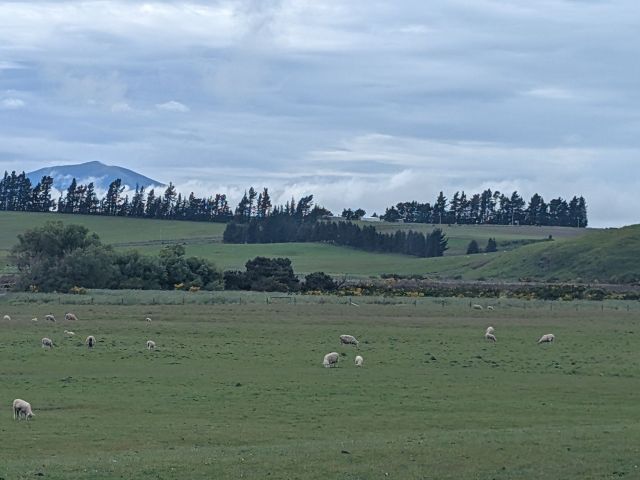
Lake Wakatipu was just as attractive going north as it was south. We didn’t stop in Kingston this time.
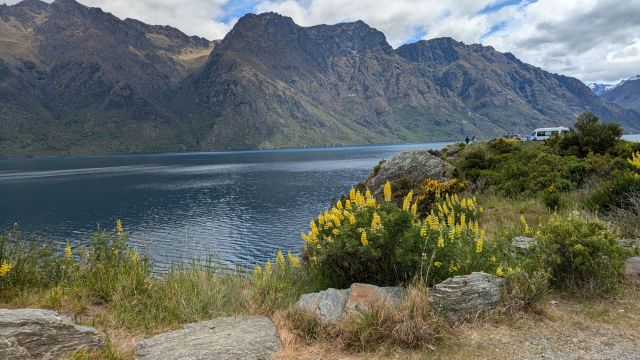
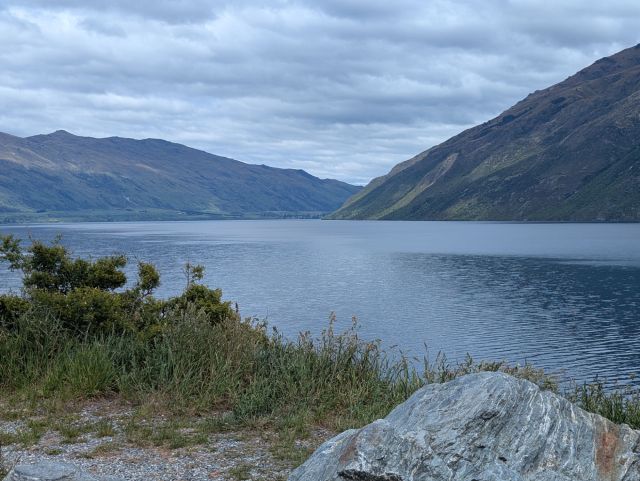
We carried on to Arrowtown. Centre of the Otago goldrush of 1861. There are a number of buildings from the gold rush days that are still surviving. Most, if not all, have been repurposed since then.
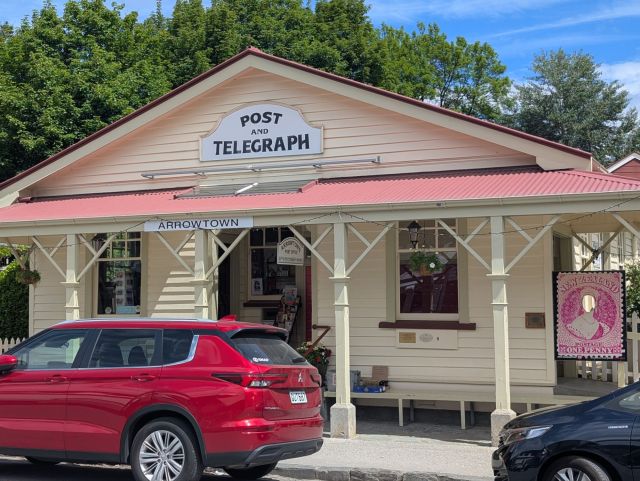
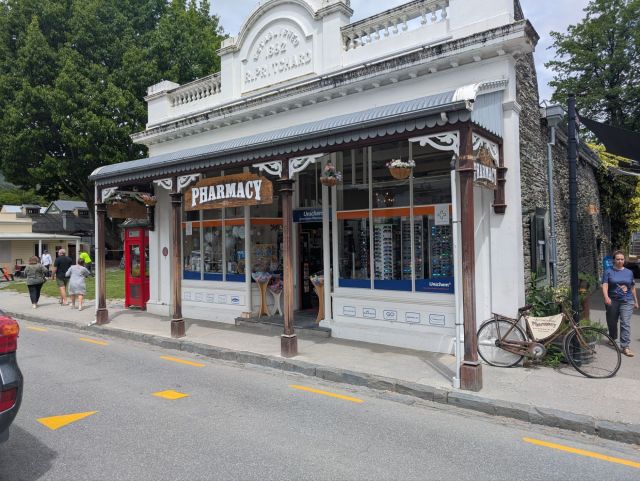

It is an interesting town to visit. It is more tourist orientated than Ross, but it still has a bit of a wild west feel to it. There may still be gold to be found. A couple were panning for gold in the river, near where we were parked. I didn’t ask if they had found any. After lunch, we headed off to Omarama via the Lindis Pass.
The Lindis Pass connects Central Otago with the McKenzie country. It is quite barren, but also beautiful. The main vegetation is tussock grass. Rising to almost 1000 metres at the summit, it is high enough to have snow during the winter.
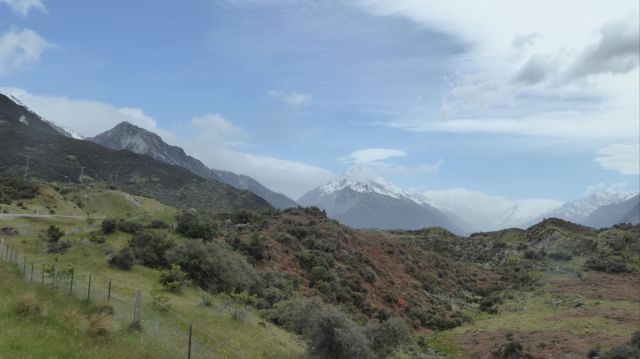
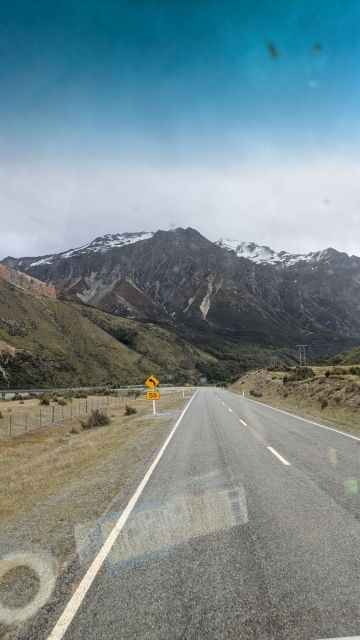

There was still some snow on the surrounding mountains.
Dropping down from the summit to Omarama was just as spectacular.
After we had parked for the night (at yet another Top 10 site). We decided that we would cook in the van for a change. The pasta was pretty good.
The next day, we set off to find Aoraki, also known as Mt. Cook.
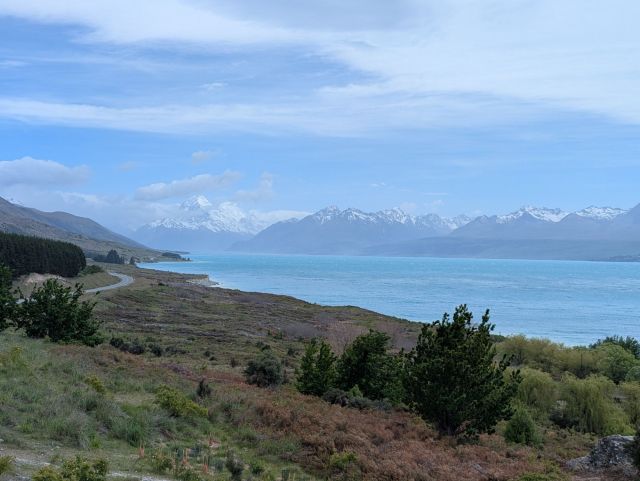
The Tasman River widens out into Lake Pukaki. The lakes and rivers in this part of New Zealand are all glacier fed. As a result, they are an amazing pale blue colour. The glaciers grind the rock down to a very fine powder. This remains suspended in the water and causes the colour.
We drove along the side of the lake up towards Aoraki/Mt Cook village. There are some spectacular views of Aoraki as you drive up the lake.
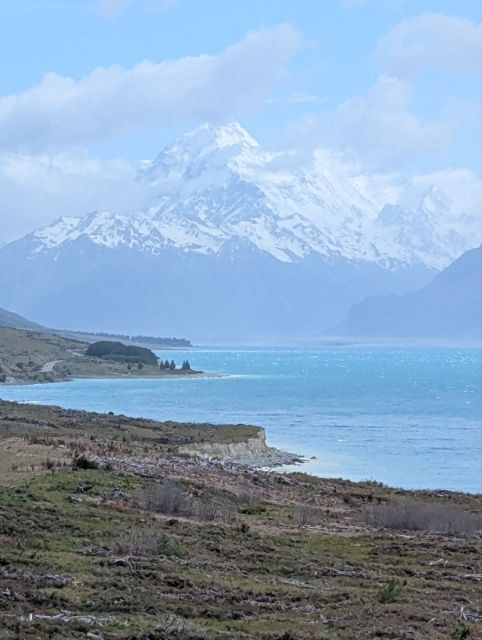
As we drove on up the valley to the village, the mist came down, and it started to rain. consequently, the mountain became more atmospheric.

We parked at the Hermatige. There has been a hotel here for well over one hundred years. It started off as a glorified mountain hut, but following various fires, floods, and rebuildings has evolved into the luxury hotel that exists today.
There is a small museum telling the story of the hotel and the mountain. It is worth a visit.
We then headed on to Tekapo, and the second must have photo on a Japanese tourist’s itinerary. The first being Aoraki. Actually, it is not just Japanese tourists anymore, everyone wants the perfect Instagram picture.
Our arrival at the campsite was a fraught. We had a seven metre van, but we were given a pitch that would have been tight for a five metre van. When I complained, they said they didn’t have a suitable pitch, but we could park by the lake, with no power and no refund. The view from the pitch by the lake was better though.
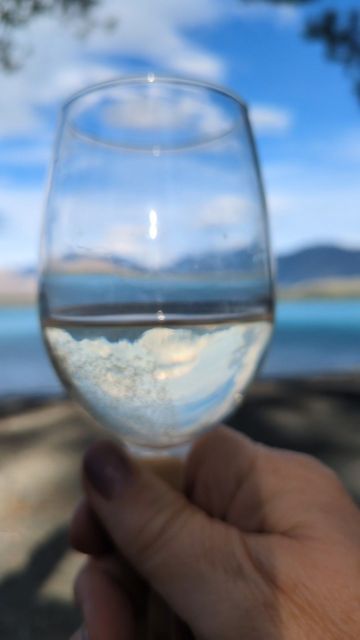
We set off to find dinner. Saw a restaurant called “Fishtail”, assumed it did fish and chips. It didn’t. It turned out to be a rather good Indian restaurant.
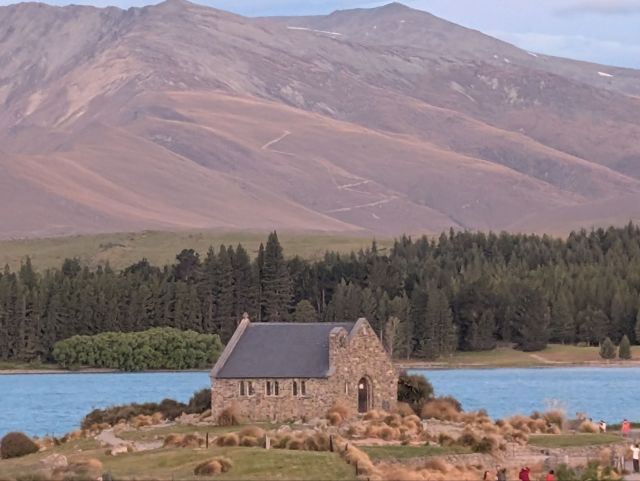
Afterwards we went to take the compulsory photo of the “Church of the Good Shepherd”.
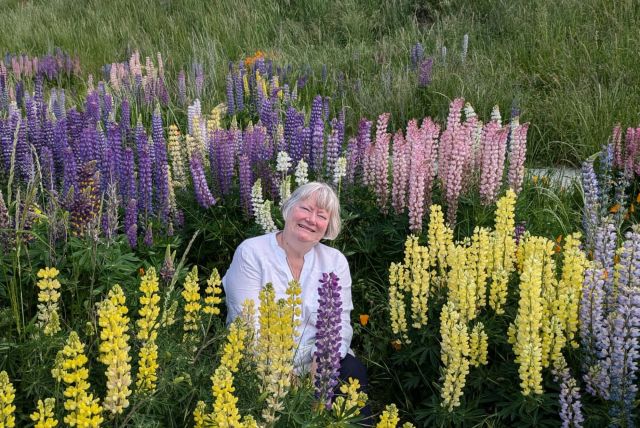
Diane also decided she wanted a photo of herself among the lupins.
Tekapo is in a dark sky area. The stars were amazing. Living in London, it is easy to forget just how awesome the night sky can be.
 A Scotsman in Suburbia