Tag Archives: David Millar

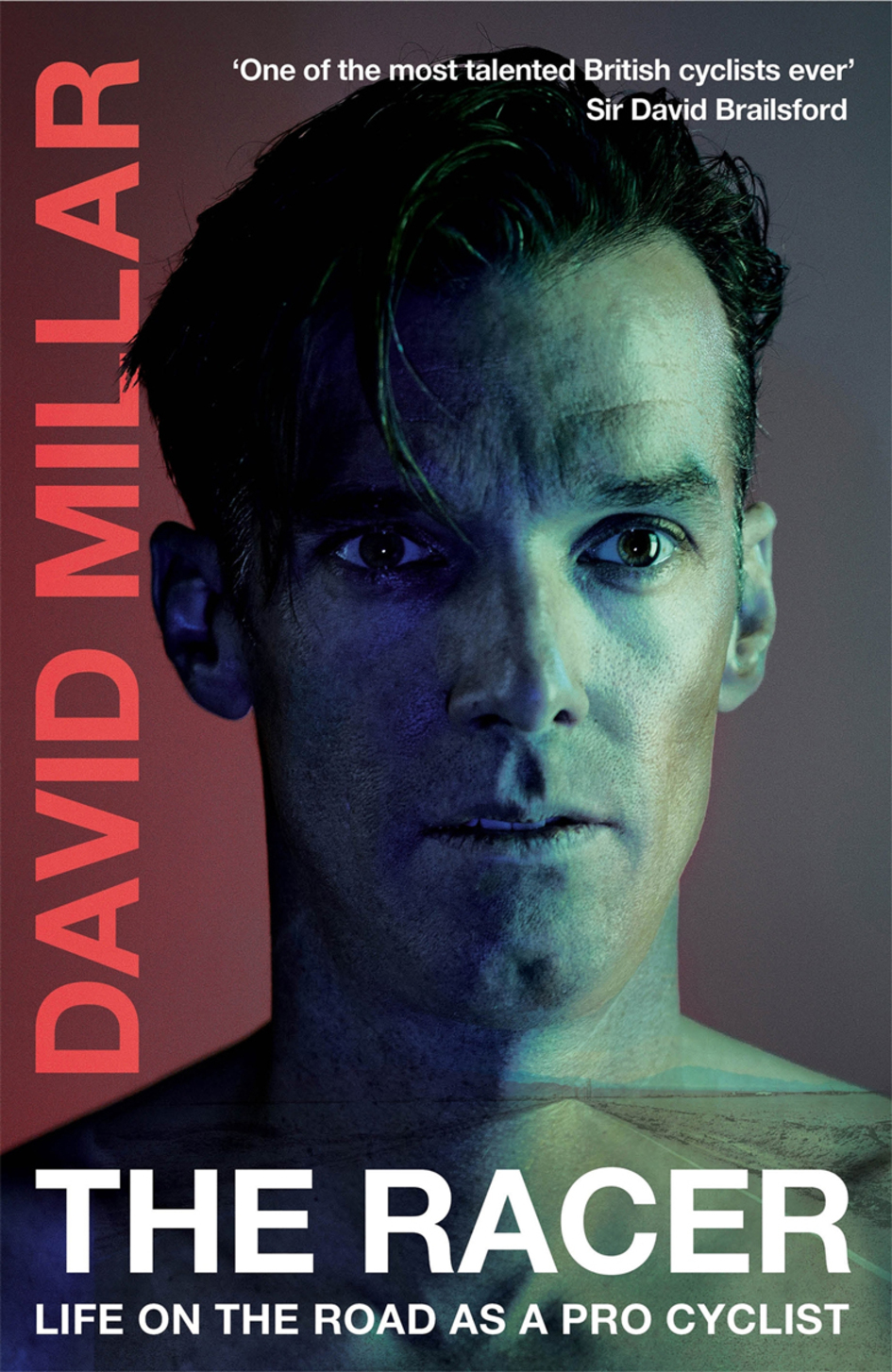
The Racer – David Millar

millar_racer_cover

The Racer is David Millar’s second book. His first “Racing Through The Dark” dealt mainly with his and the sports dark period when doping was more or less de rigueur.

Quoting the book;

We know a lot about that time now. I’ve written about it, and so have many others. I want to write something else, a book that years from now my children can read and see what it was like, what their dad actually did all those years ago, the racer that he was. But not only that, I want my friends from this generation to have something that will remind us of who we were. There was more to it than doping. We lived on the road because we loved to race.

 
What he has given us can be read on one level as a diary of his last season as a professional cyclist, but on another it can be read as a love letter to bike racing. One that acknowledges that bike racing brings joy and heartache and not necessarily in equal measure.

He writes the book as a series of vignettes. The subjects range from the difficulty of getting an ageing body ready for a final season, through a theory of crashing, to his final race which as he says completed the circle of his career by going back to where he had started as a competitive cyclist.

He wasn’t expecting to win many if any races in his final year. That wasn’t his job in the team. His job was Road Captain. Calling the tactics, making sure that the rest of the team were where they should be, encouraging riders who were having a bad day and pacing team leaders back to the front after a mechanical or a crash. He gives a particularly insightful look at how this works in the chapter on the Tour of Flanders (or Ronde Van Vlaanderen to give it the proper name).

The book divides two halves. Pre Tour de France and post (non selection for) the Tour de France. I don’t think I am giving away any spoilers by telling you that David Millar  was not selected for the Garmin Sharp Tour de France squad in 2014. Read the book and he tells the story better than I can precis it.

Post (non selection for) the Tour he had four events on his schedule. The Commonwealth Games, the Enoco Tour, the Vuelta d’Espanga – which was to be his last race with Garmin and the World Championships – his last ever race as professional.
The Commonwealth Games was a disappointment, but as he explains not an unexpected disappointment giving that he lacked the conditioning of three weeks racing the Tour de France. He deals with La Vuelta, his twenty-fourth and last Grand Tour, in day by day accounts of the highs and lows of bike racing.

So on to his final race as a professional. The World Championship Road Race. National teams race The Worlds not professional trade teams like all the other races during the season. He makes a point of comparing how the British National team treated him coming in to the Worlds carrying an injury from La Vuelta to how Garmin treated him before the Tour de France. As it turns out, because of the injury, he can’t actually give a lot, other than getting the tactics right and ensuring that the riders who might win are where they need to be when the attacks go. He did his bit then pulled out. His last race was a DNF.

Except it wasn’t his final race, he still had one more race to complete; one that brought his career full circle the ‘Bec’ hill climb.

The book gives an honest and insightful look into the life of a professional cyclist. It is well written, not by a ghost writer as with most sporting “autobiographies” but by the man himself. It is quite a book and well worth reading
Tour de France Stage 9 -Maybe it isn’t all over

TDF100Take back what I said yesterday, perhaps the Tour isn’t all over bar the champagne drinking on the final stage. Today seemed prove that the Sky team of 2013 aren’t the race crushing robo-team of 2012.

It is probably Garmin-Sharp carrying out their preannounced plan to cause chaos that is at least partly to blame. On the attack from the gun with David Millar and Jack Bauer riding a two-up time trial into the first climb, and featuring in every move including the winning one. They broke the race apart.

This left Chris Froome in the front group with most of the Movistar team for company, but a distinct lack of black and blue jerseys to help him. This happened with about 140 km and four cols left to race.

Richie Porte tried valiantly to get back on but Movistar kept the pace high on the Col de Peyresourde to make sure that he didn’t and he eventually sat up. Movistar had the advantage in numbers but didn’t seem to know what to do with them. Admittedly the stage with its 30km down-hill run to the finish was never going to be a one where a decisive gap could be forged, but I thought they could have done more than a couple of attacks from Niaro Quintana. Perhaps Valverde couldn’t attack. Froome covered all the attacks fairly easily and at one point decided to half-wheel Quintana just to make the point.
DM
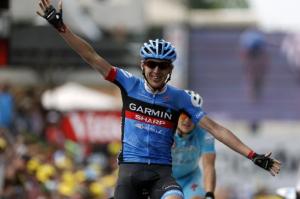
Round about the point where Movistar, or to be more precise Quintana gave up trying to drop Froome an Irish Brummie, Dan Martin, set off up the road, with about 4km left to the top of La Hourquette d’Anzican. Jacob Fuglsang(Astana) joined him. Working well together the pair quickly established a reasonable though never completely decisive lead. At about 5km to go the impetus went out of the chase and it became obvious that the stage would be won my one of them. Dan Martin, who is probably the better sprinter out of the two, judged it perfectly leading into the bend at 250m to go and taking it out from there.
What did I learn from today’s stage?

  • Garmin will mix it up and try things to win stages. This could cause problems for the teams whose focus is the GC.
  • I don’t think that Valverde has quite got what it takes to unseat Froome.
  • Like wise Contador.
  • Although the could both have just been keeping their powder dry.
  • Nairo Quintana might have, but is going to have to get a lot smarter.
  • Chris Froome might have to win this tour on his own.
  • Oh and some Scottish bloke who looks a bit like David Millar won Wimbledon

Cavendish does it.

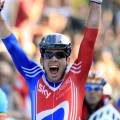
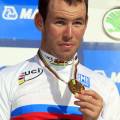
Mark Cavendish did what he promised to do and won the UCI Road World Championships: Elite Men Road Race. otherwise known as the World Championships. His is the United Kingdom’s first world champion for 46 Years, in fact he is only the United Kingdom’s second ever World Champion. He went there to win, the British team had no plan “B” either Cavendish delivered or they failed. The British team rode brilliantly, controlling the race from the start. If I had one minor criticism of the tactics it would be forget that ‘Cav’ won, the tactics must have been just right.

Cav crosses the line

In the Rainbow Jersey

He obviously took my advice and had a look at Lucy Garner winning the Junior Women’s Race

Tour de France 2011 – Part 1

Tour de France Logo

Prologue

Well there isn’t a prologue this year. So you will have to make do with my musings on what is going to happen.

The GC (General Classification or Yellow Jersey) is I think it is a straight fight between Alberto Contador (Spa) Saxo Bank Sungard (last years winner) and Andy Schleck (Lux) Leopard Trek (last years runner-up). Schleck probably is a slightly better climber than Contador and has a stronger and more experienced team, (you don’t get stronger than Fabian Cancellara or more experienced than Stuart O’Grady and Jens Voigt), but Contador proved in 2009 that he can win without a team, or indeed with a team gave that appeared to be actively working against him. Contador is by far the best individual time trialist. The Team Time Trial is fairly short so no team (except possibly Euskatel) should lose too much time.

Who is going to win? I don’t know, but I will be very surprised, barring accidents or an early intervention by CAS, if Contador and Andy Schleck are not on the top two steps. The third step could be occupied by any one of about ten riders, Bradley Wiggins, Jurgen Van Den Broeck (Bel) Omega Pharma-Lotto and Cadel Evans (Aus) BMC Racing Team among the candidates.

The Points Competition (Green Jersey) has a new format this year with only one intermediate sprint per stage and not the two or three that there were in the past.. The other big difference is that the intermediate sprint is now worth 20 points to the winner with points going down to the first fifteen riders across the line. This means that anyone who wants to win the competition will have to go for the points at the intermediate sprint, unlike in earlier years when the overall contenders could rely on a breakaway mopping up the intermediate points and only have to worry about the final sprint. On paper the favourite to win the green jersey is Mark Cavendish, but he has a habit of sitting up in a sprint when he knows that he has been beaten, thus dropping points by finishing tenth when he could have been second or third. Thor Hushvod has stated that the Green Jersey is not his aim this year, so I think that it could well end up on the shoulders of his team-mate Tyler Farrar.

The King of the Mountains Competition (Polka Dot Jersey)has in recent years become a completion fought out by French riders who got themselves into early breaks and hoovered up the points available before the GC contenders started racing properly in the latter stages of the race. Like the Points competition the scoring has been altered this year, with fewer points available on the lesser climbs. This is possibly to discourage the opportunist French breakaway riders and encourage some of the bigger names to make it a goal if they lose time in the GC. Having said that I would like to see David Moncoutie (Fra) Cofidis win.

Stage 1

Saturday’s stage, unusually wasn’t a prologue time trial, but a road stage with a reasonably steep uphill finish. Philippe Gilbert was such a short-priced favourite for the stage that one Belgian punter was heard to remark that it would probably cost him money even if Gilbert won. Surprisingly enough Philippe Gilbert did win it and in style. His team controlled the race well into the finalé, including an amusing to watch, although probably not to do, 100m turn on the front, uphill, by André Griepel. Fabian Cancellara attacked with about 500m to go, forcing Gilbert to go probably a bit earlier than he had planned, but if Spartacus goes, you have to go with him if you want to win. Gilbert caught him and sat on for a few seconds to see what was going to do, then went himself. Cadel Evans tried to bridge across but didn’t manage and came second, with Thor Hushvod coming third and setting himself up nicely for an attempt at the yellow jersey in the following days team time trial.

The other incident that shaped the day, and could yet shape the tour was a mass pile up with about 10k to go. A spectator got too close to the action and caused an Astana rider to crash , bringing half the peleton with him. Alberto Contador although not actually involved, was caught behind the crash and lost about a minute and a half to his rivals.

Stage 2

The second stage of this years Tour de France was the Team Time Trial. Jonathon Vaughters the owner/manager of Team Garmin-Cervélo has tried to win a stage of the Tour de France for the past three years. In addition he has a bit of an obsession with the Team Time Trial. This is probably due the fact that one of the highlights of his career as a cyclist was winning the Team Time Trial stage in 2001 when he was a member of Roger Legay’s Credit Agricole team.

It all worked out perfectly for him and the team. They won the stage by 4 seconds and moved Thor Hushvod out of his world champions rainbow strips into the Maillot Jaune, though today he was rather incongruously wearing the polka dot jersey of the leader of the King of the Mountains competition. If you want to know why I suggest that you read the minutiae of the Rules & Regulations of the Tour de France (in French).
This is link is David Millar’s reaction to the win

Below is Johnathan Vaughter’s reaction.

Book Review: Racing Through the Dark by David Millar

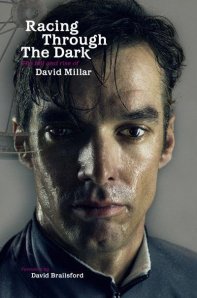
Racing Through the Dark by David Millar is an honest self-written account of his descent from an extremely talented young rider to a two-year ban for admitting to using various proscribed substances and through to something like redemption.

Racing Through the Dark cover

A confession; I have been a fan of David Millar more or less since the beginning of his career. Apart from his obvious talent, he always came across as being more interesting than the average cyclist. His answers to journalist’s questions were always a bit less bland.

I was there in 2001, wearing my “It’s Millar Time” t-shirt, in Dunkirk, when he crashed (and as the book tells started his burn) in the prologue. He may have heard my shouts of encouragement as he struggled up Cap Griz Nez, swathed in bandages, just about hanging on to the back of the peleton. I was as surprised and shocked as anyone when he admitted to doping in 2004. I was at the top of the hill at Southborough when he took the King of the Mountains points on the stage from London to Canterbury. So to the book.

The opening two short contrasting chapters set the tone for the book. The overture if it was an opera. The first chapter is his telling of his arrest and interrogation by the French Police that led to his confession of having used performance enhancing drugs.

The second chapter, set five years later, is his story of a magnificent, thrilling, but ultimately futile attempt to win the Tour de France stage from Girona (where he now lives) to Barcelona. Through his words you can capture the renewed joy that he has in the sport of cycling.

Tracing his path from an idealistic neo-pro to his eventual downfall is a fascinating psychological journey. While never excusing himself from responsibility, he shows clearly that unless you were a far more stable and emotionally mature person than he was then, the culture around you drew you into doping. The point at which he finally gives in and agrees to dope is strangely and chillingly banal and matter of fact.

His path back from the depths of 2004 in Biarritz, sitting on the steps to the beach with his sister Francis, wishing he had a fast forward button, to the closing paragraphs, the morning after celebrating his Gold Medal at the Commonwealth Games in Delhi, is neither smooth nor straightforward, but it is ultimately an uplifting story. He has problems with the French Justice system and the French Tax authority. His new team, Saunier Duval seemed to have similar problems to those he met at Cofidis, with riders notably Ricardo Ricco appearing to use EPO and other banned substances, and the management turning a blind eye to the goings on. Joining Jonathan Vaughters’ Slipstream team, with its anti-doping ethos, finally gave him something to believe in.

The book is about as far removed from the bland hack written “autobiographies” of sportsmen and women that we normally expect as can be. It is an open, honest and at times raw account of the pressures and strains that a top sportsman encounters. I think that it is a book that everyone should read, not just cycling fans. And if it does not win this years William Hill Sports Book of the Year award, then I will definitely read the book that beats it.

Racing Through the Dark by David Millar

I have managed to get hold of a copy of David Millar’s book Racing Through the Dark (Orion, 18.99 rrp) in time to read while I am on holiday. Richard Williams reviews it in today’s Guardian book reviews.

He says about the book:

David Millar provides one of the great first-person accounts of sporting experience

The definitive review will be on this blog after I get back from holiday.

The review also covers Richard Moore’s Slaying the Badger (Yellow Jersey, £12.99), which tells the story of the rivalry between Greg LeMond and Bernard Hinault and the 1986 Tour de France. I think that it will also be worth a read.

A good weekend for British Cycling

It has been a fairly impressive weekend for British Cycling.

Bradley Wiggins
Bradley Wiggins
Bradley Wiggins (Team Sky) won in the time-trial at the Bayern-Rundfahrt on Saturday (beating World Champion Fabian Cancellara by 30 seconds in the process) .
Geraint Thomas

Geraint Thomas (also Team Sky) also produced a strong ride to take him into the leaders jersey. He and his team successfully defended the lead on the final stage yesterday to give him his first major stage race on his palmares.

On top of that on the other side of the Alps in Milan, David Millar (Team Garmin-Cervelo) won the final stage of the Giro d’Italia

David Millar