Following yesterday’s excitement (seeing the twins for the first time) it was back to more mundane matters today. Some charity shops have reopened. We have been doing a bit of sorting out during lockdown, and had a reasonable amount of stuff to re-cycle. We took the BGB, to Rayne’s Park — we did have a fair amount of stuff- to find a charity shop, and do some shopping.
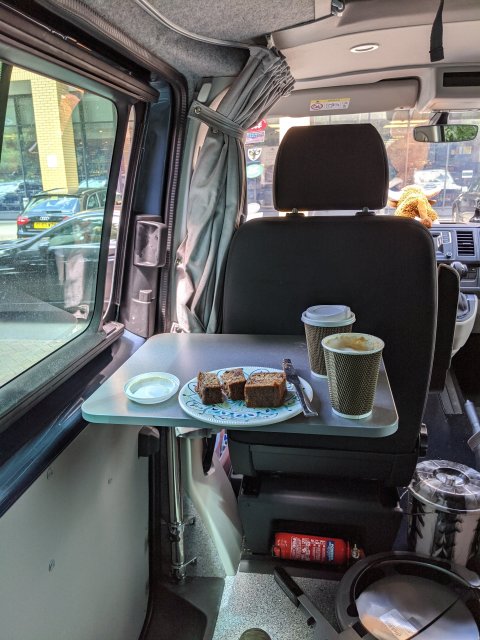
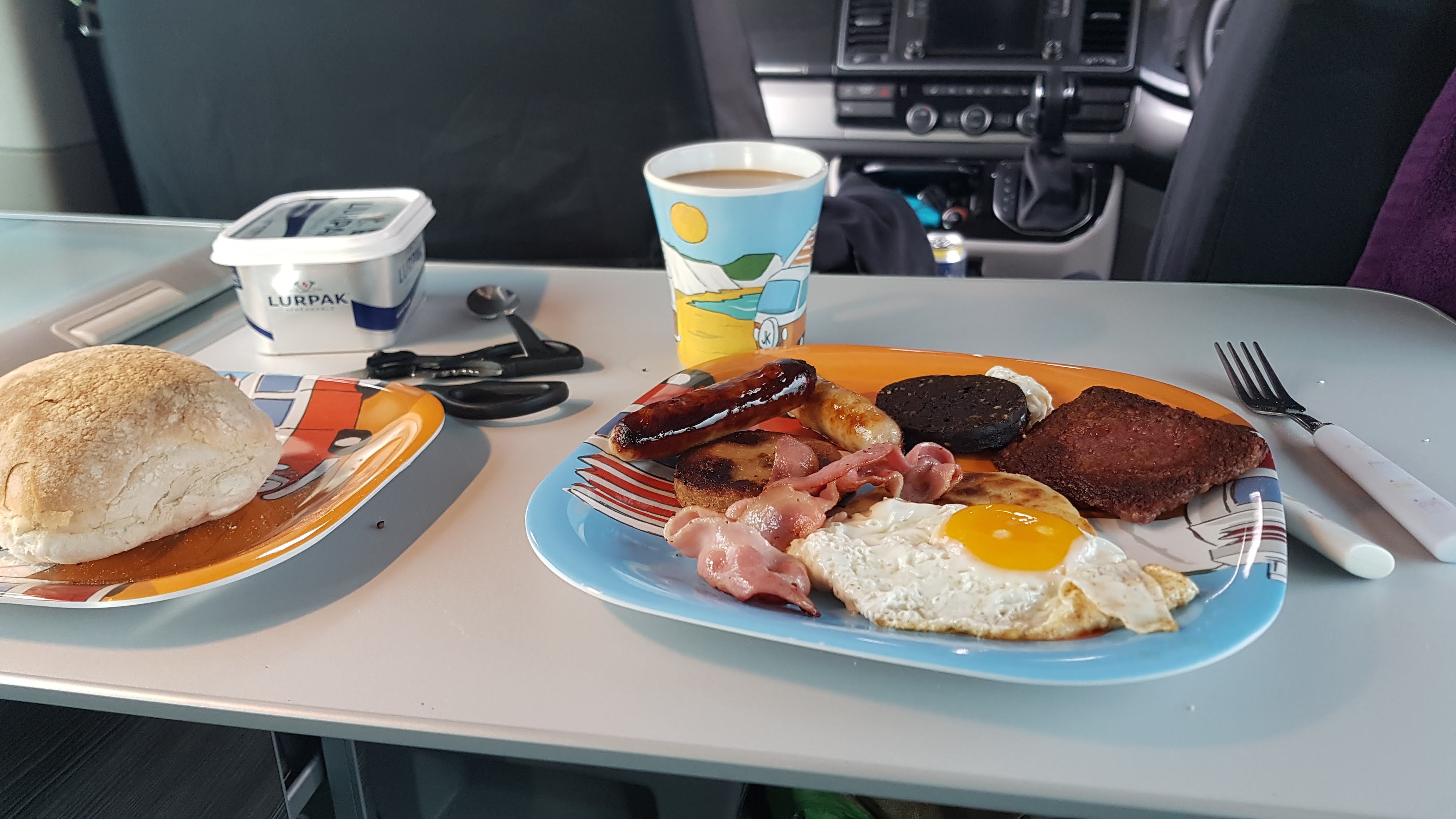
Diane came back with two cappuccinos and a slice of chocolate cake to share. As of the moment cafes are only open for take-away, but we had our own private socially isolated cafe with us.
Our own little socially isolated cafe
After lunch, we went up to the allotment I decided to attack the brambles and the bind weed. I should have taken before and after photos, but forgot. It looks a lot better, but the brambles took their revenge on my hands and arms.
Day 99 To 104 29/06/2020 to 05/07/2020
I managed to miss the momentous 100th day in lock-down. We probably should have thrown a socially distanced street party, or something like that. On day 103 (Saturday 4th) however the pubs, and hairdressers were allowed to re-open. It went surprising smoothly. The predicted mayhem did not occur. Though there were apparently a couple of localized incidents, some over hair appointments.
Sunday (Day 104) was spent getting The BGB ready for our first trip of the year, because not only are the pubs allowed to reopen, so are campsites. I checked that everything was working, filled the fresh water tank and the fridge with beer and wine (and some food). Just to be clear the water tank only has water in it. We packed about twice what we would need for three nights. I put the van on electric hook-up overnight to make sure that the electrics were OK, and to ensure that the leisure battery was fully charged. We went to bed quite excited about our first trip in almost a year.
Practising for the trip.
Day 105 Monday 06/07/2020
The big day dawned , bright, clear and sunny. The BGB was packed and ready. the bikes were on the bike rack. We set off about an hour and a half later than planned. The idea was to travel to the campsite at Norman`s Bay via Liphook, to see Finn and Sol (and Tilda, Aimee and Andrew)
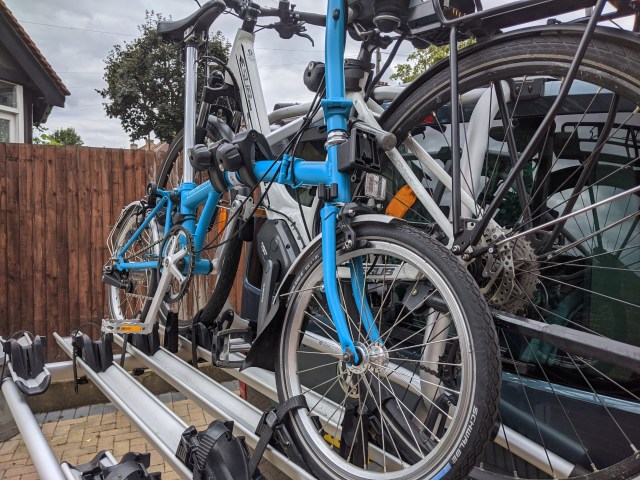
Sort of defeats the object of having a Brompton, but we need a rack for Diane’s e-bike
Finn and Sol were of course lovely. As was Tilda, though I think she is finding sharing her mum and dad slightly difficult. Everything was going smoothly until we had lunch and I discovered that I had left my spare insulin at home. To be honest it wasn’t much further to go from Liphook to Norman’s Bay via New Malden than it would have been to go the way we had planned. Or at least that is what I told myself.
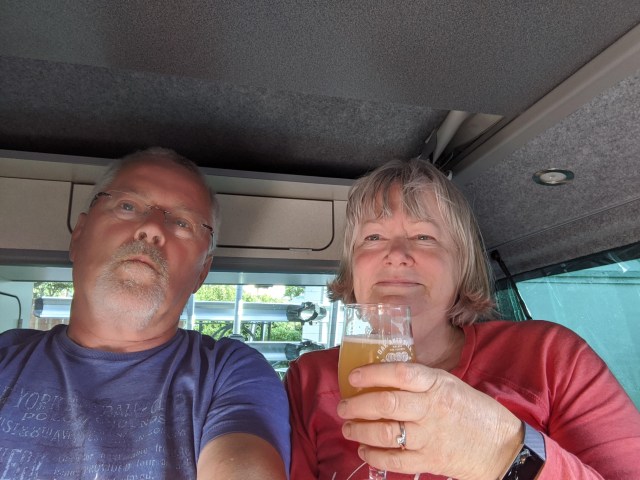
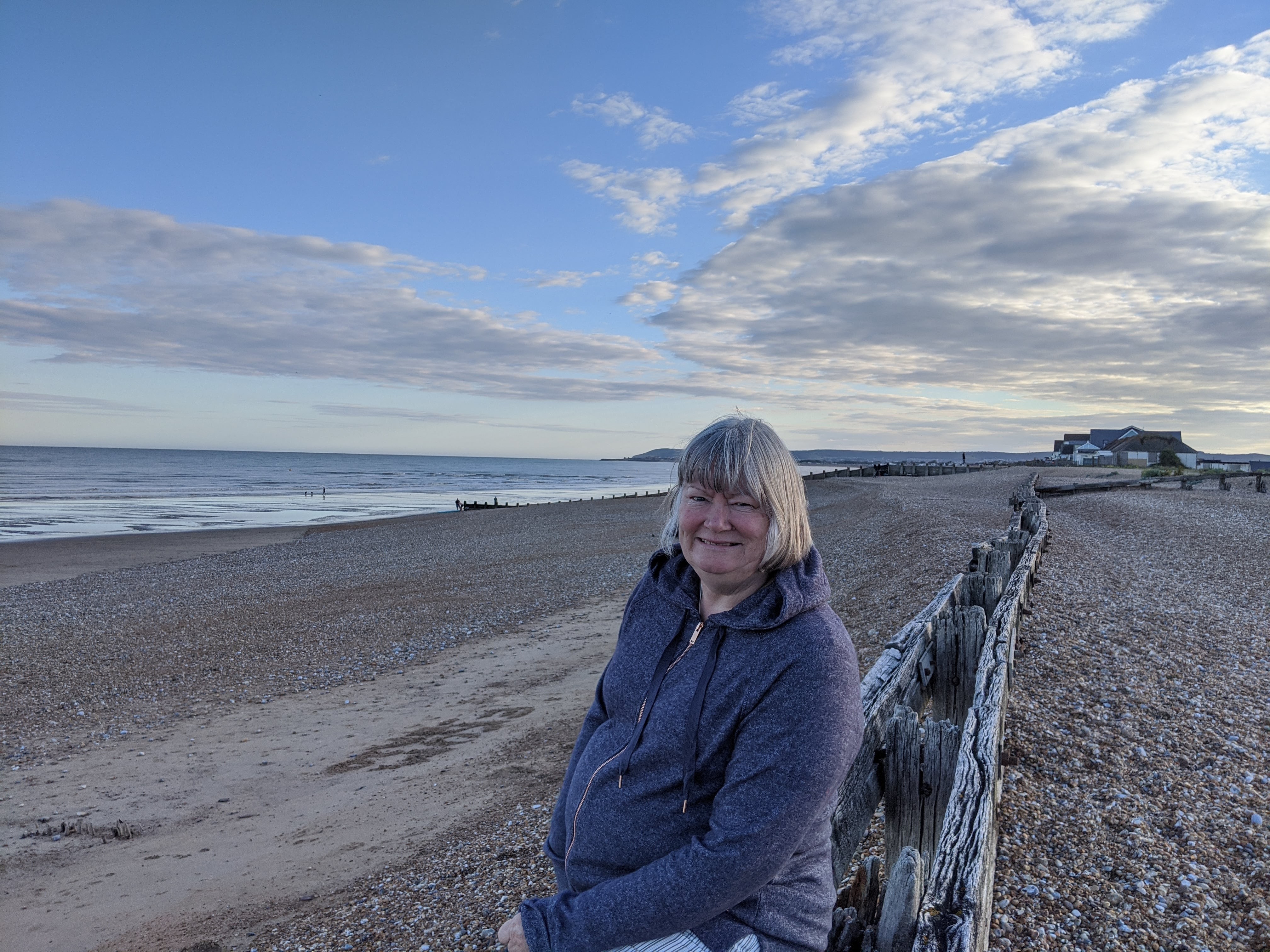
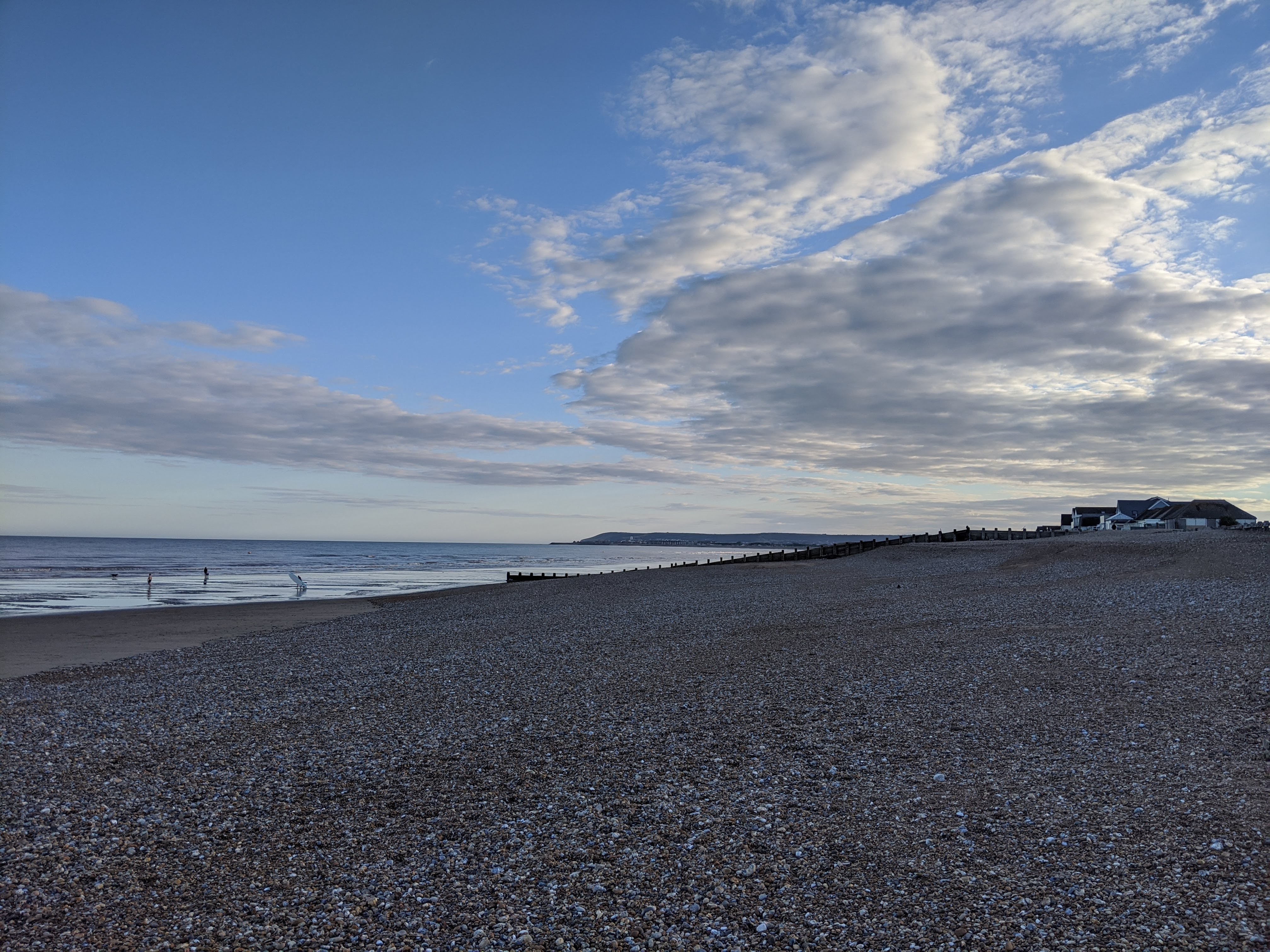
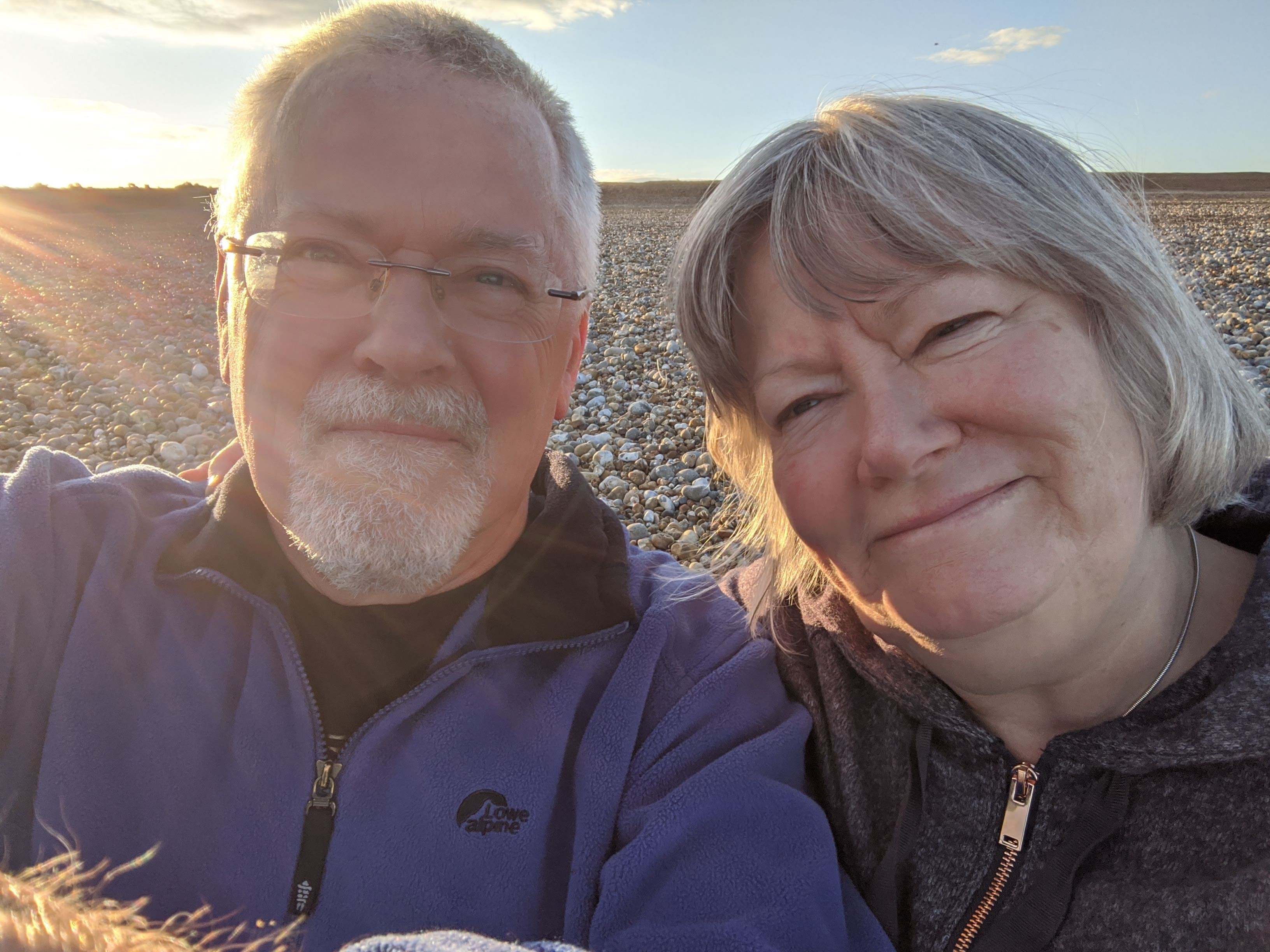
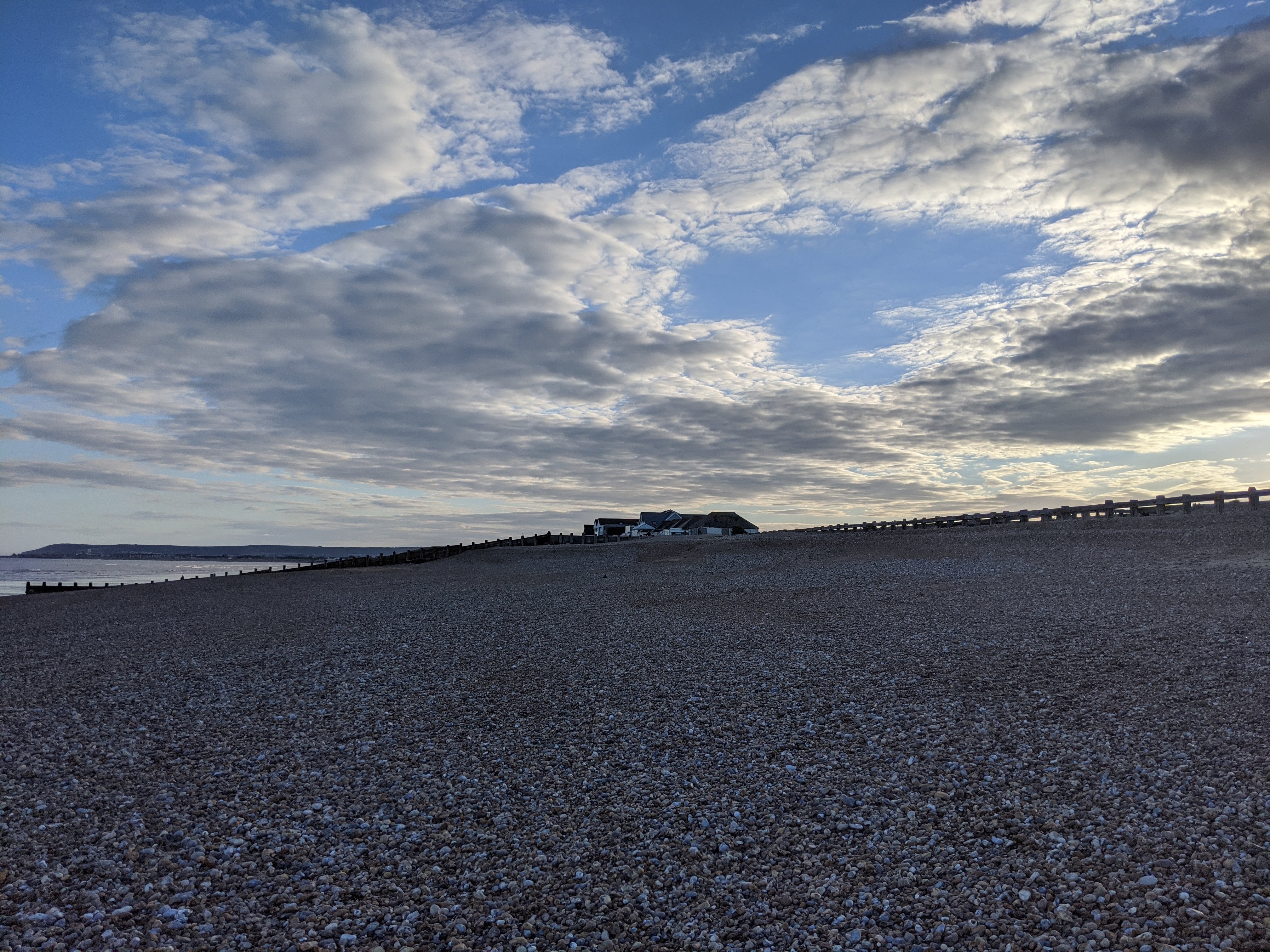
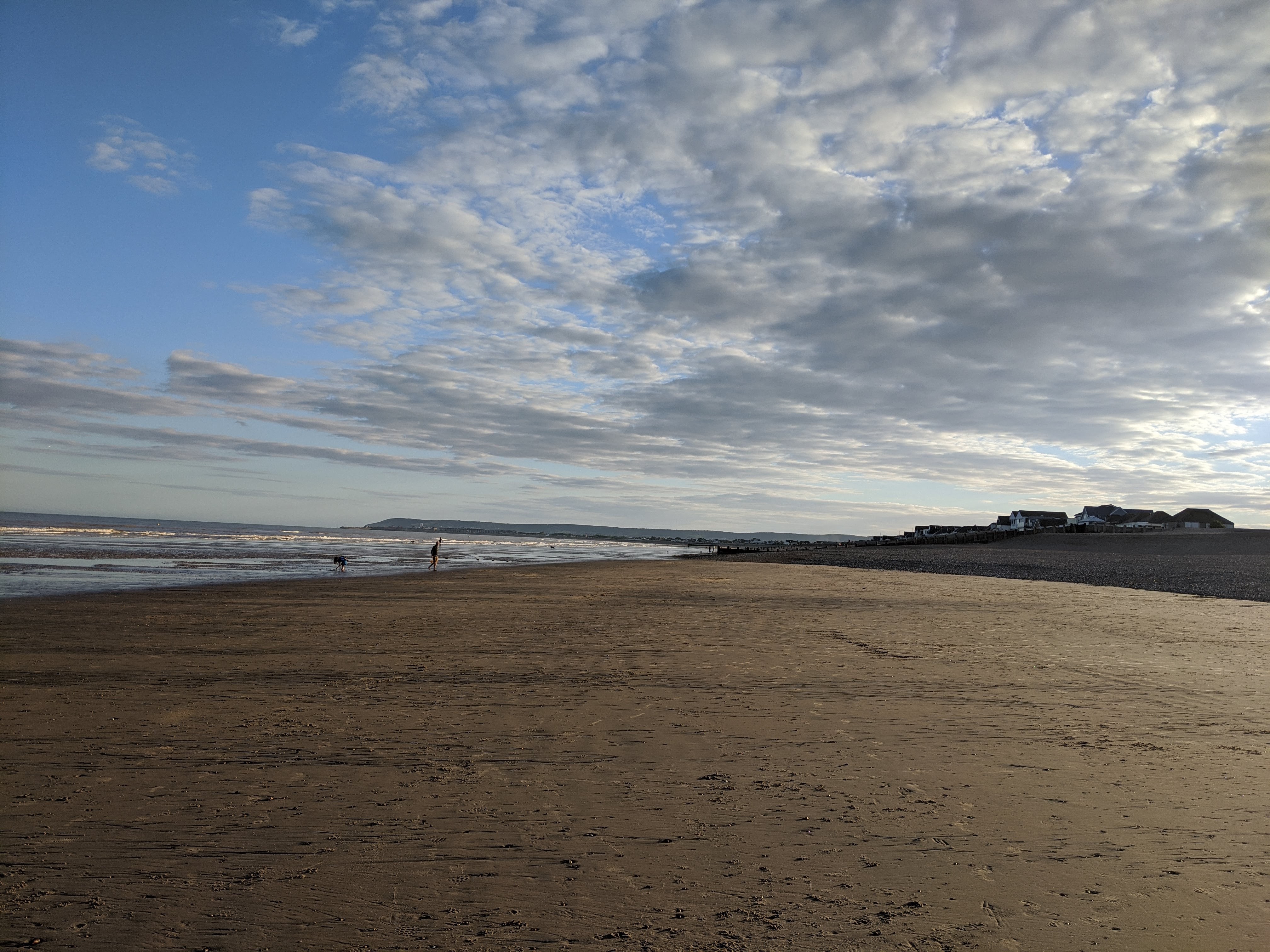
We arrived about five thirty. Diane’s cousin was on the next pitch to us (planned), so we had a drink with them. We had a walk on the beach before we made dinner. It was a beautiful evening.
Today was the day when I had to head south with a purpose.
Day 1 to An Gearisdan (Fort William)
There is no direct road due south (unless you want to walk) so I set off in the direction of Loch Maree and Torridon.
Loch Maree
The weather was a bit overcast and drizzly, which made heading home a little bit easier. It also meant that the photographs were a bit on the grey side.
As I arrived into Torridon (an area where mobile phone signals exist) I received a text from my bike shop telling me that my Brompton (which should have been there in plenty of time for my trip) had finally arrived, and would I like to come and collect it. If I had had the bike it would have enhanced my trip, but I couldn’t really say that not having it spoiled my trip. It meant that I went for a walk where I would have gone for a ride.
Torridon
Torridon
Torridon
From Torridon the Starlight Express and I headed on along the southern shore of Loch Torridon until we reached Sheildaig where a decision had to be made. The coastal route via Applecross and the Bealach na Bá (Pass of the Cattle) is supposed to be spectacular. It is also on a narrow single track road which climbs to a height of around five hundred and fifty metres with hairpin bends and a few unguarded drop offs. The cloud base was about three hundred metres so I would be driving the trickiest bit of the road in the clouds with next to no visibility. So, no views and the chance of accidentally driving of the edge of a cliff; I chickened out and decided to take the valley road. Next time if the weather is clear we will take it.
The valley road to Lochcarron was attractive enough though.
I stopped in Lochcarron for lunch at the Waterside Cafe. Like all the places I ate at during my trip it did simple things really well. Excellent soup and a sandwich to go with it.
Moving on after lunch I didn’t get very far. There were major road works on the other side of the loch. I think there had been a landslip. This necessitated a convoy system, which was complicated by the fact that the road was diverted onto the railway for about a quarter of a mile. Naturally the trains had priority.
So there I was, stuck. Anyhow as I said earlier, in a camper van you can always make a pot of coffee whenever you feel like it. So I decided to do that. As Sod’s law dictates, just as the coffee pot came to the boil the traffic decided to start moving. I manged to pour it into my travel mug while ignoring the toots from the cars behind me and set off with a mug of good coffee to keep me going.
The Starlight Express, or at least her sat-nav was making a case for diverting through the Isle of Skye. It would have been less distance, but any time saved would have been dependent on the ferry to Mallaig being exactly synchronised with my schedule. I decided to stick to the mainland route.
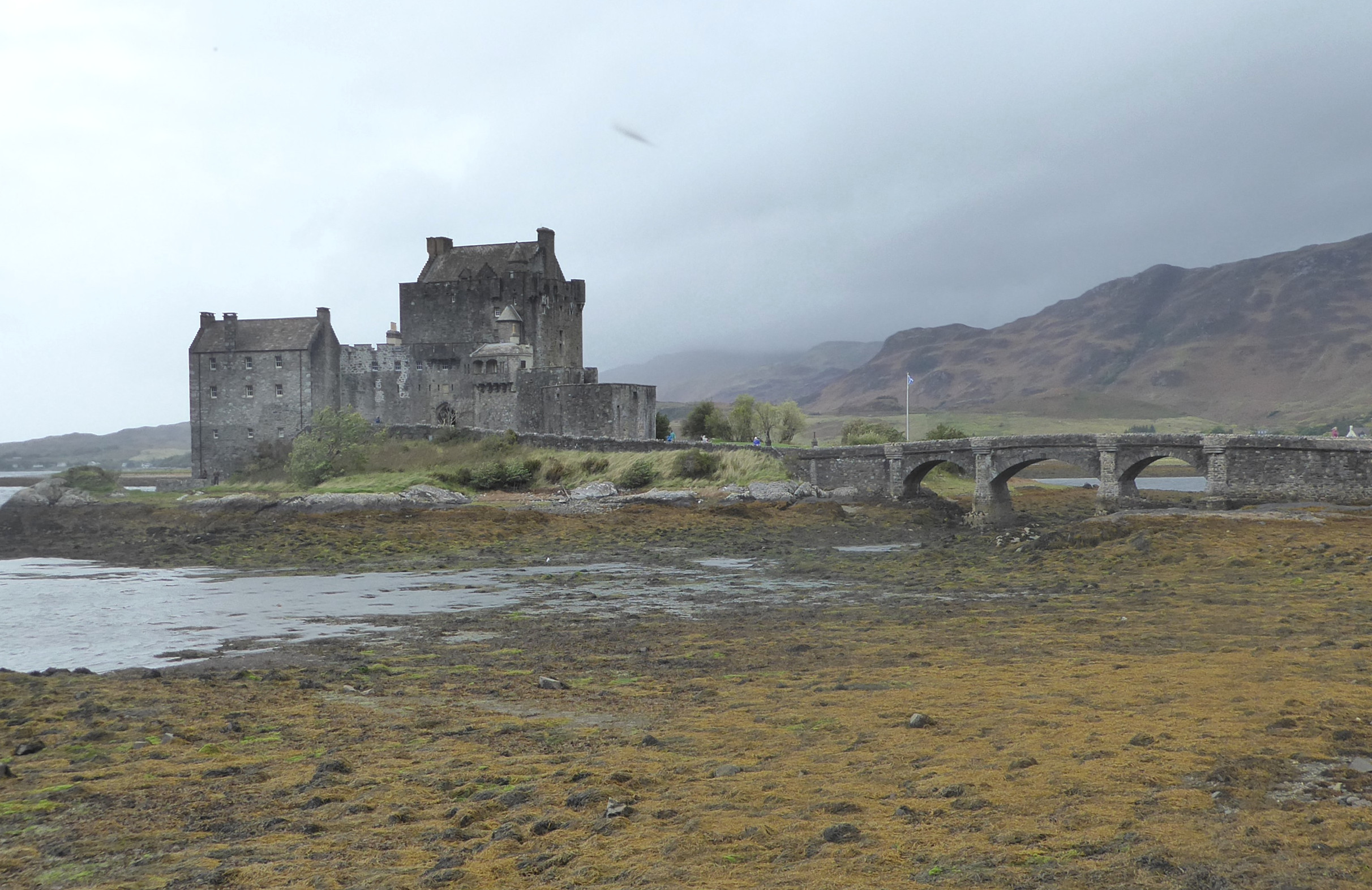
A few miles further on I stumbled across something that I wasn’t expecting; Eilean Donan Castle. I must admit that I didn’t really know exactly where it was. But having found it I thought it would have been rude not to stop and take a few photographs at least. (Besides I did need to go to the toilet)
Eilean Donan Castle
I don’t know very much about the history of the castle beyond the fact that it is a compulsory stop for every coach tour of the Highlands. but a click on the link will take you to an informative Wikipedia page. Feeling suitably relieved I pressed on to Fort William.
The weather was beginning to deteriorate and by the time I arrived at the foot of Ben Nevis it was blowing a full gale with horizontal rain.
There is supposed to be a good pub/restaurant about ten minutes walk from the campsite I was staying at, but I whether it is or not I still don’t know. I didn’t fancy arriving there looking and feeling like a drowned rat so I decided that it was a night for cooking in the van. Some pasta in a tomato and basil sauce washed down with a chilled red (the only place I could find to keep a half full bottle of wine upright was in the fridge) did the trick.
I also found a travelling companion today, Kylie the Campervan Coo.
Day 2 Back to England
The following day dawned grey, but not quite as wet and miserable as the night before. “Dreich” summed it up. The plan was to get as far south as I could, while remembering that I was still on holiday. The route more or less planned itself. Down Loch Linnie to Ballachulish, through Glencoe to Crianlarich, then down Loch Lomond to Glasgow where I would pick up the M74 for the dash south. Kylie thought the plan was OK as well, or at least she didn’t object.
The grey, dull misty weather didn’t make for great driving conditions, but It did lead to some very evocative photos, especially of Glencoe.
I didn’t have the time, and given the weather, the inclination, to do more than take a few photographs. Glencoe is a place of spectacular scenery and not a little history. The Glencoe massacre of 1692 is infamous.
Onwards and southwards, The Starlight Express, Kylie and I went, passing through Bridge of Orchy, Tyndrum and Crianlarich before arriving “By Yon Bonnie Banks” in time for morning coffee. The weather was still pretty miserable but the sun was making a vague attempt to find its way through the clouds.
Loch Lomond spat me out into the outskirts of Glasgow and traffic and dual-carriageway roads. Things that I had forgotten about in the last week or so. I coped, managed to find my way over the Erskine Bridge, onto the motorway network and eventually onto the M74 south. I stopped for lunch at a service station somewhere south of Glasgow and north of the border.
I also managed to find a bottle of raspberry wine for my friend Toby. We have a competition to see who can bring the most horrible local hooch back from holiday. There was no way that it was going to be as vile as the coffee flavoured ouzo that he brought me back from Greece. The important thing is the taking part not the winning. (It did turn out to be reasonably vile though, probably more strange than actually undrinkable.)
I crossed the border near Gretna Green. I was trying to work out how far south I could get before dark (it is easier to set the van up if it is daylight). Google said there was a campsite at Kendal, not far off the motorway, so I decided to stop there for the night.
I went for a walk into town to find something for dinner, but the only pub I found didn’t do food. I wandered back to the van. It was actually quite nice to cook one final dinner in the van.
Final dinner
Day 3 Home again
There isn’t that much to say about today. The Starlight Express’ Sat-Nav gave me a pleasant little tour around the foothills of the Cumbrian Fells because it thought that there was some kind of a hold up on the motorway. It eventually led me back on to the M6 somewhere around Morecombe and after that it was dive down the motorway to home. I stopped somewhere along the way for lunch and made one last pot of coffee.
I arrived home mid afternoon and I must admit the Starlight Express looked at home on the drive.
Day 4 Saying goodbye
I had to return the Starlight Express by ten o’clock, so I was up reasonably early and about nine I reluctantly set off for Forrest Hill to return her to Campervantastic. They asked me how the trip had gone, so I told them; “I enjoyed it so much that you may have lost a customer”
I reluctantly decided that today was the day when I had best start to work my way south towards home. I wasn’t really all that sure how far south that I wanted to get. I think I had plans to get as far south as Fort William ( or An Gearasdan as it is shown on the bi-lingual road signs).
A slight diversion. Road signs in Scotland now are generally bi-lingual. In the Gàidhealtachd the Gaelic name is given first, but as you move south into the English (or more properly Scottish speaking areas the English version is shown first.
Bi-lingual Road sign
I got as far as Gairloch, which is about 30 miles further south, but because it is quite a bit further west, I’m not sure that it was much closer to home.
Altandhu is out on a limb, so I had to retrace a bit of yesterday’s route before picking up the main road south to Ullapool. It wasn’t too much of a hardship, the scenery is spectacular which ever direction you look at it.
I thought about stopping for a coffee in Ullapool, but didn’t for two reasons. I was slightly bothered, given my tendency to be distracted, that I would end up on the ferry to Stornoway and a tour of the Outer Hebrides. Also when you are in a Campervan with a stove top espresso maker you can stop and make a coffee where and whenever you feel like it.
As I was driving down the east shore of Loch Broom I did become distracted by a ferry, or to be more exact the memory of a ferry. About thirty-five or possibly forty years ago I did a walking/hitch-hiking/public transport tour of the Highlands. I remembered taking a foot ferry across Loch Broom from Ullapool then walking over the peninsula between Loch Broom and Little Loch Broom. I then more or less followed the coast round for a few days until I eventually ended up in Torridon. I thought it might be an idea to try to replicate the journey. I knew I wouldn’t be able to do all of it as there was one section from Redpoint to Diabaig that could only be done on foot or Mountain Bike. So instead of carrying on south I turned right at Braemore onto The Destitution Road.
The road climbs over the moors, with An Teallach dominating the horizon, before dropping back down to Little Loch Broom at Dundonell, where I stopped for lunch. Moving on down Little Loch Broom as well as the obvious spectacular scenery you come to a place called Gruinard and about a kilometer off the coast an island called Gruinard Island, which has an interesting, slightly sinister, history. The last time I was here there were notices up all along the shore warning you not to attempt to land on the island. During the Second World War it had been used for experiments in biological warfare and the soil was still contaminated with anthrax. It has since been decontaminated and returned to its original owners.
I carried on following the coast road until I reached the village of Poolewe. Poolewe is the home to a rather remarkable garden. Because of the effects of the Gulf Stream, a benign micro-climate allows plants to be grown on the north-west coast of Scotland that you might not think possible. (Plockton, for example, is famous for its palm trees). Inverewe Gardens were created in 1862 by Osgood MacKenzie and later after his death, his wife and daughter further developed them. His daughter gave the gardens to the National Trust for Scotland shortly before her death.
I had brought my National Trust membership card with me, and as it gave me free entry to the gardens I thought I might as well. I’m glad that I did. In late September, when I visited, the gardens were past their best, but still worthwhile seeing. I would guess that they are at their most spectacular in late spring when the Rhododendrons are in full flower. It is easier to post pictures than try to describe in words, so here are (some of) my photographs.
This slideshow requires JavaScript.
After my walk around the gardens, and buying a T-shirt from the gift shop, I decided that it was time to find somewhere for the night. It was nearly five o’clock and as the saying goes, “the nights were fair drawing in”. I decided to drive across to Gairloch rather than spend the night in Poolewe. It was on the way to Fort William (remember, where I was heading when I set out this morning) anyway.
The skies were distinctly grey as I set off, but the weather forecast was hopeful. By the time I stopped to make a coffee at Oykel Bridge the sun had come out.
Starlight Express at Oykel Bridge
After my coffee break I carried on, heading north-west into the wilds of Assynt and Wester Ross. As I travelled west the scenery became more mountainous and spectacular. Passing through the village of Inchnadamph at the south end of Loch Assynt this was the view that greeted me.
Ardvreck Castle and Quinag
The ruins were once Ardvreck Castle a stronghold of Clan MacLeod, who once held sway over the lands of Assynt. The original keep dates from around 1490. The mountain behind the castle is Quinag.
I carried on along the north shore of Loch Assynt, heading for Lochinver. The clouds, mountains and sun combined with a stiff breeze to create a constantly changing sky scape.
Lochinver is one of the biggest villages in this part of the world. It is also one of the biggest fishing ports in Scotland. Because of its sheltered position at the top of Loch Inver it has always been an important port for landing fish. In the 1990’s the port area was extensively redeveloped.
One of the companies that transports the fish from Lochinver to its destination has some interesting looking trucks. The combination of Christian and Celtic imagery on the left hand trailer was particularly noticeable.
Interesting combination of Celtic and Christian imagary
One other thing that struck me as I was wandering around Lochinver was the names on the War Memorial. It wasn’t quite so much the names (there were a lot of MacKenzies and MacLeods both Assynt names) as the regiments. Roughly a fifth of the Assynt men killed in World War 1 belonged to Canadian regiments. There must have been a major emigration in the years leading up to the war.
I traveled on from Lochinver over a wonderful, narrow, twisty single track road to Altandhu and the Port a Bhaigh Campsite. That part of Assynt is dominated by the peaks of Suilven and Cansip.
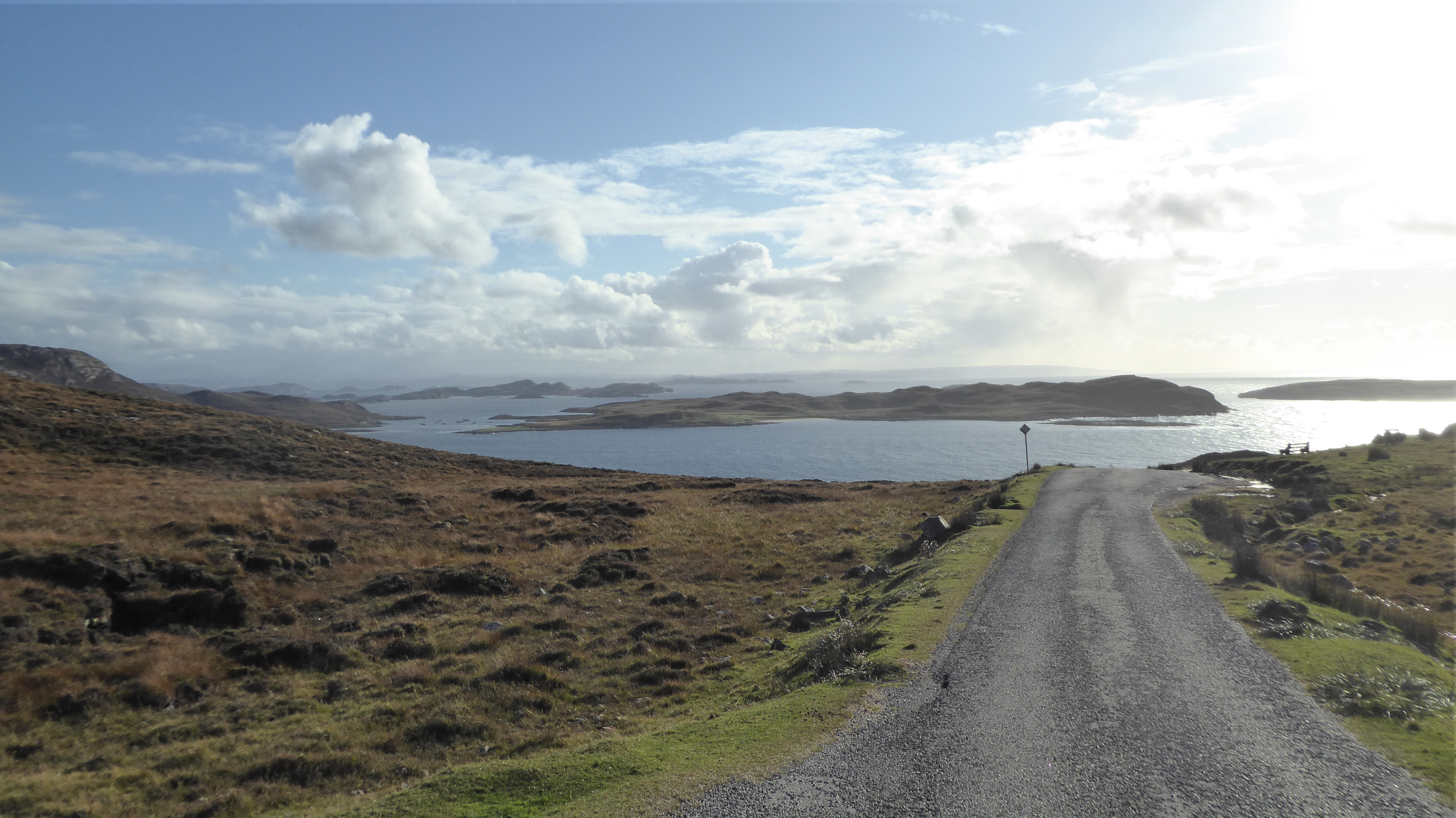
The view from the top of the ridge above Altandhu is spectacular.
The Port a Baigh campsite was probably my favourite site of all the sites that I stayed at. The views were great, the facilities were modern and clean and across the road was a bar cum restaurant called the Am Fuaran (The Well) Bar which did great locally sourced food at a reasonable price. By the time I had wandered back from my meal the wind was beginning to pick up (again). It was rattling the canvas of the pop-top, and also rocking the van about a bit, so I decided to sleep downstairs, with the roof down so that it would be a bit quieter and with the pop-top no longer acting as a sail, less rocking about.
Once you are at John O’Groats you can go west or south*. Going south would have meant retracing my path, so west it was. Going west, the road runs along the north coast of Scotland, sometimest beside the Pentland Firth, but more often a mile or so inland. It passes through several villages and after about 25 miles comes to Thurso, which is (apart from Wick) the only town of any size in this part of the world. Perhaps it was the weather, it was a bit grey and fairly chilly when I arrived there, perhaps it was the fact that the town has a bit of a run down feel to it, but it did seem as if I had arrived at the “Ends of the Earth”
First impressions aren’t always completely accurate. Wandering round the town I found that it is quite a pleasant place (if a little run down) and it has a very interesting small museum/art gallery, Caithness Horizons. Which also has, as you would probably expect a rather good café attached. You can tell that it is good as soon as you enter, because it seems to be the place where, if she had lived in Thurso, my mum and her friends would have met for coffee, cake and a blether. There is no way that mum would have put up with inferior coffee or cakes. So after a look round the museum I had my lunch there.
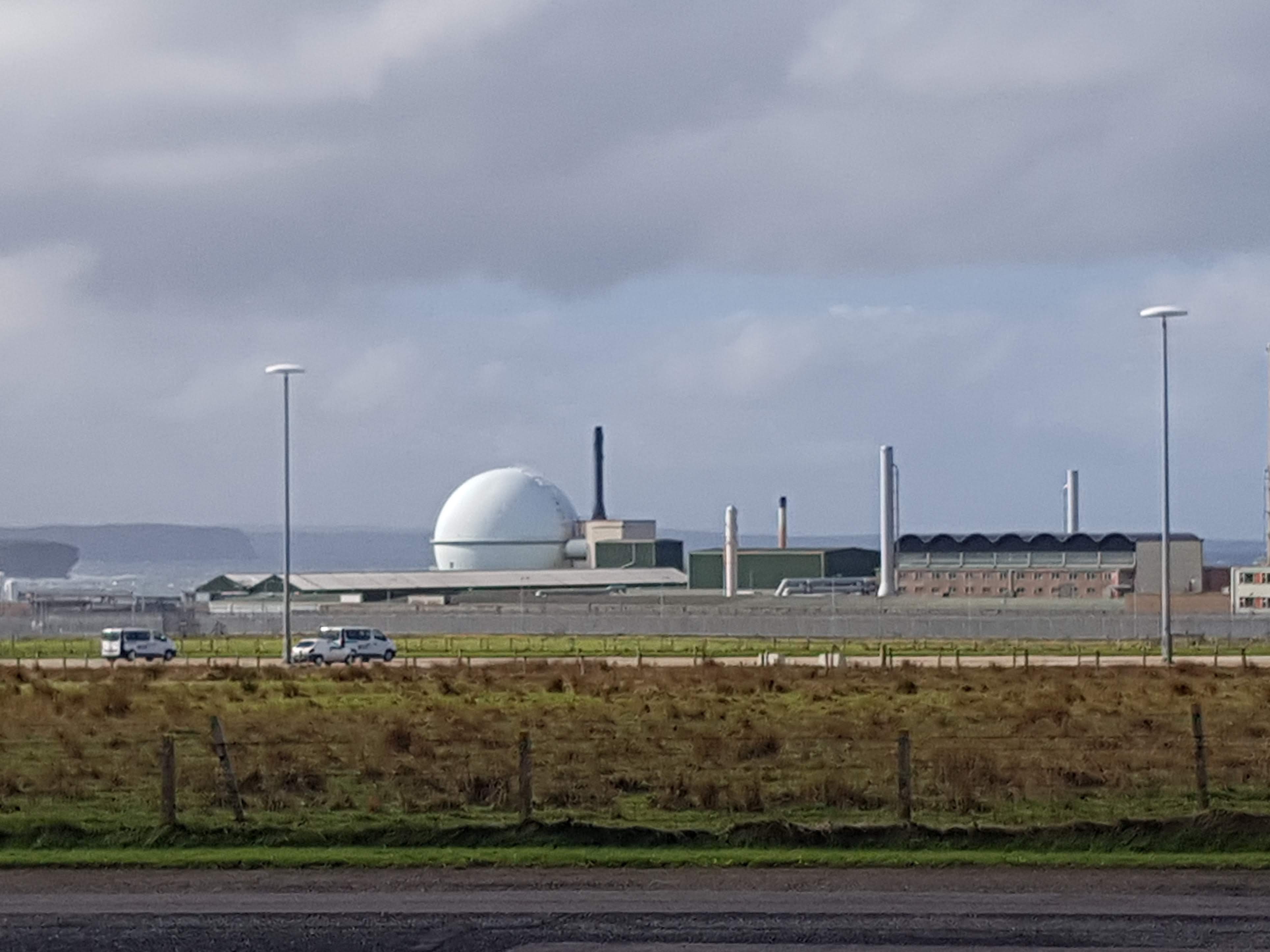
Moving on after lunch I carried on along the coast road to Dounreay . This was the site of an experimental semi-commercial nuclear reactor known as a Fast Breeder Reactor. (There is a good section in the museum on the history of Dounreay. It also has a reconstructed control room from one of the reactors.)
There was a reason that it was built in this remote part of Scotland. It wasn’t to bring jobs to a depressed area (although it did that to an extent). With most nuclear reactors if things go badly wrong you will have what is known as a meltdown, as happened at Three Mile Island, Chernobyl and Fukushima. Meltdowns are serious enough, but if things had gone seriously wrong at Dounreay a fully fledged nuclear explosion was possible. The last reactor was taken off-line in 1994 (though the Royal Navy continued to run a smaller reactor for nuclear submarine research until 2015). The plant is currently being decommissioned, a process that might be complete by about 2118, though it is thought that It will be about 300 years until the site is fully decontaminated.
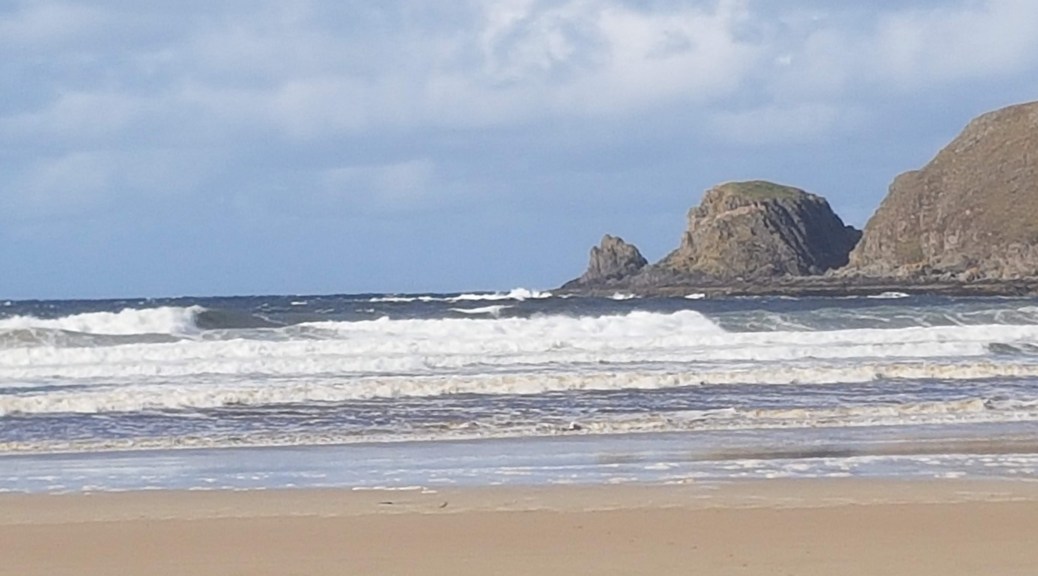
After Dounreay the roads became single track with passing places, even the roads designated as “A” roads. They continued as single track with a few exceptions for the next three days. Further along the coast I came to Farr Bay, near the village of Bettyhill. I stopped to make myself a cup of coffee, then the sun came out so I went for a walk along a pristine deserted beach.
Looking at the surf made me think that this is the real North Shore, who needs that one in Hawaii.
Continuing along the coast to Tounge I had a decision to make, whether to continue on to the North West corner, though it wouldn’t be possible to get to Cape Wrath except on foot, or to turn south. Because I had for some unaccountable reason always wanted to visit the village of Altnaharra I decided to turn south. It should be noted that villages in this part of Scotland are not like villages in the rest of the world. Houses tend to be spread out and a village is deemed to exist when the houses get a bit closer to each other.
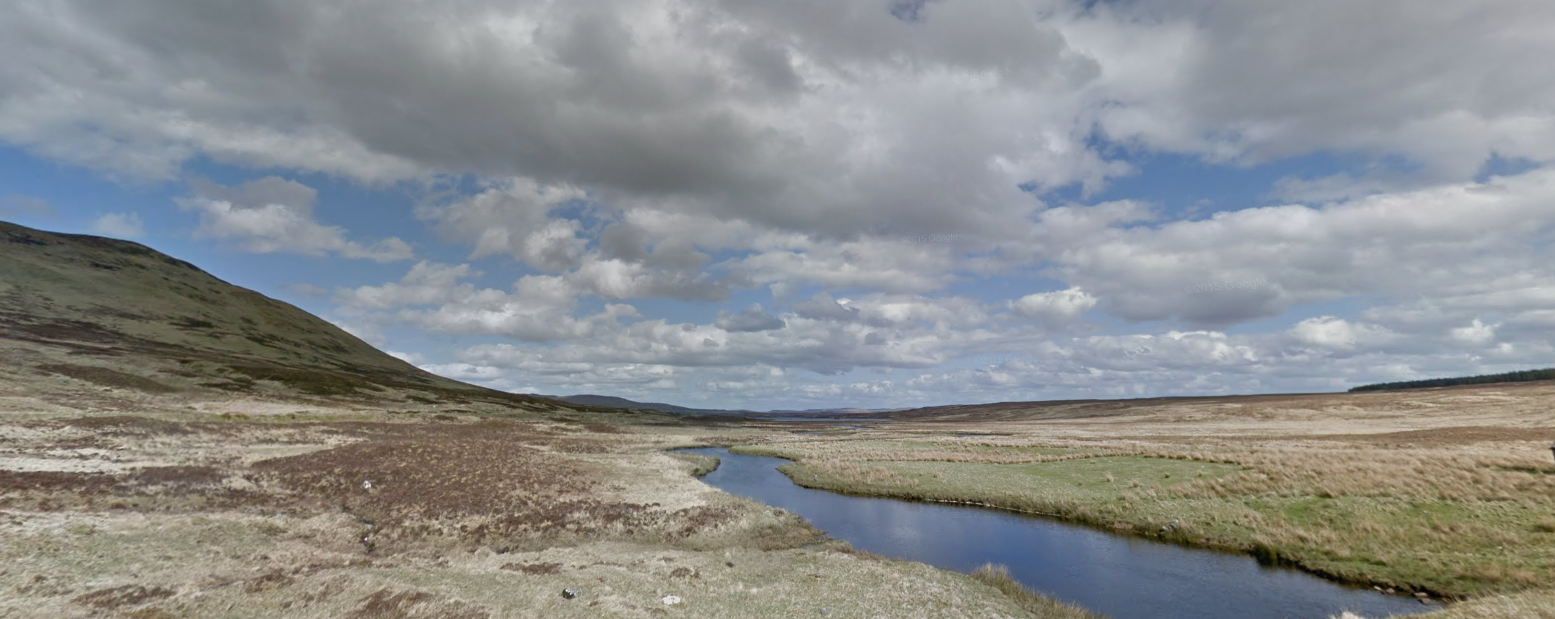
I set off south in the direction of Altnaharra and Lairg through an almost deserted, bleak but rather beautiful landscape of peat bogs, lochs, heather and hills.
Altnaharra came and went and to be honest I would have missed it if I hadn’t noticed a sign for the Altnaharra hotel. I thought about heading west again, but as I had decided that while I was in the remoter parts of the Highlands not to let the fuel tank get much lower than half full, and I was slightly below that, the best plan would be to carry on down Loch Shin to Lairg, where I was fairly sure that I would be able to find a petrol station. When I arrived there it was about 18:30 so I ended up spending the night there. There was also a hotel with a restaurant just at the entrance to the campsite, so I let someone else do the cooking and washing up tonight.
*Not strictly true, Duncansby Head is slightly further east and Dunnet Head is a bit further north, and of course, you can always get the ferry north to the Orkneys.
Storm ‘Ali’ had passed over and all was relatively quiet and peaceful. It was time to move on in search of places and adventures new. I had decided the night before that John O’Groats was the next destination. I set off with the intention of getting there by sometime in the late afternoon.
However…. Strangely enough I got distracted. By Inverness.
By the time I had driven up to Inverness it was about 11:30, my original plan was to bypass the town and carry on north over the Kessock Bridge. Then I thought Inverness would offer a greater choice of places to have lunch than some of the smaller towns and villages further north. So I might as well stop there for lunch and have a look round.
What did I have for lunch, I can’t remember, so probably a sandwich or similar. Then I went for a wander and found the River Ness, which is the river that flows out of Loch Ness to the sea. No sign of Nessie making a break for freedom though.
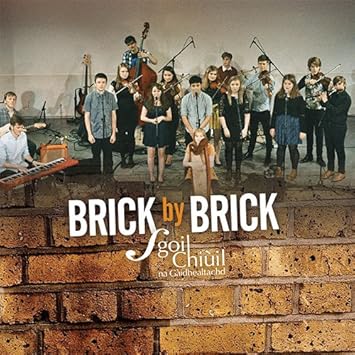
Inverness is a very attractive town (city? it has a cathedral), especially down by the river, as can be seen from the photos. As I was walking along the river I came across Inverness Cathedral. I quite like mooching around old churches (although dating from the mid c19th it’s not that old by European standards) so I decided to have a look around. What I found really made my day. There was a concert by the students of Sgoil Chiuil na Gaidhealtachd (translates as Music school for the Highlands). It is based at Plockton High School on the west coast. There were some seriously talented young traditional musicians on display. I loved the concert and bought their CD, which became the soundtrack for the rest of the trip.
If you would like to hear some of their music click on the picture of the CD above and it will take you to their Spotify page.
This left me about three or four hours behind schedule, not that it mattered, but it did mean that I wasn’t going to make John O’ Groats today.
I took the scenic route round the Beauly Firth and stopped for the night in Beauly.
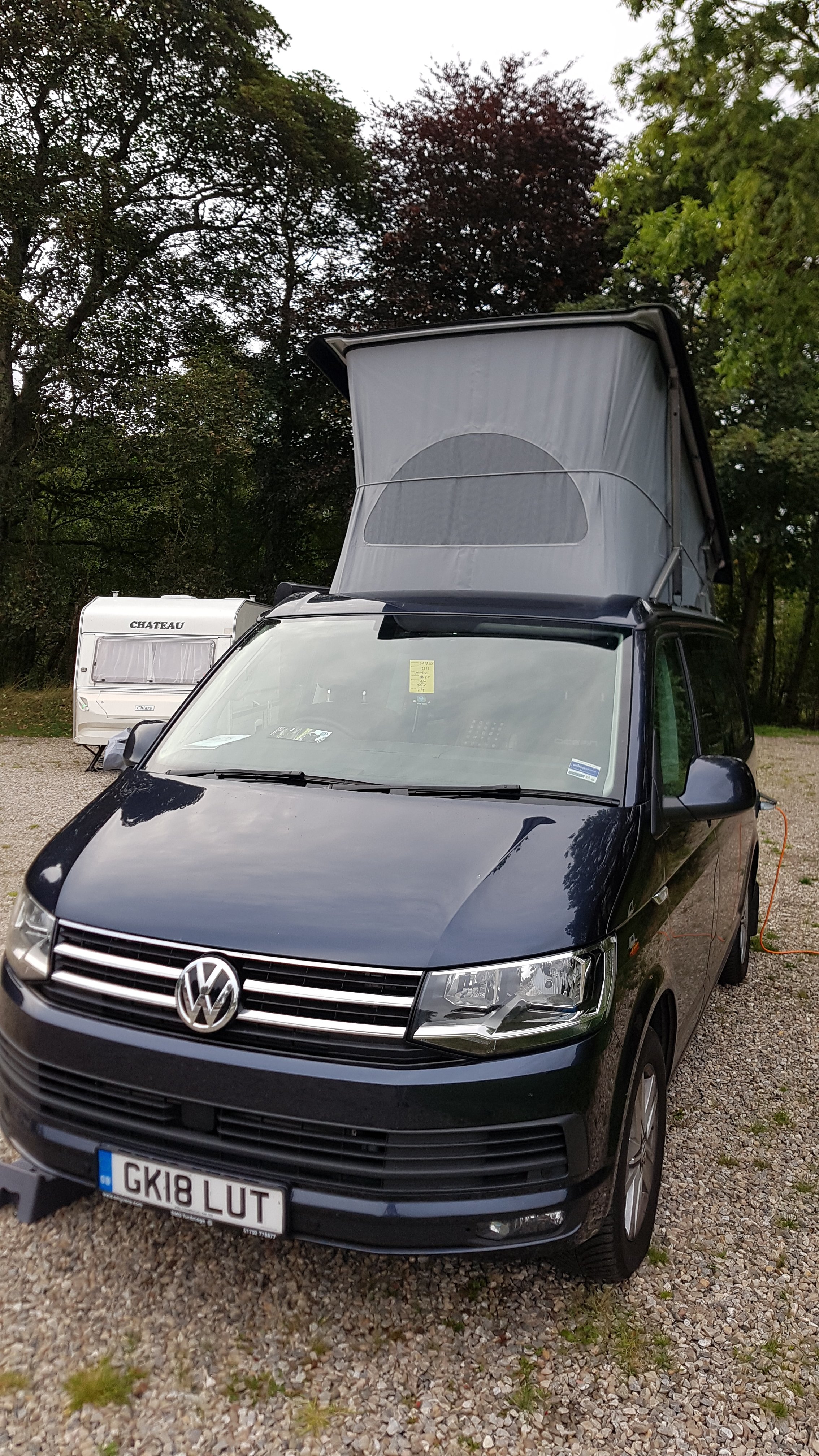
The “Starlight Express” in Beauly
The next morning I was up bright and early, I discovered that the van had a built-in alarm clock, which you had to get out of bed to switch off. Which worked better than setting an alarm on my phone, that I could cancel while still in bed. The objective today was to make John O’ Groats.
Again I decided to take the scenic route following the coast rather than just hammering straight up the A9.
I decided to take a bit of a detour to take a look at Nigg Bay.
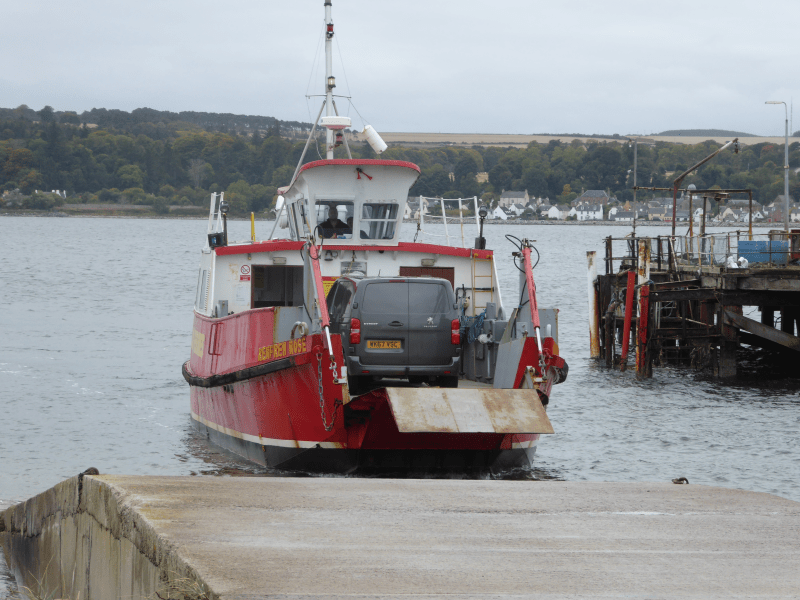
Cromarty to Nigg Ferry
If I had known that this ferry existed I would possibly have driven along to Cromarty to catch it
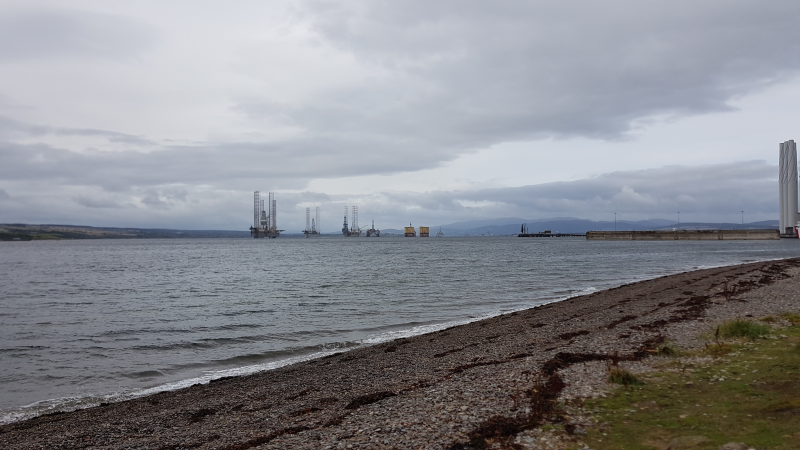
Nigg Bay
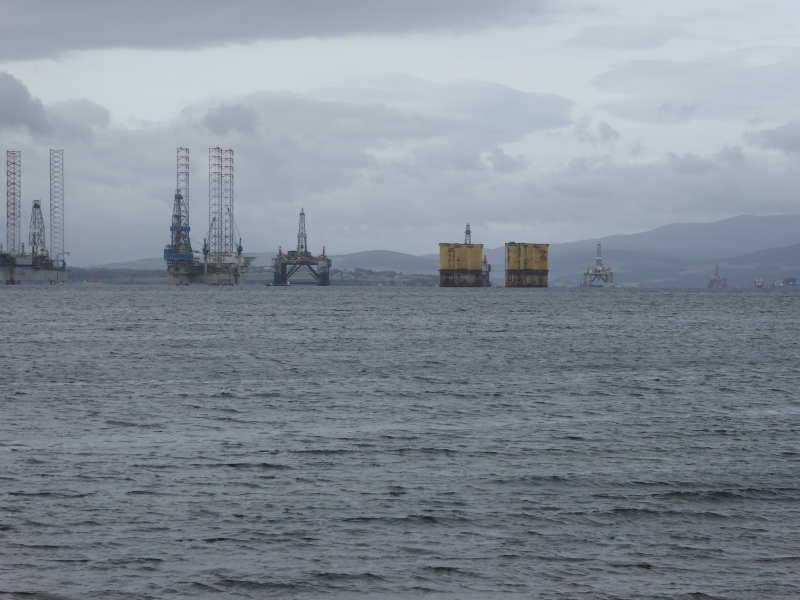
Nigg Bay used to be the main centre for building and repairing the various rigs and other sub sea structures used in the Scottish North Sea oil fields. That still comprises a fair bit of the work carried out there, but construction of offshore wind turbines is becoming increasingly important.
Nigg Bay
After my detour I found my way back to the A9 and followed it round the coast.
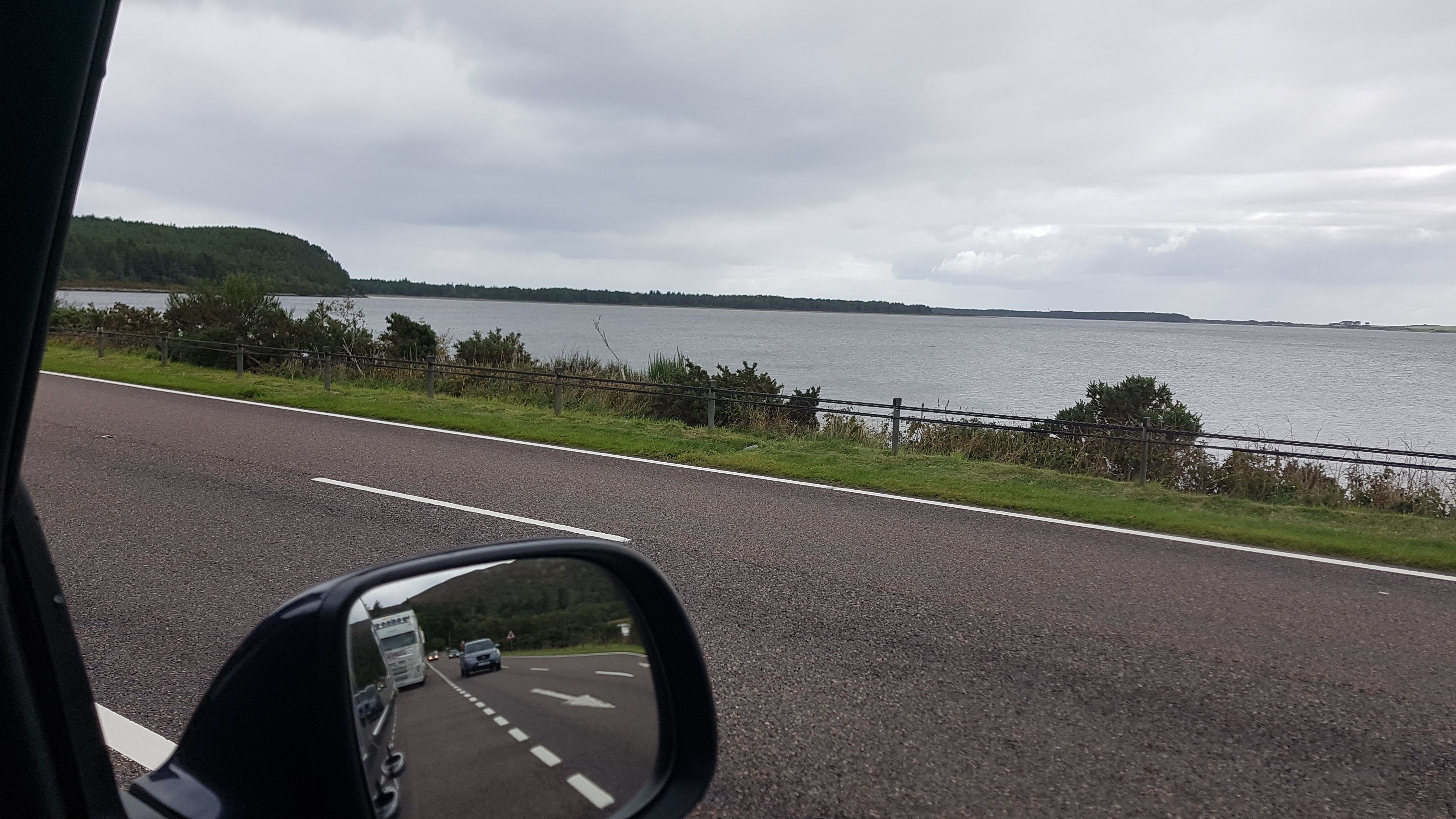
The view from the A9
It eventually led me to Golspie in time for lunch. I found a coffee shop with the marvelous name of “The Coffee Bothy”. They do a rather nice butternut squash and chilli soup as well as coffee (obviously) and sandwiches. A big bowl of soup and a sandwich was, if I remember correctly, £4.50.
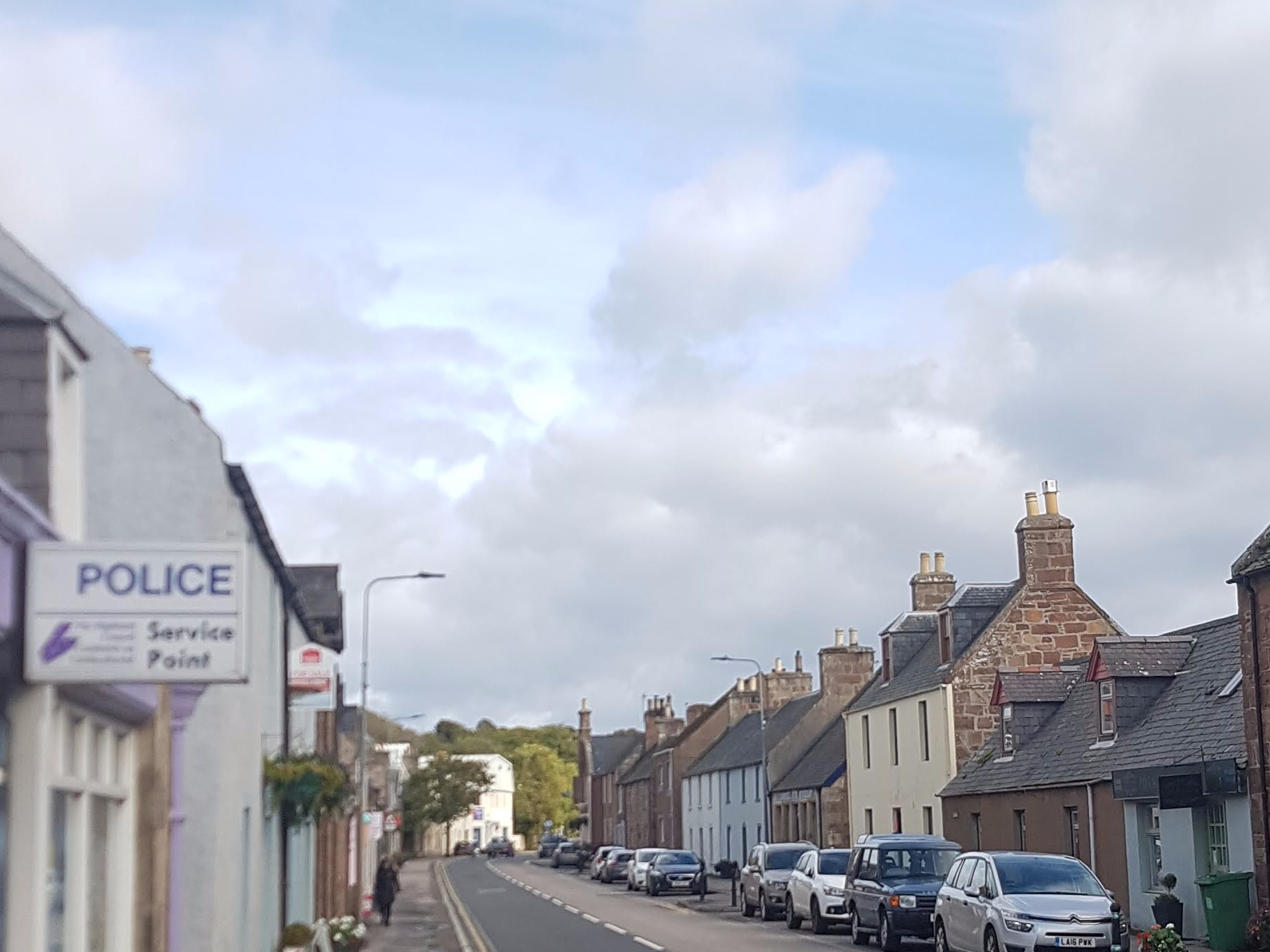
Golspie High Street
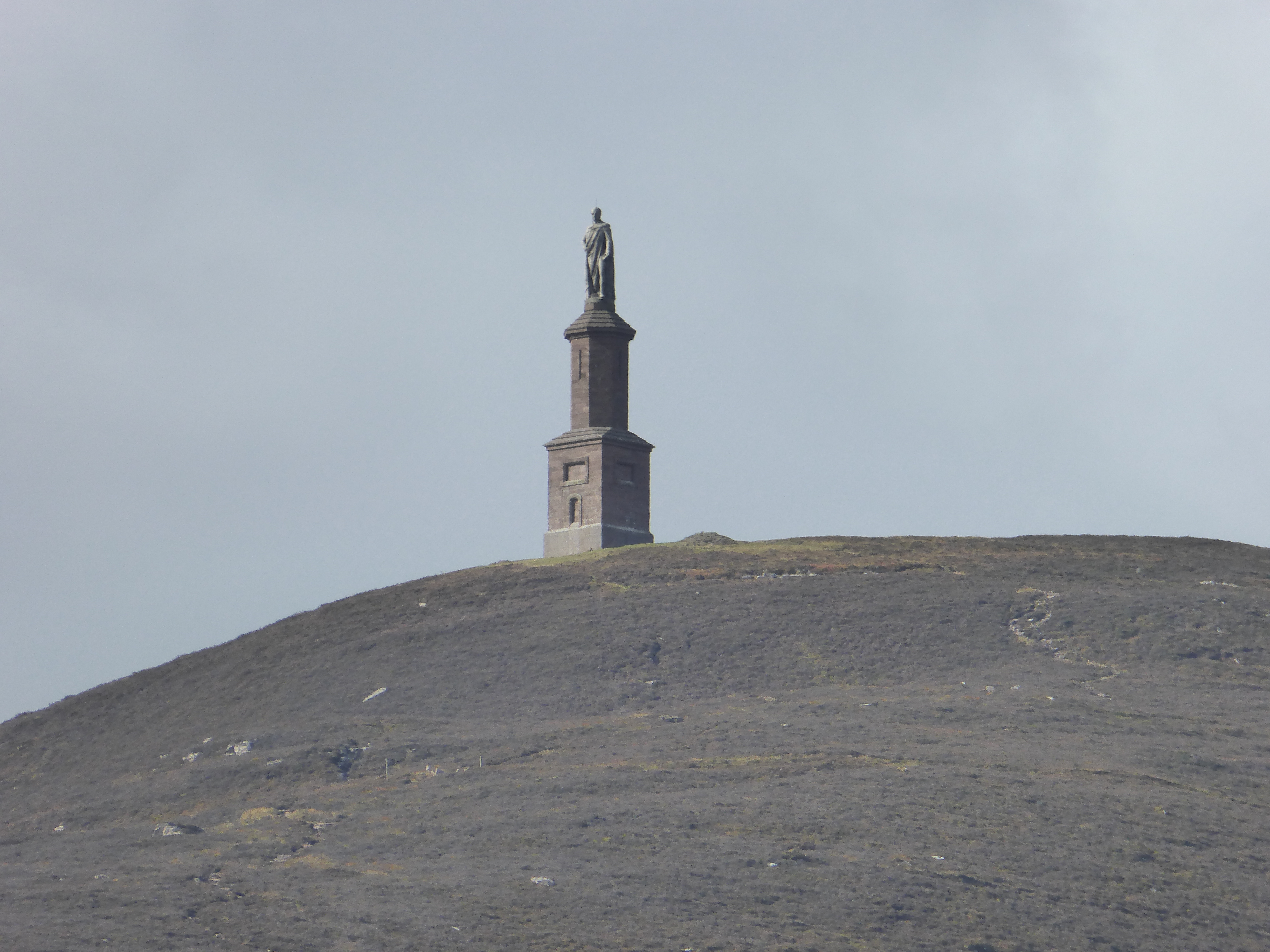
Standing above Golspie on the summit of Ben Bhraggie is a gigantic statue, known locally as “The Mannie”. It is of George Leveson-Gower, Marquis of Stafford and First Duke of Sutherland. He was a controversial figure, responsible for “The Clearances”. Some could interpret his actions as a those of a social reformer, others see him as a monster. The link above gives some information. The land was cleared of the subsistence farmers, who had lived there for generations to make way for massive sheep farms, stocked with Cheviot sheep, largely shepherded by Border shepherds. My 3x great-grandfather Francis Renwick appears to have been one of the shepherds who went North.
The “Mannie”
After lunch, a walk round Golspie and some food shopping, it was onwards and upwards to John O’ Groats. I thought about stopping at Dunrobin Castle – the ancestral seat of the Dukes of Sutherland – which is a few miles north of Golspie, but decided against it.
As you carry on northwards towards Wick and John O’ Groats the landscape becomes increasingly bleak. It is fairly flat with peat bogs and almost no trees. But it is also comparatively high up. All along the coast there are high cliffs. Pressing on and avoiding the temptation to stop in Wick (not that much of a temptation) I arrived at John O’ Groats about four in the afternoon.
Trying to bet a selfie in front of the JoG sign without being blown away
Trying to get a half decent selfie in front of the John O’ Groats sign proved slightly problematic. Trying to avoid being blown away whilst taking it was also a problem.
I was a bit upset by the state of the sign post. Applying a sticker to it (a bit like a dog peeing on a lamp-post) to mark the fact that you have been there appears to have become a thing. All I have to say to any one who reads this blog is don’t do it.
I decided to stay the night at John O Groats. There is a decent campsite. Although I couldn’t find anywhere for an evening meal. It wasn’t really a problem. I cooked up some pasta and opened a bottle of wine. Problem solved.
Now that I had reached the ends of the Earth, all I had to do was find my way back.
Well the A9 is an awful lot easier and faster than I remember from the last time I drove up to Aviemore. That was about forty years ago. Storm “Ali” was the reason for the change of plan. I was originally heading for Oban on the West Coast, but the forecast was dire. 60mph winds and torrential rain. Aviemore however was supposed to miss the worst of the weather.
Because of much faffing around – which I won’t go into – I ended up spending the morning in Dunbar, which I hadn’t planned to do. However Dunbar is a pleasant little town to visit. The harbour with the ruins of Dunbar Castle is attractive. The John Muir Country Park and the John Muir Way are also worth a look. (Though the full John Muir Way starts in Helensburgh, on the West Coast.)
Dunbar Harbour
Sunrise at Cove
It was lunch time before I made the decision to head for Aviemore rather than Oban.I suppose it is the beauty of your transport also being your bed and breakfast, it doesn’t matter where you decide to go, you will always have somewhere to sleep and, provided you have remembered to stock the fridge, something to eat.
I arrived at Rothiemurchus Camping and Caravan site about six p.m. It took me about ten minutes to set the van up for the night. Then settled myself down with a beer while I decided what to cook for supper. While I was eating my supper I checked the weather and found that Aviemore was about the only place in the Highlands that was not going to have 60mph winds the next day, so I decided to stay an extra night.
I started what was to become my daily morning ritual today. If I was staying at a campsite with showers, get up, stick today’s clothes, my wash bag and a towel into a carrier bag, stick my hoodie on over my pyjamas ( or my rain jacket if it’s raining), walk to the shower block, have a shower and sometimes a shave, change into today’s clothes and come back to the van to cook breakfast. If you are friends with me on Facebook you will have seen my daily breakfast updates.
After breakfast I had to decide what to do with my day. Using the magic of the internet I tried Google and typed “Things to do in Aviemore” It came back with a few suggestions that would have been great if I was ten years old, a few that might have been good if the forecast on the top of Cairngorm hadn’t been for wind gusts up to 100mph and the Strathspey Railway.
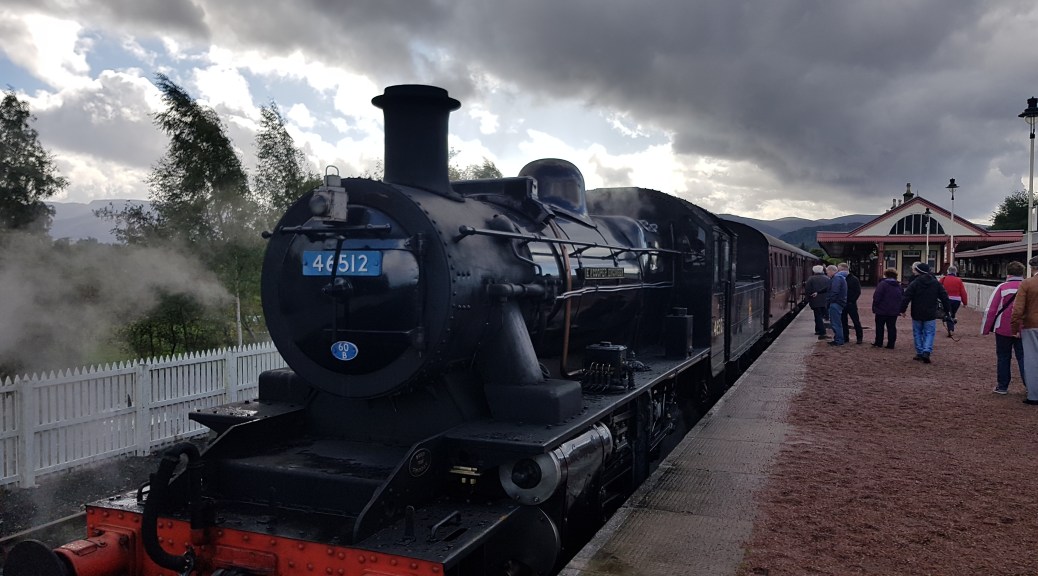
I like steam trains, in fact I like steam. It might be partially due to the fact that inspecting steam boilers has kept a roof over my head for the last thirty years. So I settled on a trip on the steam train. I caught the 12:30 train from Aviemore, which also came with the option of having a light lunch (soup, sandwiches and a pot of tea or coffee) which cost £24 return (including the train fare). The standard train fare is £15 return, so if you are feeling a bit broke you could always take your own flask and sandwiches, like a true train spotter. The journey through the pleasant Strathspey countryside takes about an hour and three-quarters.
Walking back to the Starlight Express the heavens opened and although it was only about a couple of hundred metres at the most and even though I was wearing my new Goretex rain jacket (bought specially for the trip), I got soaked from the waist down. Again the beauty of a camper van revealed itself. All I had to do was pull the blinds across find some dry clothes and change. Brilliant. I did go and buy some waterproof over trousers as a future precaution. I never needed them.
After I had dried off and done my shopping, I decided to take a trip to Grantown-on-Spey, the centre of the Speyside Whisky Trail and salmon fishing. I didn’t do either but I did discover a lovely walk from the town down to the river.
After my walk I drove back to the campsite, made myself dinner and settled down to work out where to go the next day. I had bought my self a map of the highlands because I discovered SatNav’s are very good for guiding you to a destination, but absolutely useless at helping you decide where you might like to go.
It was decided, tomorrow it was onwards and upwards to John O’ Groats.
An aside: My spell checker suggests Satan’s as a replacement for SatNav’s.
I have liked the idea of a Campervan for quite a while. Grace and I talked about getting one after I retired (though I have a feeling that Grace would probably have gone for a Motorhome the size of a small flat). Unfortunately we never got round to it. The idea never left me though. The only problem being that I wasn’t sure would like the actuality of a Campervan as much as I liked the idea. With that in mind I decided to hire a van for a fortnight to see how I got on with it.
I got in touch with a firm called Campervatastic who specialise in renting VW California camper vans. You can find cheaper (usually a mattress and a single burner gas stove in the back of a ten year old builders van) , but they have a good reputation, all their vans are this years models and top of the range. Being based in Forest Hill, they are reasonably local for me. I had everything I needed (I hoped) ready the night before. I was up early on Monday morning to get the train to Forest Hill to pick up the van. The depot is a pleasant 10 minute walk from the station. Pleasant, I’m not sure any walk along the South Circular can be described as pleasant. It is ten minutes though. The handover took about fifty minutes, because there is quite a bit that needs to be explained about how to use the van. As the guy said taking a little bit longer at the start saves a lot of panicked phone calls later.
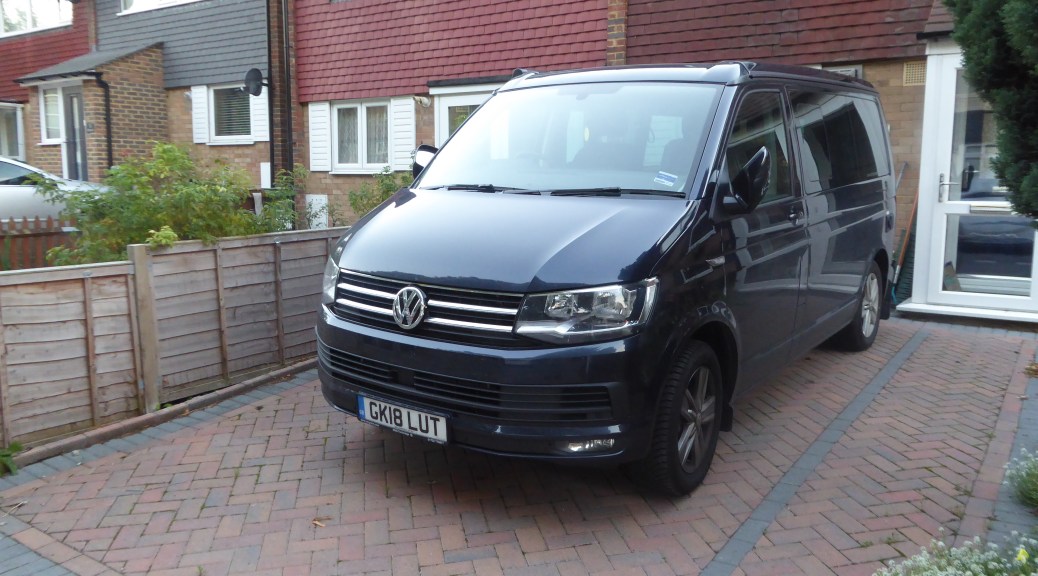
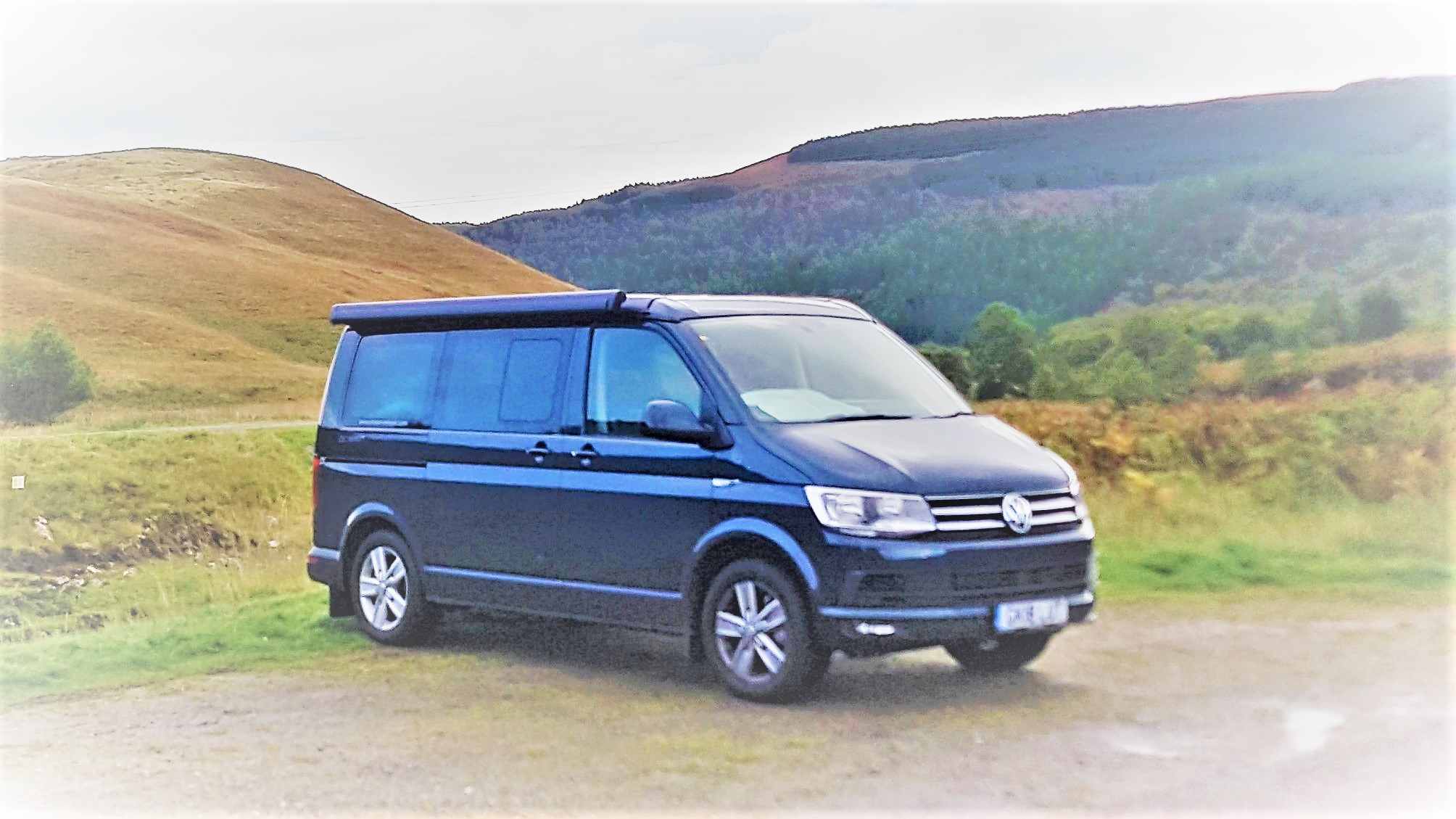
Because camper vans are supposed to have names, mine has been dubbed “The Starlight Express”, because its colour is called Starlight Blue.
I travelled back home using the SatNav to make sure that I was happy with how it worked (I was), packed the van and set off, via Sutton, in the hope that my Brompton had arrived. Unfortunately it hadn’t, so I was going to have to do without a bike. The plan was to make it up to my sisters in time for supper. The journey up was surprisingly hassle free. The van proved very easy to drive. The automatic gearbox and the adaptive cruise control meant that all I really had to do, especially on the motorway was to steer. It was a lot more comfortable and relaxing to drive up than my Little Lilac Car. It’s not quite as economical though.
Supper was great as it always is at Betty’s. My brother Jim and his wife came down and joined us, so it was a bit of a family reunion. Although Betty offered me a bed, but I decided that I was going to sleep in the van. It was a bit windy and I was parked in a lay-by so I decided against putting the roof up and obviously had to sleep down stairs. After I got used to the van rocking around in the wind, I slept well.
Next morning wasn’t quite so successful. I had remembered to put beer and wine in the fridge, but forgot the milk. I had made a batch of granola especially for the trip, but without milk ….. Likewise my coffee had to be black. Breakfast consisted of a cup of black coffee. Betty dropped round before she set off for work and gave me some lentil soup for lunch, which was great.
I needed fuel so I stopped off at ASDA in Dunbar to get some. I also got some milk and some Scotch pies. Right next door is a McDonalds so I had a Sausage McMuffin for breakfast.
My next problem was where to go. The wind last night was caused by the tail end of Hurricane Helene, but coming up behind it was Storm Ali, promising 60mph winds and heavy rain in Oban where I had planned to be. The beauty of a Campervan is that you don’t have to stick to a schedule. A quick internet search showed that the region around Aviemore was forecast to miss the worst of it. So I set off for Aviemore.
Day 5 The Pinzgauer Lokalbahn Railway and Krimml Falls
Today would have been Grace’s birthday. We often went away for her birthday, especially during the years that she was teaching, because it usually coincided with half term. So I was feeling a bit more contemplative than usual.
Anyhow the Pinzgauer Lokalbahn has connected the small communities of the Upper Salzach valley to Zell am See for over a hundred years. It is a narrow gauge railway and during the summer often runs steam trains pulling the original carriages from Zell to Krimml. Unfortunately during the time I was there the steam trains were out of service because of maintenance and track repair issues. So we had to make do with the modern diesel train instead. The views were just as attractive, the seats were probably more comfortable, and it was quicker. It’s not the same though. The smell is different. To an old marine engineer, there is nothing quite like the perfume that is created when oil and steam come together. Modern diesel locomotives do not make as good photographs either. Hence the fact that there are none.
The train took us up the valley to the Krimml Falls which the website describes as the fifth highest waterfall in the world. Spoiler alert – they are not even the fifth highest in Europe, and depending on how you measure the height of a waterfall, they may not even be the fifth highest in Austria. The websites exaggeration about their height does not detract from the fact that they are very spectacular.
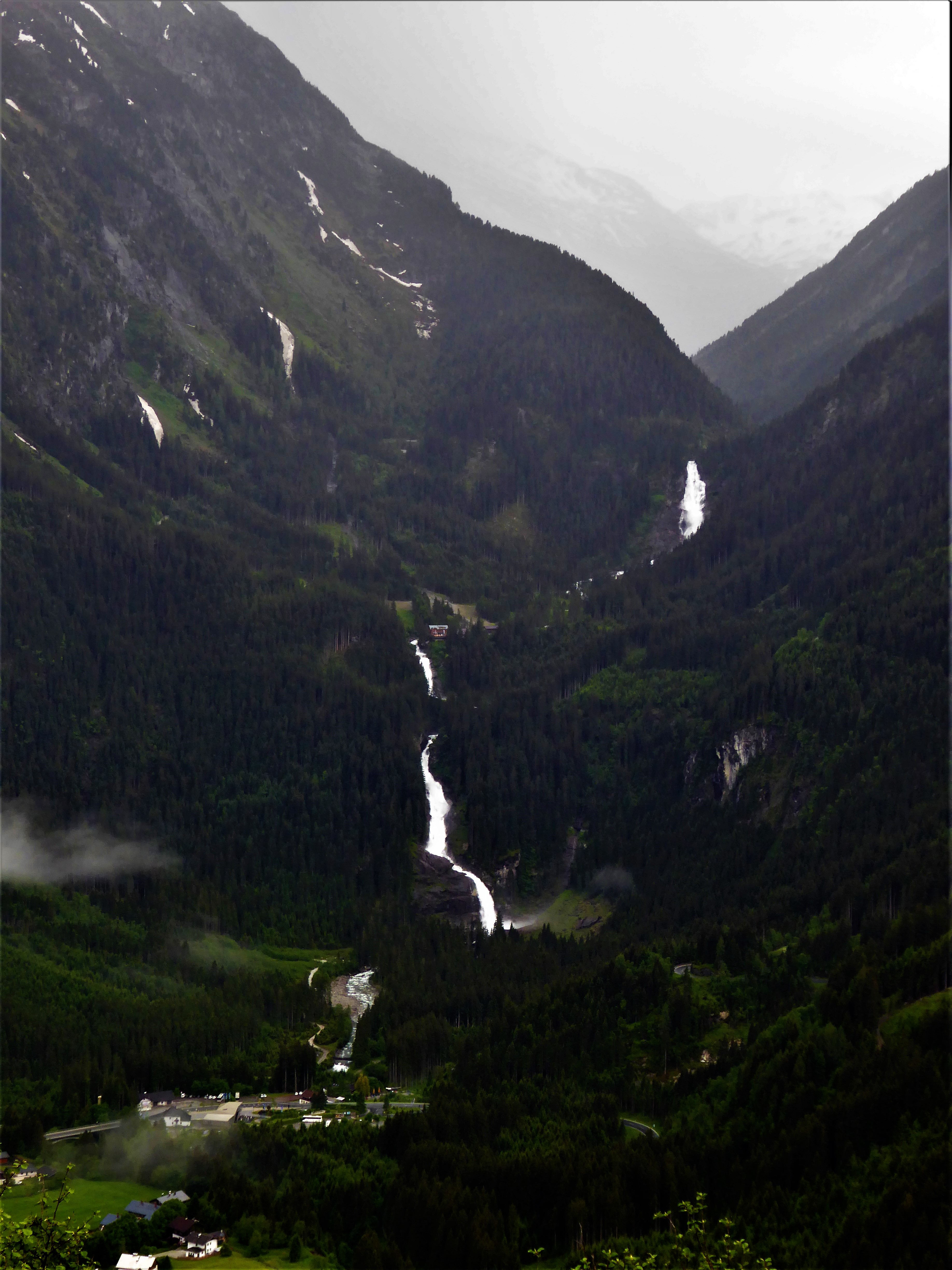
It is about a three kilometres from the railway terminus to the foot of the falls so GRJ arranged for a coach to take us there. On the way there it took us up to a view-point on the opposite side of the valley where we could see the falls from top to bottom.
Having seen the full extent of the falls the next question was did I want to climb up them? What would Grace have done? Well, one of Grace’s favourite tricks was to walk for miles in one direction, until she was exhausted and then wonder how she was going to get back. So obviously she would have aimed for the top. Our guide told us that the most spectacular parts of the falls were the lower two sections, so unless we were feeling particularly masochistic, in his opinion there wasn’t a lot of point in going right to the top. The path follows the falls up the mountain, so is obviously steep. I took his advice. Besides there was a restaurant half way up which did a pretty decent lunch. You can make it out in the photo below.
The walk up to the restaurant was about 2.5 km, with a 250m height gain, and it took me just over an hour, but that included stops to take photographs (and catch my breath). Lunch was a bowl of potato soup flavoured with caraway seeds and a hunk of rye-bread. It was good and worth the effort to get up the hill. Coming back down was quicker, but because the path was so steep, not all that much easier. A different kind of effort was needed.
At the bottom of the falls there is a sort of museum/exhibition called WasserWunderWelt which apparently gives a bit of history of the falls but also explores how water is used. It is also apparently quite good. I say apparently, because I didn’t get to see it. Entry to the falls and the museum are on the same ticket, and somewhere between the entry gate to the falls and coming back down the mountain I lost mine. So I had a coffee and apfelstrudel instead.
We didn’t take the train back, the coach which took us from the station to the falls took us back to Zell am See to dry off. A combination of the spray from the waterfall and the only rain I encountered all holiday meant that I ended up decidedly damp.
Day 6 Schmittenhöhebahn cable car and a walk down the mountain.
Today was another free day when we didn’t have any excursions arranged for us. I thought about getting the train to Vienna until I discovered that getting there and back would have taken almost all day. I would have had about an hour maximum for sightseeing, so decided that it probably wasn’t worth it.
When Grace and I were last in Zell am See we spent quite a lot of time walking around the mountains above the town. We would catch the cable car up to the top and spend most of the day wandering around the paths at the top of the mountain (with Grace occasionally bursting into a chorus of “The Hills are Alive with the Sound of Music”)finding a mountain restaurant for lunch, then either walking all the way back down (not recommended, it does nasty things to your knees) or getting another cable car down.
That is what I decided to do. There was only one problem. In the intervening 25 years I have developed an aversion to dangling from a length of wire anything up to 500 metres above the ground.
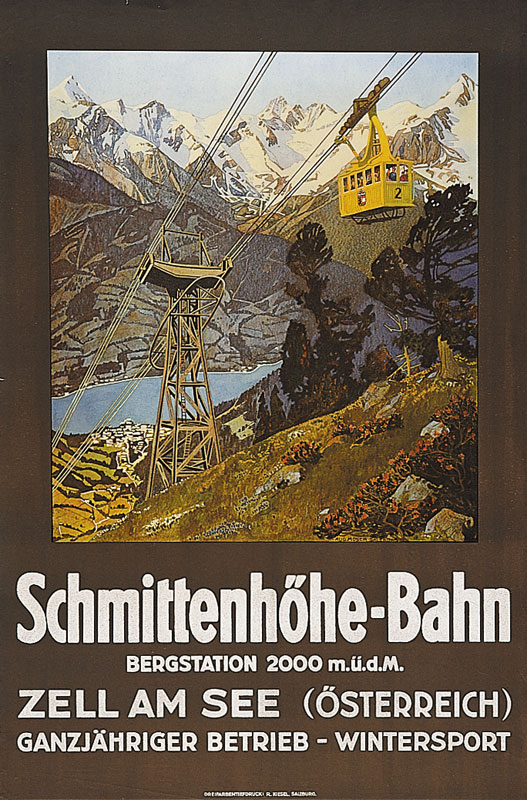
The way it used to be
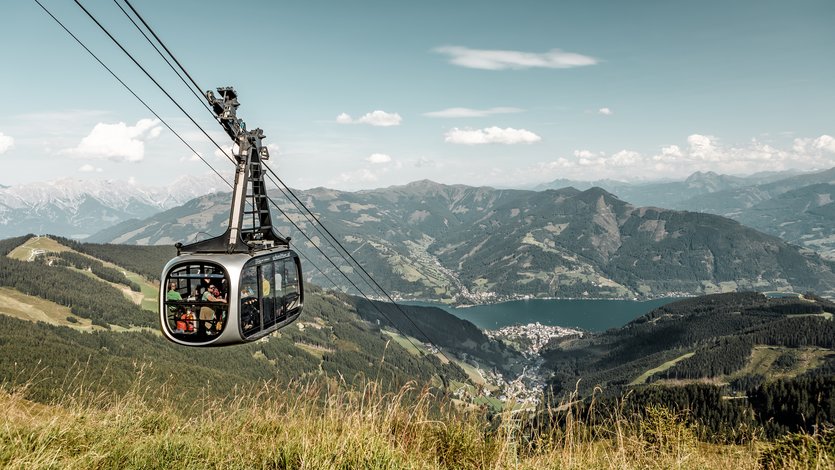
I decided that I was going to do it anyhow. The Schmittenhöhe-Bahn follows the contours of the mountain and so is not too high above the ground, generally only 10 to 20 metres. Unlike some, especially in Switzerland, which can be a few hundred metres. I am also better going up rather than down, because it doesn’t feel as if you are quite as high above the earth when you are going up. I also feel more comfortable enclosed in the cabin of a cable car than exposed to the elements on a chair lift. Having weighed all these factors, I gritted my teeth, paid my € 28.50 and got into the, rather sleek, Porsche designed cabin, planning to keep my eyes closed ’till we got to the top if necessary.
The way it is now
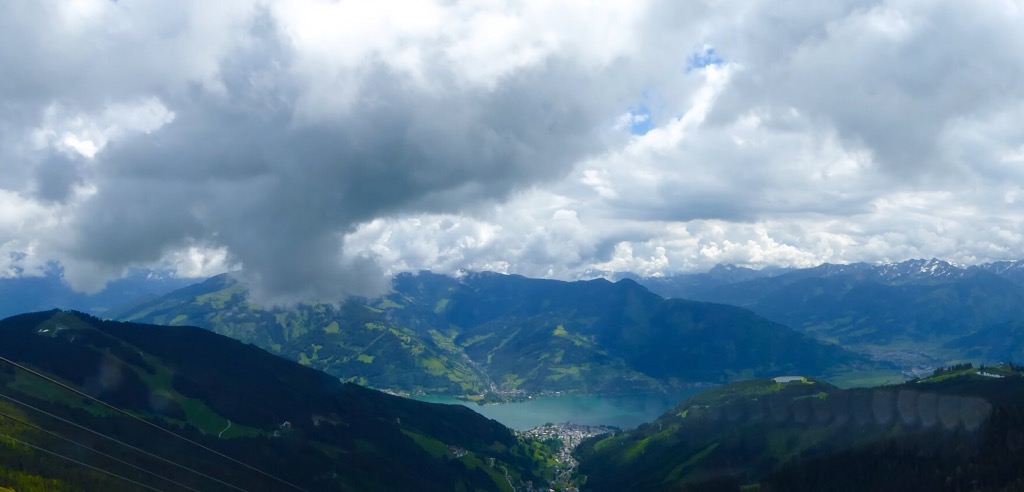
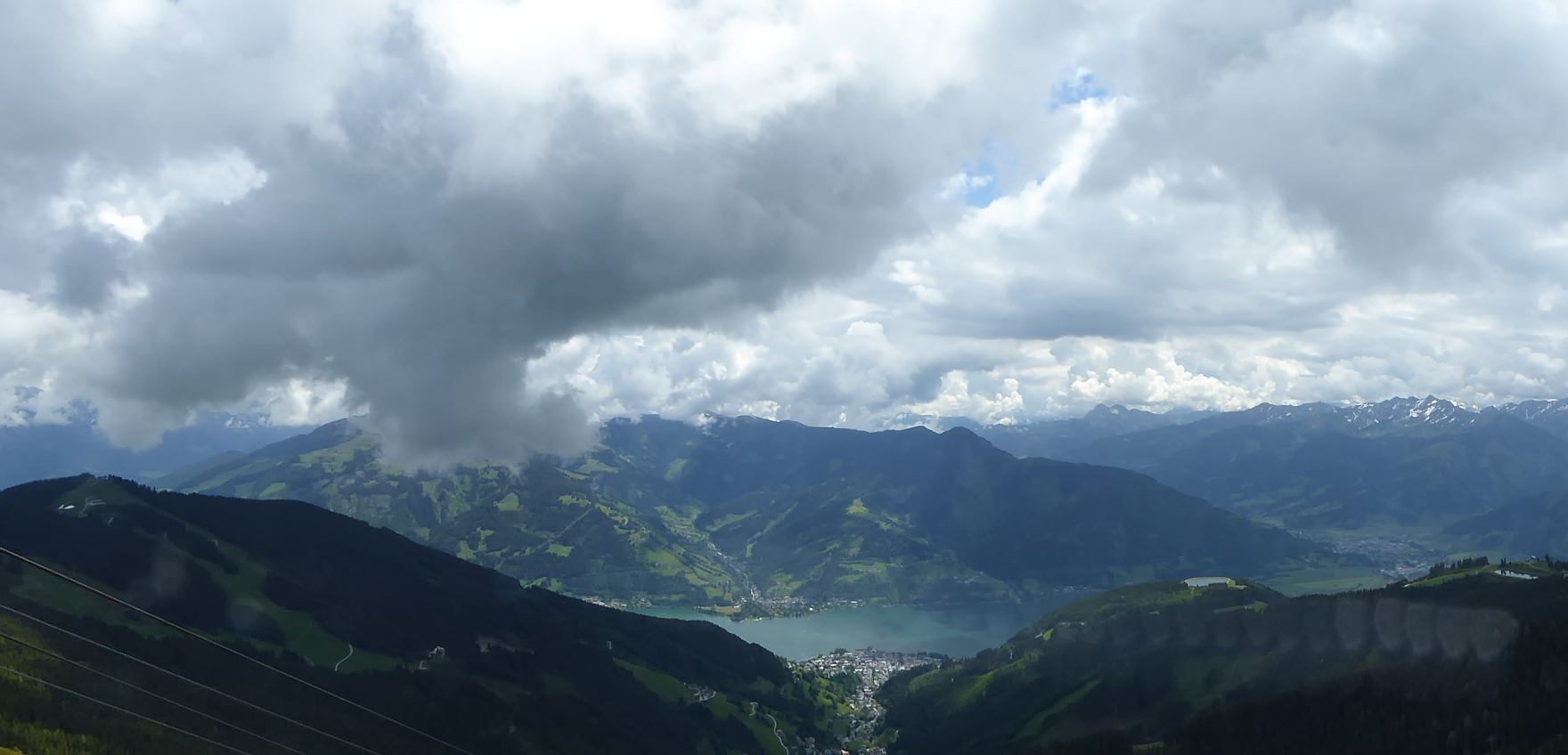
It wasn’t too bad. It took about ten minutes, maybe a bit less to get from the base station in Zell am See to the top of the Schmittenhöhe. It was about eleven, so time for a coffee and a cake, 2000m up. The view from the terrace was quite spectacular, looking back down to the town, the lake and the mountains beyond.
Suitably refreshed, it was time for a walk. There is another cable car terminus called the Sonnkogel about three or four km away along the ridge. It is quite a gentle walk, mainly down hill, but without any really steep up or down hill sections. The plan was to get there about one o’clock and have some lunch.
View from the ridge
View from the ridge
View from the ridge
View from the ridge
View from the ridge
View from the ridge
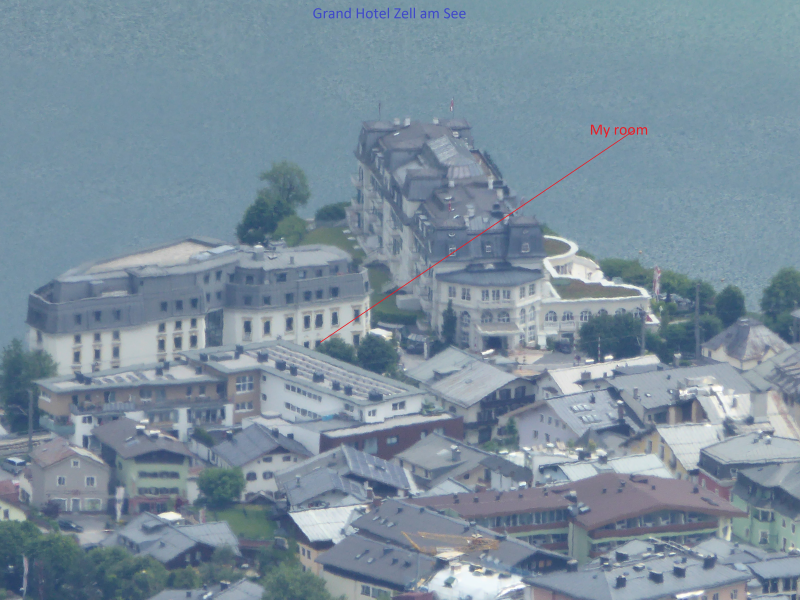
I could see the hotel so I decided to try out the zoom on my camera to see how well it worked.
I had a pleasant stroll along the ridge passing a couple of art works/installations on the way.
Mountain Artwork
Mountain Artwork
Lunch was fine, if not particularly memorable (I can’t remember what I had, but it was edible). After lunch I found that I had a problem. The first stage of the journey back down to the lake wasn’t in a nice enclosed cable car cabin. It was an open chairlift down a very steep slope to the intermediate station where there was an enclosed cabin cable car.
I looked at it a couple of times and thought about it for the best part of quarter of an hour before deciding that I probably wasn’t going to handle it. So I made the decision to walk down the path to the intermediate station. I was just over three kilometres with an elevation drop of 420m, an average gradient of 12% on the zig-zag path. So I guess that the chair lift, which takes the straight line might have been twice that. Walking down hill when it is very steep, is in my opinion, as hard or even harder than walking uphill. I puts a strain on your knees and calf muscles, in addition your toes tend to get crammed into the toe space of your boot, which can be painful. In addition, because I was now off the ridge and walking down through the wooded part of the mountain, the views while still attractive, were not as spectacular as the views from the top. I was glad when I arrived at the bottom.
The cable car down was fine, I kept looking back up the mountain so that it didn’t feel as far above the ground. In retrospect I would probably have been better doing the trip in reverse. Going up on the chair lift I would probably have been fine. I’ll remember that for when I go back in twenty-five years time.
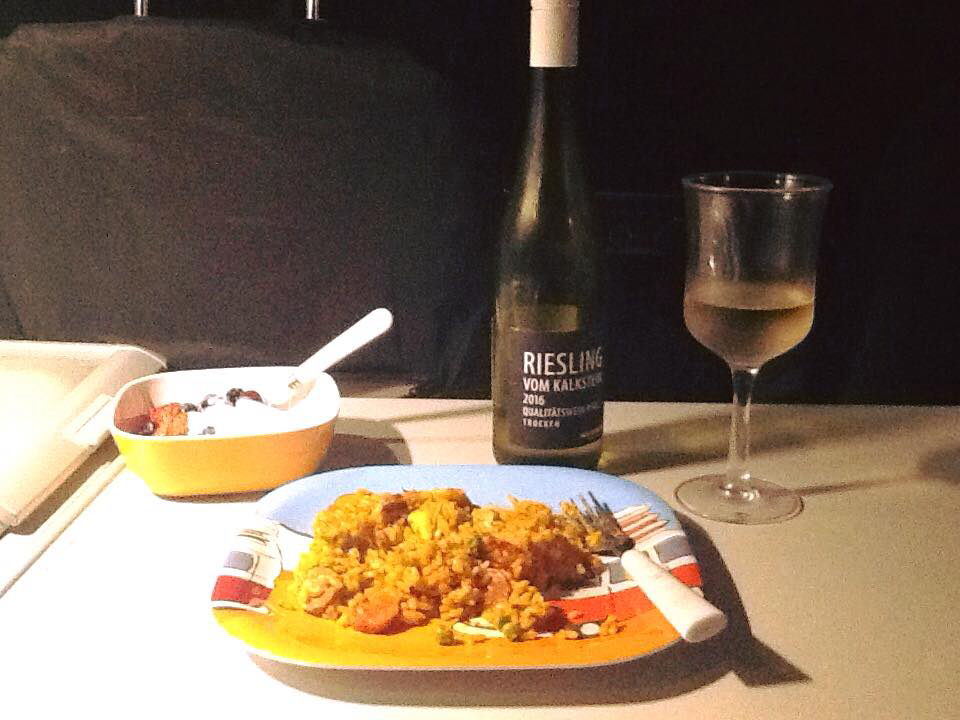
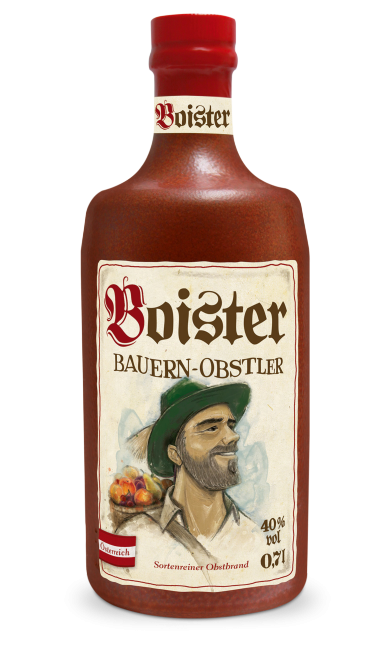
After I got back down the mountain I had an important task to perform. One of my friends and I have a competition. The idea is to bring back the most undrinkable local hooch that we can find as a “present” for each other. He is currently well in the lead after a holiday to Latvia when he brought me back a bottle of Riga Black Balsam.
I have brought him back this. I’m don’t think that it will beat the Black Balsam, but it might get me back into the competition.
Again, because it was a free day, we were not booked into the hotel restaurant for dinner. Today’s search for dinner was more successful than the last time. I went out a bit earlier, which helped. Opposite the hotel, across the railway tracks is a restaurant/café/bar called Villa Crazy Daisy. I decided to go there for a pre-dinner drink, while I was drinking my beer I had a look at their menu and thought that it looked fine. So I decided that I would eat there. I had not had a Wienerschnitzel so far and thought that I couldn’t leave Austria without having one. I went full Austrian and had a green salad starter and apfelstrudel for pudding accompanied by a glass of Grüner Veltliner (also currently very trendy in London). All good and reasonably priced. The bill, including drinks, came to about €45.
Note: click on any of the photos if you want to see them full size.
My third day started with a bit of a lie in. I had an early start (up by six) on both the previous days, so I set my alarm for eight. As it turned out the trains, which ran just below my window, which had to be open because the room was not air-conditioned, did the job instead, waking me about six thirty. I did doze off in between trains though. Breakfast was the normal Euro-buffet, although if you wanted there were cooked to order omelets. It was fine but nothing really to blog about.
After breakfast I had all day to myself. GRJ did not have any excursions organised. I decided to reacquaint my self with Zell and the See (lake). In many ways not that much had changed, the streets were still the same. There seemed to be more tourist shops and restaurants, and rather fewer “proper” shops than I remembered but it all looked quite similar to twenty-five or so years ago.
That last time that I was here Grace and I walked round the lake, so I decided to do that again. The idea was to get about half way round and find a café for lunch.
It is about 15km (9 miles) according to my GPS watch, but that included a few detours, so it is probably nearer to 13km if you stick to the official Zell am See tourist board route. Very peaceful and serene. There did seem to be a bit more development on the far side of the lake than I remembered, but it didn’t detract from the beauty of the place. It took me about three hours (four if you include my lunch stop) to walk round.
I had a wander round the town after I had finished my walk around the lake, stopped at a konditorei for a coffee and cake, I was in Austria, you have to, it’s the law. I also found a shop to buy some tooth paste, because the tiny complimentary tube from the Maritim wasn’t going to last me the week. Then wandered back to the hotel for a shower and a change before dinner.
Lakeside Sculpture
Lakeside Sculpture
Lakeside Sculpture
Lakeside Sculpture
Dinner was a bit of a disappointment. We were not booked into the dining room that evening, so I wandered up into town to find something to eat. I forgot that Austrians are not Spanish (even though they share a common imperial past) and the only place I could find still serving food at nine thirty in the evening was a pizza restaurant. It served the worst pizza that I can remember eating. L’Oro di Napoli sets a pretty high bar I know, but this was worse than Pizza Hut.
However on my way back to the hotel I had a pleasant surprise. Every Tuesday, Thursday and Sunday the town puts on the Zeller Seezauber (Magic Lake Show) which blends water, light, lasers and music into a spectacular twenty-minute show.
Day 4 Berchtesgaden National Park and the Eagles Nest
This was the one day of the holiday that I had slight misgivings about before the start. I wasn’t all that sure that I wanted to visit somewhere that had been built as a present for Adolph Hitler’s fiftieth birthday. On the coach journey there our guide gave us a brief history of the place, and how it came to be built. Originally there appears to have been a mountain hut there known as “die Kehlsteinhaus” (which is what the building is known as officially) because it sits on top of the Kehlstein mountain. Where the name “Eagles Nest” came from no one is quite sure. I was never called that in German. Anyway I was pleased to find that one of the conditions that the Americans insisted on when they were persuaded not to demolish it, was that there should be no references or obvious reminders as to it’s past. If you are interested in reading more about the place and its history, click here .
The road up the mountain is a feat of civil engineering. It is cut into the side of the mountain and goes up that steeply your ears pop. A specially designed fleet of buses takes you up to some very spectacular views and a slightly underwhelming building, though the entrance lift is quite impressive.
This slideshow requires JavaScript.
We were transported back down the mountain and discovered that it is not only the National Trust that has an “exit through the gift shop” policy. A whole range of keenly priced Bavarian themed souvenirs were available for purchase. I never buy souvenirs that can’t be eaten or drunk. It saves having to recycle them in six months time.
We stopped for lunch in a pretty village called Schönau, where again we were presented with the opportunity to purchase even more Bavarian tat. In keeping with my souvenir buying policy I bought a Bavarian themed lunch consisting of Wurstsalat washed down with a Weißbier.
After lunch it was a boat trip on the Königssee, literally translated as the King’s lake, no one knows why it has that name, because there do not seem to be any kings associated with it. It is a spectacular looking lake, in some ways almost like a Norwegian fjord, with very steep mountains and cliffs running directly down into the lake. In order to help preserve the lake all the boats are now electrically powered.
We went about half way down the lake where we stopped off at St Bartholomew’s church. In the past it used to be a place of pilgrimage. I would imagine that prior to the twentieth century it would not have been all that easy a place to get to.
On the way down one of the crew members demonstrated the remarkable echo in one part of the lake. There is a sheer rock face on both sides which can lead to multiple echoes. In the past they fired a small cannon, which produced up to seven echoes, but now he plays a trumpet and harmonises with the echo. It is more tuneful, but a bit less spectacular.
I was caught in a typical late afternoon Alpine downpour whilst waiting for the boat back to Schönau, but like a good Boy Scout I was prepared and had my umbrella with me, so I was merely soaked rather than drowned.
The coach trip back to Austria was uneventful, but very pretty.







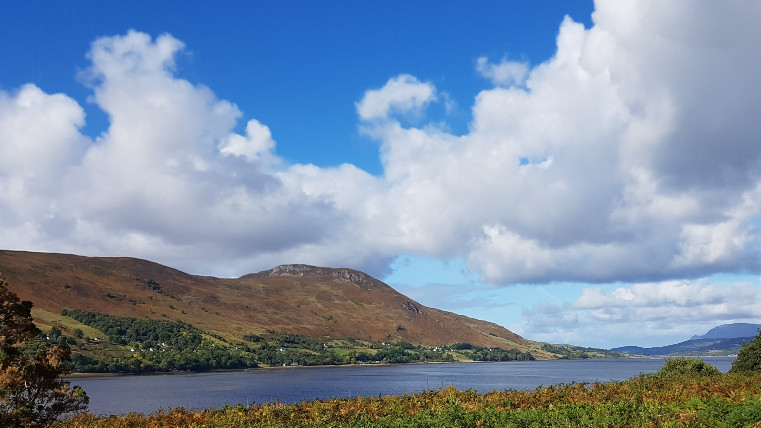


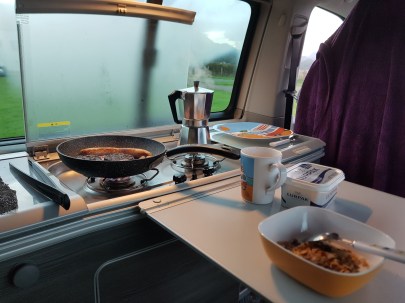 bothered, given my tendency to be distracted, that I would end up on the ferry to Stornoway and a tour of the Outer Hebrides. Also when you are in a Campervan with a stove top espresso maker you can stop and make a coffee where and whenever you feel like it.
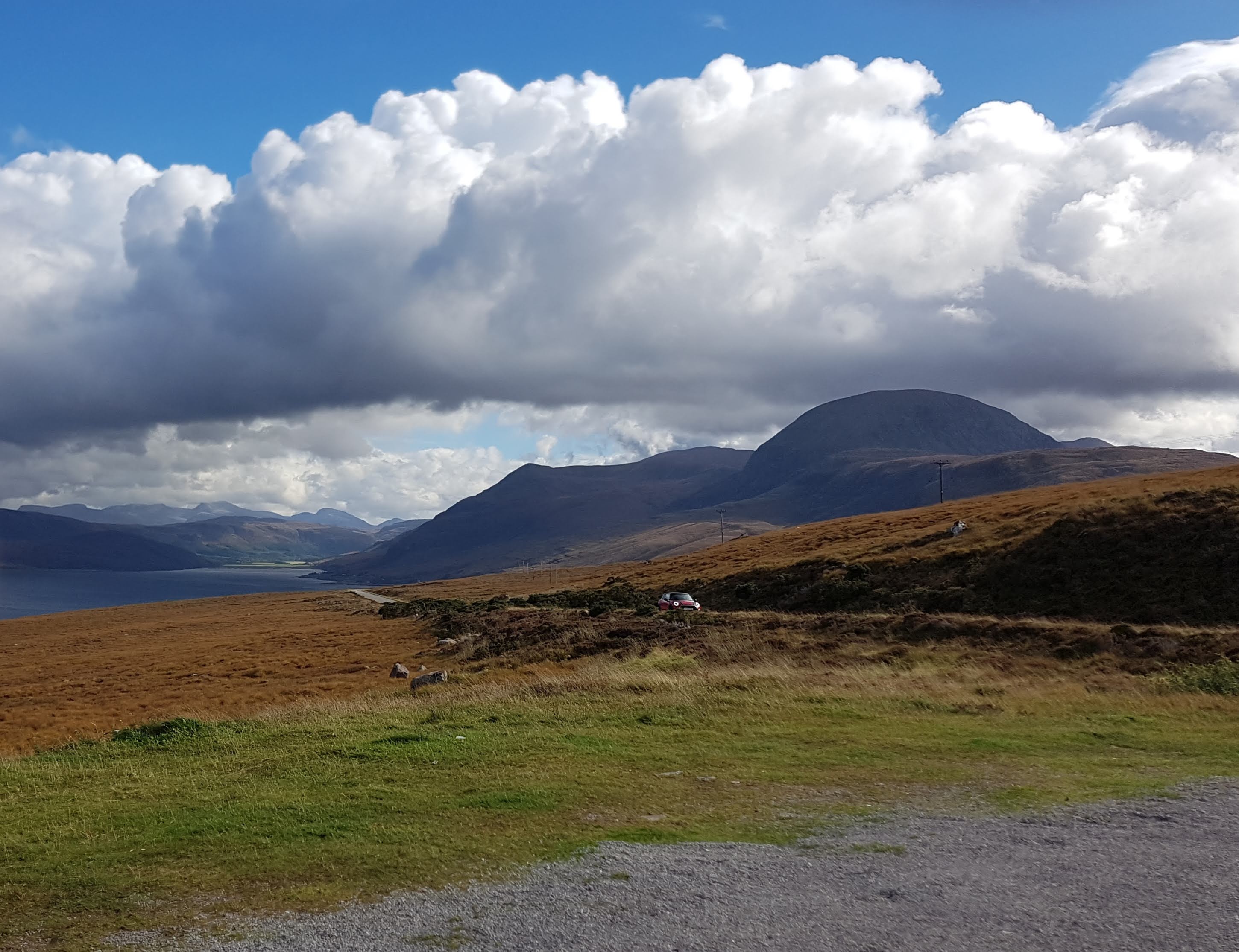 you come to a place called Gruinard and about a kilometer off the coast an island called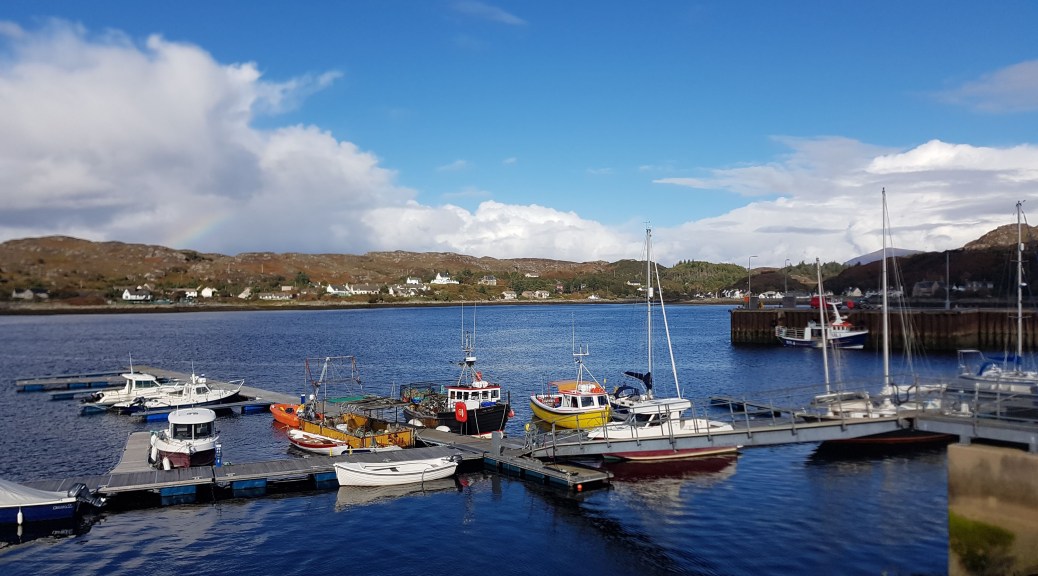





















 friends and I have a competition. The idea is to bring back the most undrinkable local hooch that we can find as a “present” for each other. He is currently well in the lead after a holiday to Latvia when he brought me back a bottle of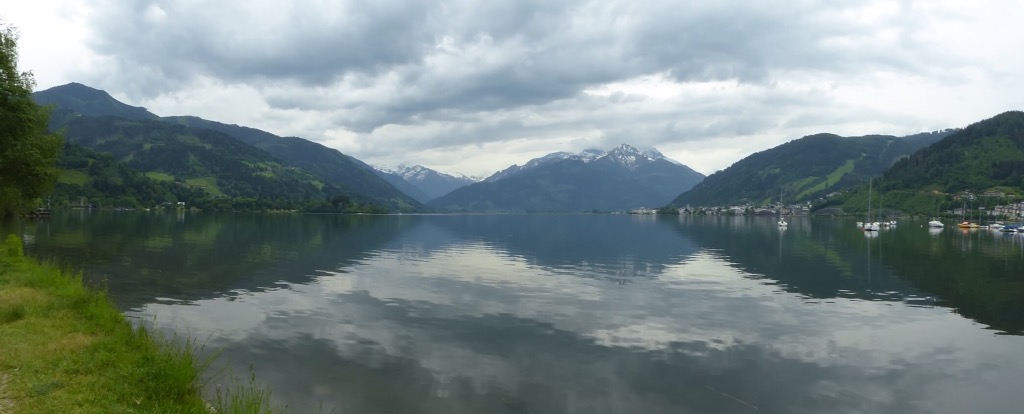


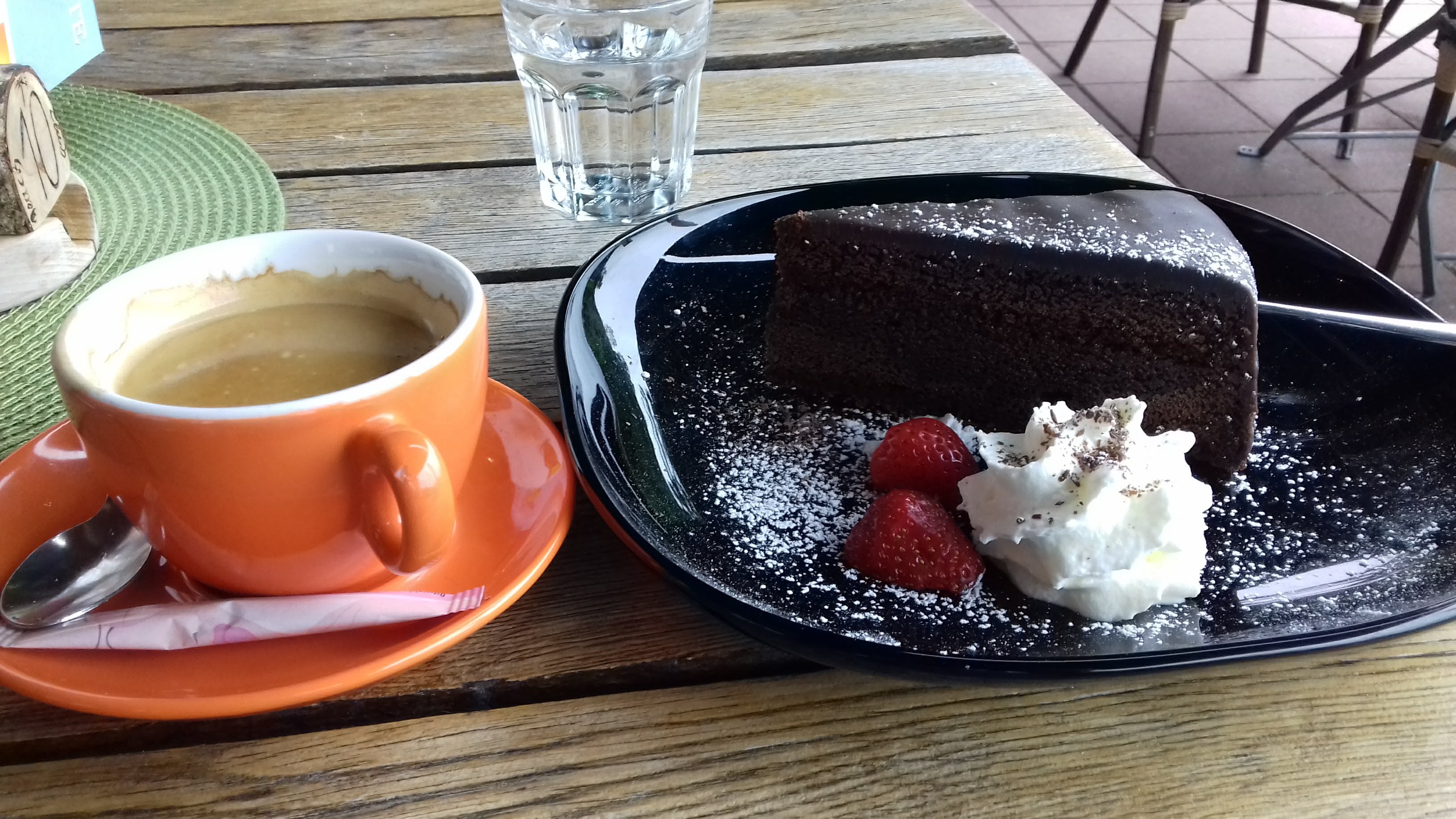 I also found a shop to buy some tooth paste, because the tiny complimentary tube from the Maritim wasn’t going to last me the week. Then wandered back to the hotel for a shower and a change before dinner.


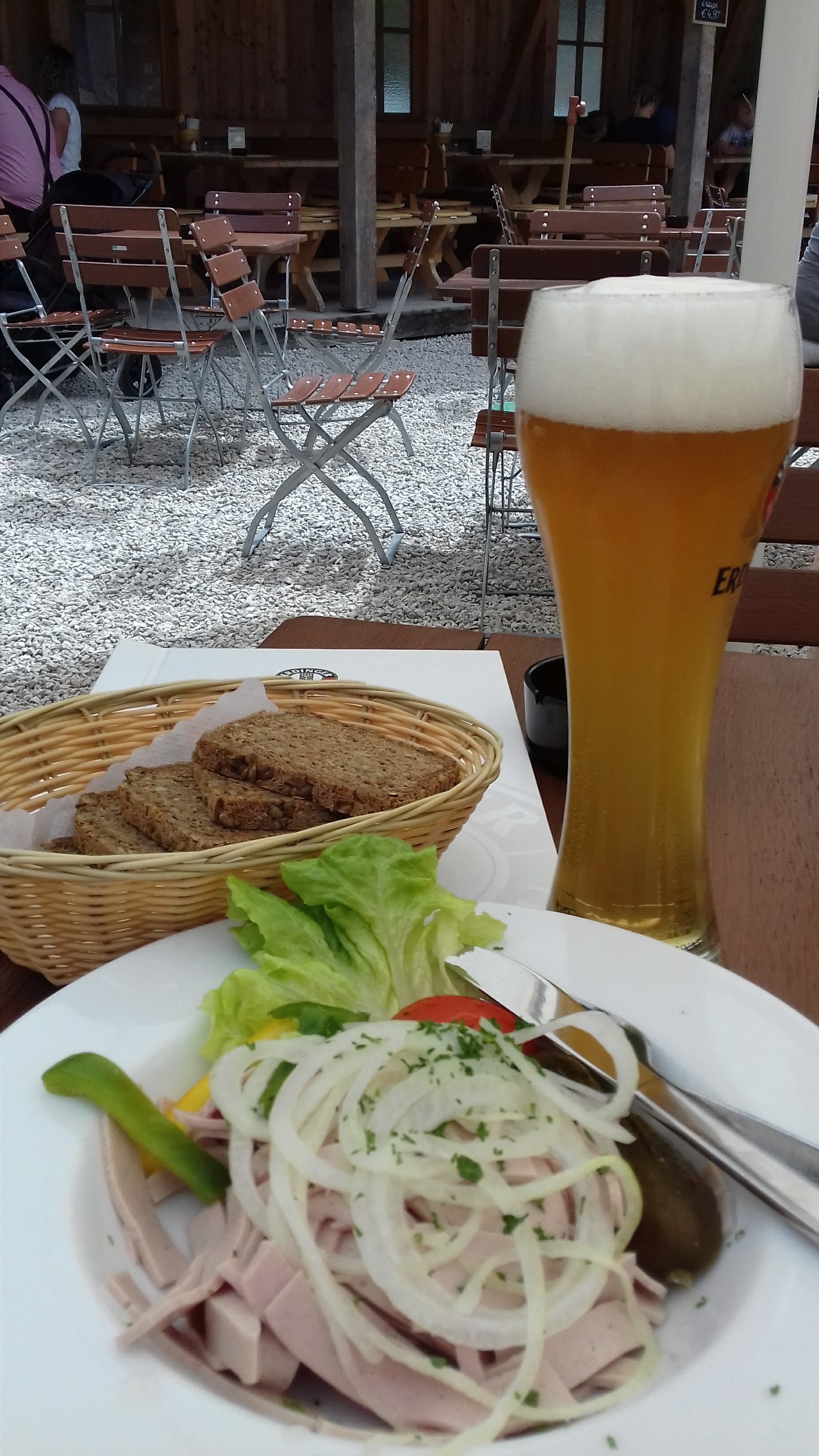 with the opportunity to purchase even more Bavarian tat. In keeping with my souvenir buying policy I bought a Bavarian themed lunch consisting of Wurstsalat washed down with a Weißbier.


 A Scotsman in Suburbia