Category Archives: Thoughts and Opinions

A morning’s distracted web surfing

The Tories are conducting an amazing dog-whistle racist survey. I urge you all to sabotage it.They then have the nerve to ask you to donate twenty quid for the privilege of filling the thing in.

Lots of things can prevent a kid from getting a decent education, but the myths surrounding education definitely don’t help.

(H/t to @johnlg44 for the two above) Continue reading A morning’s distracted web surfing

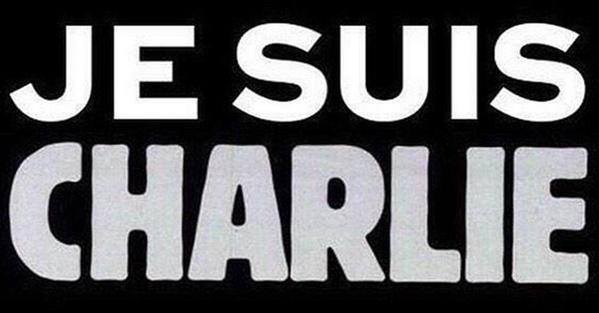
Je Suis Charlie

This post was prompted, obviously, by yesterday’s murder of the Charlie Hebdo journalists, apparently by Islamist fanatics. Now some people felt that Charlie Hebdo went out of its way to offend Muslims, this is not true. Charlie Hebdo went out of its way to take the Mickey out every one. It didn’t matter whether you are a Catholic, a Jew, a Protestant, a Buddhist or especially a French politician, you will find something in the magazine to offend you. Do a Google Image search for Charlie Hebdo and you will see what I mean.

The attack yesterday was an attack on freedom of speech. It was an attempt by people who believe that their god would approve of wiping out anyone who disagrees with them. It was an attempt to silence all criticism of their fanatical death cult. The sad thing is that it may work after a fashion. Newspaper editors, columnists and cartoonists may think twice before publishing something, though I think that Steve Bell hits exactly the right tone in today’s Guardian:

Steve Bell 08.01.15

We need to keep pointing and laughing at these people. I know that what they do is not particularly funny, but it is ridiculous.

The post was also prompted by a couple of things that Billy Bragg said on Facebook.

Yesterday he just left this quote:

“Fanaticism is a monster that pretends to be the child of religion” Voltaire

 
I can basically agree with that, though I am not so sure about the word pretends, bastard child possibly, but this sort of fanaticism stems from a particular understanding of religion. Whether its out working is the killing of twelve journalists in Paris, flying an aeroplane into the World Trade Centre or murdering abortion providers in Alabama, the problem is religion and actions that can be justified by a selective reading of a holy book.

A woman called Rekha Kodikara posted this in response;

Je suis Charlie

Just because I believe in religion
Does not mean it is sacred

Just because I believe in God
Does not make me holy

Just because I speak
Does not mean I am right

Just because I am silent
Does not mean I agree

Just because I criticise
Does not mean I hate

Just because you are angry
Does not mean I fear

Just because I think
Does not mean I am free

Just because you pray
Does not mean you are blessed

Just because you kill
Does not mean I will hide

Just because you threaten
Does not mean I will surrender

Just because there is religion
Does not mean we are happy

Just because there is God
Does not mean we live in peace

Hate is ruled by fear
Fear is governed by ignorance
Ignorance can lead to dogma
And Dogma can lead to death

Freedom from Fear
Je suis Charlie

 
I don’t know if she is Christian, Muslim, Bahai or what ever but it does make a poetic case for good religion.

Today Billy said this;

I was rather disappointed by the number of people who responded to the Voltaire quote I posted yesterday by seeking to blame people of faith for the massacre carried out in Paris. When you say that religion is the problem here, you condemn all believers, just as the fundamentalists condemn all non-believers.

Multiculturalism means having respect for things that you yourself don’t subscribe to. The killers yesterday were intolerant of those who had different views to their own. In times of outrage, intolerance becomes contagious. We must guard against those who wish to punish all Muslims and people of colour for the crimes committed yesterday.

 
I have no wish to target people of colour or Muslims in revenge for yesterday’s attack on Charlie Hebdo. Similarly because I do not feel the need to apologise for every white racist attack, I do not necessarily expect every Muslim in the world to apologise for this.
Having said that, all religions are based on a false premiss, some like wooly Anglicanism, Sufi Islam and Zen Buddhism seem to be fairly benign, others like the Salafist form of Islam seem to be anything but. I see no reason why I should be prepared to tolerate this in the name of multiculturalism any more than I should tolerate the racism of Britain First, rampant homophobia or sexism.

Princesses and Engineers

Having just shared a post on why Britain needs more women engineers on Facebook I came across this post by Libby-Anne which may just, at least in part get to the root of the problem.

Britain needs more women engineers

The post on why Britain needs more women engineers says that we need more engineers and if more women could be encouraged to join the profession it would be easier to meet the target.

Industry estimates suggest Britain will need 87,000 graduate-level engineers every year between now and 2020, but only 46,000 young people are likely to be awarded degrees in engineering annually.

There is also likely to be a gap between the number of young people acquiring vocational engineering qualifications and employers’ demand for technicians.

These gaps would be much smaller if more young women opted for careers in engineering. The UK has the lowest proportion of female engineering professionals in Europe.
Later on it tries to analyse why women are not attracted to what is a well paid profession.

However, our report also shows that choices made at the age of 16 are based on attitudes and perceptions about engineering that have been formed over many years. Engineering is seen as a career for ‘brainy boys’. Intervention at the age of 16 is likely to be too late.

The key to getting more women into engineering is to make it an attractive option for girls from an early age. But at present, teachers, careers guidance, work experience and families are not doing enough to counter the view that engineering is for men, not women, and in some cases they are guilty of perpetuating it.

Which leads me to Libby-Anne’s post which she titles “What’s Your Favorite Princess?”.

She is writing from an American perspective but I don’t think that social attitudes are that different here in the UK. I don’t think that her husbands colleague who’s first question to her daughter is “What’s your favourite princess?” is sexist, just trapped by what we think of as gender norms.

She says rightly:

Yes, not every five-year-old has a favorite princess. I know, right? What a novelty! Sally does enjoy princesses, but she has other things on her mind at the moment. Frustrated but trying not to show it, I explained that Sally is more into science. Sally became immediately excited, and spent the next few minutes explaining some of her favorite scientific concepts, using the chalkboard to illustrate. Sean’s colleague quickly lost interest and drifted away before he finished.

As she is leaving she says to her husband’s colleague who is working in a STEM (Science Technology Engineering Maths) field:

“You know, one of the reasons we see a gender disparity in the maths and sciences is that people assume girls will fit into a preconceived stereotype,” I told him. “And princesses are part of that.”

And that is one of the roots of why Britain can’t recruit enough women engineers

The Psychology of First World Problems

A phrase has appeared on the internet recently. Someone posts a Facebook status update complaining about a less than perfect hazelnut latte, and in the comments some one will point out that this is a First World Problem.
Oliver Burkeman has an interesting column in the Guardian on the psychology behind this.

He starts with the furore caused by a very very rich American Tom Perkins comparing criticism of the richest 1% to Nazi persecution of the Jews (completely ignoring Godwin’s Law).

Perhaps you recall the furore a few weeks ago when Tom Perkins, a stratospherically wealthy venture capitalist from San Francisco, wrote a letter to the Wall Street Journal, comparing criticism of America’s ultra-rich to Kristallnacht. Yes, that Kristallnacht. The Nazi one. Perkins apologised, but in an editorial the Journal claimed the uproar proved his point: “Maybe the critics are afraid that Mr Perkins is on to something?” Maybe. Or maybe it was a very stupid comparison, made only marginally less offensive by its absurdity.

He puts this incredible touchiness among the 1% down to the fact that they surrounded by lackeys and flatterers – like the editorial writer in the Wall Street Journal – employed to blow sunshine up the arse of the rich. They never hear criticism, they are never told they could be wrong, when criticised or told that they are wrong they take it incredibly badly.

I remember a story that our then Union Convener told me. He had encountered two members of the higher echelons of the company’s management in a hotel bar. While remaining perfectly civil about it he told them exactly where they were wrong why they were wrong and what they needed to do to put things right. He said that the primary reaction he received from them was shock, shock that someone had the effrontery to tell them something that they didn’t want to hear, and probably shock at the fact that a person about ten pay grades below them was telling them and giving a good coherently argued case.

That accounts for the 1% reaction, but it doesn’t take into account the problem of the imperfectly prepared hazelnut latte.

Then again, if you’ve ever felt cross about the absence of your favourite brand of coffee at the supermarket, or frustrated by slow broadband, you’re doing something similar. In that sense, the tale of Tom Perkins is just an extreme illustration of how, to quote the comedian Louis CK, “everything’s amazing and nobody’s happy”. (He recalled a fellow aeroplane passenger complaining that the in-flight WiFi didn’t work. “But you’re sitting in a chair in the sky!”) Actually, he might have added, it’s worse than that, because the more amazing things get, the less it’ll take to make you dissatisfied.

This is where the problem lies, we have become used to a world of perfect hazelnut lattes and super-fast broadband and if the latte isn’t exactly to our taste, or it takes more than a nanosecond to download the latest pearls of wisdom from johnm55, we get annoyed. It applies to other, more serious, things. As Steven Pinker points out in the Better Angels of Our Nature we live in probably the least violent era in human history. As a result some things like domestic violence, which a century or even a few decades ago would have seemed unremarkable, are now seen as unacceptable. Because aggressive and violent behaviour is now fairly rare these things stand out.

Some bad phenomenon – workplace bullying, say – may strike us as appalling. But part of the reason it stands out is that aggressive behaviour in general is so rare, and our standards so high, compared with previous eras. In this area, high standards are a good thing, of course, since workplace bullying ought to be eliminated. When it comes to your slow broadband, you’re probably better advised to lower your standards. Yet, in both cases, it’s the excellence of the wider context that makes the flaw look so bad. And when your context is more privileged than that of almost any human in history, perhaps you stop being able to see how deranged it looks when you compare your critics to Hitler.

Or possibly a few lessons in self-awareness might help – for everyone.

The full article can be read here