A more nuanced, and better written, take on the electability of The Greens from Will Hutton in today’s Observer.
“The Greens, chaotic as they are, give a lesson to the main parties
Link to the full article here

A more nuanced, and better written, take on the electability of The Greens from Will Hutton in today’s Observer.
Link to the full article here
The Green Party has recently seen a surge in the opinion polls and its members. Depending on how you count them they now have more members than the Liberal Democrats and possibly by the time the votes are counted on the 7th of May more MPs. However I have always had my doubts about the Green Party. Neither because I am a climate change denier nor because I don’t believe that we need to be careful about what we do to our planet, but because I feel that at a basic level what the propose probably won’t work.
The reason that I say this is because I do not think they have a theory of the generation and distribution of wealth. All the other parties have a theory for both these functions. Sometimes the theory is fairly explicit as in the case of the Labour party, with others, especially the Conservatives it is implicit. I am not the only person who feels this, Suzanne Moore thinks the same.
As she says:
 
Syriza is a seriously radical party of the left. The Green party isn’t. They portray themselves as the only anti-austerity party in Britain, but don’t tell us how they will meet this aims economically. Do they favour tax rises and if so what tax rises? What do they plan to cut, apart from the Trident programme – something incidentally I also think should be cut. The estimated cost of replacement at £34 billion, although some estimates go as high as £130 billion. This (£34b) is less than a third of the cost of running the NHS for one year.
Their one policy in this arena “The Citizen’s Income” which is an unconditional, non means tested, non-withdrawable income for every person, including children. It is, I think ,intended to be linked to citizenship and it replaces personal tax allowances, and most means-tested benefits. It will do away with jobseeker’s allowance, child benefit, the basic state pension and tax credits. There is one major problem; without means testing the poor will be worse off.
A second point is that if there is a link between Citizen’s Income and citizenship where does that leave foreign nationals working legally in the UK? For example an EC citizen would lose all his or her tax allowances and be entitled to nothing in return. They would not be entitled to job-seeker’s allowance if they found themselves out of work nor tax credits if they are in a low paid job. It sounds more like a policy that UKIP would come up with than the policy of a party of the left. I also think that it would be in breach of EU employment law.
My other major gripe about the Greens is their anti-science bias. Significant numbers of Green Party members seem to believe that the NHS should provide alternative treatments including homoeopathy as a matter of course.
As what is now unofficially known as “Minchin’s Law” states :
Still treating people using sugar pills and water must be cheaper than using the current methods. Chuck in a bit of Reiki and Crystal Healing and we should be able to get the cost of running the NHS down from £115 billion a year to £5.35 plus the water bill.
Ask your average Green party member if they accept the scientific consensus on Climate Change and you will get close to 100% affirmation. Ask if they what they think about safety of Genetically Modified Crops and they will that they are not sure and that we need to be cautious. Point out that the science behind the safety of GM crops is at least as sound as the science behind Climate Change and you will still be told that we should apply the precautionary principle. This is the same argument that Climate Change deniers make.
Similarly with Fracking. The process is safe, but you won’t hear that from the Green Party. There are very good environmental arguments for leaving as much oil and natural gas as possible in the ground. Instead of making the hard argument that making hydrocarbon fuels more expensive is in the long run a good thing, the Green Party prefers the easy but untrue argument that it is dangerous. But I suppose on the basis that all publicity is good publicity, getting your one and only MP arrested at a Fracking protest gets you in the news.
If you want to know what a Green Party government might look like take a look at the one place where they are in charge; Brighton. A Green Party has managed to reduce recycling rates and delivered a greater series of cuts and privatisations than the Tories had planned.
As Steve Bassam (former Labour Leader of Brighton and Hove Council) says;
I don’t know how Syriza is going to work out for Greece, but Greece does need something radical, and I wish them well. Radicalism must be rooted in reality and I’m afraid that the Green Party isn’t.
To the Green Party I would say come back and see me when you have worked out something like an economic policy and when you are prepared to accept the scientific evidence, even when it doesn’t fit your prejudices, in the meantime I’ll stick with the Labour Party and hope that it can grow a bit of a backbone.
I know voting Labour isn’t a particularly exciting vote, but we don’t have a Syriza or a Podemos to vote for in the UK and Labour is as close to a radical party as we have. Perhaps as Suzanne Moore says;
The original stating of “Minchins Law” can be found at about the 3:00 minute mark in the video (NSFW it’s a bit sweary). It also gives a very funny takedown of a certain type of person who probably votes green (if they can be bothered to vote at all)
The Tories are conducting an amazing dog-whistle racist survey. I urge you all to sabotage it.They then have the nerve to ask you to donate twenty quid for the privilege of filling the thing in.
Lots of things can prevent a kid from getting a decent education, but the myths surrounding education definitely don’t help.
(H/t to @johnlg44 for the two above) Continue reading A morning’s distracted web surfing
As we bloggers of the western world play around with our words and fine the tune our themes, in other parts of the world blogging is a serious business. Putting your thoughts down in a blog can get you sentenced to ten years in jail and a thousand lashes.
Raif Badawi is a Saudi Arabian blogger. The Guardian takes a look at the sort of writing that gets you sentenced to one thousand lashes. Writings like this;
Read the full article here
He was due to have the second series of fifty lashes today – after Friday prayers – but it was postponed on medical grounds.
Amnesty International reports;
“Not only does this postponement on health grounds expose the utter brutality of this punishment, it underlines its outrageous inhumanity. The notion that Raif Badawi must be allowed to heal so that he can suffer this cruel punishment again and again is macabre and outrageous. Flogging should not be carried out under any circumstances,” said Said Boumedouha, Amnesty International’s Deputy Director for the Middle East and North Africa Programme.
Amnesty International is trying to have his sentence overturned. Read about it on their website and what you can do to help.
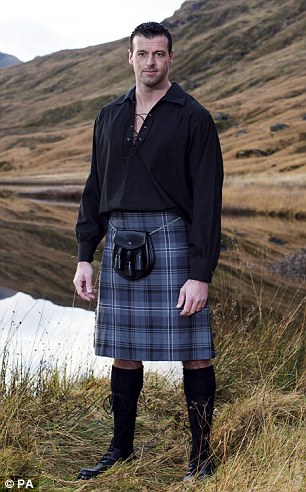
Lidl are selling Kilts for 30 quid!.
I’m not sure what to make of a German supermarket selling Scotland’s national dress for less than the price of a decent bottle of whisky. I’m also not sure what the model is wearing under his kilt but the way they describe the kilt (made from soft viscose and acetate material) makes me think that it won’t have the weight of a real one so I would suggest underpants unless it is a guaranteed windless day. It looks more like a kilt for wearing to a rugby international than a wedding.
To give you an idea of how cheap this is, my kilt cost £175 thirty five years ago. I don’t think I’ll bother getting one. I might get myself a shirt though. Continue reading Lidl are selling Kilts #ScottishSuburbanProblem
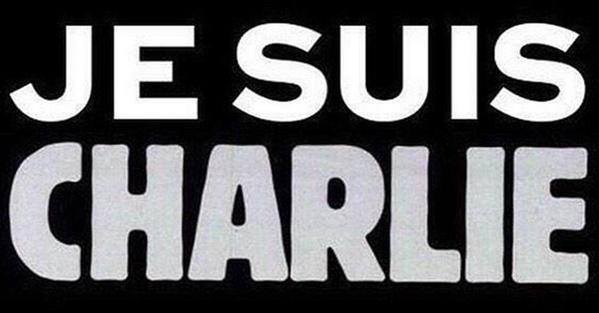
This post was prompted, obviously, by yesterday’s murder of the Charlie Hebdo journalists, apparently by Islamist fanatics. Now some people felt that Charlie Hebdo went out of its way to offend Muslims, this is not true. Charlie Hebdo went out of its way to take the Mickey out every one. It didn’t matter whether you are a Catholic, a Jew, a Protestant, a Buddhist or especially a French politician, you will find something in the magazine to offend you. Do a Google Image search for Charlie Hebdo and you will see what I mean.
The attack yesterday was an attack on freedom of speech. It was an attempt by people who believe that their god would approve of wiping out anyone who disagrees with them. It was an attempt to silence all criticism of their fanatical death cult. The sad thing is that it may work after a fashion. Newspaper editors, columnists and cartoonists may think twice before publishing something, though I think that Steve Bell hits exactly the right tone in today’s Guardian:
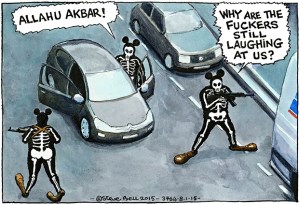
We need to keep pointing and laughing at these people. I know that what they do is not particularly funny, but it is ridiculous.
The post was also prompted by a couple of things that Billy Bragg said on Facebook.
Yesterday he just left this quote:
I can basically agree with that, though I am not so sure about the word pretends, bastard child possibly, but this sort of fanaticism stems from a particular understanding of religion. Whether its out working is the killing of twelve journalists in Paris, flying an aeroplane into the World Trade Centre or murdering abortion providers in Alabama, the problem is religion and actions that can be justified by a selective reading of a holy book.
A woman called Rekha Kodikara posted this in response;
Just because I believe in God
Does not make me holy
Just because I speak
Does not mean I am right
Just because I am silent
Does not mean I agree
Just because I criticise
Does not mean I hate
Just because you are angry
Does not mean I fear
Just because I think
Does not mean I am free
Just because you pray
Does not mean you are blessed
Just because you kill
Does not mean I will hide
Just because you threaten
Does not mean I will surrender
Just because there is religion
Does not mean we are happy
Just because there is God
Does not mean we live in peace
Hate is ruled by fear
Fear is governed by ignorance
Ignorance can lead to dogma
And Dogma can lead to death
Freedom from Fear
Je suis Charlie
I don’t know if she is Christian, Muslim, Bahai or what ever but it does make a poetic case for good religion.
Today Billy said this;
Multiculturalism means having respect for things that you yourself don’t subscribe to. The killers yesterday were intolerant of those who had different views to their own. In times of outrage, intolerance becomes contagious. We must guard against those who wish to punish all Muslims and people of colour for the crimes committed yesterday.
I have no wish to target people of colour or Muslims in revenge for yesterday’s attack on Charlie Hebdo. Similarly because I do not feel the need to apologise for every white racist attack, I do not necessarily expect every Muslim in the world to apologise for this.
Having said that, all religions are based on a false premiss, some like wooly Anglicanism, Sufi Islam and Zen Buddhism seem to be fairly benign, others like the Salafist form of Islam seem to be anything but. I see no reason why I should be prepared to tolerate this in the name of multiculturalism any more than I should tolerate the racism of Britain First, rampant homophobia or sexism.
Following the Scottish Independence Referendum it is generally agreed that how we govern the United Kingdom needs to be overhauled and dragged into the 21st century.
David Cameron thinks that it can all be stitched up neatly by a Cabinet committee. However it only takes about two seconds of thought to understand that his proposal for “English votes on English Laws” (EVEL) is nothing but a piece of low politics, designed to make it difficult if not impossible for the Labour party to form an effective government.
As Vernon Bogador (Professor of Government at King’s College London) says:
His article on the subject essentially demolishes Cameron’s plans.
Ed Milliband and the Labour party propose a constitutional convention, which if it isn’t used as an excuse to do nothing, is the way forward. With a bit of luck we might even come up with a proper constitution; i.e. a written one, at the end of it
UKIP, I think, wants to re-build Hadrian’s wall. I can’t find any official Liberal Democrat policy, the only thing I can find is this on the Liberal Democrat Voice blog (not an official outlet) which says “Err… not sure…let’s hold our horses”
Here are my ideas on what we need to do about re-ordering the way we govern ourselves. The first draft of my submission to the constitutional convention if you like.
In my opinion we need to move to a federal system of government. Scotland, Wales and Northern Ireland already have their own devolved assemblies. Some have proposed that England should have its own assembly as well. England’s population is around fifty million. It is too large and too London-centric to have an effective devolved government covering the whole of the country. In my opinion power needs to be handed down to smaller areas to provide an effective local devolution I would suggest looking at how the German Länder system works, or, if we want to stick to the Anglo-Saxon world the American, Canadian or Australian systems would be suitable starting points.
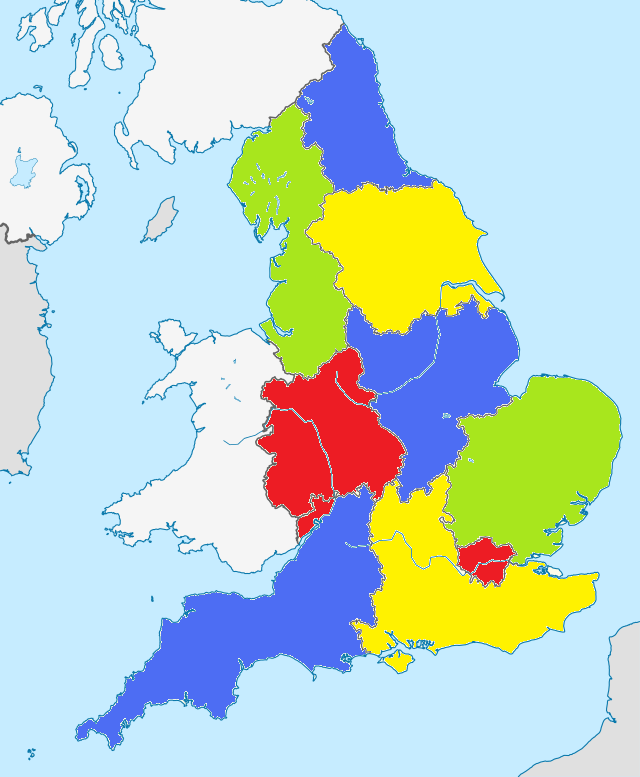 Some have proposed that power be devolved to the cities, Each of the major cities should have its own assembly, possibly modelled on the London assembly complete with elected mayor. The problem with this is that it leaves those parts of the country that aren’t major cities with a bit of a democratic deficit. Others, have proposed devolving greater powers to the counties and unitary authorities. I feel that they are too small to wield power effectively.
My proposal is this:
The nine regions of England, the North East, North West, Yorkshire and Humberside, East Midlands, West Midlands, East Anglia, London, The South East and the South West, have very roughly similar populations. They should each be given their own regional assembly with powers at least equal to those of the Welsh assembly. They would be funded initially according to the Barnet formula. The members would be elected by proportional representation. I would think that each regional assembly would have between 50 and 80 members.
The Welsh, Scottish and Northern Irish Assemblies would obviously continue as they are.
The North East rejected a regional assembly in 2004 and some people argue that this shows that there is no desire for regional devolution in England. However what was on offer in 2004 was not devolution but a regional talking shop. As the Newcastle Journal says in an editorial:
What was on offer then was NOT devolved powers, but a talking shop with no authority.
Devolution is not about creating a new class of politician. It’s about bringing powers and control over funding to the region – so that we can set our own priorities for training, education, health services and more, and carry out vital infrastructure projects without going cap in hand to Whitehall.
There needs to be a debate about who would exercise these powers, but there is already a tier of local government involving councils working together in a combined authority.
Our MPs must also play a role – and their voices must be heard at Westminster, too.
But let’s be loud and clear about one thing, so that the message reaches those in the Westminster bubble. The North East did not reject devolved powers in the assembly vote. The powers were never there.
I think that there is an appetite for genuine devolution in the regions of England.
With Regional Assemblies in place doing most of the spade work of governing I would question whether we still need a House of Commons of six-hundred plus members. I think that it could be reduced to around two-hundred and fifty, elected by some form of proportional representation.
Its remit would be to consider the aspects of policy that would remain at national (federal) level. Aspects such as foreign policy, defence and overall fiscal policy. It would also be responsible for aspects of policy devolved to regional level, that need national co-ordination, for example transport.
The House of Lords obviously has to go. It needs to be replaced by an elected assembly which I propose should be known as The Senate. The Senate would be elected from the regions, with each region supplying the same number of Senators. I would suggest six per region giving a total of 72. Again they would be elected by proportional representation, probably on a region wide basis. The Senate would be mainly a revising chamber. It would have the power to amend legislation and send it back to the Other House 1 for further consideration, but would not have the power to block legislation. It could also propose legislation, but such legislation would have to be passed by the Other House
All members of all the various assemblies would be elected by a system of proportional representation . My preferred system is the Single Transferable Vote but we can argue about the details later.
When the SNP decided to lower the voting age to sixteen for the referendum I was sceptical. My thinking was that they hoped to tap into naïve patriotism and that most 16 to 18 year olds would vote yes. This did not prove to be the case. As the campaign went on it became obvious that they were listening to and participating in the discussion on both sides before making their own minds up.
I now think that the franchise should be extended to sixteen year olds in all elections.
If you agree with what I have said here, Unlock Democracy have an E-petition calling for a UK Constitutional Convention.  I would ask you to think about signing.
1.I haven’t, as yet,thought of a name for what is currently known as The House of Commons
Emma Watson delivered an excellent talk at the U.N. the other day. I hope that Harry (Daniel Radcliffe) and Ron (Rupert Grint) will support her.
I advise you not to read the comments if you watch this on you tube, They only go to prove how correct she is in what she says.
The Scottish Independence Referendum is over, the results declared, and I feel relieved as much as happy that the result went the way that I hoped. A letter in today’s Guardian sort of expresses what I feel;
When the no vote won, it felt like an enormous relief. I can still feel Scottish, then, perhaps even more so since not excluded. I can be as Scottish as I choose, whatever that means. Thank goodness. We are all world citizens. We might as well try to get along.
I know that there are a lot of disappointed people in Scotland today. I hope you believe me when I say that can understand your pain. When you put time, effort, money, passion and belief into something and it doesn’t work out the way you had hoped, it hurts.
The “Yes” campaign brought a new passion, a new style and a new level of engagement to politics in Scotland. At least part of this was due to the fact that an existential question had to be answered, and that for once every vote counted. I hope that the level of passion and engagement will continue when politics goes back to ‘normal’ representational politics , where the questions are not so easily framed and the answers are less clear-cut. I also hope that we can tap into that passion south of the border. I will expand on that in another post.
There have been acres of newsprint and terabytes of blog postings already on this subject so I think I should add my bawbee’s worth to them.
I feel the main reason was an unwillingness or inability to answer some fundamental questions.
The big question that the “Yes” campaign totally failed to answer was the currency question. Their answer was “we will continue to use the Pound Sterling”. When it was pointed out that this was neither practically nor politically possible, they blustered and basically said ‘we’ll sort it out later’.
Practically it wouldn’t work, because as the Euro has proven, currency union without political and fiscal union at a federal level doesn’t’ work. Politically it wouldn’t work because all three main UK parties had said they wouldn’t allow it. The reason they wouldn’t allow it was because they were worried about an independent Scotland building a deficit of Greek proportions and the Bank of England being left as lender of the last resort. Even if both those problems could have been overcome, there would still have been the problem of Scotland’s interest rates and monetary policy being set in London.
The funding of the Scottish Exchequer was also never properly addressed, other than to say that oil revenues would cover any gap.
I felt that one of problems with the yes campaign was that it presented an independent Scotland as a blank canvas. You could paint any picture you wanted onto it. This is obviously an attractive notion, and it seduced many people, notably singer/activist Billy Bragg. Obviously had “Yes” won the day a there would have been lot of disappointed people a few weeks down the route to independence. The redistributive Social Democracy being promoted by Common Weal is obviously incompatible with the small state, tax-cutting, Tiger economy that those on the Libertarian end of Nationalism were hoping for. Equally the petro-chemical fuelled economy implied by much of the Scottish Nationalist Party’s economic predictions was at complete odds with the Scottish Green Party’s vision of a Scotland fuelled by renewable energy.
Many people who I interacted with on Social Media, normally after I had raised a question about something that Alex Salmond had said, told me that the referendum was not about the SNP. I will admit that there were other strands within the “Yes” campaign but Salmond set the overall tone. While some people loved him, a lot more, including myself were completely turned off by an ego the size of Ben Nevis and the arrogance that went with it. His answer to any criticism of his policies was” I’m right, you’re wrong”.
Scotland has said yes to continuing as part of the United Kingdom, but it is a qualified endorsement. The debate has shown that our current constitutional arrangements are no longer fit for purpose in the 21st century. We need to come up with a new settlement for the whole of the country, and not something stitched up by Westminster. We can see this happening already. David Cameron makes his proposals not so much because he thinks they are right for the United Kingdom but because he thinks that they will put The Labour Party in a difficult position and therefore be good for the conservatives.
This cannot be about narrow party advantage. We need a sound and lasting settlement made in a way that allows everyone their say in how it is reached.
Unlock Democracy have an E-petition calling for just this which I would ask you to think about signing.
It is probably time to reconsider (again) how we elect our representatives. The Single Transferable Vote is an idea whose time has come.
As well as this I would like to see politics south of the Tweed develop some of the passion and thinking that people like Common Weal have brought to the Scottish Independence debate.
There was an important vote on the 18th that did go in favour of those voting “Yes”. Royal & Ancient Golf Club of St Andrews finally dragged itself out of the early neolithic and into the 21st century by voting to allow women members.
Any one who knows me and my politics will understand that I opposed almost everything that Margaret Thatcher stood for. In fact the only thing that I can think of that she did that I approved of was creating more comprehensive schools than any Education Secretary before or since. And helping get rid of the military government in Argentina.
However, this thought occurred to me while dodging the piles of dog poo on my walk to the station this morning: Would we have experienced the same levels of hatred and gut level loathing if a Michael Thatcher had been Prime Minister during the 1980’s?
We shouldn’t forget her, but let’s not waste our righteous anger on her when her successors are hell bent on destroying the foundations of the United Kingdom in a way that she would not have dared to, and without her electoral mandate.
 A Scotsman in Suburbia