
Category Archives: Music

Songs I love: Kathryn Tickell – Favourite place

Kathryn Tickell is known for being the finest Northumbrian piper around and arguably the best there ever has been. I first heard her play at the Rothbury folk festival about thirty-five years ago. I heard her before I saw her.

Like a few other festivals whose origins go back a long way, Rothbury bases itself (or used to base, I haven’t been back for a long time,) around musical competitions. I wanted to see the open pipes competition, but I had missed the start. As I was making my way into the hall, I could hear this wonderful lyrical pipe music being played. The style wasn’t familiar, it didn’t sound like any of the pipers I knew. On the stage was a girl, maybe twelve or thirteen years old.
“It can’t be her”
was my initial thought, but it was, and if I remember correctly she won the competition.

Having told you what a brilliant piper she is, this “Song I Love” doesn’t feature her pipes.

It is Kathryn’s reconstruction of her mother’s reminiscences of being a girl brought up on a Border farm. Lots of the things she says remind me of my upbringing on a Border farm, about ten or fifteen years later and on the Scottish side of the border.

It features Kathryn’s fiddle (she is almost as good a fiddle player as she is a piper) and her spoken voice.


There isn’t a YouTube video so I have embedded a Spotify track. I’m not quite sure how it works because I haven’t tried it before.You might have to register to listen.
Songs I Love: Nic Jones – Isle of France

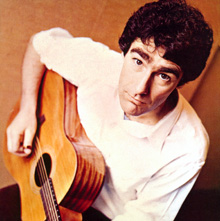
nic_jonesNic Jones was one of the finest singers and guitar players to come out of the Folk Revival.  I remember going to hear him at the Marsden Inn Folk Club back in 1976 and being completely blown away by his performance.

A near fatal car accident in 1982 cut his career short. He performed a few gigs in 2012-13 accompanied by his son but has since stopped performing in public. The BBC made an hour-long  documentary “The Enigma of Nic Jones: Return of Britain’s Lost Folk Hero”. I was part biographical and part following him on the run up to his first comeback gig. Unfortunately it is not currently available on BBC iPlayer or YouTube but it can be bought as a DVD from Nic’s official website nicjones.net

I like all Nic Jones’ work and could have chosen any one of a dozen songs to showcase the talent that we lost that night back in 1982, and we did lose something special . Although he still has a fine singing voice, he no longer plays the guitar or the fiddle.

The song I chose is this one “The Isle of France”*.  from the album “Noah’s Ark Trap”. It shows off Nic’s fine guitar playing and I like the story that the song tells.

* The Isle of France is now known as Mauritius.

Songs I Love: Toto – Africa

This song is a bit –a lot- different from most of the music that gets showcased in my Songs I Love. It is not Scottish or Irish Folk and while the band are American it is definitely not Americana.

I was prompted to write about it while I was sitting in the Watermill Cafe at Merton Abbey Mills waiting for my lunch to arrive. They had music playing in the background. I’m not sure if it was the radio or the chef’s mp3 player on random shuffle, I wasn’t paying that much attention. Then I heard the very distinctive Baa-dnt-dnt-na-dnt-dnt-Daaa opening chords to “Africa” and my ears pricked up, because as I said I love that song. I was singing along with the chorus “Miss the rains down in Aaa-fri-caa” hopefully not loud enough to attract attention when the thought occurred, “I should add this to the collection.” Continue reading Songs I Love: Toto – Africa

Songs I Love: Billy Bragg – Both Sides the Tweed

This is Billy Bragg’s version of a song first recorded by Dick Gaughan back in 1979 after the defeat of the first Scottish Devolution Referendum. The original song was written or collected by James Hogg (aka The Ettrick Shepherd) and published in The Jacobite Relics of Scotland as Song LXXV (page 126).  It appears to date back to or possibly recall the 1707 Treaty of Union between Scotland and England.

What Dick Gaughan has done is alter the lyrics to give them a more contemporary Scottish Republican feel and put his own tune to the song. However even if he is singing the “original” 1 tune to a song it often feels as if he has put his own tune to it so that is not really a surprise. His lyrics and interpretation of what the song is about can be found here.

The song can be sung as a lament/rant against those who, as was felt then, sold Scotland’s freedom to clear their debts from the Darien Scheme. But it is also be a plea for tolerance and understanding between peoples

Let friendship and honour unite And flourish on both sides the Tweed.

There is a lot of history and emotion in this song. And although I think that Billy Bragg and Dick Gaughan were on the wrong side of the Referendum debate they are both on the correct side when it comes to the debate about humanity.

This is a version by Dick Gaughan from 1989; The fiddler is Aly Bain, the Keyboard player is Phil Cunningham

1. Most traditional folk songs don’t really have an *original* tune as the tune has  usually been lost or become so altered by passing the song from one singer to another that the original composer, if there was one, would not recognise their song. Many  traditional songs are composites of other songs, to a certain extent like Both Sides the Tweed. Some songs, however do have an accepted tune that they are normally sung to.

Songs I Love: Pete Seeger – Quite Early Morning

When Pete Seeger died on January 27 this year the world lost one of its greats. To get a bit of an idea how great read this tribute to him and his influence on the British folk scene by Martin Carthy.

As a song-writer he wrote songs that are now so much part of the tradition that many people who sing them may not even be aware that he wrote them. Songs like, “If I Had a Hammer”, “Where Have all the Flowers Gone?” and “Turn Turn Turn” – lyrics borrowed and slightly adapted from Ecclesiastes Chapter 3 (This is Judy Collins’ version). He also helped to popularise “We Shall Overcome” as the anthem of the Civil Rights Movement. (Click in the links to go to videos of the songs)

Out of all the songs that he wrote, “Quite Early Morning” is the one that speaks to me the most. It is an old man’s song of hope. Most of us, as we get older, get more pessimistic about the future of the human race, but Pete never gave up on his hope that we would eventually get our collective act together.

Some say humankind won’t long endure,
But what makes them so dog gone sure.

The song I think sums up his life as a political, environmental and civil rights activist, and his hope that the next generation can and will take up the challenge of making the world a better and fairer place.

There are quite a few versions on You Tube, and I have posted links below. I can’t find Holly Near’s version on YouTube, but I do have a Spotify link;
Holly Near Quite Early Morning
Pete Seeger
Pete Seeger when he was (a bit) younger
Pete Seeger and Arlo Guthrie

This version of the song is by The Rivertown Kids, a group of young people from his home-town in New York, who get together to sing and work toward environmental and social justice. Pete acted as their mentor and I suppose great-grandfather figure. One line in the song says;

When these fingers can strum no longer,
Pass the old banjo to the young ones stronger.

This, I think is what he meant.

Through all this world of joy and sorrow,
We still can have singing tomorrow.

Thanks Pete for your life, songs and inspiration.

Songs I Love: Dick Gaughan – The 51st (Highland) Division’s Farewell to Sicily

Was this song made for the singer or was Dick Gaughan born to sing this song? The first time that I heard him sing it the hairs on the back of my neck stood up. The mix of his voice, the song itself, and his unique ability to get a bagpipe like quality out of his guitar make this something extaordinary

The late Hamish Henderson wrote the song. During the Second World War he was an intelligence officer attached to the Eighth Army, of which the 51st was a part. Following on from the desert campaign in North Africa they took part in the invasion of Sicily.
He wrote the song, while watching the troops preparing to leave the island. They were going back to the UK to prepare for the D-Day invasion. Henderson was going to Italy in part to work with the Partizans fighting Mussolini and Hitler. The pipe band were playing the tune “Farewell to the Creeks”, (a popular pipe tune written by Pipe Major James Robertson) and according to his account the words of the song came almost ready formed as he fitted them to the music. The lyrics are in a Scots dialect and slightly obscure to non-natives. Some words may even be slightly obscure to other Scots who speak a different dialect. Helpfully Dick Gaughan publishes the lyrics and a Scots-English dictionary on his website.

Dick Gaughan also recorded an earlier version on his album “Kist of Gold”

Songs I Love: Neil Gow’s Lament for his Second Wife

This is a tune that I love rather than a song. It is a tune that has been in the repertoire of almost every Scottish fiddle player since the beginning of the nineteenth century. First a bit of the history of the tune.

Neil Gow was the most famous Scottish fiddle player and composer of the eighteenth century. His first wife, as often happened at that time died young, and in 1768 he married for a second time, to Margaret Urquhart. They had a long and happy marriage until she died in 1805. After she died, according to the story, Neil Gow was so devastated that he stopped playing the fiddle for a time. The first tune that he played on picking up his fiddle again was this one.

I chose Sir Yehudi Menuhin’s version for two reasons;

  1. it is a pretty good version and
  2. the finest version I ever heard of the tune was as far as I know never recorded.

Bob Hopkirk the guy who performed that version, did, however play with Yehudi Menuhin on one occasion, and may even have taught him how to play it.

Ally Bain does a decent version as well.

Songs I Love: Townes Van Zandt – Pancho and Lefty

The late Townes Van Zandt was one of the finest (arguably the finest) tellers of stories in song of the past few decades. Many of his songs such as “If I Needed You,” “To Live is to Fly,” “No Place to Fall” and “Tecumseh Valley” have become standards, recorded by artists like Emmylou Harris, Merle Haggard, Willie Nelson, Gillian Welch and Allison Krauss, to name a few. Which makes it surprising to find that during his life he never had a hit single or album, and that he spent most of his career playing bars for enough money for a cheap motel and a drink. Actually if you read any biography of him you will find that he wasn’t the most reliable person in the world. Throughout his life he wrestled with addiction to drugs and alcohol, some people would argue that he embraced his addictions rather than fought them. So perhaps it isn’t so surprising.

Townes’ various addictions isn’t really what this post is about. I want to celebrate his talent as a singer and especially as a songwriter. The song “Pancho and Lefty” is probably his most famous song and arguably his best. It tells the story of the life and death of two Mexican bandits, actually it’s probably easier to let Townes explain the story

Just about every country singer worth listening to has covered the song.
Merle Haggard and Willie Nelson do a particularly fine version of the song as does Emmylou Harris. She may have been the first person to record the song, possibly even before Townes had got round to it.

Pancho and Lefty a song of death and betrayal in the Mexican sun. A song that I love.

Songs I Love: Luke Kelly – On Raglan Road

Having recently discovered YouTube* and spent/wasted quite a bit of time watching music videos. I have decided that it would be a good idea if I share some of my favourites with you and try to explain why exactly I like them.

The first song I want to introduce you to is Luke Kelly’s version of Raglan Road.

Luke Kelly was one of original members of the Irish group The Dubliners. He played the five-string banjo and sang in his distinctive voice.

The song came about when the poet Patrick Kavanagh who wrote the words heard Luke singing in a pub and asked him if he would like to put the words to music. They set the poem to the music of the traditional song “The Dawning of the Day” (Fáinne Geal an Lae) and one of the great Irish songs was born. That’s the background. So what is it that I love about the song?

It is a love song. It tells the story of a love affair that was probably doomed from the start through to its conclusion in four verses. It is a sad song, the love the writer had for the girl, either wasn’t expressed in terms she could relate to or wasn’t returned.

“That I had wooed not as I should a creature made of clay”

It is also a song that affirms the belief “That it is better to have loved and lost than never to have loved at all”

Of course there is also Luke Kelly’s marvelous liquid voice that makes you believe that this is exactly how it happened.

The full poem can be found here

Many other singers have recorded the song and I have included a couple of links to other versions that I like.

Sinead O’Connor

Mark Knopfler
I’m not quite so sure about this one but I’ve included it for contrast.
Rodger Daltry and the Chieftains


*Obviously I knew of the existence of YouTube but I had previously thought of it as a place to see piano playing cats instead of a source of real music.

A Song For Valentine’s Day

The incomparable Joe Ely “Settle for love?”

You want diamonds
I’ll give you rhinestones
And you want romance
Would you settle for Love?