With Christmas Day my Advent Calendar came to an end. There are no more whiskies to try. (In my Advent Calendar). There are still thousands, millions maybe, of whiskies still out there. I could drink a different whisky every day, from today until I run out of breath. By then, I would just about have scratched to surface of all that this wonderful drink has to offer.
Dec 25th – Christmas Day
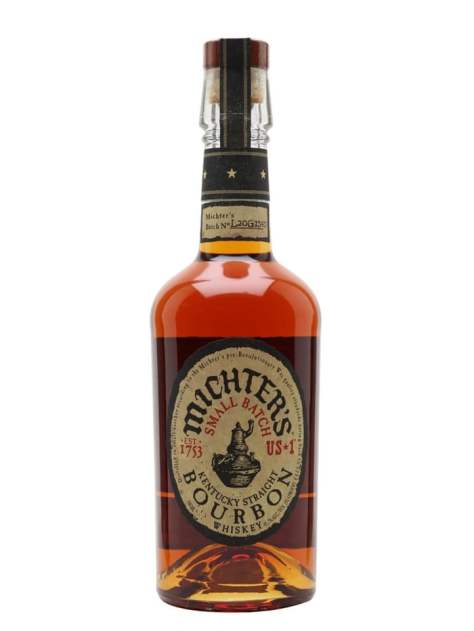
Our final whiskey is a Bourbon from the United States, from Kentucky to be precise. Made by Michter’s, they claim to trace their lineage back to America’s first whiskey company in 1753. I do suspect that whiskey had been produced unofficially long before then.
It is Michter’s US★1 Kentucky Straight Bourbon. It has an ABV of 45.7% and is dark amber in colour. Its nose has leather, dried fruit and just a hint of smoke. They char their barrels, and I think that is where the smoke comes from. On the palate I got sweetness, somewhere between maple syrup and caramel, with nutmeg and cinnamon. Followed by a hint of the oak char.
I enjoyed this whiskey. Online the price it is offered at varies considerably. But I think it is reasonable value. It and the other Bourbon (Maker’s Mark) in the box have made me think. Maybe I should try a few others.
My Advent Calendar whisky journey has taken me from the far North of Sweden. I traveled south to New Zealand, then west to Kentucky and Tennessee in the United States. Finally, I went east to Japan and Taiwan. We have visited quite a few other countries on route.
I won’t say I liked every every whisky, but I did enjoy the experience of trying them. As the blurb on the box says, in the worst case scenario, it saves you from having twenty-five nearly full bottles of something that you don’t really get on with. Every whisky drinker has one or two of those.
There are a few that I wouldn’t drink again. There are many that I would happily accept as a gift. Some of them I would pay hard-earned cash for.
I didn’t get on with any of the Rye whiskies. I was surprised by how much I liked the Bourbons. I have never been a fan of sherry cask whiskies in the past. Still, I was surprised by a couple of them. When it came to the whiskies that I liked best, well, I am a huge fan of Islay malts. Especially the slightly less peat prominent ones, like Caol Ila. So it is no surprise, to me, that the two whiskies I liked best, have similarities to Islay Malts. Those two are the Connemara 12 year old and the Yoichi single malt.
All of this is purely my personal opinion and taste. As I said right at the start, I am no whisky expert, just someone who enjoys a dram. And I did enjoy tasting these twenty five, very different drams.
I am coming to the end of my Advent Calendar. I have five more whiskies to experience. I shall write about the next four (up to Christmas Eve) in this post. I will do a separate post about the Christmas Day whisky. Which I hope will be something special, but fear will be the World whisky equivalent of a generic blended Scotch.
I will also try and summarise my experience. I will try and decide my favourite whisky from the twenty five.
Dec 21st
Today’s whisky comes from Sweden. The distillery is near the coast of the Gulf of Bothnia, about five hundred kilometres north of Stockholm.
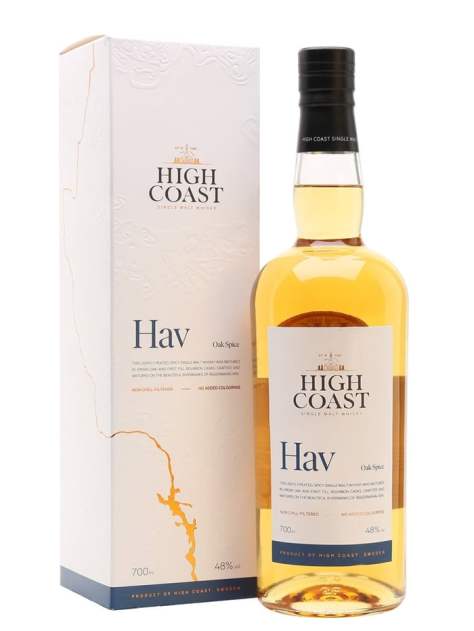
High Coast Hav comes in at 48% ABV. “Hav” is the Swedish word for sea.
It has an attractive pale amber colour. I found notes of peat, smoke and oak on the nose. Tasting it gave me fruit, spice and peat smoke.
This was another whisky that I found a drop of water helped to open the whisky up.
The distiller likes to experiment with different mash combinations. They use a variety of barrels to achieve different effects on the final product. Clearly, in this case the experiment works. This was a whisky that I liked. While it is not cheap I feel that it is reasonably priced.
Dec 22nd
We are back to Ireland to sample another Mitchell and Sons Spot Whiskies. We tried their Red Spot on the 17th.
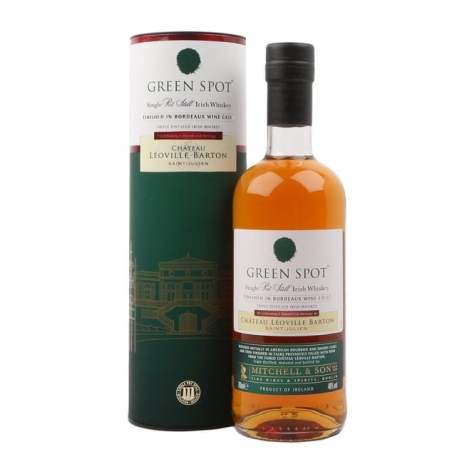
Today’s offering is Green Spot Single Pot Still Chateau Léoville Barton Bordeaux Cask
Taken from the Website: Green Spot Château Léoville Barton represents the coming together of two historic families, two stories of Irish endeavour and enterprise who together are the inspiration for this special edition whiskey. Our whiskey is finished in Château Léoville Barton French oak casks, the very casks that play a vital role in the wine’s distinctive balance, bouquet and flavour, that we’ve used to bring something extra to our Green Spot Single Pot Still Irish Whiskey.
As you can see from that, the whiskey is finished in Bordeaux Casks. This is where, I would suppose, that the very dark gold colour comes from. The nose, I found is heavily influenced by the cask. I got fruit and wine as the main elements . Taste wise fruit and spice were the main elements.
I have never been totally convinced by wine barrel whiskies. This one did nothing to change my mind.
Dec 23rd
The whisky today comes from Canada. It is made by Hiram Walker. It is a blend of Corn and Rye whiskies aged in rum barrels
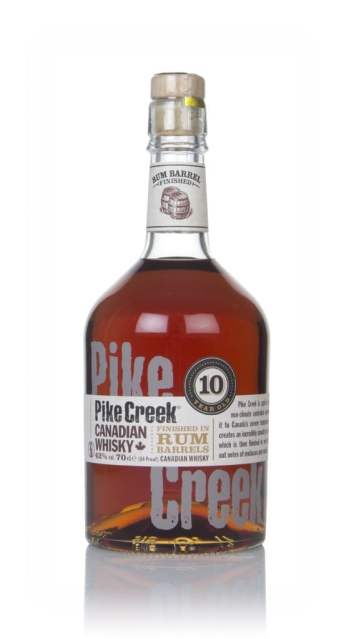
Pike Creek 10 year old comes in at 42% ABV. It is brown in colour. on the nose I found that the rum cask was the predominant theme, followed by a hint of sweetness. Taste wise, again rum was prominent, as well as spice from the rye and sweetness from the corn.
This was a pleasant enough whisky. It is reasonably priced, but there was nothing about it that said, “buy me”
Dec 24th
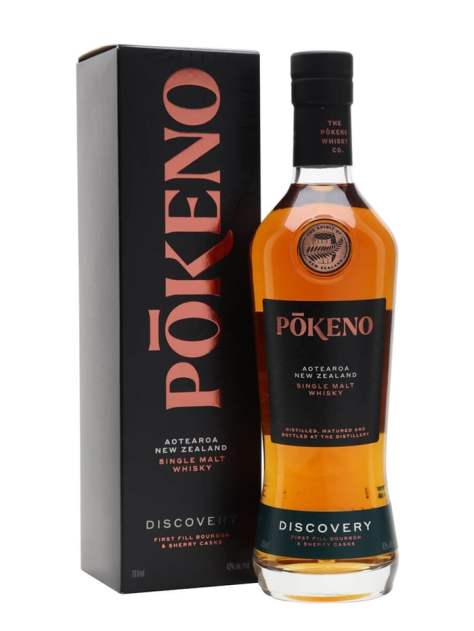
Our Christmas Eve whisky came from New Zealand. When we were on holiday there, last year, I found that New Zealand creates some very drinkable whiskies. The Cardrona distillery produced some exceptional ones. The Cardrona distillery is situated in the South Island. Today’s whisky is produced in the North Island, in the small town of Pokeno, about fifty kilometres south of Auckland.
Pokeno Discovery is a single malt with a 43% ABV. It is matured in Bourbon casks and Oloroso sherry casks. It has an amber colour. I found the nose to be fruity with a hint of honey. Its palate gave me dried fruit and cinnamon, with a hint of chocolate.
This was a whisky that I enjoyed drinking. I was one of the few that I did not feel the need to add water to. Most of the others needed a drop of water, either to open them out, or in some cases alleviate the alcohol burn.
It is not a cheap whisky but I would say worth paying for.
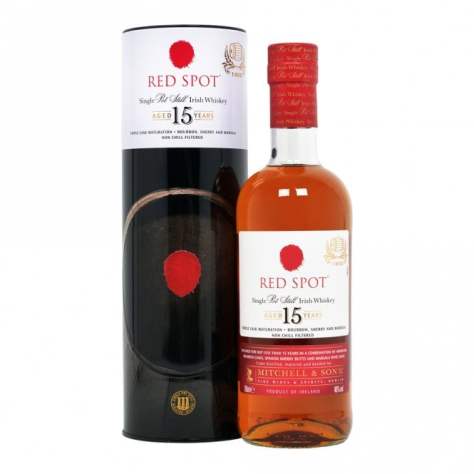
For today’s whiskey we go back to Ireland. Red Spot is a 15 year old single pot still 46% Irish whiskey. Matured in Bourbon, Sherry and Marsala casks, it is amber in colour.
On the nose I got fruit and nuts. Taste wise, there was again fruit, with a hint of pepper, and vanilla. While I found that it was fine straight from the bottle, a couple of drops of water improved it. This opened it out.
I quite like this whiskey. The price tag is well over £110 for a bottle though. I didn’t like it enough to pay that money.
Dec 18th
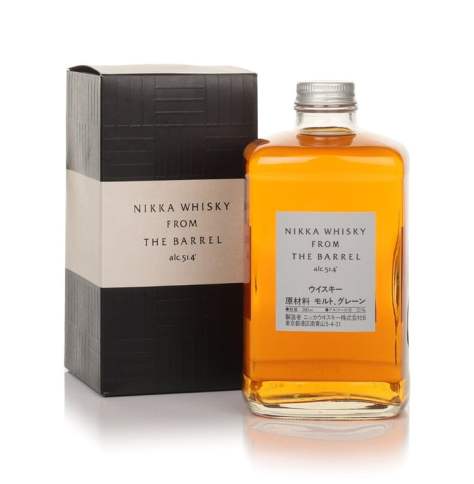
This Japanese whisky is the only one in the calendar, so far, that I have previously drunk. I was given a bottle as a gift by my step-son who had been on holiday in France. I don’t know why someone would buy a bottle of Japanese Cask Strength whisky in France. Especially as a gift for a Scotch whisky drinker. It does mean that I have a 50 cl bottle of Nikka from the Barrel sitting on my sideboard. It comes in at 51.4% ABV. It is blend of various malts and grain whiskies.
It is pale amber in colour. I found caramel and fruit on the nose. The palate gave me toffee, a hint of fruit and chili. Though as with most whiskies over 45% ABV, I needed to add a drop of water to get the nose and the palate to open out.
This is whisky that I would recommend.
Dec 19th
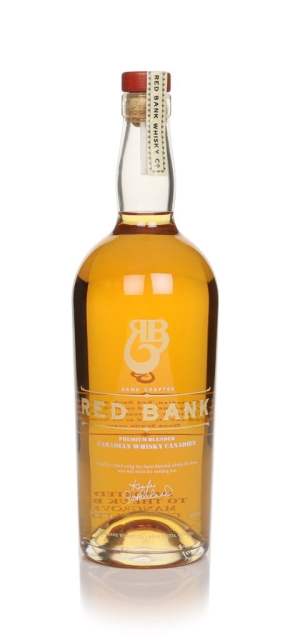
Our whisky adventure takes us to Canada today. To Nova Scotia to be exact. Nova Scotia, having been settled mainly by the Scots, has probably been producing whisky since the c17th. Red Bank, which has the actor Keifer Sutherland as one of its founders, only goes back to 2022
The Red Bank Blend comes in at 40% ABV. It combines mainly wheat whisky, with corn and rye whiskies also added. This process gives a reasonably balanced and quite drinkable product.
The colour is pale gold. I found fruit and oak on the nose. The palate was sweetish, with some fruit and spice. It was a pleasant enough whisky, but without anything to make it stand out from the pack.
Dec 20th
We journey back to India for today’s offering. I wasn’t too sure what to expect of this whisky. I was not overly impressed by the last Indian whisky in the calendar.
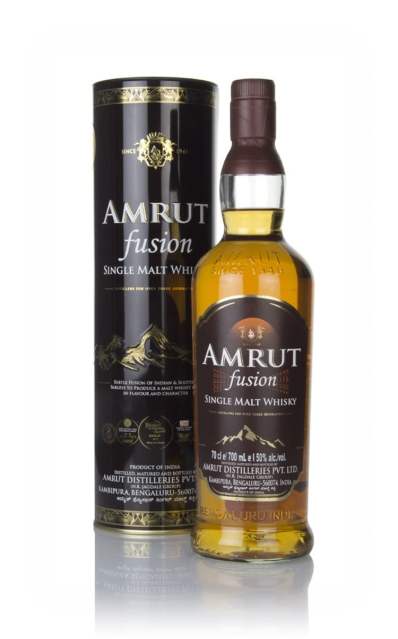
Amarut Fusion single malt comes in at 50% ABV. It has an amber colour. The nose gave me smoke and fruit, with a hint of sweetness. It tasted of pepper, oak and sultanas, with a gentle touch of peat smoke. Again I felt that a little water opened up both the nose and the palate. I liked this Indian whisky much better than the first one.
Click on the names of the whiskies. You can also click on the pictures of the bottles. Both actions will take you to the appropriate distillery website.
Moving on, with my thoughts on the next four whiskies in my advent calendar. Blogging about the very varied whiskies that I am finding in the calendar is an interesting experience. I am finding that it is making me think about what I am drinking. Instead of just drinking the day’s whisky, I reflect on it. I consider whether I like it or not and share my thoughts. Drinking mindfully, if you like.
Dec 13th
We journey back to Japan for today’s whisky. The Yoichi distillery has been producing whisky since 1934. It is situated in Hokkaido, in the far north of Japan. Their stills are heated by coal fires, which gives their whiskies some of their character.
My whisky today, was the Yoichi single malt with an ABV of 45%. It has a lovely pale gold colour. I found the nose had a little bit of smoke, sultanas, and other fruit. The palate had apples, honey, and citrus, with a hint of spice.
This was whisky that I liked a lot.
Dec 14th
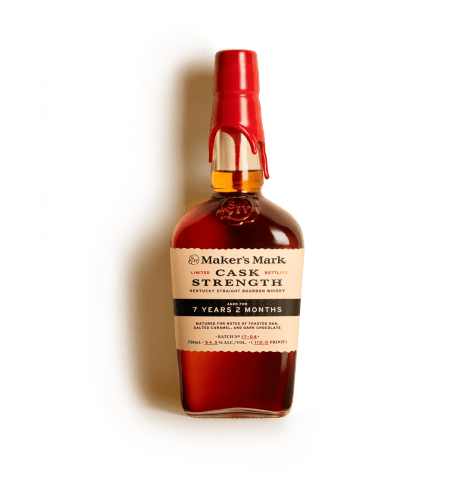
Today’s whiskey surprised me. I have mentioned, in an earlier blog, that I am not generally fond of cask strength whiskey. But I found that the Maker’s Mark Cask Strength Kentucky Bourbon at 55.1% ABV was surprisingly approachable, even before the addition of some water.
The colour of the whiskey is dark amber, almost brown. Its nose gives aromas of vanilla and maple syrup. On the palate I found, caramel, chocolate and spice, with a slightly herbal finish.
I found that the addition of a little water opened up the nose. It also enhanced the palate. But, I found it very drinkable at cask strength.
Dec 15th
For today we have an English whisky. Fielden is an English Rye Whisky at 48% ABV. According their website the name “Fielden” comes from the Old English and means “from the fields”, or “of the fields”. They apparently use rye wheat and barley in various combinations. Still, I am fairly sure that my whisky was at least 50% rye.
Colour wise the whisky is an attractive amber. It has quite a floral and sweet nose. Taste wise, like the earlier rye whisky, it had a hint of rye bread, as well as nutty sweet marzipan notes.
It wasn’t a whisky that I was particularly fond of. I have never drunk that much Rye whisky in the past. It is possible that they are not my thing, or that I have yet to discover the one for me.
Dec 16th
Our whisky today comes from down under. Melbourne to be precise. The Starward distillery has been making whisky since 2007. Recently they have been exporting to the UK. I noticed a bottle of today’s sample in my local Waitrose.
Starward Left Field single malt comes in at 50% ABV. It is very dark in colour, almost brown. The predominant note on the nose is fruit. The whisky is matured in red wine casks. (There is a lot of wine produced in Victoria.) So I assume that is where the colour and the nose come from. The palate is fruity and quite sweet, I would describe it as a biscuit sweetness.
I tried the whisky as it came and also with a drop of water, but it didn’t appeal to me. I calls itself “Left Field” and their website talks about “moving beyond tradition”. Often things are done traditionally, because that works.
Click on the names of the whiskies. You can also click on the pictures of the bottles. Both actions will take you to the appropriate distillery website.
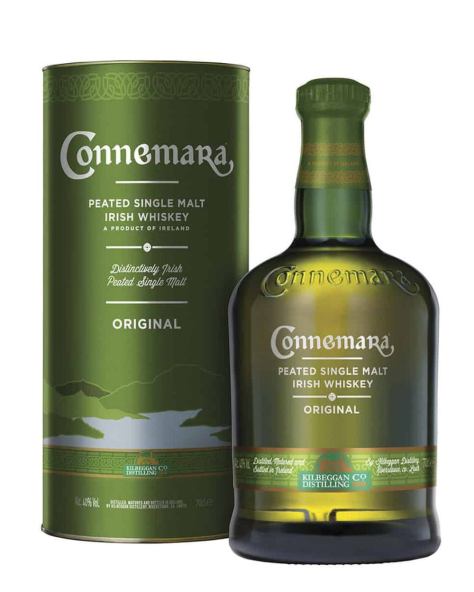
Today’s offering is another Irish single malt. This time it is the Connemara 12 year old with an ABV of 40%. It is apparently the only peated Irish malt. This surprised me, given the amount of peat to be found in Ireland.
It has a pale straw colour. The nose is essentially smoke and peat, but not overwhelming, like say Laphroiag. There is also just a hint of lemon. On the palate, there is smoke, obviously, but there is also a hint of sweetness and vanilla. I liked this whiskey a lot. I am a big fan of Islay malts, and this could almost be an Islay malt
Dec 10th
Taiwan is not a country that I would have thought made whisky. Today’s whisky, though, comes from Taiwan.
Ka Va Lan Single Malt Sherry Cask , it comes in at 40% ABV. It has a very dark amber colour. The nose is predominantly sherry, although other things like berries and chocolate are noticeable. On the palate, sherry comes through quite strongly, but, honey, and stone fruit are observable. I am not usually that fond of sherry cask whisky, but I quite liked this one.
Dec 11th
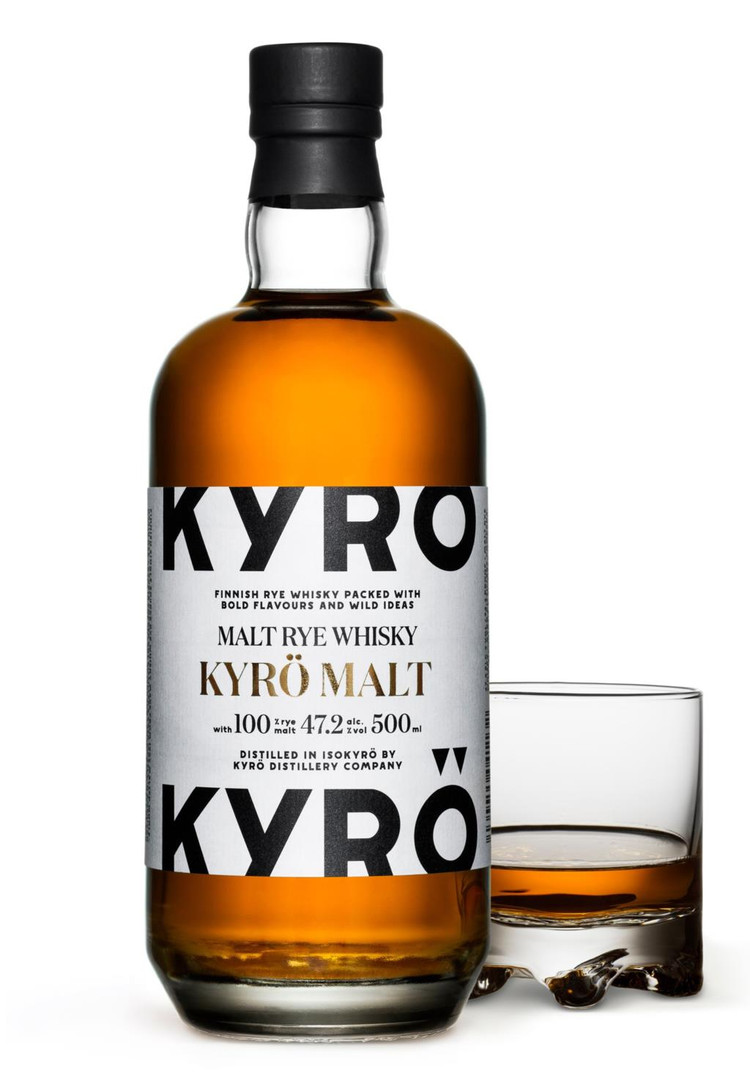
Today’s whisky comes from Finland. I think of Finland as a place where vodka is produced rather than whisky. The Kyrö distillery has produced a single malt using rye rather than barley. The Kyrö Rye single malt is matured in American Oak and comes in at 47% ABV. Its colour is dark golden. I found it nutty and sweet on the nose. It tasted of bread, rye bread presumably. There was also a hint of peppery spice. I was not sure what to make of this whisky. Because rye whiskies are a new thing to me, I had difficulty assessing what I was drinking. I don’t want to dismiss it out of hand, but with an unfamiliar taste, I didn’t like it that much.
Dec 12th
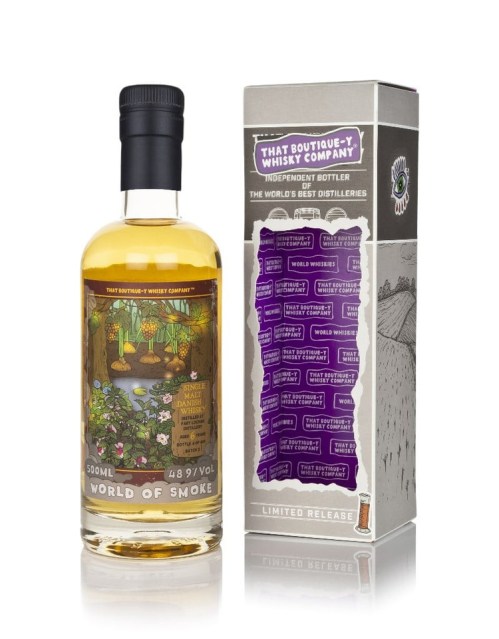
Another Nordic offering today. This time from Denmark. Fary Lochan, which has an ABV of 48.9%, is a rather unique whisky. The malt is smoked, but not over peat, as is normal in Scotland, but over fresh nettles. This makes for a dram that is very different from the norm.
It is very pale in colour. The nettle smoke comes through on the nose, as does a herbal note. Herbs and grass are the prominent notes in the palate, accompanied, by hints of spice, and a slightly sweet finish.
Like yesterday’s rye malt, I’m not quite sure about this one. It is not really to my taste, but it is an interesting and different whisky. If it comes your way, do try it and see what you make of it.
Click on the names of the whiskies. You can also click on the pictures of the bottles. Both actions will take you to the appropriate distillery website.
Continuing on from my earlier post, let us see what the next few days have brought.
Dec 5th
We are off to Wales for our next whisky adventure. The Pendyryn distillery have been producing whisky since 2000, with their first sales being made in 2004. (Whisky must be matured for at least three years before it can be legally sold in the UK.)
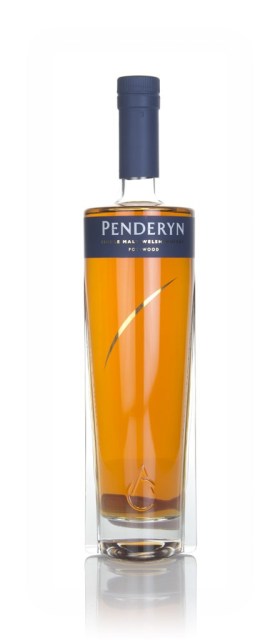
Pedyryn Portwood finish at 46% was today’s offering. It is quite a dark coloured whisky, I would describe it as amber coloured. On the nose I got dried fruit with a hint of sweetness. Taste wise, it had notes of burnt sugar and spice.
I am not a big fan of port and/or sherry cask whisky, but I found this pleasant to drink.
Dec 6th
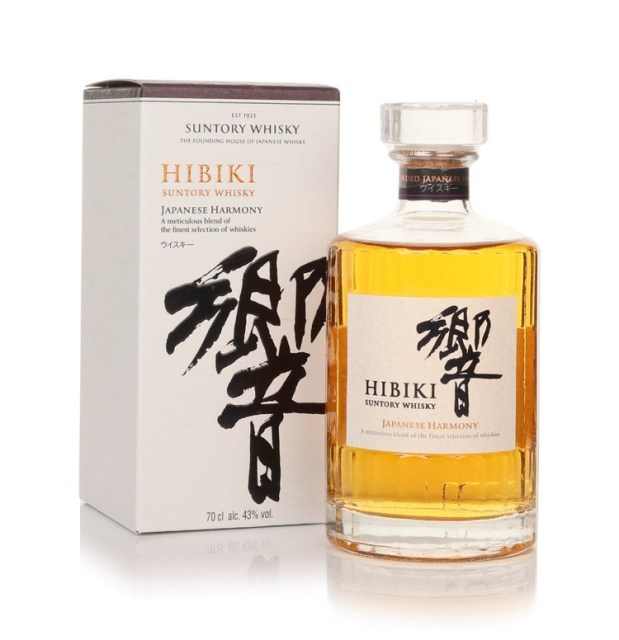
We are back to Japan again for our next whisky. Hibiki Harmony Blend at 43%. It is manufactured by Suntory, who have a long distilling history. This whisky is a blend. It is pale golden in colour. The nose was basically apples on the palate I found apples and spice, cinnamon and cloves. It was a pleasant enough whisky, though a little on the bland side for me.
It is amber in colour. On the nose I got straw and roast chestnuts. It had a slightly sweet fruity palate.
The inclusion of the rye malt makes it very different whisky. The 30 ml sample that came in the calendar wasn’t enough to let me decide on the whisky. I think I would need another glass. Maybe two, to fully make up my mind as to whether I liked it.
Dec 8th
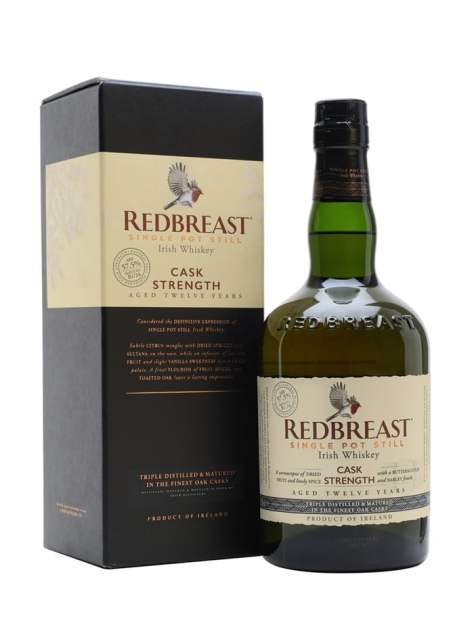
We journey back Ireland for our next whiskey, Redbreast Single Pot Still 12 year Cask Strength 57.2%. I am not a huge fan of cask strength whiskeys. I find that at cask strength the alcohol content overpowers everything else. This one was no exception. I trust the distiller to add the correct amount of the distillery water to bring out the characteristics of their product. I think that it is better than me trying to guess. Having had my little rant, on to the whiskey.
It is a very attractive honey gold colour. On the nose I found dried fruit and vanilla. When it came to the palate, all I initially tasted was alcohol. Adding some water improved it. I found a very pleasant mix of honey, tropical fruit and vanilla.
This is a whiskey that I liked. If I were buying it for myself, I would probably choose the 12 year old 40% expression. I would prefer it over the cask strength. It is also nearly £30 less expensive.
I think writing about four whiskies at a time is enough. I will fill you in an days nine, ten, eleven and twelve in the next post.
My lovely wife bought me a whisky/whiskey advent calendar. Whisky/eys of the world. Yes, whisky is produced in other countries besides Scotland. Ireland, Japan, Canada and the USA all produce decent whiskey. Thailand also produces something that they call whiskey. My step-son and his partner brought me some back, the less said about it the better.
I should note before I start that I am in no way a whisky expert. I am just someone who enjoys a dram.
I shall try to get the correct spelling of whisky or whiskey. Scotch, is whisky, as is Canadian and New Zealand. Irish and United States is whiskey. I’m not sure if other countries use whisky or whiskey, please don’t shoot me if I get it wrong.
On to the advent calendar.
December 1st
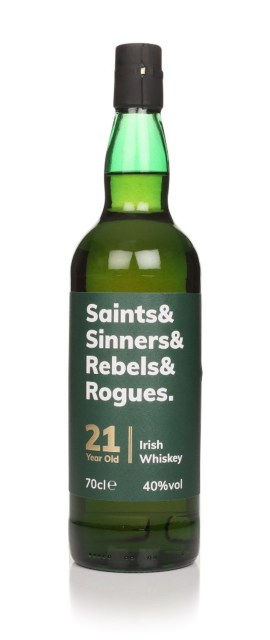
Today’s whiskey was Irish. Saints & Sinners & Rebels & Rouges 40%. It is a 21 year old blend . There were definite hints of vanilla and honey on the nose. It is very smooth, as you would expect with a 21 year old, slightly too smooth for my tastes. I like a slight bite in my whiskey. On the palate, honey and sultanas were the notes that I found. It was a whiskey that I liked.
December 2nd
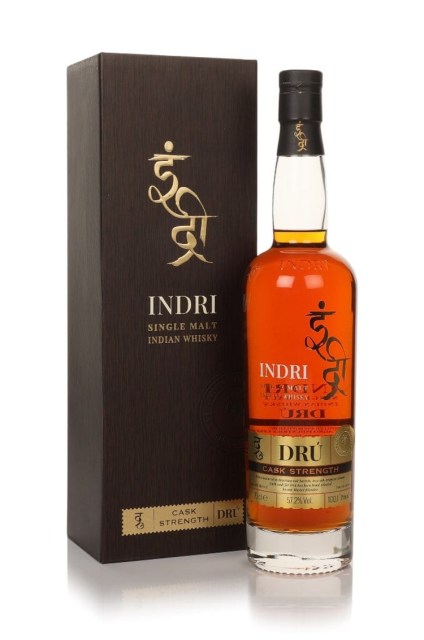
Today’s whisky is Indian. Indri Drú Cask Strength – 57.2%. No barrel age is given. Their website mentions that the high temperatures in Northern India speeds up the maturation process. I found tobacco and burnt fruit on the nose. Like almost all cask strength whiskies, I found it initially too fiery for me say anything about it. Diluting it about 1 part water to 3 parts whisky calmed it down. I found hints of spice but not that much else. It was an interesting whisky to try, but not one that I would think of buying.
December 3rd
For today’s whisky, we move further east, to Japan. A country that has a longer whisky making tradition than India. Yamazaki Distiller’s Reserve is 43% and is made by Suntory who have been distilling whisky since 1923. The nose was floral, incense was a word that came to mind. On the palate, there were hints of dried fruit and vanilla and cinnamon. The whisky is pleasant enough. It shares a few characteristics with Highland malts.
December 4th
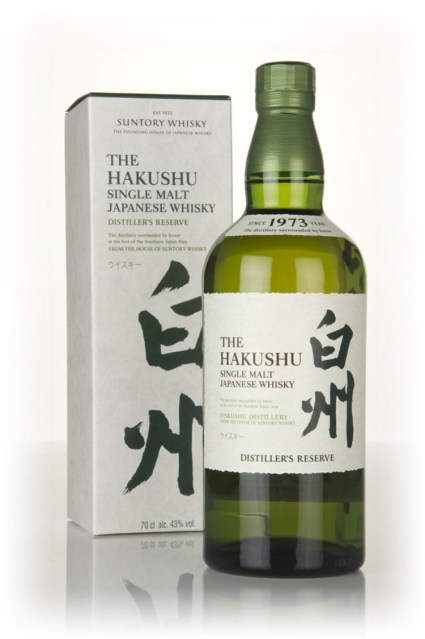
We are still in Japan for today’s whisky. It is Hakushu Distiller’s Reserve 43% Its nose it is slightly smoky with a hint of dried fruit. On the palate I found smoke, fruit and a hint of peppery spice. Again a pleasant enough whisky, but without any thing that would encourage me to buy it.
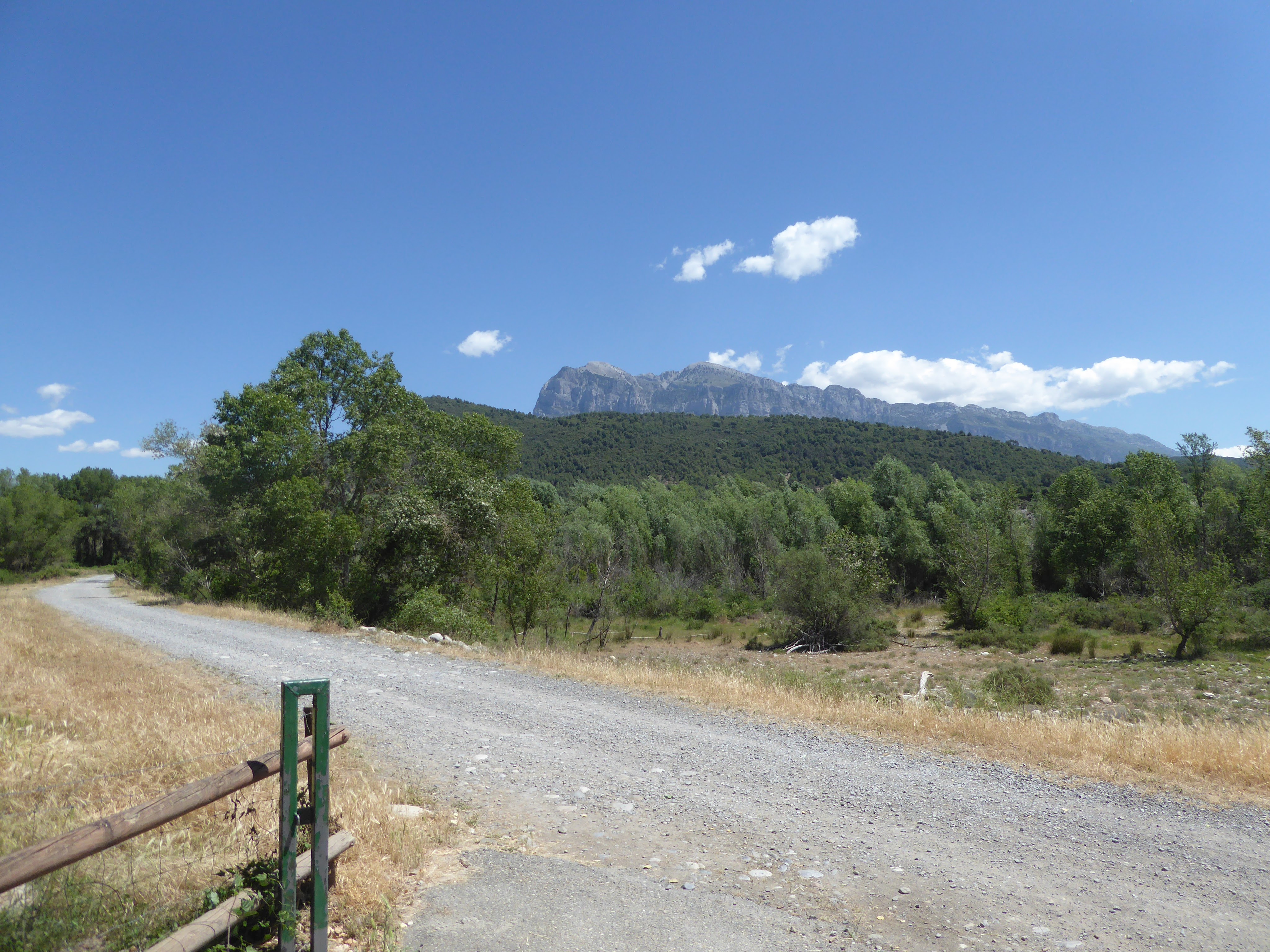
After a leisurely breakfast, we decided to go for a walk along the river that runs beside the campsite.
The path lead us to a village called Labuerda.
The road to Labuerda
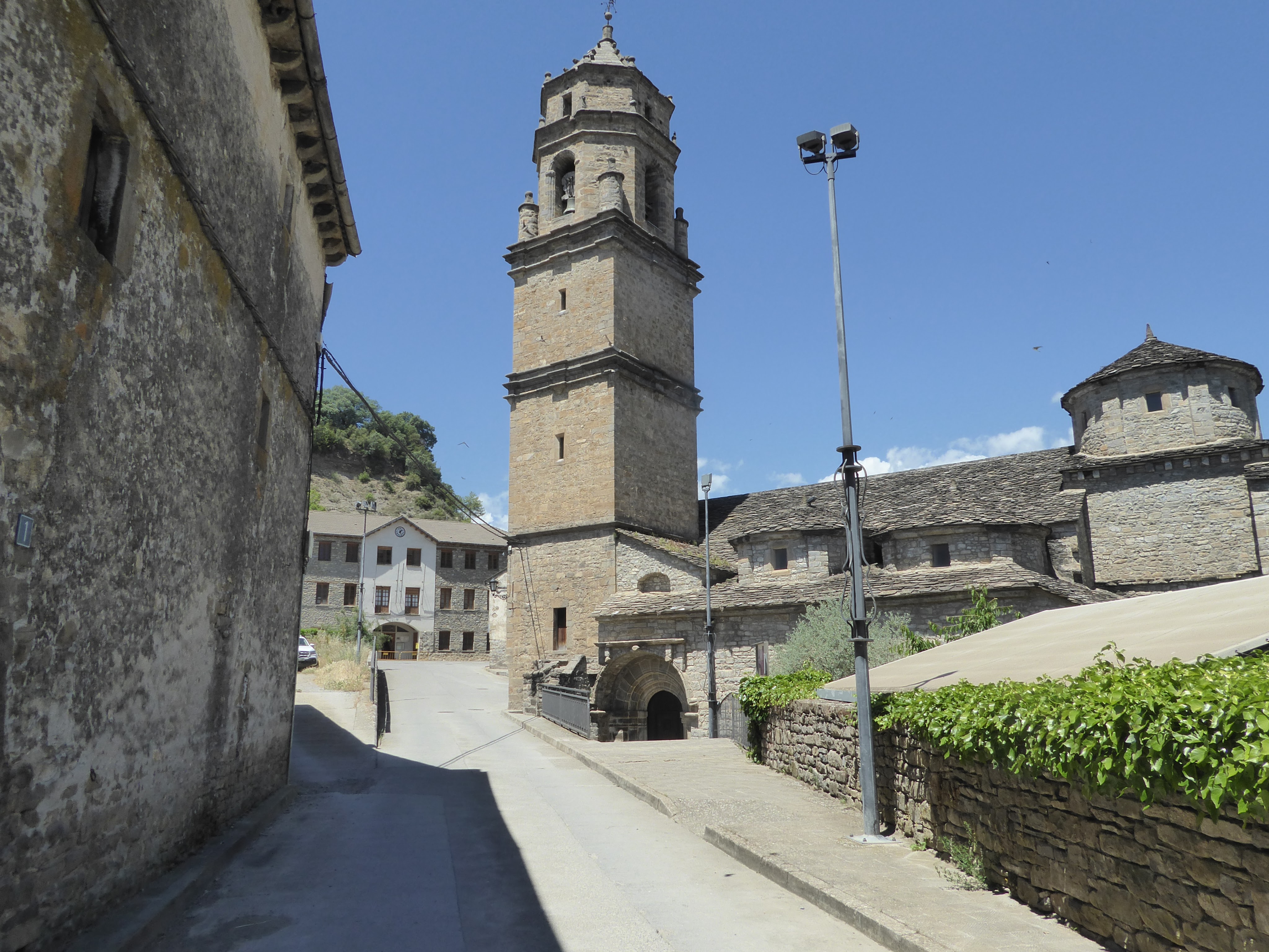
I suppose it took us about half an hour to walk to the village. It is small (according to Wikipedia it has 172 inhabitants). It is attractive, set around a square with a c12th church as its focal point.
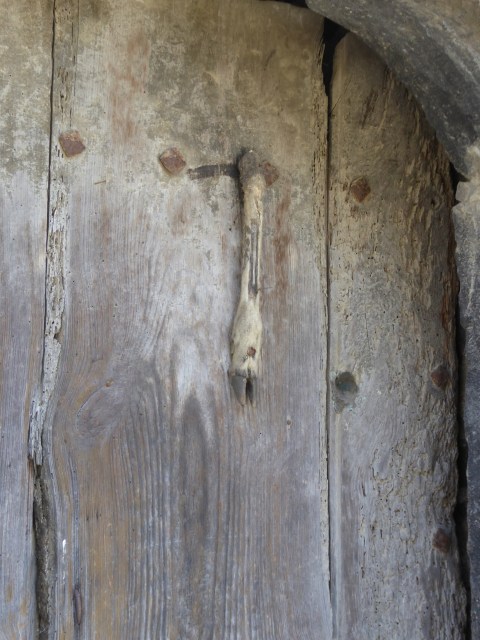
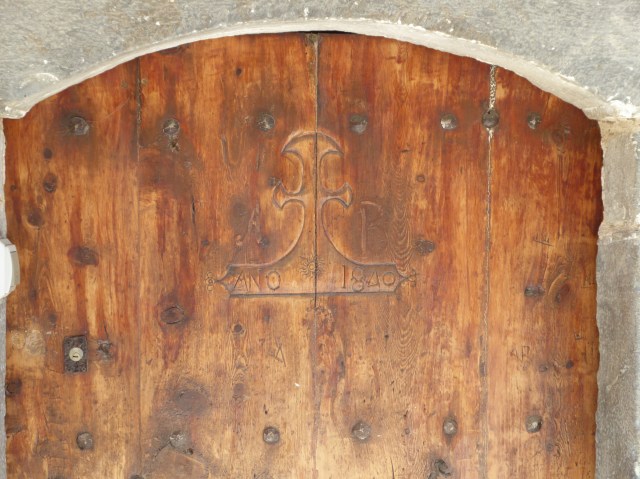
We had a mooch around the village, found the Parque de Mayores (Park for Oldies) and a few interesting doors.
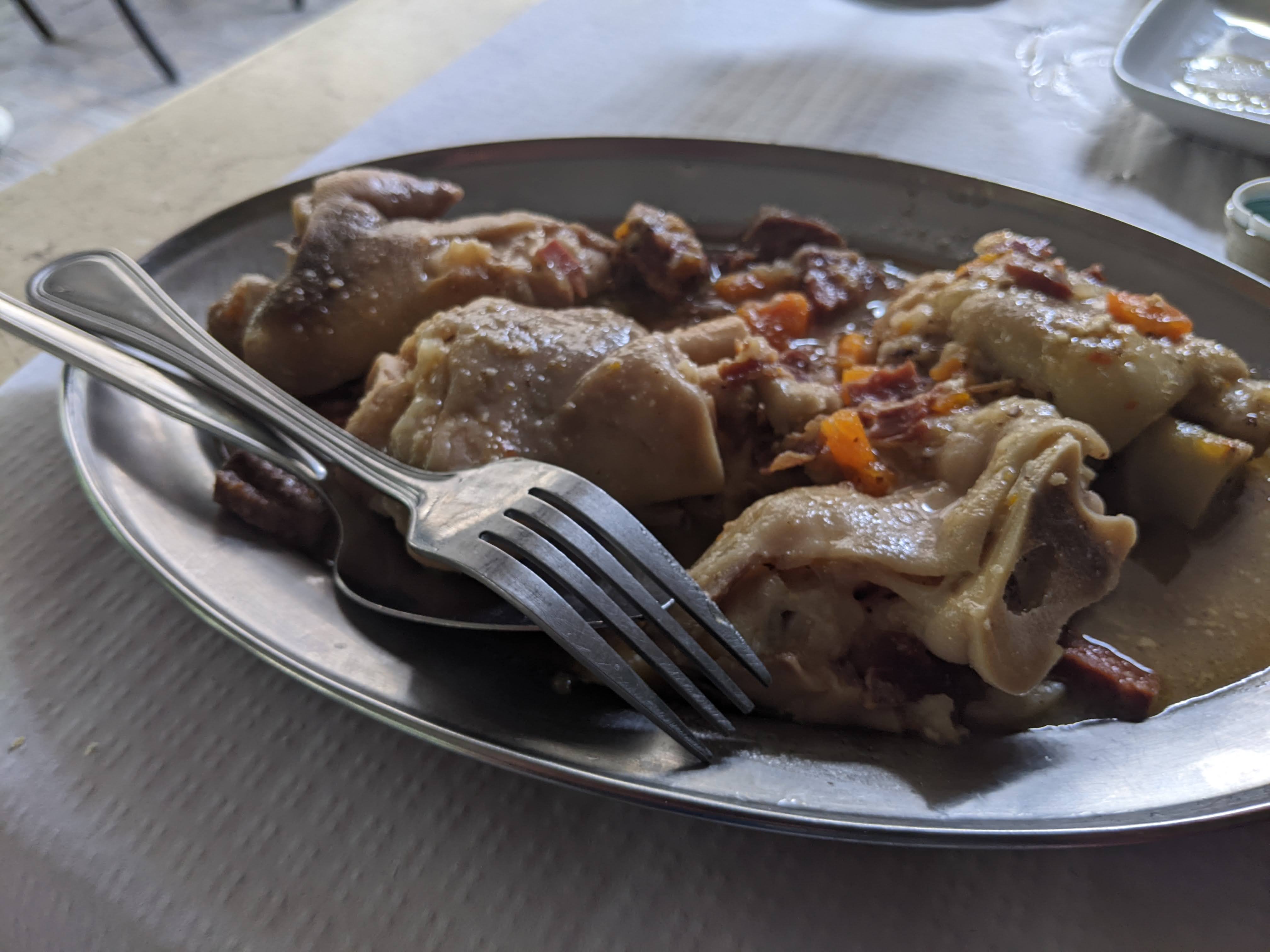
We decided that we like lunch and a cold beer. The only place that appeared to be open was a bar/restaurant called Fonda Carrera. Neither Diane nor I speak much Spanish, “dos cervezas por favor” is about my limit. As a result, we couldn’t make it clear that we wanted a cold beer. We also wanted something light to eat. We were ushered downstairs to a table in this covered courtyard, where lunch was being served. We ended up having a very good lunch of five, six or seven courses, depending on how you counted. I had manitas, which according to Google translate means handymen, slightly disturbing. It can also mean trotters, pig’s trotters to be precise. I almost chickened out and ordered the chicken. But I thought that pig’s trotters don’t often show up on menus in the United Kingdom. So, why not go for it? I’m glad that I did. They were slightly gelatinous, but tasted magnificent. The meal, which included half a litre of wine each and coffee, came to €26 each.
Handymen (Manitas)
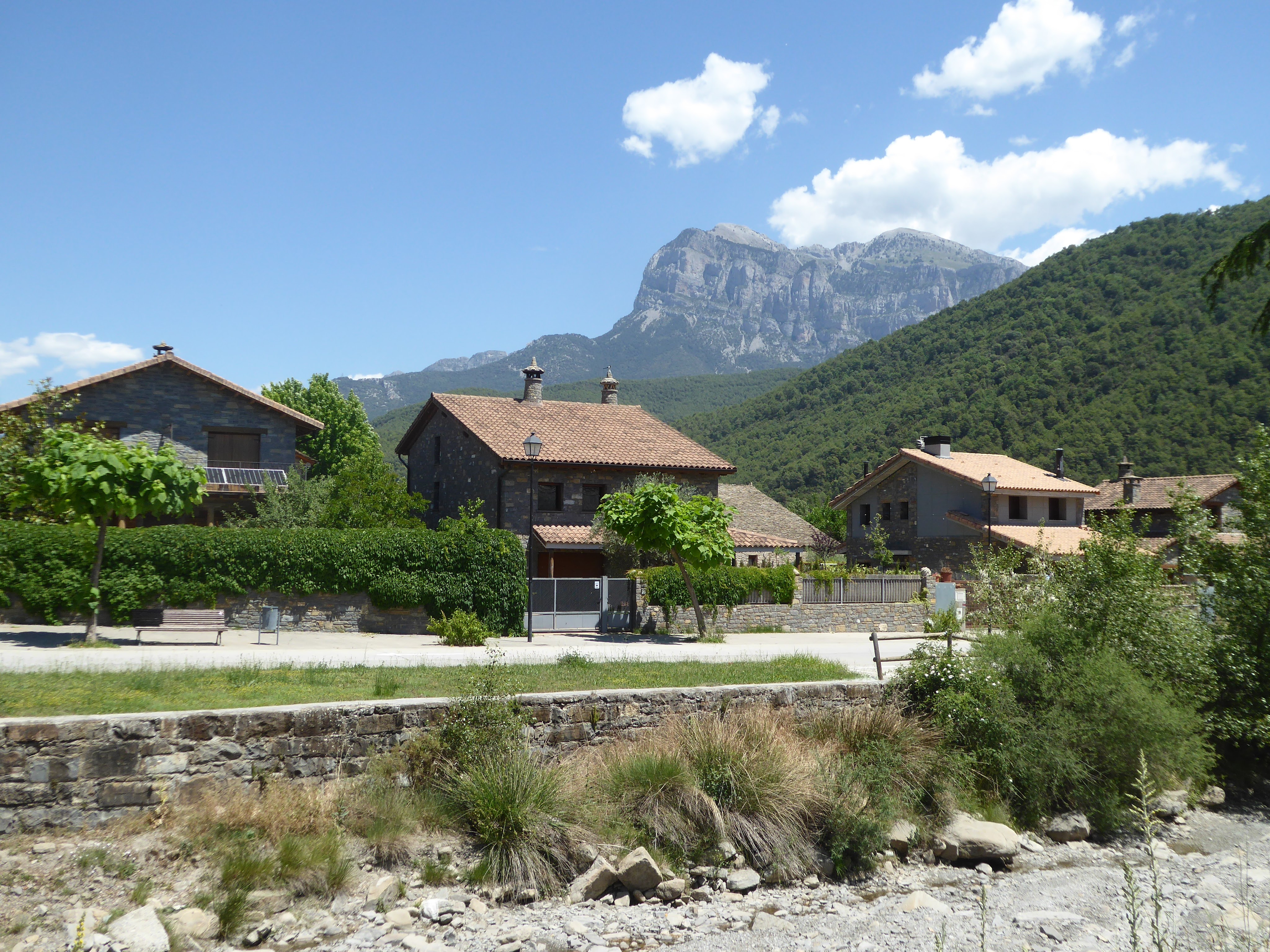
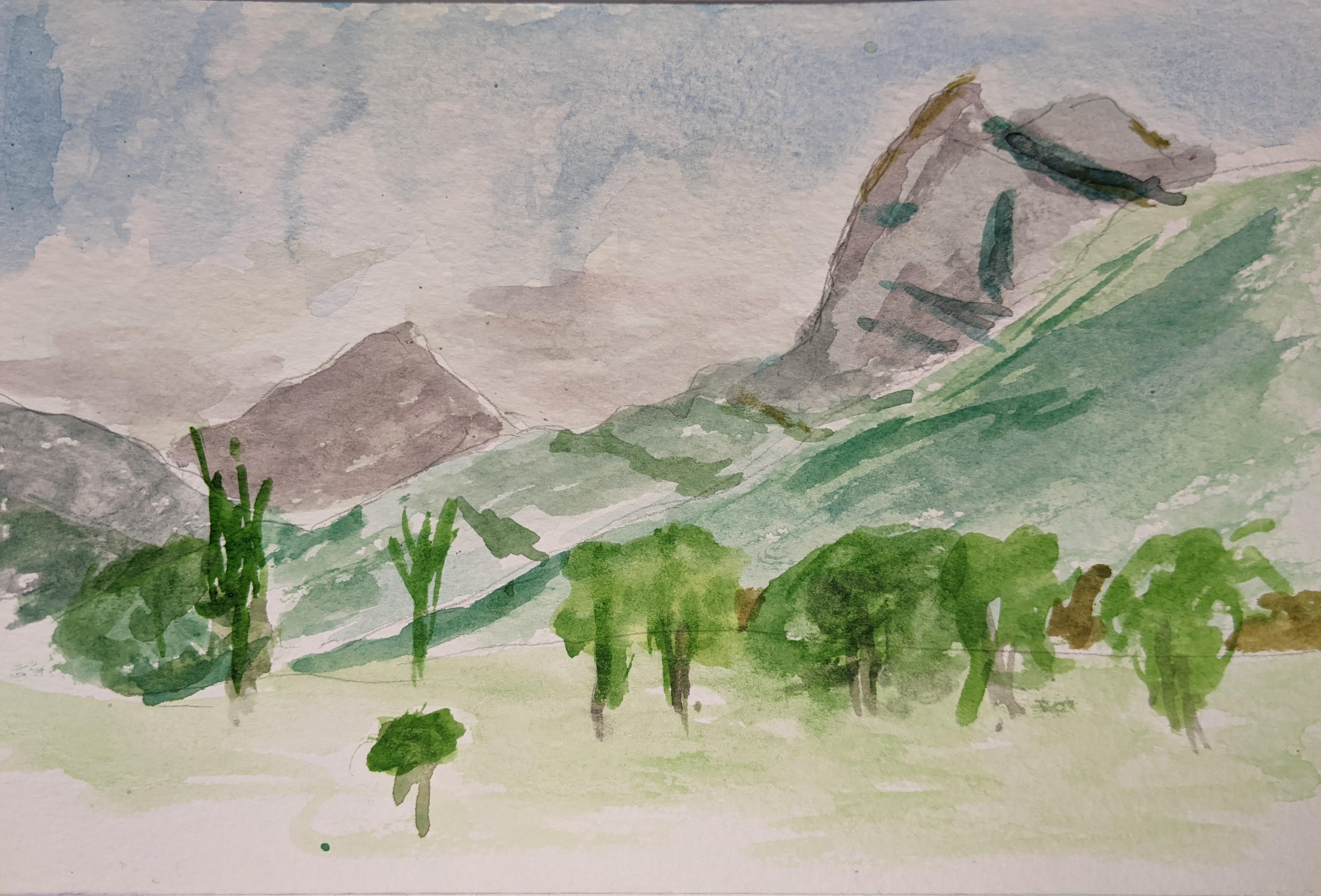
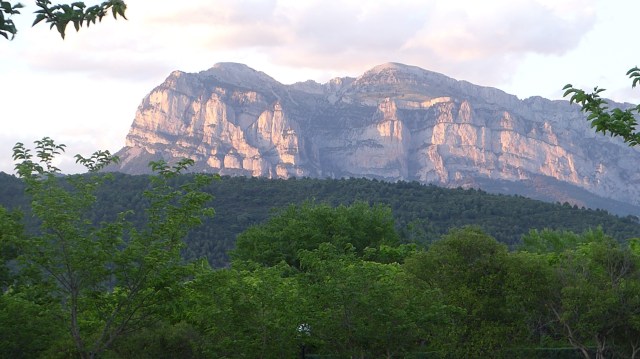
After lunch, we wandered back the way we had come. We stopped for a while, so I could do a watercolor sketch of Peña Montañesa.
Later on, as the sun was setting, it took on a wonderful rose colour.
I haven’t written much on here for well over a year. AFC Wimbledon haven’t exactly inspired me to write. I haven’t been to as many away games this past season compared to earlier seasons.
We have a new Campervan though. The Big Green Bus has gone to a new owner. I hope they have as much fun with it as we did. We have replaced it with an even bigger bus, yet to be named. We had a couple of trips out to familiarise ourselves with it. This but is the big one. Three weeks in Spain and France.
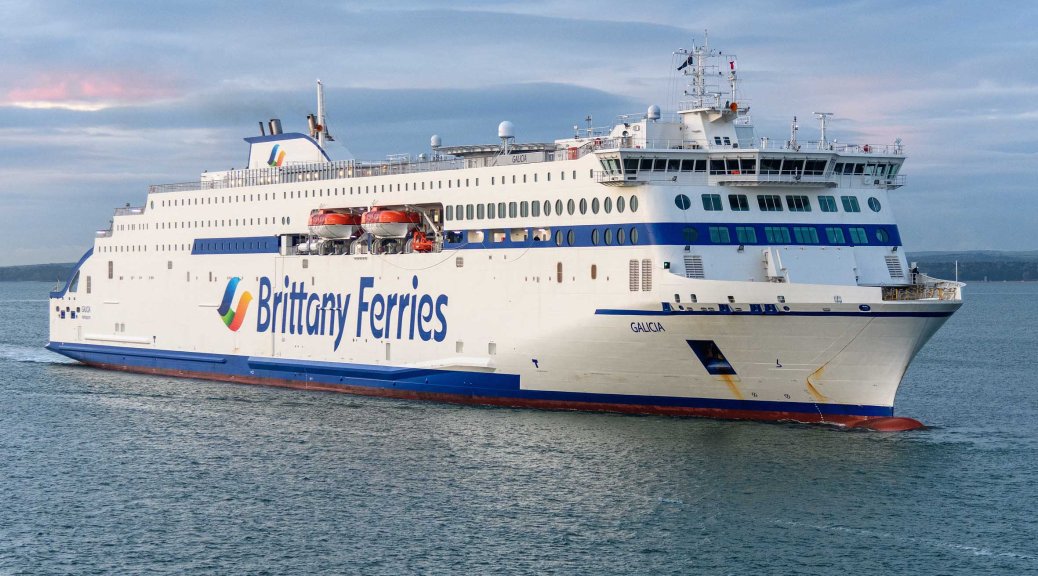
I am writing this on board the MV Galicia, heading for Santander, in Northern Spain.
We drove down to Portsmouth to get the ferry last night and sailed about 21:30. We encountered a hold up at the check in gate. We got stuck behind a car that had two dogs and the wrong paperwork. Despite these issues, everything went smoothly. Our cabin is small but perfectly adequate for two nights. The bunks are comfortable and the toilet works.
Going on board
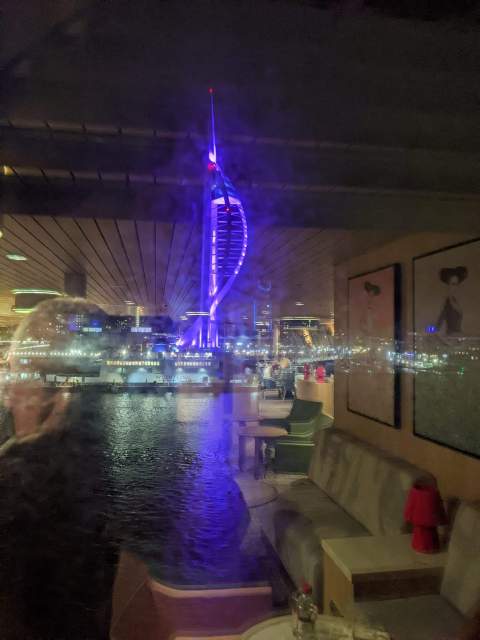
Leaving Portsmouth – The Spinnaker Tower On the ferry
We had supper in the lounge, tapas and a glass of wine, then went to bed about eleven. We woke up somewhere off the Brittany coast. Breakfast was good, nothing spectacular but perfectly fine.
This was probably the first time I had been at sea for more than a short inter-island hop since I left the Merchant Navy. We also did something that I never did during my MN years. We sailed between Ushant and the mainland. We always went round the outside. But I assume that the Master is a Breton and knows what he is doing.
The whole journey was been a pleasant experience. Diane decided to upgrade us to a Commodore class cabin, which helped. It was only £35 more than a standard cabin. It gave us significantly more space. We also had access to the Commodore lounge. This lounge is quieter than the public lounges and has complimentary tea, coffee, and cakes. At lunch time and pre-dinner wine and tapas are available, also complimentary. Well worth the extra cost in my opinion, if you are planning an overnight trip on Brittany Ferries
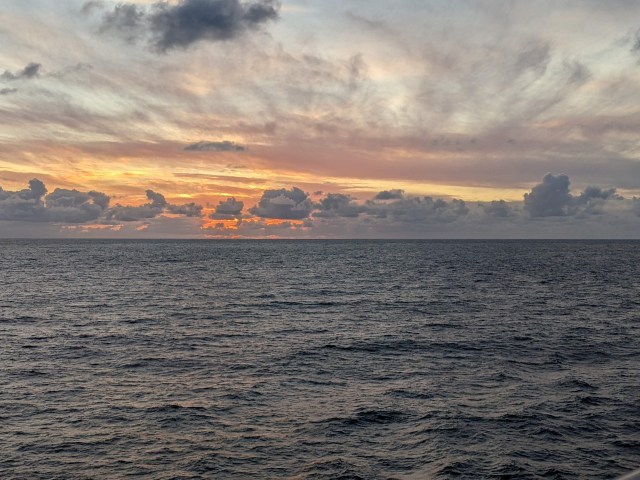
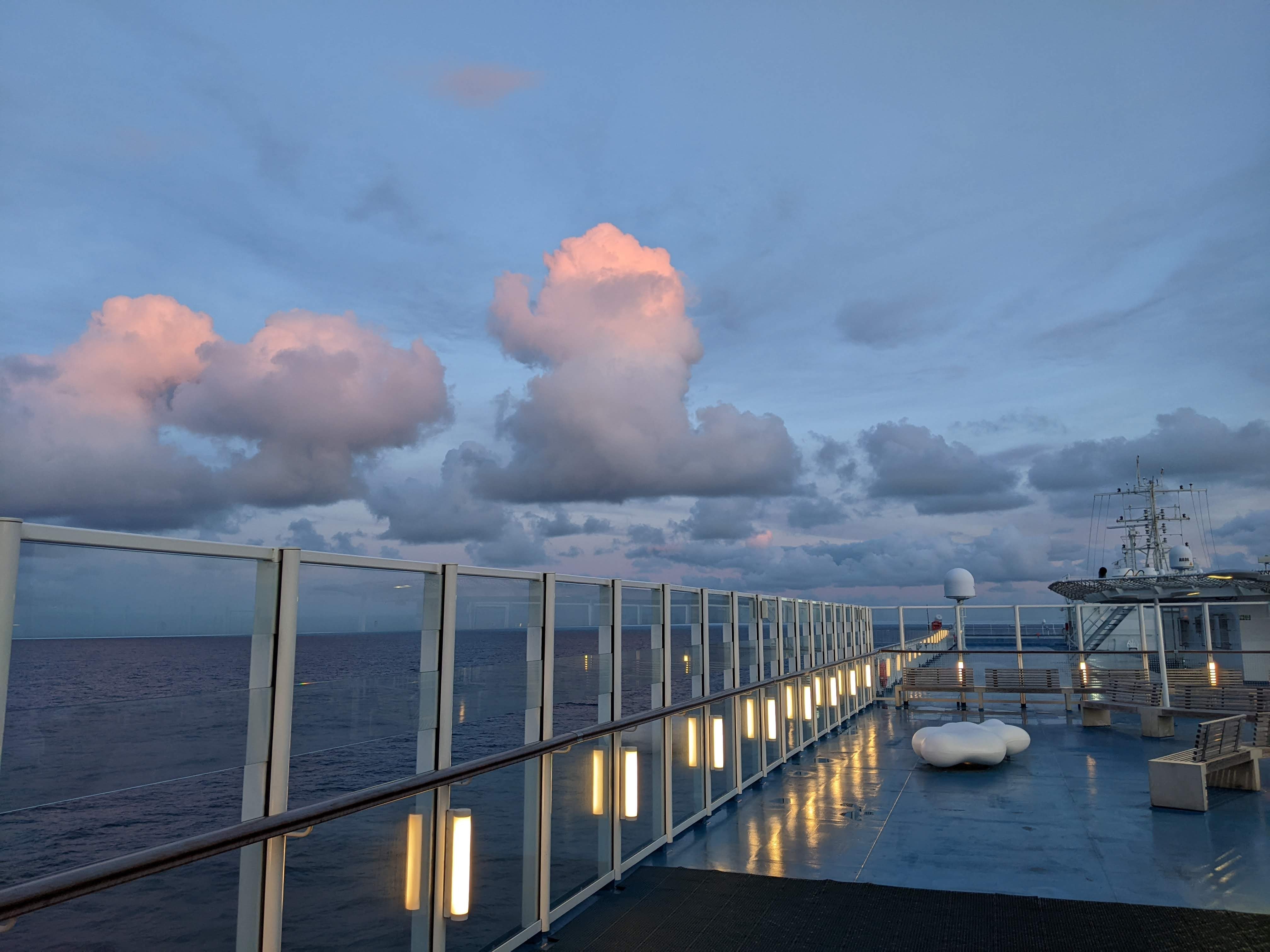
Biscay Sunset
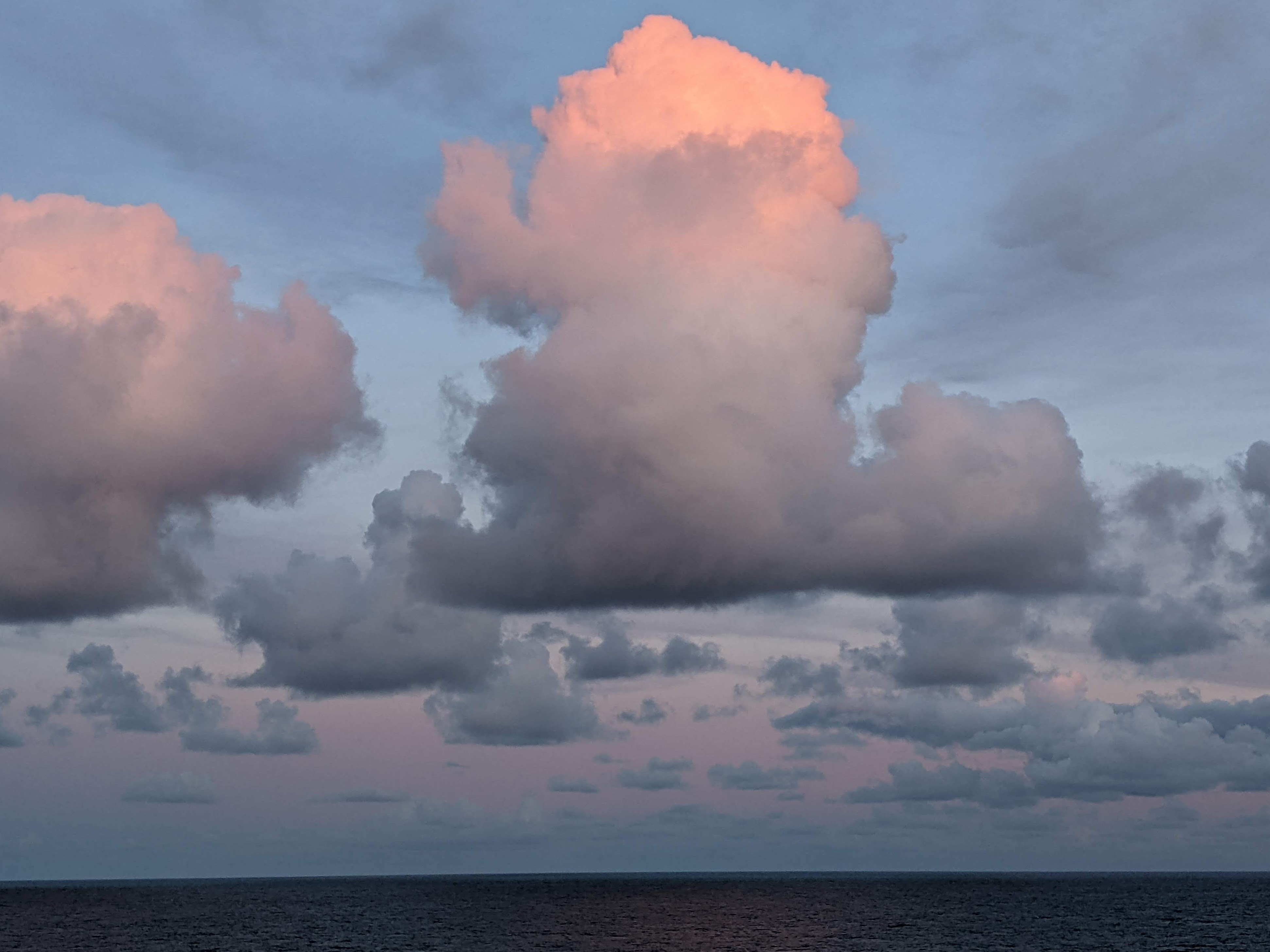
Clouds over Biscay
After a very enjoyable dinner we wandered up on deck to watch the sun go down. Also to give the whales and dolphins one last chance to show up. Diane had been religiously looking for a whale or a dolphin all day.
Biscay Sunset
It was then time for bed, as we had an early start on Wednesday morning. The ship docked at 7:00, so that meant up about 05:30 if we wanted breakfast before disembarking.
The concept behind Heston Blumenthal’s restaurant, Dinner, at the Mandarin Oriental Hotel is an interesting one. While his other restaurant, The Fat Duck, pushes the boundaries of modern cuisine, Dinner takes its inspiration from recipes from Britain’s past. He explains why the restaurant was given its name;
“It is never easy naming a restaurant. On this occasion, I wanted something that represented our menu that is inspired by historic British gastronomy, so I searched for a name that had a bit of history, but was also fun.
In the past, the main meal -dinner-was eaten at midday, before it got too dark. But affordable candles and, later, gaslight saw dinner shift. By the mid-1800s people were dining later. People working in the cities were taking a ‘lunch’ to work and having their main meal at 5.00pm when they got home, while in rural areas the main meal was still taken at midday.
Even today, depending where you are in the British Isles, ‘dinner’ might be served at lunchtime, suppertime or, indeed, dinnertime!
This made ‘Dinner’ the natural choice for its typically British quirky history and linguistic playfulness. If nothing else, I hope it’s easy to remember.
– Heston
Though, I suppose, because I live in London rather than the Scottish Borders these days we had “lunch” rather than “dinner”. Anyway the older of my two sisters was down from Scotland on her annual pre-Christmas trip to London and my younger sister suggested that we go to Dinner. Grace and I said “yes please”.
The Room
You walk into the restaurant through a bar area, which looks a pleasant enough area to have a drink while you are waiting for friends and/or your table. The restaurant itself is a large open room with a view over Hyde Park (a strategically placed hedge hides the road that runs between the hotel and the park. A glass wall runs down one side of the room allowing you the see into the kitchen and the famous pineapple spit.
The dress code is pretty relaxed, at least at lunch time, but I doubt that it would change for the evening. While most people, including ourselves, had dressed up a bit, there were a few diners wearing t-shirts and jeans and very few men were wearing ties.
Grace declared the chairs to be suitably comfortable, so on to the food.
The Food
We decided in the interests of economy to have the set menu, which is only available from 12:00 to 14:30, but at £38 for three courses is good value. Neither of the two choices of main course were suitable for a vegetarian,so Grace was given a dish from the A La Carte menu called “Braised Celery” She also went off piste with her pudding, but more of that later.
A very comprehensive wine list was proffered and flicked through. Possibly I missed it but I couldn’t see the £12.50 House Red. Wine by the bottle is not cheap. There are few, if any bottles at less than £50 and an awful lot over £100. We decided to go with the suggested wine pairings at about £10 per glass.
The set menu offers a choice of two starters, two mains and two puddings, if you are interested click here to see the full menu.
The Starter
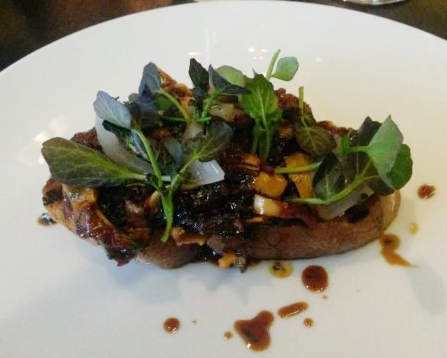
Ragoo of Pigs Ear on Toast (c.1750)
My starter was the Ragoo of Pigs Ear on Toast. The recipe it is based on comes from around 1750. The pig’s ear is cooked in red wine and Madeira with onions and anchovies until it is falling apart. The sauce is heavily reduced to a slightly sweet syrup. My sister who also had the dish suggested that it had the texture of pulled pork, she was about right. It is served on a slice of toast, which soaks up the juices and saves asking for bread to mop them up. The wine that went with it was a full bodied Rioja. The intense meaty flavours would have completely overwhelmed a more delicate wine.
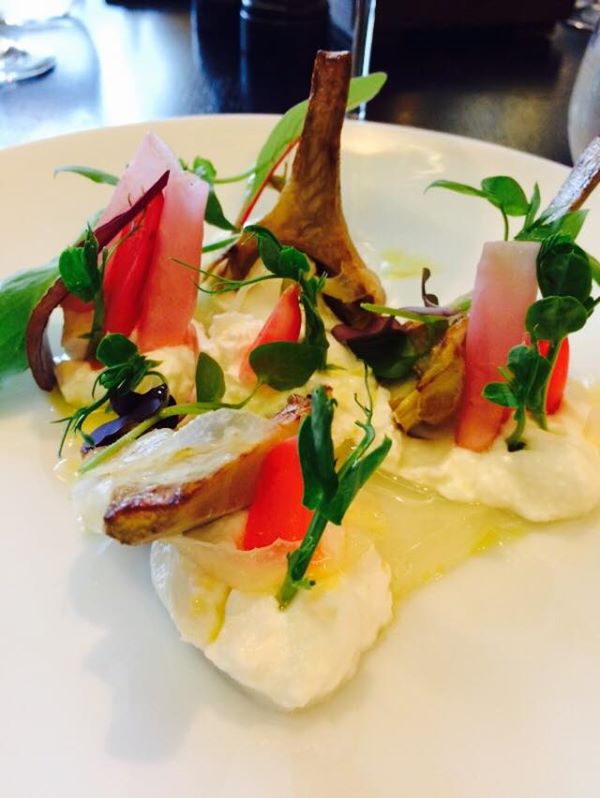
Lemon Salad (c.1730)
Grace (being vegetarian) and my other sister chose the Lemon Salad which dates from around 1730. It consisted of smoked artichokes preserved lemon, beetroot and goat’s curd. They both pronounced it excellent. (The photo is borrowed from my sisters Facebook page)
The Main
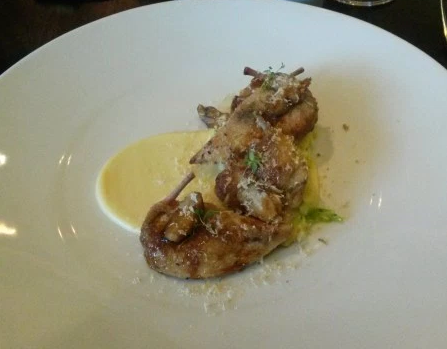
Roast Quail (c.1590)
My main course was Roasted Quail, which was served on a bed of cabbage with a celeriac puree, smoked chestnuts and a quail sauce. This was a lovely dish. Quail is quite a delicately flavoured bird and because of it’s size not the easiest to cook, it is very easy to over or under cook and even easier to dry out. I suppose I shouldn’t be surprised that a two Michelin Starred kitchen managed to cook it perfectly, but it was. The puree was smooth as silk and the smoked chestnuts added a complimentary flavour and texture. What they did to the cabbage I am not quite sure, but it was simultaneously creamy, crunchy and had more flavour than any cabbage I can remember eating. The wine that was served with it was something I had never tasted before. A Corsican red, made from two grapes that I had never heard of and whose names I cannot remember, I really should have taken notes from our very (pleasantly) chatty and informative sommelier. When we tried it the first reaction of my sister and myself were exactly the same “That’s different, but pleasant”, when it was drunk with the food it was perfect. I don’t think I have ever had a wine that went with the food I was eating as perfectly as that did.
Grace had the only veggie main on the menu; Braised Celery (c.1730) with Parmesan, girolles, vinaigrette, cider apple & smoked walnuts. Unfortunately the restaurant got the idea that she was a Vegan rather than Vegetarian (she’s not it’s just that she doesn’t like too much egg or cheese and lazy cooks have a tendency to produce a cheese omelette) the kitchen left the parmesan sauce off the dish. She said it was fine and that the carmelised smoked walnuts were something else, but it probably did need the sauce or something to bring it together.
My other sister decided to have the Roast Pollack (c.1830), Admiral’s sauce Parsnip puree, shrimps, shallots, brown butter & capers. She is married to a fisherman so knows what a good piece of fish should taste like. She pronounced it the best bit of fish that she could remember eating.
The Pudding
Spiced Christmas Custard Tart (c.1850)
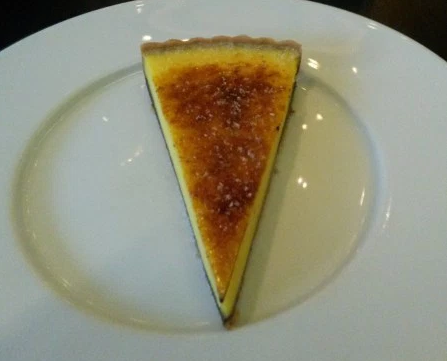
My pudding was a Custard Tart, but that doesn’t really do it justice. Yes it was a perfectly made custard tart, the pastry was thin sweet and crisp and the custard, well, custardy soft and not too sweet, but what lifted it to the special was the intense thin layer of mincemeat with a good kick of brandy between the pastry and the custard, oh and the brulee type topping.
My sister had the Millionaire Tart (c.1730), which when it arrived at the table I said “oh it’s just like mum used to make”. Apparently, it had similarities in that it had a biscuit base, a caramel layer topped by a chocolate layer, but that was where it ended. Mum I’m afraid that your Millionaire’s Shortbread is now only the second best ever. (Though I don’t think they could top your Apricot Tart.)
Grace decided that she would like the Tipsy Cake (c.1810) with Spit roast pineapple from the spit that we could see revolving away from our table. She didn’t like the pineapple, but that was because for some reason she has developed an aversion to acidic foods, so she left it to the rest of us to try, it was perfectly fine, but I didn’t think the taste justified the hype. The tipsy cake on the other hand brought a huge silly grin to her face with the first spoonful, which stayed there ’till we got home. She was generous enough to let the rest of us try a little bit. It was a brioche filled with creme anglaise and soaked in rum, pure indulgence. She described it as the best bread and butter pudding ever.
We finished our meal with coffees which came with a caraway seed biscuit and a little pot of chocolate ganache to dip them in.
The service throughout was excellent but unobtrusive, I don’t think my water glass remained unfilled for more than five seconds. Actually our sommelier wasn’t that unobtrusive, but he was informative and fun, so I forgave him.
The bill, including drinks and service came to £75 per head, not cheap but I think for a one off occasion worth it.











 A Scotsman in Suburbia