

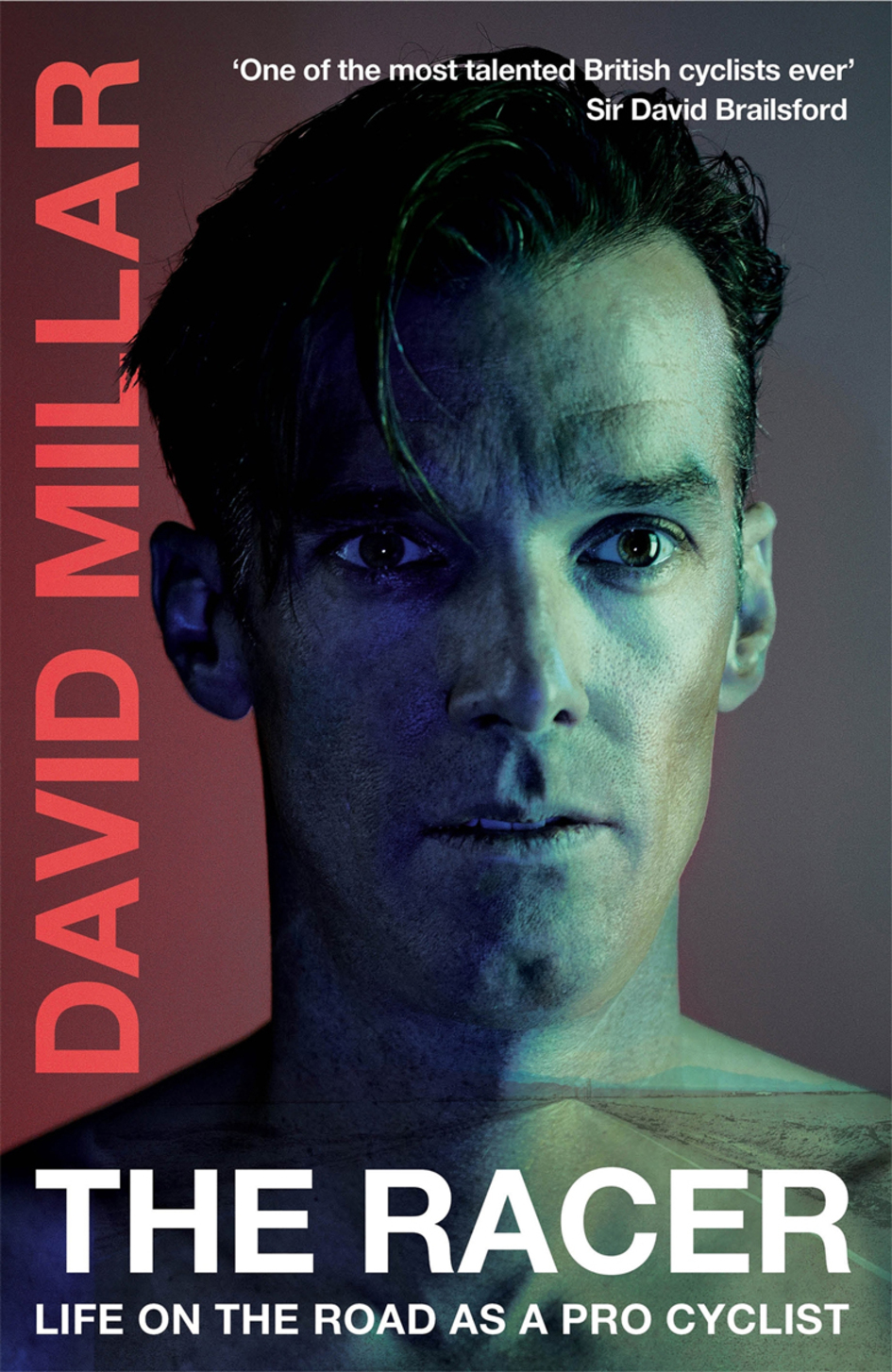
The Racer is David Millar’s second book. His first “Racing Through The Dark” dealt mainly with his and the sports dark period when doping was more or less de rigueur.
Quoting the book;
What he has given us can be read on one level as a diary of his last season as a professional cyclist, but on another it can be read as a love letter to bike racing. One that acknowledges that bike racing brings joy and heartache and not necessarily in equal measure.
He writes the book as a series of vignettes. The subjects range from the difficulty of getting an ageing body ready for a final season, through a theory of crashing, to his final race which as he says completed the circle of his career by going back to where he had started as a competitive cyclist.
He wasn’t expecting to win many if any races in his final year. That wasn’t his job in the team. His job was Road Captain. Calling the tactics, making sure that the rest of the team were where they should be, encouraging riders who were having a bad day and pacing team leaders back to the front after a mechanical or a crash. He gives a particularly insightful look at how this works in the chapter on the Tour of Flanders (or Ronde Van Vlaanderen to give it the proper name).
The book divides two halves. Pre Tour de France and post (non selection for) the Tour de France. I don’t think I am giving away any spoilers by telling you that David Millar was not selected for the Garmin Sharp Tour de France squad in 2014. Read the book and he tells the story better than I can precis it.
Post (non selection for) the Tour he had four events on his schedule. The Commonwealth Games, the Enoco Tour, the Vuelta d’Espanga – which was to be his last race with Garmin and the World Championships – his last ever race as professional.
The Commonwealth Games was a disappointment, but as he explains not an unexpected disappointment giving that he lacked the conditioning of three weeks racing the Tour de France. He deals with La Vuelta, his twenty-fourth and last Grand Tour, in day by day accounts of the highs and lows of bike racing.
So on to his final race as a professional. The World Championship Road Race. National teams race The Worlds not professional trade teams like all the other races during the season. He makes a point of comparing how the British National team treated him coming in to the Worlds carrying an injury from La Vuelta to how Garmin treated him before the Tour de France. As it turns out, because of the injury, he can’t actually give a lot, other than getting the tactics right and ensuring that the riders who might win are where they need to be when the attacks go. He did his bit then pulled out. His last race was a DNF.
Except it wasn’t his final race, he still had one more race to complete; one that brought his career full circle the ‘Bec’ hill climb.
The book gives an honest and insightful look into the life of a professional cyclist. It is well written, not by a ghost writer as with most sporting “autobiographies” but by the man himself. It is quite a book and well worth reading
 A Scotsman in Suburbia