My step-daughter very kindly bought me a birthday present last year, tickets for an exhibition of Monet’s paintings of London at the Courtauld Gallery.
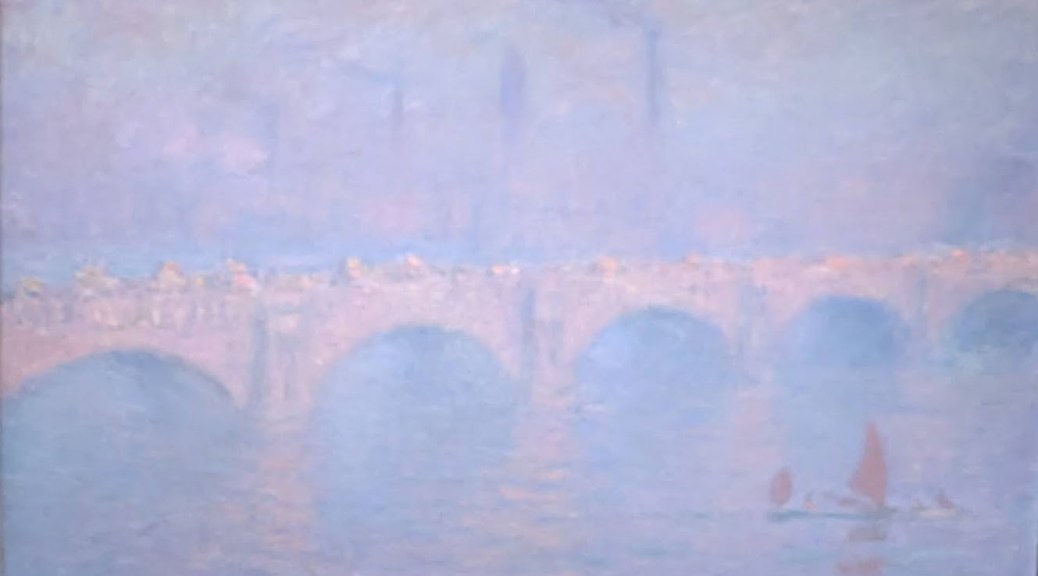
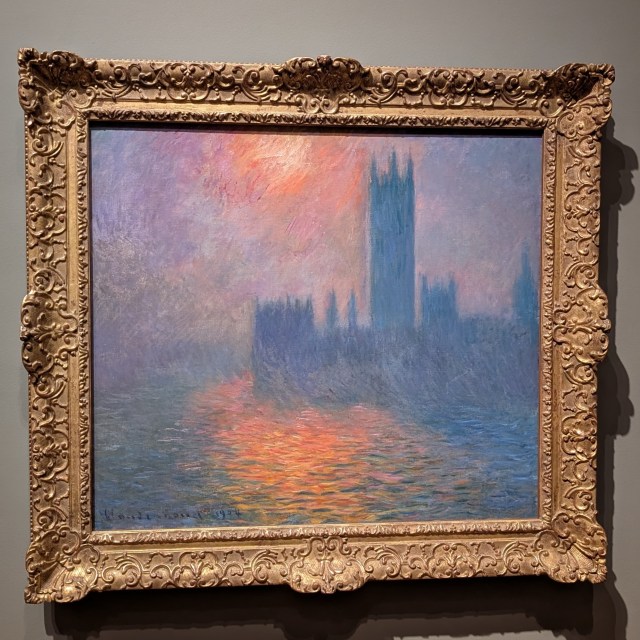
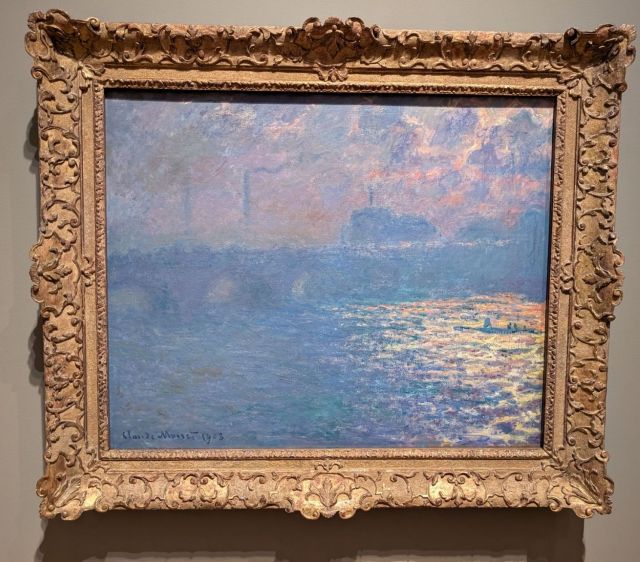
Monet was fascinated by the effects of sunlight. He loved its interaction with the fog and the smoke belching from the factories on the South Bank. Between 1899 and 1901, he made three extended trips to London to try and paint the effects. He stayed at the Savoy and set his easel up on a balcony overlooking the river. (No starving in a garret by this stage of his career) During his stays, he produced over a hundred unfinished canvases. From these, he eventually produced a series of thirty-seven paintings called View of the Thames. The paintings concentrate on just three sites, Charing Cross Bridge, Waterloo Bridge, and the Houses of Parliament. The views of the Houses of Parliament were painted from a terrace at St Thomas Hospital, on the South Bank.
The paintings were exhibited in Paris in 1904. The exhibition was a critical and commercial success. He had plans to repeat the exhibition in London in 1905. The plans fell through because of the commercial success of the Paris exhibition. (He couldn’t borrow back enough of the paintings he had sold) One hundred and twenty years later, twenty of the thirty-seven paintings are back together in London. The Courtauld Gallery is in Somerset House. It is about one hundred meters down river from the Savoy hotel, where they were originally painted.
The Exhibition.
The source of the paintings is familiar, as are the paintings themselves. With Monet’s views of the Thames it is difficult to feel surprised by any individual piece. But when presented with the ensemble, it is hard not to be impressed
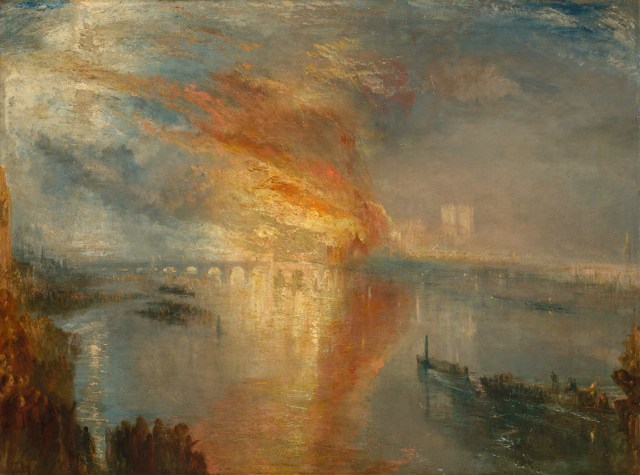
Although there are only three subjects, Monet imbues each painting with a different feel. Although Monet admired J.M.W. Turner, he never claimed him as an influence. Nevertheless, many of the paintings have a Turneresque feel to them. Though Turner only painted the Old Parliamentary buildings on fire
Parliament Claude MonetParliament J.M.W TurnerClick to enlarge.
The paintings of the bridges show that the sun does come out (occasionally).
The Waterloo Bridge that Monet painted was replaced by the current bridge in 1934 because of structural problems. Waterloo Bridge was falling down
Having completed his London series, Monet went on to work on his Waterlilies series, which took up his remaining years. In many of the paintings, but especially in the ones above, you can see the development of blending water, sky, and sunlight. That became one of the features of his Waterlilies.
It was an enjoyable, if not overly challenging exhibition. Not every exhibition has to be challenging or ground breaking.
The permanent collection is also worth an hour or two of your time.
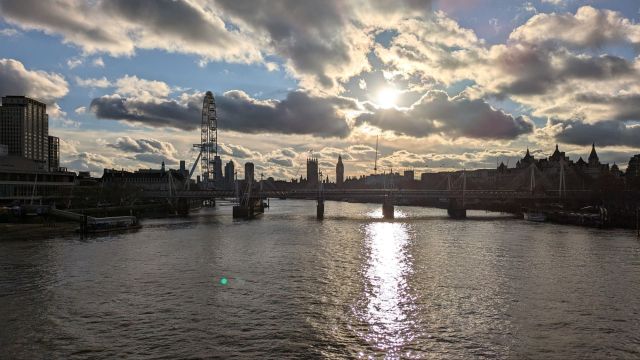
We couldn’t get onto a balcony at the Savoy, so we did our modern-day take on the scene from Waterloo Bridge. Fortunately, we no longer have the air pollution that created the effects that fascinated and, to an extent, frustrated. Monet. He found it frustrating because the light changed every five minutes.
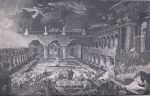
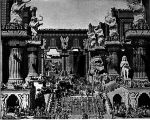
In the very early years of cinema DW Griffith more or less invented the Blockbuster Action movie with his films “Birth of a Nation” and “Intolerance”. The set designs for “Intolerance” clearly show John Martin’s influence. Compare the print of Martin’s painting “Belshazzar’s Feast with Griffith’s set design for a Babylonian scene in Intolerance.
(As always click on an illustration to see a larger version)
I remember reading somewhere that Griffith owned a good selection of Martin’s prints and did use them as source material for some of his sets. Unfortunately even in the age of Google I can’t find a reference.
Moving on to more recent events in the history of the cinema:
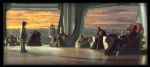
The scene in Star Wars I “The Phantom Menace” * where Anakin Skywalker is before the Jedi Council has clear echoes of John Martins “Paradise Lost” print entitled “Satan in Council.
There are many other examples that I could have chosen, but these two do as well as any to illustrate the hypothesis. Anyone who has seen Peter Jackson’s Lord of the Rings trilogy can see how Martins work influenced him.
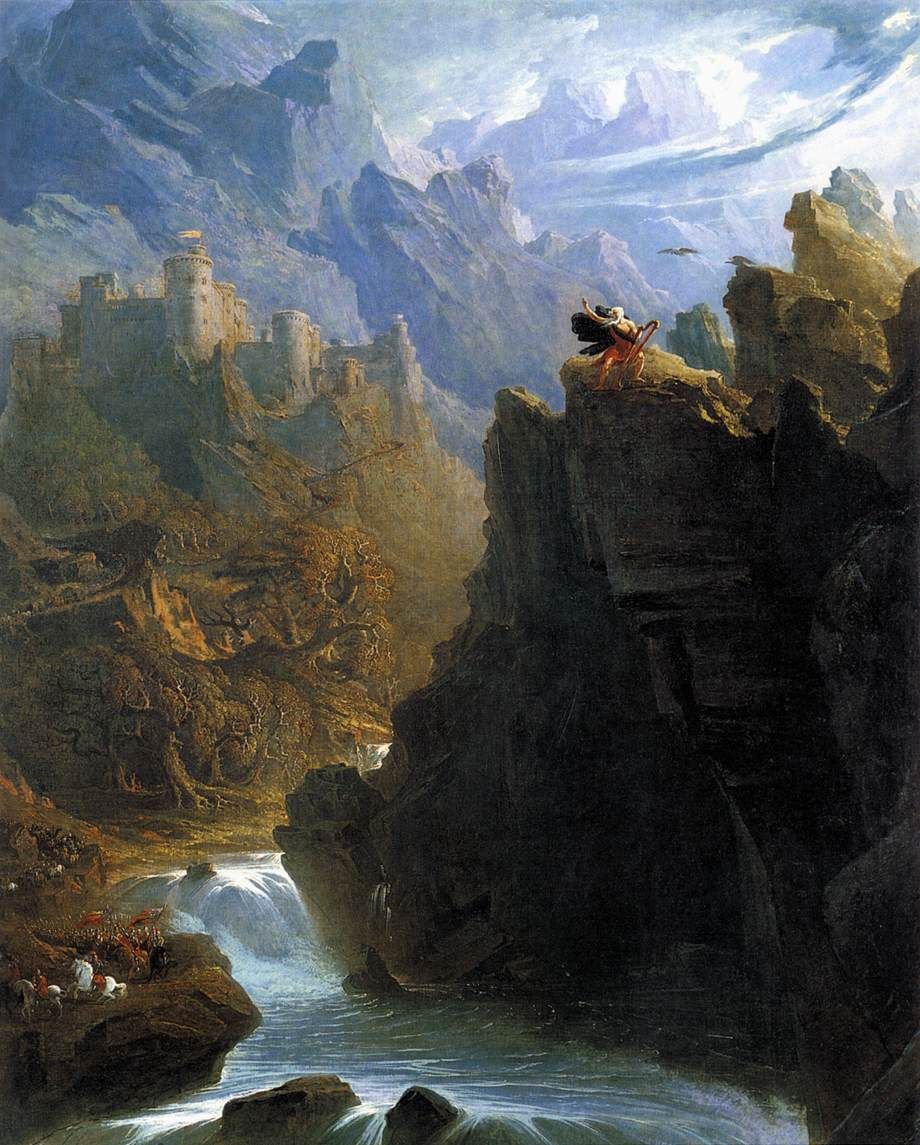
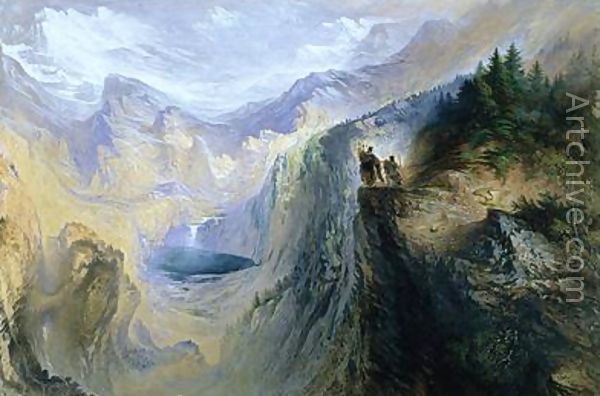
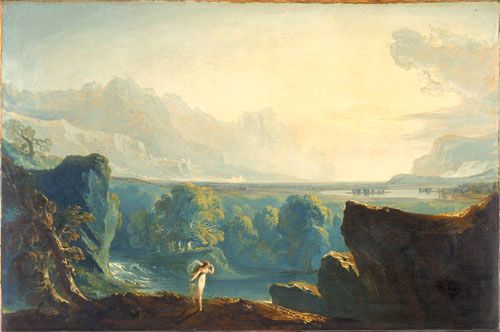
Two of Martin’s paintings “The Bard” and “Manfred on the Jungfrau” seem, to me at least, to have strongly influenced Jackson’s vision of Rivendell.
The Bard
Manfred on the Jungfrau
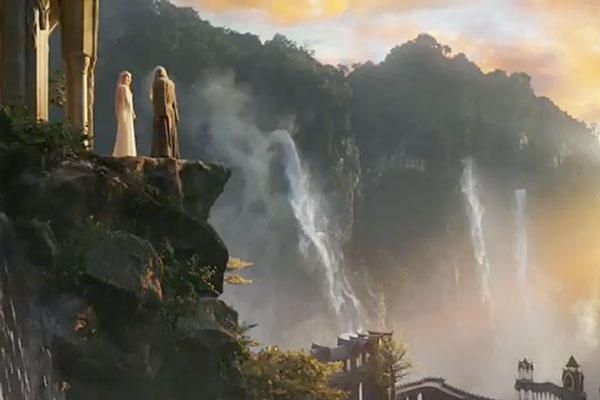
Now compare these with a still taken from the trailer of “The Hobbit”.
Rivendell (Still from the Hobbit)
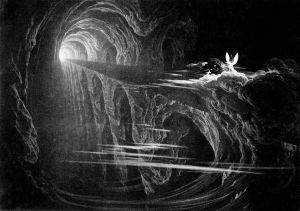
Also recall the scene inside Mount Doom shortly after Gollum fell to his death, taking the ring with him and Frodo and Sam made their escape across the rapidly collapsing bridge.
The influence of another “Paradise Lost” print “Bridge over Chaos” is obvious – to me at least.
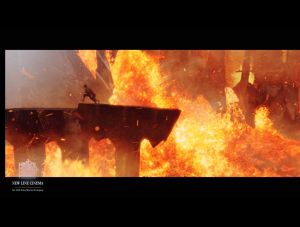
Almost every disaster movie ever made borrows its images to a greater or lesser extent from “The Great Day of His Wrath” with its vision of whole cities being cast into the flaming abyss. Take this still/advertising poster for “2012”.
Just to back up my reasoning The Tate made a short Sci-Fi/Disaster Movie influenced video to promote the show.
Disclaimer: I am not endorsing a film that stole £8.50 of my money and about two hours of my life under the false pretences that it had something to do with “The Empire Strikes Back”
Another review of an art exhibition just before it is due to close. I must try to get my act together next time.
The current exhibition at Tate Britain features the Cecil B de Mille of the early c19th Art World John Martin.
Portrait of John Martin by Henry Warren, 1839
John Martin was born on 19 July 1789 in Haydon Bridge near Newcastle. His family appears to have been fairly poor. He did not have much in the way of formal training in fine art. He was originally apprenticed to a coach painter. After the coach painter broke the terms of the indentures by failing in increase John Martin’s wages, he went to work for Boniface Musso, an Italian artist who had based himself in Newcastle. In 1806 he left Newcastle for London where he intended to establish himself as an artist. Initially he supported himself by working as a ceramic painter. (The only known ceramic by him is on display in Room 1)
Martin became known as a painter of the “Sublime” in other words as a painter of awe-inspiring and terrible scenes. He deliberately designed his paintings to stand out from the crowd in shows such as the Royal Academy and as such they took on what we would now see as a cinematic quality. Indeed his work can be likened to a block-buster action film, full of drama and possibly too many special effects. I’ll come back to this aspect in another post, because it is an area that I would like to explore in more depth.
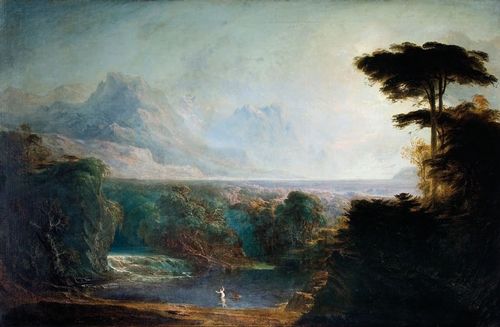
I have liked John Martin’s work for a long time, in fact since the first time I saw his Last Judgement Triptych. His best paintings have a grandeur and a touch of madness about them that I love. However during his lifetime (and since) the criticism that his work is repetitive and displays good craftsmanship but not true artistic merit is often made. The charge of repetition especially, does have a basis. He painted a series based on Ovid’s Metamorphoses, and while I wouldn’t say the every painting is the same, there is more than a theme running through them. In addition the mountains in almost every painting that features mountains, from “Clytie” in 1814 through to “The Plains of Heaven” in 1854, are essentially the same, albeit very dramatic, mountains.
Notice any similarities between the paintings?
I can forgive him, he was a man from a poor background making his living by selling his paintings. He found a formula that sold and stuck to it. Like Albrecht Durer (1471 – 1528), another artist who relied on what he sold to keep body and soul together, he moved into printmaking. And although ultimately it was only marginally profitable and a major drain of resources, like Durer, he produced some of his finest work in this medium.
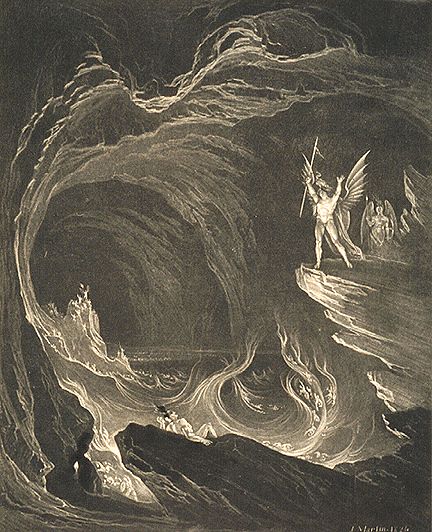
He was initially commissioned by Samuel Prowett to create a series of prints to illustrate John Milton‘s Paradise Lost. Later, inspired by Prowett’s venture, between 1831 and 1835 Martin published his own illustrations to the Old Testament.
His illustrations for Paradise Lost are quite stunning, I have included two below, but to see more follow the links.
Part of the reason for John Martin’s decline in fame, and possibly where some of the idea that he was a craftsman and not a painter came from, was that for the best part of a decade from the late 1820’s he devoted most of his time to trying to produce a solution to London’s sewage disposal problems. The exhibition includes some of his plans and proposals for the sewage system. They are beautifully drawn and to this (mechanical) engineer’s eye seem to be workable solutions. They were never executed in his lifetime. The authorities rejected his plans, deeming them to be too expensive. Although whether they would have been more expensive in the long-term than doing nothing is less clear. However when Joseph Bazalgette designed and built the London wide sewage system in the 1860’s (a system that is still largely in use today) He adopted and incorporated many of John Martin’s ideas.
The main focus of the exhibition are what are known as “The Three Great Paintings” or “The Last Judgement Triptych”. John Martin painted them in the period shortly before his death. He completed them in 1853 shortly before a stroke paralysed his right side. He never recovered and died on February 17, 1854.
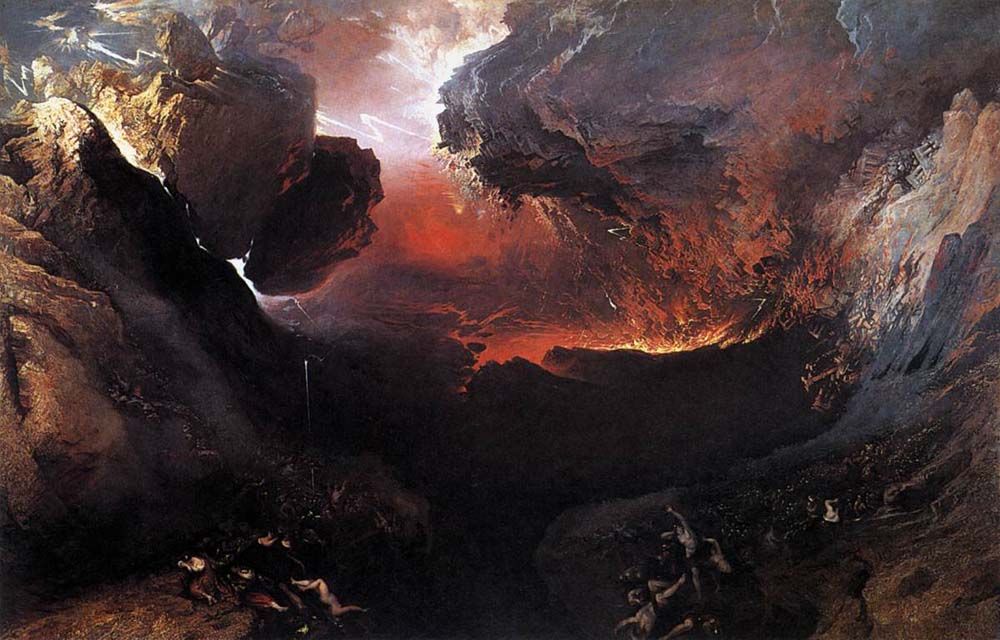
The Great Day of His Wrath (1851-53)
“The Great Day of His Wrath” based on the passage from The Book of Revelation Chapter 6 vs12-17 shows Marin at his apocalyptic apogee. We see people, buildings, whole cities, and mountains being hurled to their destruction in a chasm of fire. Martin is stating his belief that nothing can escape the wrath of God and indeed it is futile to even try.
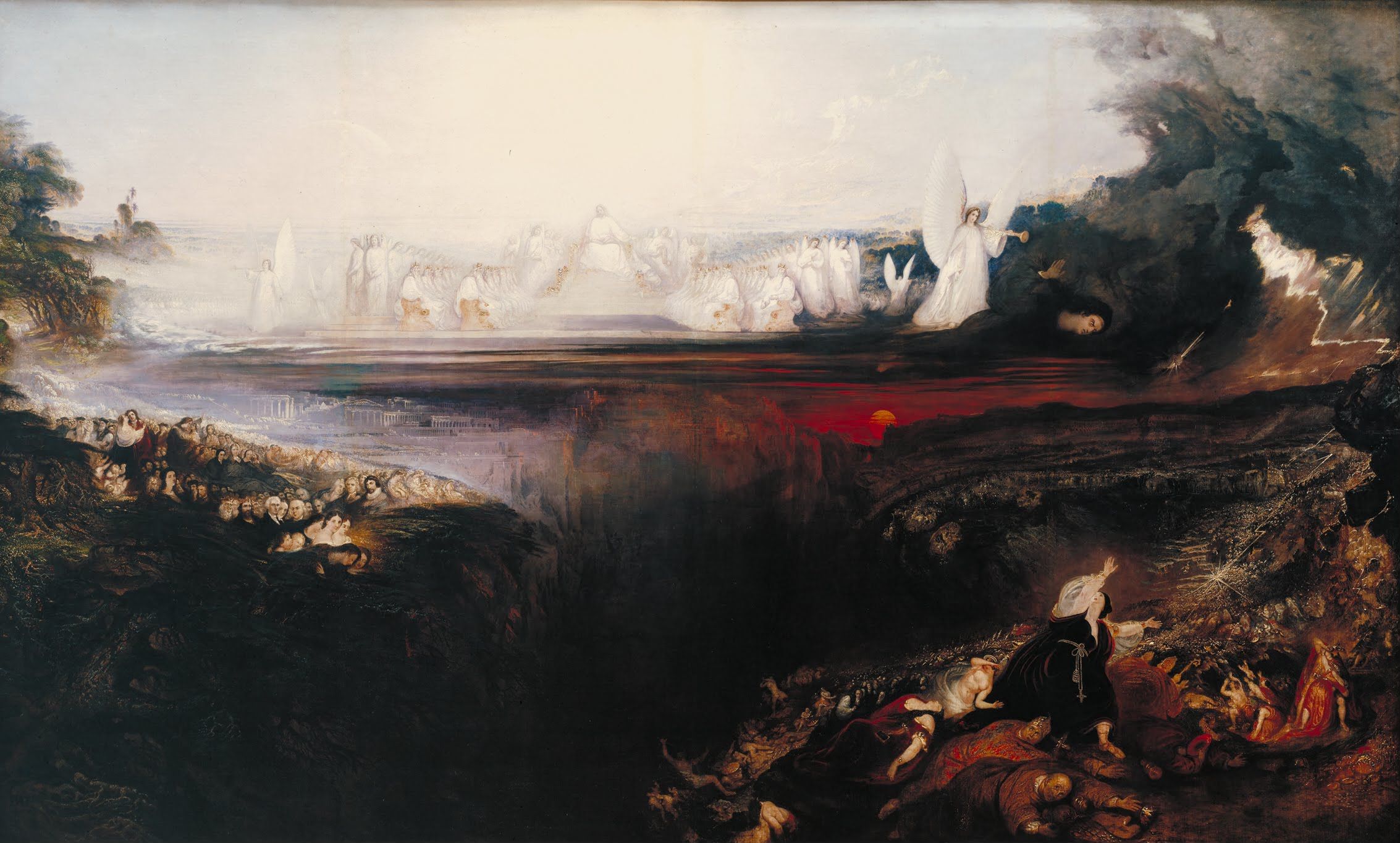
The Last Judgement 1853
Again based on passages in the Book of Revelation, Martin allows himself to play at being the Last Judge, on the right hand of Christ (left hand side of the painting) are the elect, the chosen, who will live for ever, with God in the New Jerusalem. On the left hand, being thrown into the pit of fire, along with Satan and the Whore of Babylon are the damned. Among the chosen are the likes of Shakespeare, Milton, Isaac Newton and a few Kings that Martin approved of. Among the damned are Popes, and priests, a couple of Kings he disapproved of, and I think Oliver Cromwell. Originally there was an index to the painting naming both the damned and the chosen.
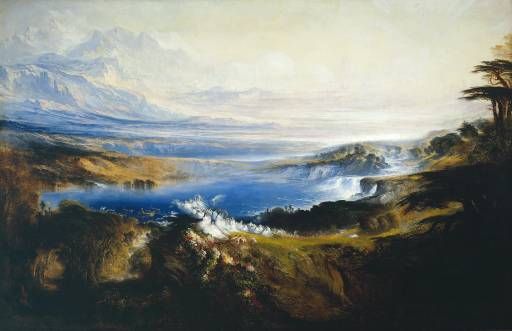
The Plains of Heaven 1851-53
This is the most serene and peaceful of the three paintings.It contrasts dramatically with “The Great Day of His Wrath” hanging on the other side of the central panel of “The Last Judgement”. Again a passage from the Book of Revelation is the inspiration, this time Chapter 21.
Then I saw “a new heaven and a new earth,” for the first heaven and the first earth had passed away, and there was no longer any sea. I saw the Holy City, the new Jerusalem, coming down out of heaven from God, prepared as a bride beautifully dressed for her husband. And I heard a loud voice from the throne saying, “Look! God’s dwelling place is now among the people, and he will dwell with them. They will be his people, and God himself will be with them and be their God. “He will wipe every tear from their eyes. There will be no more death or mourning or crying or pain, for the old order of things has passed away.”
Martin has produced his vision of paradise. In the foreground wearing white we see the chosen. Behind them is a deep blue heavenly lake, filled by the waters of rushing rivers and waterfalls. Majestic snow-capped mountains surround the scene, and in the background a faint, almost ghostly New Jerusalem descends to Earth.
The three paintings became famous in the years after John Martin’s death. The paintings toured widely both in Britain and the United States. They were described as “the most sublime and extraordinary paintings in the world” and valued at over 8000 guineas. Typically the exhibition would include a diorama and narration. The Tate puts on a modern take on this, projecting computer graphics onto the paintings. This makes the paintings seem as if they are backlit. The computer graphics are obviously capable of effects that the Victorians using gas lamps couldn’t manage, but the narration seemed authentically contemporary and suitably over the top.
Although prints of the paintings sold in large numbers, John Martin’s style of vast and dramatic paintings now seemed outmoded to the mid and late Victorians. The paintings themselves never found a buyer and by the 20th century his work had fallen into complete obscurity. When his painting of “The Destruction of Pompeii” was badly damaged in a flood in 1928, it was not considered to be worth restoring. The Last Judgement paintings were sold in 1935 for seven guineas.
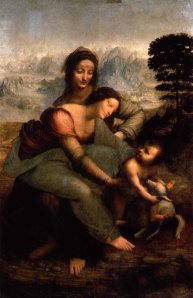
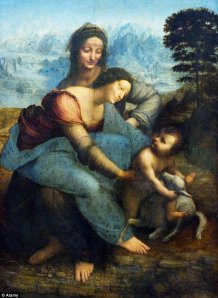
There is a bit of an argument going on in the art world about how to clean a painting and how much to clean it. It came to a head recently over the cleaning and restoration of the Louvre‘s “The Virgin and Child with Saint Anne” painted by Leonardo da Vinci.
Two French art experts have quit The Louvre’s advisory committee in a row over the restoration of a Leonardo da Vinci painting, according to reports.
Segolene Bergeon Langle and Jean-Pierre Cuzin resigned in protest over the cleaning of The Virgin and Child with Saint Anne, The Guardian said. The pair claim the Paris gallery has over cleaned the 500-year-old masterpiece. They argue it has left the work with a brightness the artist never intended.
There are a couple of points that make me wonder if they have actually thought about what they are saying. I am not disputing the fact that you need to be very careful when restoring a five hundred year old masterpiece. My arguments against them are these. Firstly, cleaning is not going to create new colours, it is only going to expose the colours that Leonardo (or his assistants) put on the wood panel in the first place. Secondly, they presume to know how Leonardo intended the painting to look. Did he leave a set of notes saying that on no account should five centuries worth of candle soot and darkening varnish ever be removed from the surface of the painting? Or are they really saying, “We actually preferred it the way it was before cleaning.”? If they had said that I could have accepted it as their judgement, because that is what it is, an aesthetic judgement. Trying to invoke the ghost of Leonardo to back up your taste is not really on.
Make your own mind up, the un-cleaned painting is on the left, and the cleaned painting is on the right.(Click on the picture to see it in a larger size.)
If you want to see an even better example of the restoration of a painting take a look at this article from the Guardian about Dulwich Picture Gallery‘s restoration of a painting of St Cecilia.
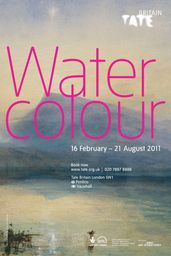
I am a bit late to the party with this review. The exhibition opened in February and closes on 21st of August. Various circumstances prevented me from visiting until recently, but I think it is worth recording my opinions, even if it is only for my benefit.
Before I start the review I should explain that watercolour is my least favourite method of making artistic marks on paper(or any other support for that matter). I find it difficult to handle if I am working anything bigger than A5 size and I find that my results are generally disappointing. There are some artists who can handle the technicalities of medium, but I generally find that their work is, how shall I put it gently, boring. I associate watercolours with meticulously rendered reproductions of country churches and pastoral landscapes. Paintings that make me think, why didn’t you just take a photograph and save yourself the time and trouble.
I also tend to think of watercolour as a very English method of painting. I don’t know if this is a good thing, a bad thing or something that does not really matter.
I did, however, go to the Tate ready to have my opinions of the medium and the artists who use it radically revised. But wait, there’s more
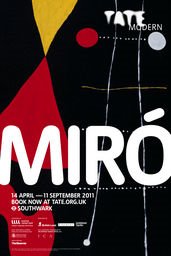
I recently went to see the Joan Miró exhibition at the Tate Modern. I have long liked what I have seen of Miró’s work, but, before the exhibition had not seen a lot of it. In addition I knew very little about Miró as an artist. It is, I think a sign of a good exhibition that I left not only having seen a lot more of the artist’s work, but feeling that I had learned a bit about what made Miró the artist and the person he was.
The early rooms explore his relationship with Catalonia and his identity as a Catalan. It is worth noting that Miró always insisted upon using the Catalan ‘Joan’ rather than the Spanish ‘Juan’ as his given name. Read On
I grew up on a farm in the Scottish Borders. The nearest house to the one we lived in was about quarter of a mile away, the nearest town was about seven miles away and the nearest city about fifty miles away. When I went outside on a clear moonless night I have no idea how many stars I could see. Above me the of the universe was on display. Later in life I earned my living at sea. Sitting on the fo’c’sle on a warm tropical night looking up at the strange – to northern eyes – stars of the Southern Hemisphere is a memory I will always cherish. Now I live in the South London suburbs, I once counted the stars I could see on a clear moonless night. There were 42 visible. Where have all the stars I marvelled at in my youth gone. They are all still there. But our insistence that there be no difference between daylight and night drowns them out.
About two weeks ago we observed Earth Hour. We switched our lights off at 20:30, and discovered that with the light from the street lights at the front of the house, and our neighbour’s ‘security’ (as in blanket) light at the back, there was enough light, if not to read by, but to do most things. Read On
I am a great proponent of art in public spaces. While not every work achieves the iconic status of “The Angel of the North”, I think that public art serves to increase the happiness and well-being of the people who come into contact with it and as such is generally worth the outlay.
It is easy to criticise public art as a waste of money, and is a reliable space filler for certain newspapers. While I do agree that there are a few works that should never have been allowed to escape the artists subconscious, let alone their studio, but they tend to be far fewer than the Daily Mail would have you believe.
During the past few days I have been doing some work in The Chelsea and Westminster Hospital , which has quite a lot of art in its public spaces. The art works at the Chelsea and Westminster tend in the main to be abstract sculptures and paintings. Although it is the sculpture that catches the eye first. They are brightly coloured and essentially serve to make the main atrium and hence the hospital itself a place a place that welcomes you. They perform that function very well. I don’t think anyone would claim that they individually or collectively are great art, but I would argue that as an ensemble they work. It is good art.
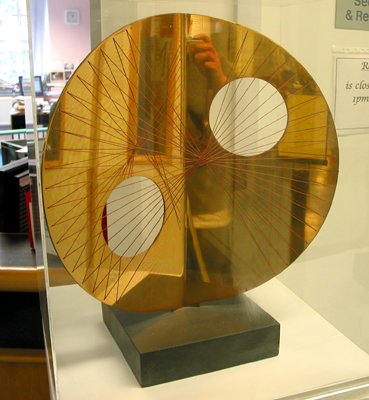
On piece of work that I didn’t see is this piece by Barbara Hepworth whose work I love. But she probably needs another post(at the minimum).








 A Scotsman in Suburbia