All posts by A Scotsman in Suburbia

I am not a Grumpy Old Man I am a middle aged man who occasionally gets slightly hacked off with things. My politics are greenish and to the left of centre. I am married again, following being widowed. I own two bikes, one car, one campervan and half a cat. I love cycling (hence the bikes) and cycle sport especially road racing. During the winter I enjoy watching football (soccer if you are North American). I sometimes paint and enjoy cooking and eating.

Rupert Murdoch, Phone Hacking and Press Regulation

Will Cookson has an interesting post on media regulation, where he argues against our current media ownership rules. He says;.

We need to look at the ownership rules of the media for our country. They are not like other goods and services. They can strike at the root of our democracy. If someone like Rupert Murdoch can summon senior politicians at short notice to the other side of the world because of his power then that is bad for democracy.

The media should only be allowed to be owned by UK citizens resident in this country. Political parties are no longer allowed to receive gifts from overseas residents and the same should apply to the media ownership.

Not that much for me to disagree with there, though drafting legislation in such a way that it cannot be challenged (especially under EU competition law) will be difficult. Plus all our main political parties and the City do not think that nationality of ownership is anything that we should worry about. Convincing them otherwise without voting for a UKIP or a Socialist Workers Party government at the next election will be difficult.

Where I tend to disagree with Will  is on his proposals for regulation, which I think have implications around freedom of the press, and freedom of speech in general. He says;

We must have an external independent ombudsman for the media whatever the media throw at the politicians (and be prepared for some very nasty stories about politicians with innuendo and smears in the early autumn).

Newspapers have always been the tools and playthings of the rich and powerful. Owners in the past like Lord Beaverbrook and the Rothermeres  (owners of the Daily Mail) have always used their publications to persuade, bribe (by granting or withholding support) and if necessary bully governments into doing their bidding. Whether Rupert Murdoch has a larger and more insidious influence is a moot point

I am sure that journalists on the past bought information and were on far too friendly terms with various police officers. They didn’t hack mobile phones (they didn’t exist), but probably had ways of tapping landlines if they thought that the story would be worth the risk. But the sins of the past do not excuse the sins of the present day.

Even phone hacking gets a bit tricky. I don’t want my mobile hacked. I don’t want Milly Dowler’s parents’ phones hacked. Neither do I want the phones and emails of relatives of service personnel killed in Iraq and Afghanistan hacked. But, say a newspaper has very tenuous evidence that a senior politician is accepting bribes to influence the placing of government contracts , would I worry if the newspaper hacked his or her phone as part of their investigation?

The hard question is what to do about it. It is without doubt that what happened at the News of the World was beyond the competency of the Press Complaints Commission as it is presently set up. The PCC does valuable arbitration and conciliation work and it needs to carry on doing it, but without increased powers it should drop the pretence that it is a regulator.

A truly effective regulator has to have the powers to stop a story being published in the first place. Our ridiculous libel laws (“super-injunctions”) are often used by celebrities to just that end. The publishing of a story , or putting a celebrity adulterer’s name to a twitter #hashtag. puts the information into the public domain. Taking it back is impossible. The regulator can do nothing other than deal with the complaints.

The idea of a state appointed “independent” press regulator worries me. Would a state appointed regulator have allowed the Daily Telegraph break the story of the MP’s expenses scandal? MP’s, and probably not just the guilty parties, would have complained to the regulator and asked for the suspension of the story. The Telegraph bought the information. The information, was probably stolen. I think that an independent regulator would have prevented the Telegraph publishing the story.

How far will the press regulators powers go? Will every story in every newspaper need submitting to him or her before publication? If not, what will be criteria that triggers the need for submission? If a newspaper (or other outlet like say a blog) publishes an unsuitable story what powers will the regulator have to correct them? Will the regulators powers only apply to newspapers, or will they extend to include all publications? If the regulators powers cover all publications, will I have to send my blog posts, will they come back with the spelling and grammar corrected and will the regulator reading my blog posts show up in my statistics? Do we want to regulate unsuitable stories or just unsuitable methods of journalism?
We must have these, and probably more questions satisfactorily before we head down this path.

I think that keeping press regulation voluntary, with the PCC having increased powers to demand retractions and insist on the positioning of the retractions within the newspaper, and possibly even suspending a publication in the worst cases might work. If, as is currently the case with the Express group newspapers, they refuse to be bound by the PCC rulings then OFCOM will take over their regulation. OFCOM has the powers to insist that the owners of a non compliant company sell their stakes in it (at a loss if necessary).

Oh, and applying the law, not just to “rogue” reporters, but extending culpability to those who employ them.The possibility of the Rupert and James Murdoch, Andy Coulson and Rebekah Wade, spending some time behind bars would really get the attention of the owners and editors of newspapers. I understand that the instances of phone hacking have dropped to round about zero since Glenn Mulcaire and Clive Goodman were jailed.
I am also sure that it is against the law for police officers to pass confidential information to third parties, with or without money changing hands. If the law needs clarifying then clarify it, but again applying the law will be more effective.

The Space Race is Over

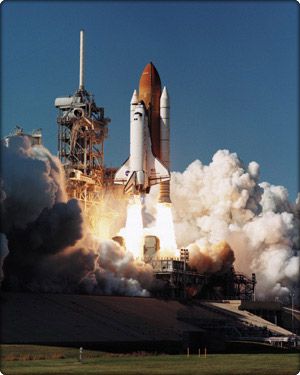
Today(8th July) at 15:26 (GMT), assuming that the weather holds, the Space Shuttle Atlantis will blast off on the last Space Shuttle mission ever.
Space Shuttle Launch
I grew up in the fifties and sixties when space exploration was on the cutting edge of technology (hence the term “rocket science”) and adventure. I remember the Earth rise photograph taken from Apollo 8. I remember crowds of people in front of a shop window watching Neil Armstrong take his first steps on the moon. I remember the drama of Apollo 13 and the relief when the astronauts landed safely.
The Space Shuttle programme was never going to be as exciting, but in many ways it was probably more important. The tragedies of Columbia and Challenger should never be forgotten, but neither should we forget the advances in knowledge that we gained from the Space Shuttle programme. Above all it brought us the Hubble Space Telescope which as well as advancing our knowledge of the universe and its origins brought us some of the most beautiful photographs ever taken.
I think it is interesting to note that the laptop I am typing this on probably has more computing power than was available to the first shuttles.
I know that the Space Shuttles are probably more or less worn out and that trying to keep them in service and safe would probably bankrupt NASA, but this saddens me, probably because one more connection to the hopes and dreams that I had as a child has been severed.

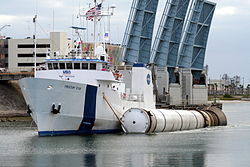
Freedom Star

I also have a tenuous connection with the Space Shuttle programme. Back in 1983, I was on a ship called the Petite Forte. We were laid up in Jacksonville. Berthed on the other side of the dock were the tugs that recovered the reuseable rocket boosters. During the four months that I was there I became quite friendly with the crew of the two ships the Freedom Star and the Liberty Star.

Billy Bragg sums all of my feelings up, better than I can in this song;

Tour de France 2011 – Part 1

Tour de France Logo

Prologue

Well there isn’t a prologue this year. So you will have to make do with my musings on what is going to happen.

The GC (General Classification or Yellow Jersey) is I think it is a straight fight between Alberto Contador (Spa) Saxo Bank Sungard (last years winner) and Andy Schleck (Lux) Leopard Trek (last years runner-up). Schleck probably is a slightly better climber than Contador and has a stronger and more experienced team, (you don’t get stronger than Fabian Cancellara or more experienced than Stuart O’Grady and Jens Voigt), but Contador proved in 2009 that he can win without a team, or indeed with a team gave that appeared to be actively working against him. Contador is by far the best individual time trialist. The Team Time Trial is fairly short so no team (except possibly Euskatel) should lose too much time.

Who is going to win? I don’t know, but I will be very surprised, barring accidents or an early intervention by CAS, if Contador and Andy Schleck are not on the top two steps. The third step could be occupied by any one of about ten riders, Bradley Wiggins, Jurgen Van Den Broeck (Bel) Omega Pharma-Lotto and Cadel Evans (Aus) BMC Racing Team among the candidates.

The Points Competition (Green Jersey) has a new format this year with only one intermediate sprint per stage and not the two or three that there were in the past.. The other big difference is that the intermediate sprint is now worth 20 points to the winner with points going down to the first fifteen riders across the line. This means that anyone who wants to win the competition will have to go for the points at the intermediate sprint, unlike in earlier years when the overall contenders could rely on a breakaway mopping up the intermediate points and only have to worry about the final sprint. On paper the favourite to win the green jersey is Mark Cavendish, but he has a habit of sitting up in a sprint when he knows that he has been beaten, thus dropping points by finishing tenth when he could have been second or third. Thor Hushvod has stated that the Green Jersey is not his aim this year, so I think that it could well end up on the shoulders of his team-mate Tyler Farrar.

The King of the Mountains Competition (Polka Dot Jersey)has in recent years become a completion fought out by French riders who got themselves into early breaks and hoovered up the points available before the GC contenders started racing properly in the latter stages of the race. Like the Points competition the scoring has been altered this year, with fewer points available on the lesser climbs. This is possibly to discourage the opportunist French breakaway riders and encourage some of the bigger names to make it a goal if they lose time in the GC. Having said that I would like to see David Moncoutie (Fra) Cofidis win.

Stage 1

Saturday’s stage, unusually wasn’t a prologue time trial, but a road stage with a reasonably steep uphill finish. Philippe Gilbert was such a short-priced favourite for the stage that one Belgian punter was heard to remark that it would probably cost him money even if Gilbert won. Surprisingly enough Philippe Gilbert did win it and in style. His team controlled the race well into the finalé, including an amusing to watch, although probably not to do, 100m turn on the front, uphill, by André Griepel. Fabian Cancellara attacked with about 500m to go, forcing Gilbert to go probably a bit earlier than he had planned, but if Spartacus goes, you have to go with him if you want to win. Gilbert caught him and sat on for a few seconds to see what was going to do, then went himself. Cadel Evans tried to bridge across but didn’t manage and came second, with Thor Hushvod coming third and setting himself up nicely for an attempt at the yellow jersey in the following days team time trial.

The other incident that shaped the day, and could yet shape the tour was a mass pile up with about 10k to go. A spectator got too close to the action and caused an Astana rider to crash , bringing half the peleton with him. Alberto Contador although not actually involved, was caught behind the crash and lost about a minute and a half to his rivals.

Stage 2

The second stage of this years Tour de France was the Team Time Trial. Jonathon Vaughters the owner/manager of Team Garmin-Cervélo has tried to win a stage of the Tour de France for the past three years. In addition he has a bit of an obsession with the Team Time Trial. This is probably due the fact that one of the highlights of his career as a cyclist was winning the Team Time Trial stage in 2001 when he was a member of Roger Legay’s Credit Agricole team.

It all worked out perfectly for him and the team. They won the stage by 4 seconds and moved Thor Hushvod out of his world champions rainbow strips into the Maillot Jaune, though today he was rather incongruously wearing the polka dot jersey of the leader of the King of the Mountains competition. If you want to know why I suggest that you read the minutiae of the Rules & Regulations of the Tour de France (in French).
This is link is David Millar’s reaction to the win

Below is Johnathan Vaughter’s reaction.

Book Review: Racing Through the Dark by David Millar

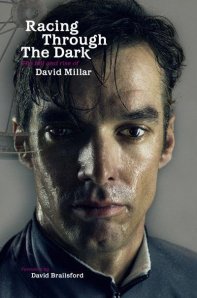
Racing Through the Dark by David Millar is an honest self-written account of his descent from an extremely talented young rider to a two-year ban for admitting to using various proscribed substances and through to something like redemption.

Racing Through the Dark cover

A confession; I have been a fan of David Millar more or less since the beginning of his career. Apart from his obvious talent, he always came across as being more interesting than the average cyclist. His answers to journalist’s questions were always a bit less bland.

I was there in 2001, wearing my “It’s Millar Time” t-shirt, in Dunkirk, when he crashed (and as the book tells started his burn) in the prologue. He may have heard my shouts of encouragement as he struggled up Cap Griz Nez, swathed in bandages, just about hanging on to the back of the peleton. I was as surprised and shocked as anyone when he admitted to doping in 2004. I was at the top of the hill at Southborough when he took the King of the Mountains points on the stage from London to Canterbury. So to the book.

The opening two short contrasting chapters set the tone for the book. The overture if it was an opera. The first chapter is his telling of his arrest and interrogation by the French Police that led to his confession of having used performance enhancing drugs.

The second chapter, set five years later, is his story of a magnificent, thrilling, but ultimately futile attempt to win the Tour de France stage from Girona (where he now lives) to Barcelona. Through his words you can capture the renewed joy that he has in the sport of cycling.

Tracing his path from an idealistic neo-pro to his eventual downfall is a fascinating psychological journey. While never excusing himself from responsibility, he shows clearly that unless you were a far more stable and emotionally mature person than he was then, the culture around you drew you into doping. The point at which he finally gives in and agrees to dope is strangely and chillingly banal and matter of fact.

His path back from the depths of 2004 in Biarritz, sitting on the steps to the beach with his sister Francis, wishing he had a fast forward button, to the closing paragraphs, the morning after celebrating his Gold Medal at the Commonwealth Games in Delhi, is neither smooth nor straightforward, but it is ultimately an uplifting story. He has problems with the French Justice system and the French Tax authority. His new team, Saunier Duval seemed to have similar problems to those he met at Cofidis, with riders notably Ricardo Ricco appearing to use EPO and other banned substances, and the management turning a blind eye to the goings on. Joining Jonathan Vaughters’ Slipstream team, with its anti-doping ethos, finally gave him something to believe in.

The book is about as far removed from the bland hack written “autobiographies” of sportsmen and women that we normally expect as can be. It is an open, honest and at times raw account of the pressures and strains that a top sportsman encounters. I think that it is a book that everyone should read, not just cycling fans. And if it does not win this years William Hill Sports Book of the Year award, then I will definitely read the book that beats it.

Debt Crises and Paying Your Taxes.

The budgetary problems of Greece are again making the headlines. The country is in a mess, and because of it the Euro-zone is also potentially in a mess. If the Euro goes tits up, the banking crisis of 2008 will look like a bun-fight at the church fête. The question I want to explore is how did we get here?

There are two basic reasons why Greece got itself in to its current situation:

  • The previous government cooked the books
  • Paying your taxes is seen as a voluntary activity – especially by the rich

Philip Inman in exploring the possible outcomes of the crisis, states this as part of the most optimistic (and least likely) scenario:

Greece’s rich landowners, shipping magnates, doctors and dentists all agree to pay their taxes. As City credit analyst Jan Randolph of IHS says: “The Achilles heel of the Greek economy is tax evasion. If the rich paid their taxes there wouldn’t be a problem.”

Grecian doctors and dentists apparently use accountancy systems that British “cash-in-hand” builders might be advised to study. The mega-rich just avoid paying taxes at all.

Jason Rosehouse touches on this in the context of American politics

The power brokers in the Republican party are primarily Wall Street barons and other members of the super rich. On domestic policy they care almost exclusively about redistributing wealth upwards and in creating an entirely unregulated environment for corporations. The flip side is that anything that might benefit poor or middle class people they oppose. That is why they will fight tooth and nail to oppose the tiniest tax increase on millionaires, but will then turn around and accuse schoolteachers (!!) of being greedy. It is why they openly despise the public schools, and propose ludicrous, unworkable tax schemes that overwhelmingly benefit the super rich. It’s why they are so horrified by the idea that the health care system might be reformed to make it possible for millions of uninsured to obtain insurance. (It’s certainly not that they had a better idea for reforming the system. And notice that when they controlled both Congress and the Presidency from 2000-2006, they never even mentioned the health care crisis. As far as they are concerned, forty million people without health insurance simply isn’t a problem.)

This increasingly the situation throughout the western world. The rich basically want it all. They want the state to educate and train their workforce. Suitably trained they want our labour at the lowest possible price. They expect the state to protect their property, to make sure that the transport system and services work, and in the last resort to bail them out. But they are more and more reluctant to pay for any of it.

They demand lower corporation tax. They demand that the 50% income tax rate be removed. Multi-nationals declare their profits where ever it suits them, regardless of where those profits have been earned. Thus they deprive developing nations of large amounts of needed and legitimate revenue.

The middle classes in the west used to think that at least we had a share in all this corporate greed through our pension schemes, but even that is going. We are now too expensive to keep in our old age, and paying into a employee pension scheme damages corporate profitability. Besides the middle classes are no longer needed by the Masters of the Universe©. Someone on the other side of the globe can do (with a few exceptions) your job just as easily and for half, or less, the wage that you need to live on in the west.

When Bill Clinton left office in 2001 the American Federal Budget was in surplus, now it is in massive deficit, essentially because tax cuts for billionaires, one and a half unnecessary wars and allowing the banks to run amok. Many of the Republican candidates for the 2012 presidential elections are making noises about cutting taxes for the rich, and cutting corporation tax, “balancing” the budget by cutting environmental protection and programs such as Medicaid and Medicare. One of them Michelle Bachmann is proposing increasing the tax burden on the working classes to help offset this.

In this country the Tories haven’t gone that far yet. They would like to abolish the 50% income tax rate for high earners. They would like to cut corporation tax. But it is difficult to do so when you are trying to claim that the country is bankrupt. If you are lopping £20 billion of the NHS budget and closing Sure Start Centres, a give away to the rich just might be the trigger for either riots or the LibDems to develop a bit of backbone, neither of which is desirable from a Tory point of view.

Getting back to my original point; Government is a necessity in any community over about one hundred and fifty, and governments need to raise revenue. Graduated taxation of income is the fairest way to do it.
If the rich are not prepared to pay their share, which they did (up to a point) in the past, then all the west is heading in the same direction as Greece.

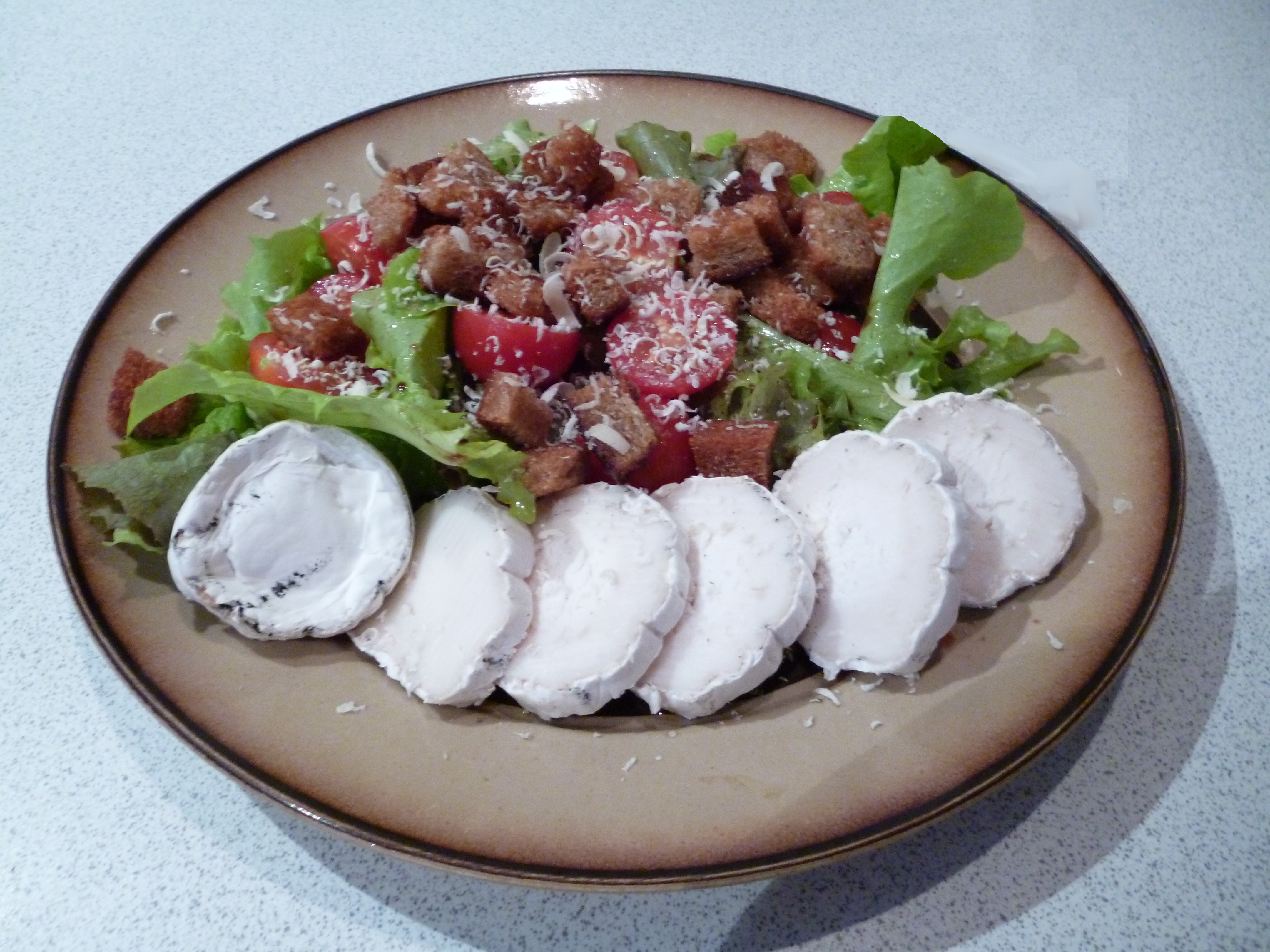
Goat’s Cheese Salad

I made myself a dead simple but very enjoyable light lunch today.

Ingredients

per person

Goat's Cheese Salad

  • A good handful of salad leaves ¹
  • Half a dozen cherry tomatoes ²
  • Half a Kidderton Ash Goats Cheese (sliced into rounds) ³
  • A small handful of croutons
  • Olive oil (Extra Virgin for preference)
  • Balsamic Vinegar
  • A little Parmigiana Cheese (grated or shaved)

Method

  • Rinse and dry the salad leaves
  • Toss the leaves, tomatoes and croutons together with the oil and vinegar
  • Arrange the slices of goat’s cheese in an aesthetic manner
  • Grate the Parmigiana over the salad and serve

I served the salad with a chilled Hoegaarden

Hoegaarden


  1. from the garden
  2. from Sainsburys, mine wont be ripe ’till July or August
  3. any goat’s cheese will do

Racing Through the Dark by David Millar

I have managed to get hold of a copy of David Millar’s book Racing Through the Dark (Orion, 18.99 rrp) in time to read while I am on holiday. Richard Williams reviews it in today’s Guardian book reviews.

He says about the book:

David Millar provides one of the great first-person accounts of sporting experience

The definitive review will be on this blog after I get back from holiday.

The review also covers Richard Moore’s Slaying the Badger (Yellow Jersey, £12.99), which tells the story of the rivalry between Greg LeMond and Bernard Hinault and the 1986 Tour de France. I think that it will also be worth a read.

Persuading the UK to get on its Bike.

The Walking and Cycling group have released an interim report. It makes disappointing reading for those of us who see the bicycle as an essential part of a less energy intensive transport strategy. To sum the report up in a few words; The adult population of the UK just doesn’t get cycling, except as a leisure activity.

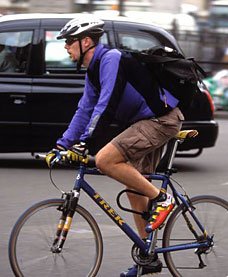
I’m trying to work out why? Does the image that we project as cyclists put people off? We are not all Lycra clad and super-fit, but if that is the image we project then it is understandable why the public think that they wont and don’t want to make the grade.

Typical British Cyclist ?

In the Netherlands, which in many ways is the European country that most resembles the United Kingdom, about 25% of all journeys are made by bicycle. In the United Kingdom it is about 2%. So what I want to explore is what makes the Dutch get on their bikes and the British get in their cars.

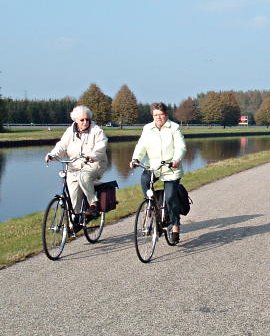
Typical Dutch Cyclists?

What are our reasons/excuses for using our cars and not our bikes?

The weather is often given as a reason, it rains a lot in Britain. It does if you live on the Northwest coast of Scotland or in Cumbria, but I refuse to believe that it rains more in the populated areas of Britain than it does in the Netherlands. Even if it does rain more, to quote some one, possibly Billy Connelly “there is no such thing as bad weather, just inappropriate clothing”

The Netherlands are much flatter than the United Kingdom claim the motorists. I will agree, that for the most part they are, but there are bits of the Netherlands that are far from flat, and large areas of the United Kingdom, such as London that are less than Alpine in their hilliness. Flatness of the countryside is a double-edged sword, as any one why has cycled across the Fens into a head wind will tell you.

In my opinion the biggest obstacle to getting the British on their bikes is a justified fear of the traffic in our cities and towns. I do think that the dangers of cycling in Britain are often overstated, but I cannot pretend that they are non-existent.

Mrs johnm55 loves cycling, put her on her bike out in the countryside, especially on a sunny day with the prospect of lunch at a country pub, and she is in heaven. But she hates cycling in London. She finds the conduct of a significant number of other road users intimidating. They rarely leave a safe distance between her and their vehicle, they overtake at inappropriate times and they are rude and impatient. As a result, when she does use her bike in London she tries to find routes that keep her away from traffic as much as possible. The problem with such routes are that they are usually rough surfaced, tend to take you away from populated areas, are often poorly lit after dark, and often have pedestrians wandering willy-nilly across them. Pedestrians who get upset, and as rude as any motorist, if you ring your bell to warn then that you are coming up behind them. (Possibly they would prefer it if you yelled “get out the #@*!#@!# way you moron.”, but Mrs johnm55 is a very polite woman and would never even think of saying things like that. johnm55 at times takes a different view.)

All this means is that compared to cycling on the road, cycling on traffic free routes, in London, often is a very slow way of getting from A to B.

Now, look at the photo of the Dutch cyclists above, what do you see under their wheels?  Correct, a well surfaced (motor) traffic free cycle route. The Netherlands has a has a comprehensive network of traffic free cycle routes which is one reason for the Dutch getting on their bikes. When the cyclist In the Netherlands has to share the road with cars, as they have to, even with a well designed system of cycle routes, The Netherlands has another advantage. In common with most other European countries the Netherlands has what is often known as a law of Strict Liability. The law assumes that unless proven otherwise, if a car collides with a more vulnerable road user (cyclist or pedestrian) then the car driver is at fault. The video gives explains how it works:

Any law similar to the Dutch law is of course anathema to our motoring organisations and Jeremy Clarkson, so there is not a lot of chance of a law like it being passed in this country any time in the near future. Of course a law of strict liability only goes so far. Hopefully it will make drivers slightly more careful around cyclists and pedestrians.  It is also comforting to know that your loved ones will be taken care of if you are crushed by a lorry, but it is probably fear of getting crushed by the lorry that stops you getting on your bike in the first place. So we are back to needing effective cycle routes.

London’s developing network of Cycle SuperHighways are a start, but the one I have used CS7 still allows cars to park on it, forcing you out into the main traffic. Car drivers also don’t seem to take all that much notice of the blue bit of the road surface that is for cyclists alone. Driver education might help. Getting more cyclists out on the road would definitely help to make life safer for all cyclists.

Possibly the choice of bikes on sale in the UK doesn’t help either. It is getting better, but if you go into the average bike shop in Britain you will be hard pushed to ride out on a bike that can be ridden wearing a suit. By that I mean a bike with full mud-guards, an effective chain guard, and an upright riding position. Strangely enough his type of bike is known in the UK as a Dutch roadster.

An additional problem is where people keep their bikes when they are not in use. I used to keep all my bikes safely locked up in the shed in my back garden. The five or six minutes it takes to get the bike out of the shed and on to the road, then make sure all the back doors and gates have been re-locked is not a big deal, if I am going out for an all day bike ride. However, if all I am doing is going along to the shops to get some bread and milk, it is easier to take the car. The car sits outside the front of the house, all I have to do is unlock it and jump in.
I overcame this problem by keeping my old bike locked to a strong point at the front of the house. This makes it at least as easy as using the car for short trips.

I was going to insert a mini rant about cycle helmets at this point, but he post is getting a bit long so I’ll save it for later.

To sum up; I feel we need to do the following to encourage more use of the bicycle for transport.

This study took place in Copenhagen, Denmark over 14.5 years. It found that cycling to work (an average of 3 hours cycling per week) decreased risk of mortality by about 40% compared to a sedentary control group. This study involved 30,000 people. The study took into account age, health status, and socio-economic factors such as education. It also found that older people gained even more from physical activity than younger people.

Next time for the sake of your health and the planet’s health, if you are going to the shops or the pub or to work, and the journey is five miles or less, think about walking or using your bike, it will probably be quicker anyway.

New theme

I have decided to change the appearance of the blog (slightly). WordPress have come up with a new theme called Twenty Eleven which I like the look of and gives a few extra features for me to play with, so I have decided to try it out. As I say the appearance is slightly improved, but unfortunately the content remains the same – sorry. 😦

Will your mobile fry your brain?

Wiil your mobile fry your brain

A report has been produced by The World Health Organisation, which, as far as I can see, says the there is no data that proves a causal link between mobile phone usage and brain cancer. It does, I will admit, also say that the risk cannot be ruled out. But why the headline like the one in today’s Guardian?

Mobile phone radiation is a possible cancer risk, warns WHO

As far as I can see there has been no new data, just a review of the existing evidence, which has always pointed to the conclusion that there is no obvious link between mobile phone usage and brain cancer, so why the change in emphasis?. This is their summary of the evidence;

.

The evidence was reviewed critically, and overall evaluated as being limited among users of wireless telephones for glioma and acoustic neuroma, and inadequate to draw conclusions for other types of cancers. The evidence from the occupational and environmental exposures mentioned above was similarly judged inadequate. The Working Group did not quantitate the risk; however, one study of past cell phone use (up to the year 2004), showed a 40% increased risk for gliomas in the highest category of heavy users (reported average: 30 minutes per day over a 10 year period).(my emphasis)

The one study they highlight appears to be an outlier (i.e data that while not ignored, would not normally be used to draw the conclusion, as it does not fit with the rest of the data). When the strongest words that they (the WHO) can find to describe their data are limited and inadequate do they up ante and say that using your mobile could cause cancer?

Orac gives a much more detailed account of the (lack of) evidence on his blog.

One of the things we as human beings have difficulty with is assessing risk. (This could be the subject of a future post.)

There is a proven casual link between driving cars and killing people. We think we know what the risk is, so we discount it and carry on driving, Mainly because we feel the inconvenience of not driving outweighs the risk of using the car. There is no casual link between the Measles Mumps Rubella (MMR) vaccine and autism. Certain newspapers, however, acted and reported as if there was. Because we as human beings had no way of assessing what the (non-existent) risk was, and the immediate downside of not having your child vaccinated seemed small, large numbers of people failed to have their children vaccinated. The result is we now see a significant increase in the frequency of a disease (Measles) that had become more or less non-existent in the United Kingdom. In the future, we may also see an increase in birth defects caused by Rubella during pregnancy as girls who missed their vaccination enter their child-bearing years.

So my conclusion; Will your mobile fry your brain? – No – but reading newspaper science reports without a pinch of salt and a close look at the data just might.


Update Saturday 04 July 2011 @ 10:30

Ben Goldacre writes about the report in his Bad Science column for the Guardian

He quantifies the increased risk that the worst case scenario points to (the study I referred to as an outlier). A forty percent increase would mean about 14 new brain tumours ber 100,000 people per year as opposed to 10 per 100,000.

Contrast that against this article

But I have to admit, this story from Kenya was the first time I heard of cell phones helping health workers speed up diagnoses and help fight preventable diseases. In this video, Steven Omollo, the health worker, even uses his phone to confirm a suspected case of malnutrition.

which I found on the Bread for the World’s blog. Watch the video embedded in the post. Risk versus reward anyone?