I am not a Grumpy Old Man
I am a middle aged man who occasionally gets slightly hacked off with things.
My politics are greenish and to the left of centre.
I am married again, following being widowed. I own two bikes, one car, one campervan and half a cat.
I love cycling (hence the bikes) and cycle sport especially road racing. During the winter I enjoy watching football (soccer if you are North American). I sometimes paint and enjoy cooking and eating.
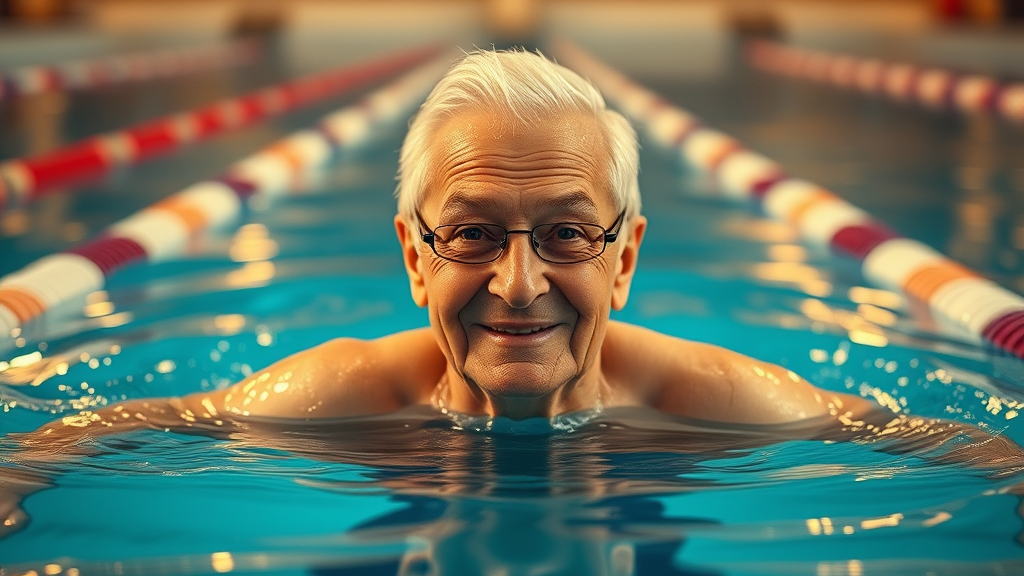
I am now seventy. I can swim. Not very well, nor very far but I can actually swim.
In my last post, I mentioned that the teaching pool at the Malden Centre has a great feature. Its greatest depth is only one meter. Its less than great feature, is that the depth quite quickly becomes half a meter. Drowning is difficult, but so is swimming once the water gets shallow.
I found a solution to this.
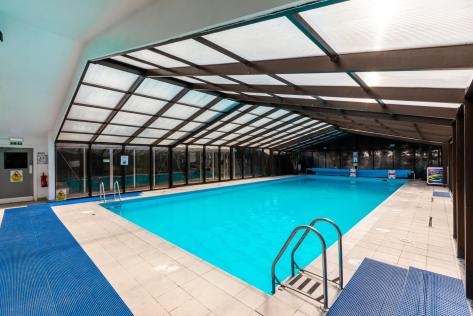
My wife Diane is a member of The River Club (not as posh as it sounds). It is a gym which has a swimming pool. The pool is about eighteen meters by six meters, but only one point four meters deep. So drowning is almost as difficult as in the Malden Centre teaching pool. Nevertheless, it has the great advantage being 1.4 meters deep over its entire length.
I had a trial session and liked what I saw. The facilities and gym equipment are good. The staff are friendly. The pool allows me to swim without finding myself out of my depth or running out of water. So, I signed myself up.
Since then, I have continued my weekly lessons at the Malden Centre. I also try to fit in a swim at the River Club at least twice per week. This has helped a lot. It lets me try out the things that Sue teaches us on a Monday night. It also allows me to concentrate on one aspect, for example my breaststroke kick.
I can now swim a full length of the pool comfortably, using breast or back stroke. I still struggle with front crawl (freestyle). Coordinating kicking, breathing and arms is difficult, for me. I haven’t tried butterfly yet.
River Club Swimming Pool
Another feature of the pool is that the roof is retractable. During the summer it is pulled back, and you can swim in the open air. It also allows access to an outside deck, where you can sunbathe.
So, I learned to swim by my seventieth birthday. I have lots of room for improvement, but I am getting there, slowly.
I’m not actually seventy just yet. “Learning to Swim at Seventy” has more of a ring to it than “Learning to Swim at Sixty-nine and three-quarters”. I am learning to swim though.
A lot of people are surprised that I can’t swim. I did spend about twenty years at sea and most people assume that seamen should be capable of swimming. I used to rationalise my inability to swim by saying that being capable of swimming would prolong the agony. Why swim around for an hour and then drown anyway. Just get it over with. Besides, we had life jackets.
I began to feel I was missing out. Last summer we had a holiday in Croatia. We cruised around the islands on a small (thirty-five passenger) ship. Every day we would anchor in a bay, to allow us to go swimming. Diane loved it. I only watched and felt I was missing something.
As part of my Christmas present Diane paid for a series of swimming lessons at our local leisure centre.
I started the week before Christmas. Our instructor, Sue, asked me a few questions. Was I afraid of the water? – no not really. Could I swim at all? – again, no not really. With that, she gave me a float and told me to get in the teaching pool. The teaching pool at The Malden Centre is great in one respect. It is a maximum of one meter deep. This greatly reduces the possibility of drowning.
The first exercise was learning to kick holding on to the float. Kicking was easy. Kicking, moving and breathing, all at the same time, less so.
Over time, I started to improve. The first thing I had to learn to do was how to stand up. Initially I had a great deal of difficulty in putting my legs down when I wanted to stop. When I wanted to swim, they would sink. When I wanted to stand up, they would float. I also needed to learn to breathe air rather than water.
I find it easier to swim on my back. Breathing is easier this way. But, I veer off to one side.
The main disadvantage of the teaching pool is that it’s depth reduces to less than half a meter. This means that, especially when swimming breast stroke, your feet end up hitting the bottom.
My step-daughter very kindly bought me a birthday present last year, tickets for an exhibition of Monet’s paintings of London at the Courtauld Gallery.
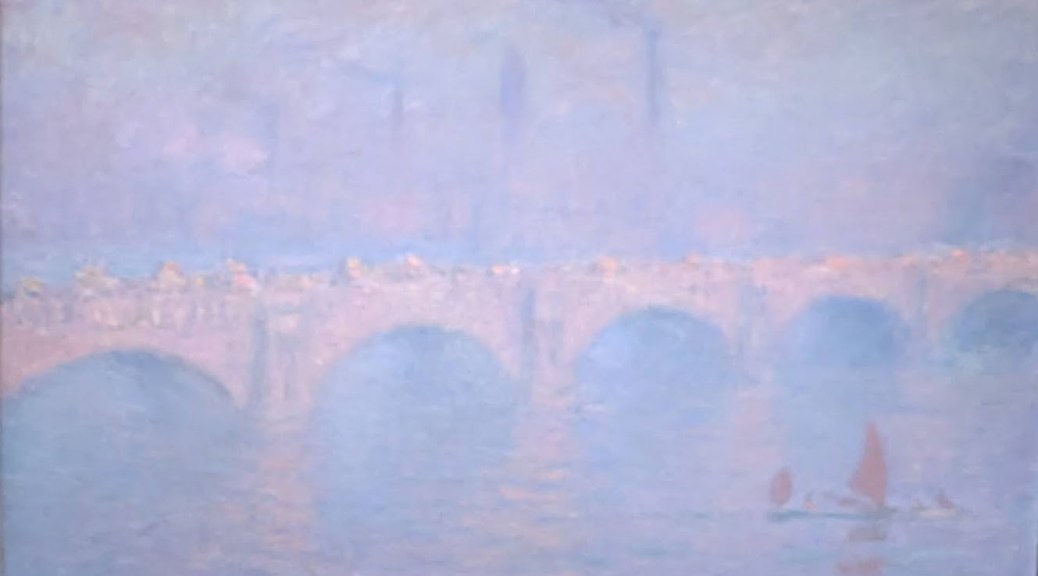
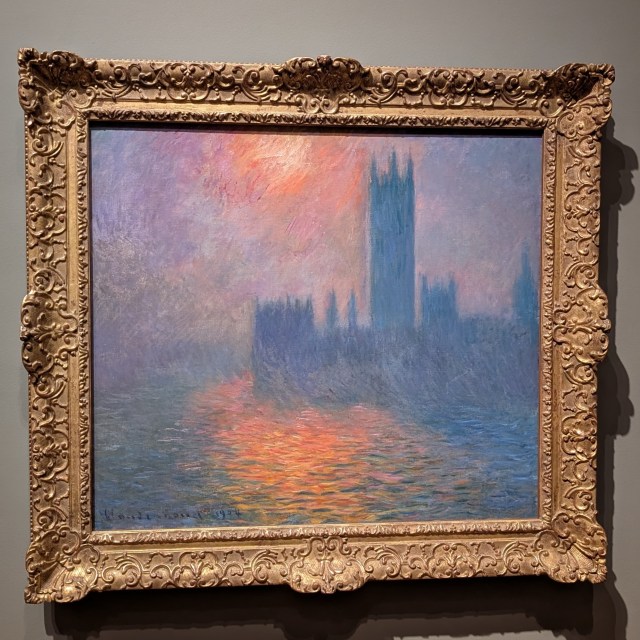
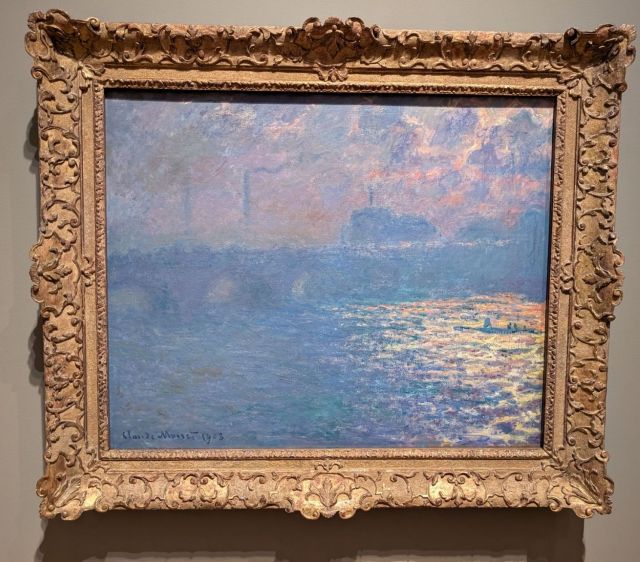
Monet was fascinated by the effects of sunlight. He loved its interaction with the fog and the smoke belching from the factories on the South Bank. Between 1899 and 1901, he made three extended trips to London to try and paint the effects. He stayed at the Savoy and set his easel up on a balcony overlooking the river. (No starving in a garret by this stage of his career) During his stays, he produced over a hundred unfinished canvases. From these, he eventually produced a series of thirty-seven paintings called View of the Thames. The paintings concentrate on just three sites, Charing Cross Bridge, Waterloo Bridge, and the Houses of Parliament. The views of the Houses of Parliament were painted from a terrace at St Thomas Hospital, on the South Bank.
The paintings were exhibited in Paris in 1904. The exhibition was a critical and commercial success. He had plans to repeat the exhibition in London in 1905. The plans fell through because of the commercial success of the Paris exhibition. (He couldn’t borrow back enough of the paintings he had sold) One hundred and twenty years later, twenty of the thirty-seven paintings are back together in London. The Courtauld Gallery is in Somerset House. It is about one hundred meters down river from the Savoy hotel, where they were originally painted.
The Exhibition.
The source of the paintings is familiar, as are the paintings themselves. With Monet’s views of the Thames it is difficult to feel surprised by any individual piece. But when presented with the ensemble, it is hard not to be impressed
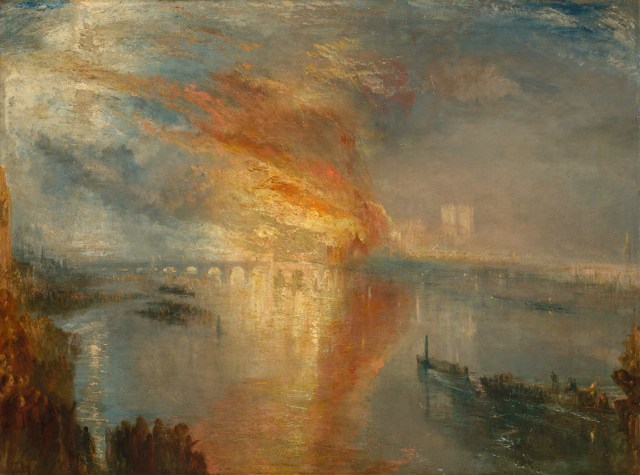
Although there are only three subjects, Monet imbues each painting with a different feel. Although Monet admired J.M.W. Turner, he never claimed him as an influence. Nevertheless, many of the paintings have a Turneresque feel to them. Though Turner only painted the Old Parliamentary buildings on fire
Parliament Claude MonetParliament J.M.W TurnerClick to enlarge.
The paintings of the bridges show that the sun does come out (occasionally).
The Waterloo Bridge that Monet painted was replaced by the current bridge in 1934 because of structural problems. Waterloo Bridge was falling down
Having completed his London series, Monet went on to work on his Waterlilies series, which took up his remaining years. In many of the paintings, but especially in the ones above, you can see the development of blending water, sky, and sunlight. That became one of the features of his Waterlilies.
It was an enjoyable, if not overly challenging exhibition. Not every exhibition has to be challenging or ground breaking.
The permanent collection is also worth an hour or two of your time.
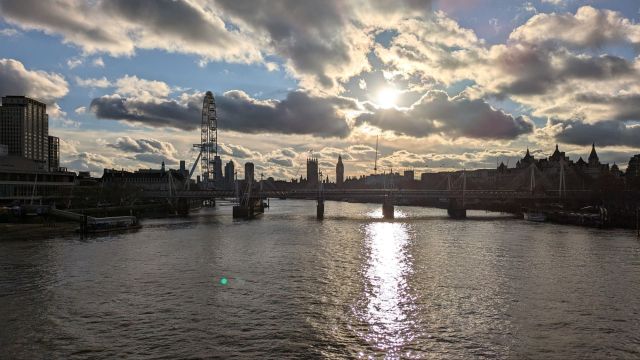
We couldn’t get onto a balcony at the Savoy, so we did our modern-day take on the scene from Waterloo Bridge. Fortunately, we no longer have the air pollution that created the effects that fascinated and, to an extent, frustrated. Monet. He found it frustrating because the light changed every five minutes.
Our adventures, which started back in October, were drawing to a close. Our last day had dawned.
After our day of decadence yesterday, today was always going to be more prosaic. So it was breakfast, then packing our cases for the last time. In the meantime, we had to figure out what to do after checking out at eleven. We had nine hours to fill before we would be picked up for our flight at eight p.m.
We decided on a visit to the National Gallery of Singapore . We left our luggage with the concierge. We decided to walk to the gallery. It was about a ten minute walk from the hotel. The walk took us down Bridge Street, across the river and past the Parliament Building.
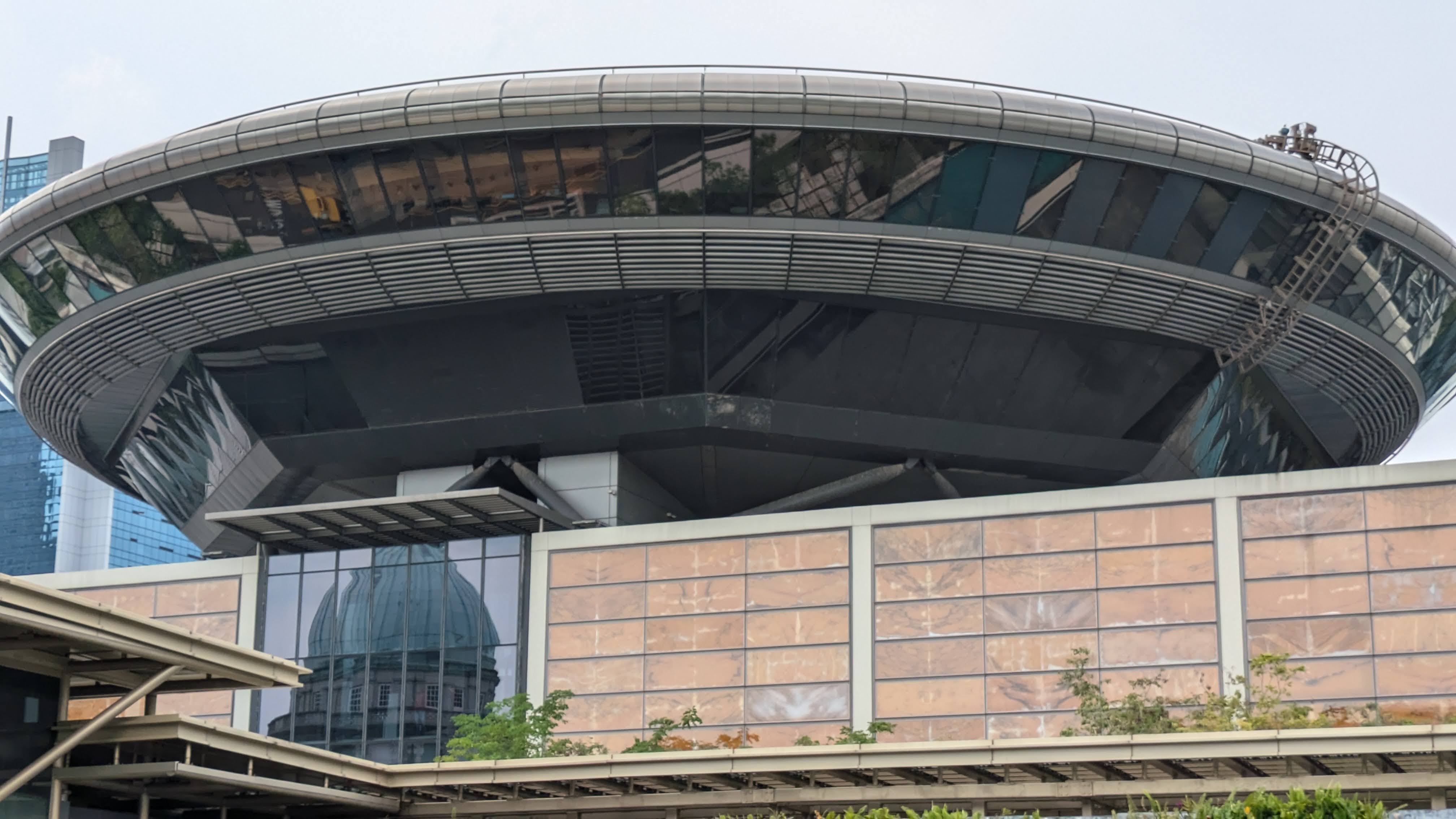
Not an alien spaceship, but the new Supreme Court Building
The gallery is situated in what used to be the City Hall building and the old Supreme Court building. It is a confusing building to navigate. The two earlier buildings are separate but joined, making it difficult, for me at least, to know where I was.
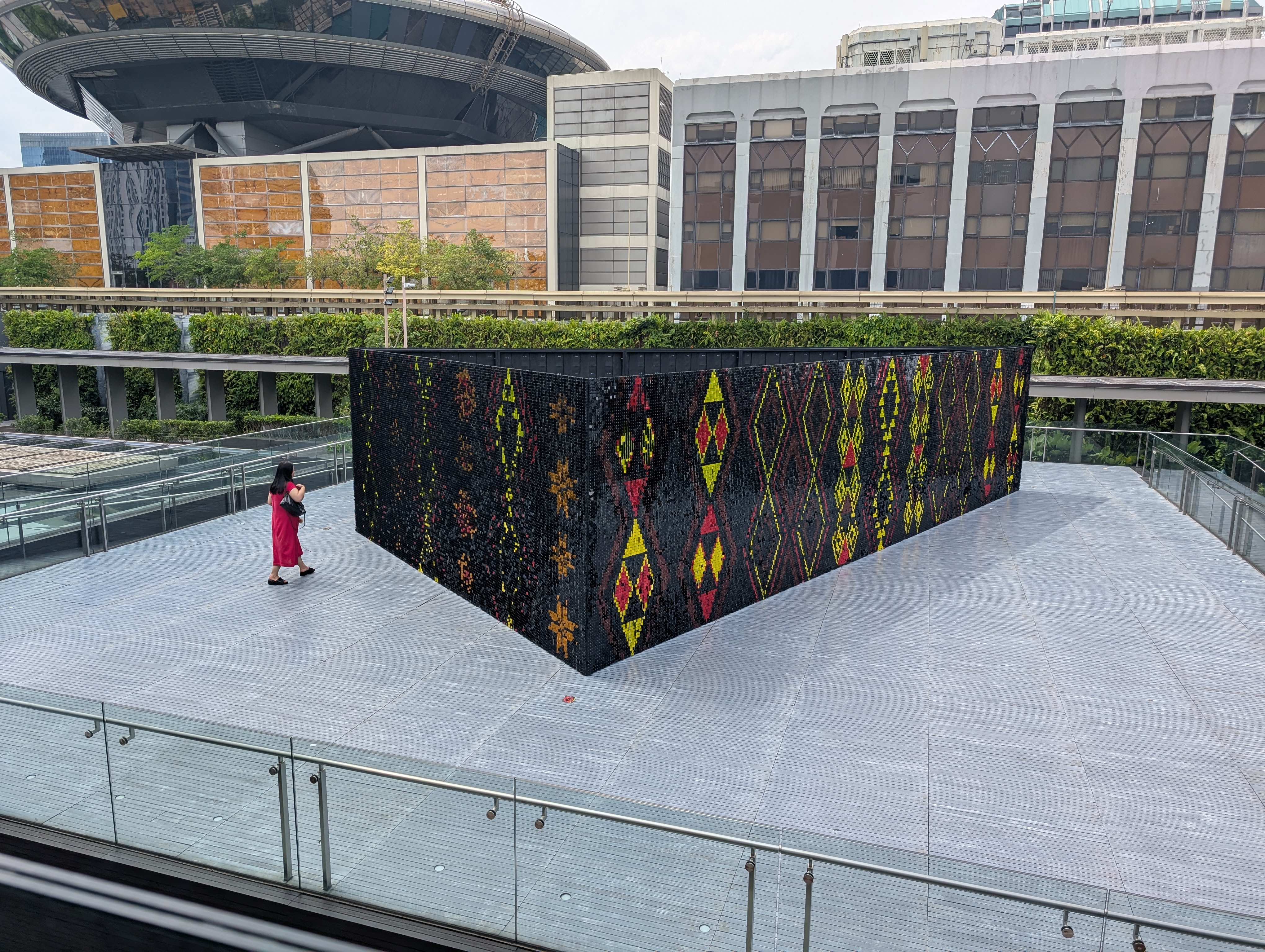
‘We visited one of the exhibitions named “Glisten”. It was located in the Roof Garden created by Aotearoa/New Zealand artist Lisa Reihana. A link to where we come from.
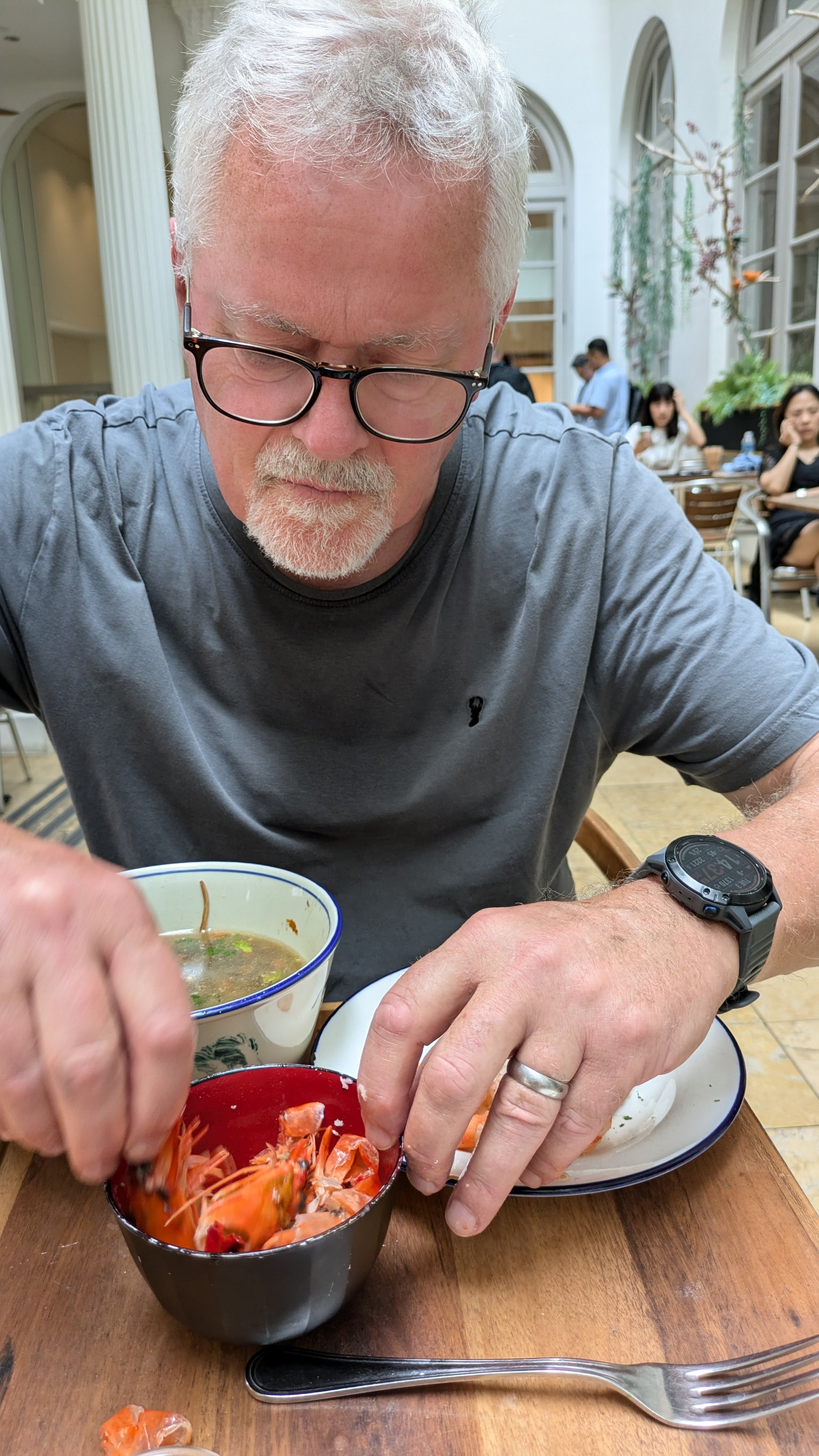
After that we decided to have lunch. There are a variety of restaurants and cuisines to chose from. They range from a three Michelin Star French Restaurant, through Cantonese to Japanese to Catalan. We settled on the Courtyard Café which does, in its own words “Straits Asian food”. It was good, even if I had to peel my own prawns.
I thought the prawns would be peeled
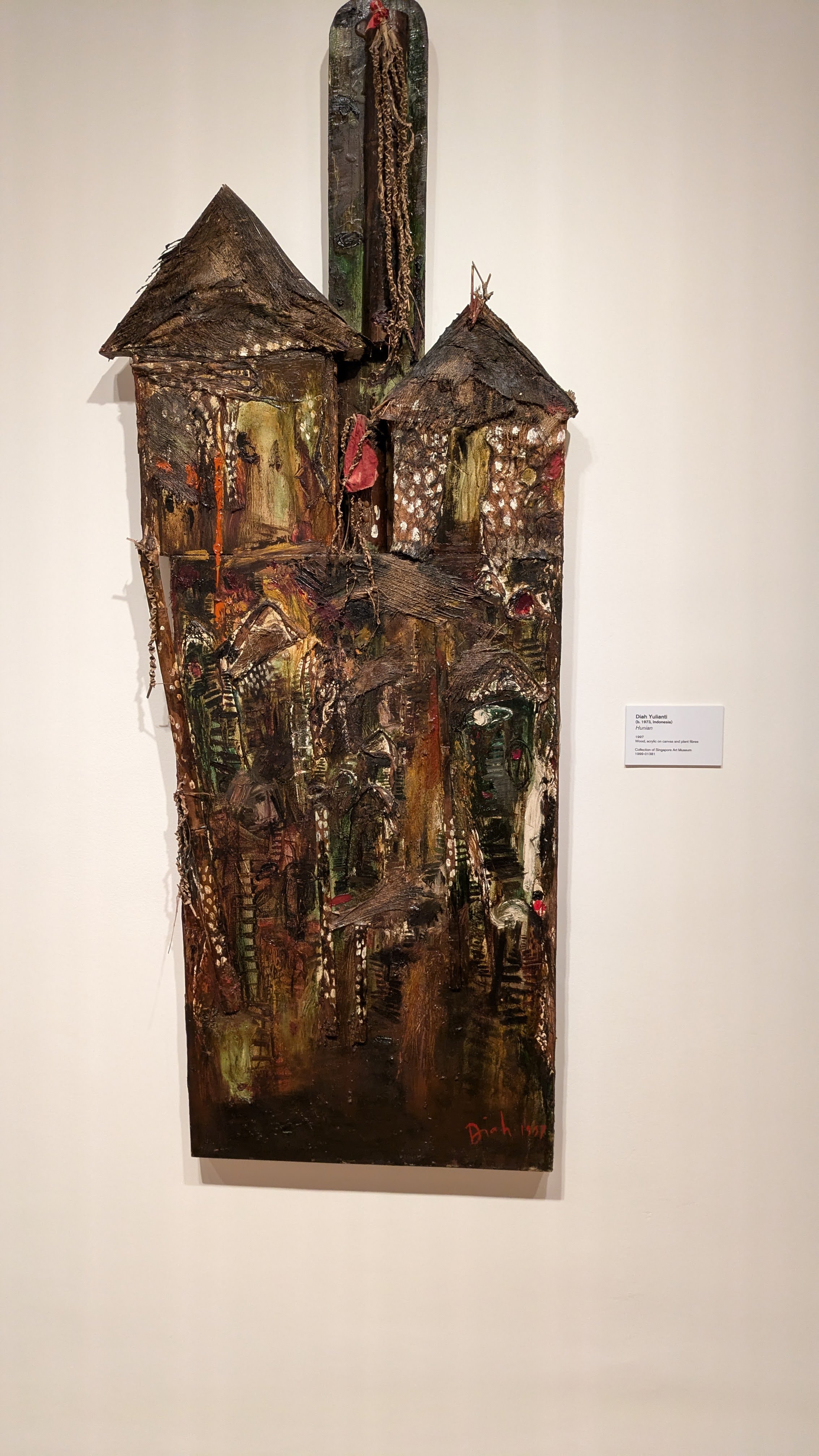
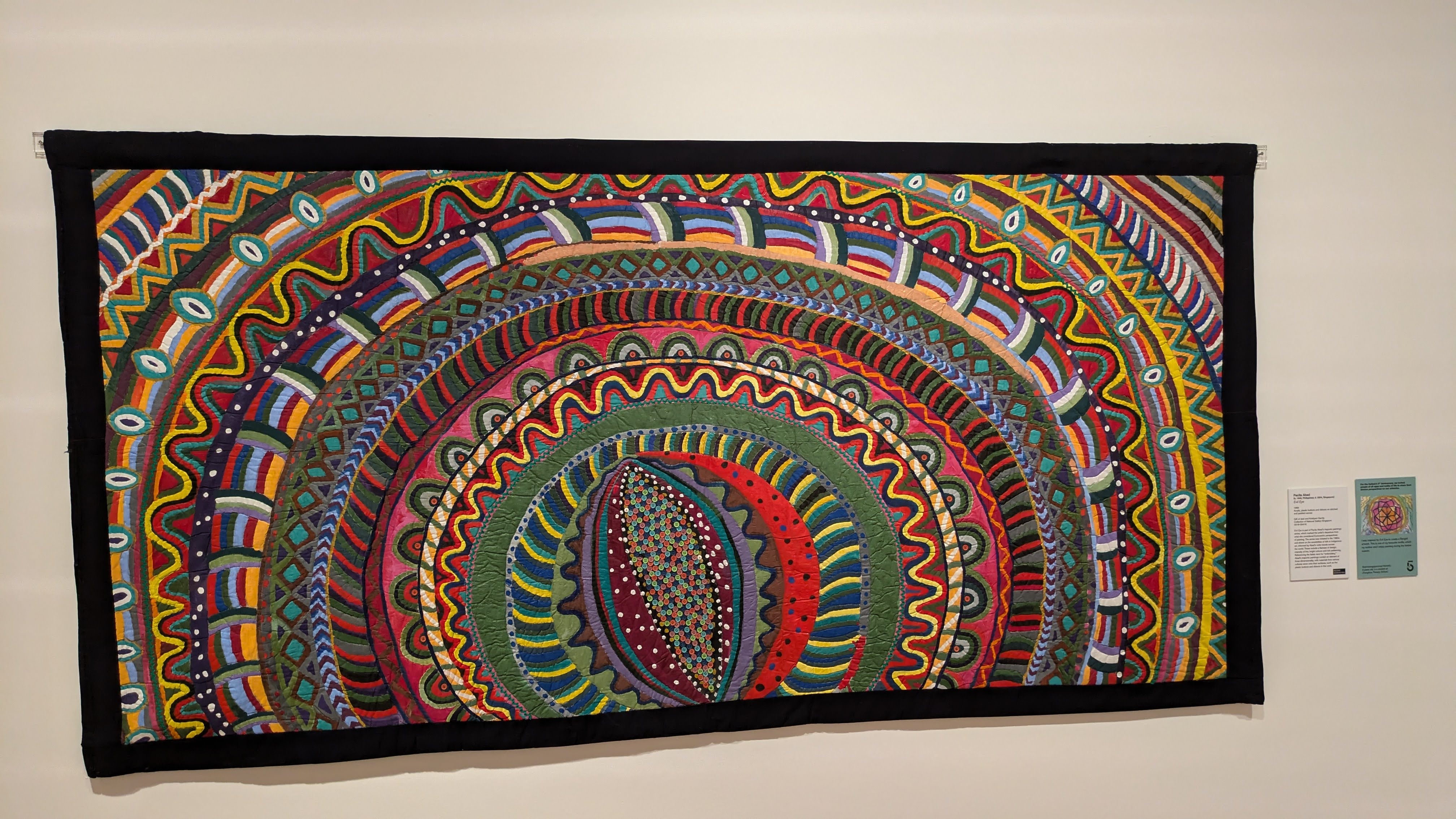
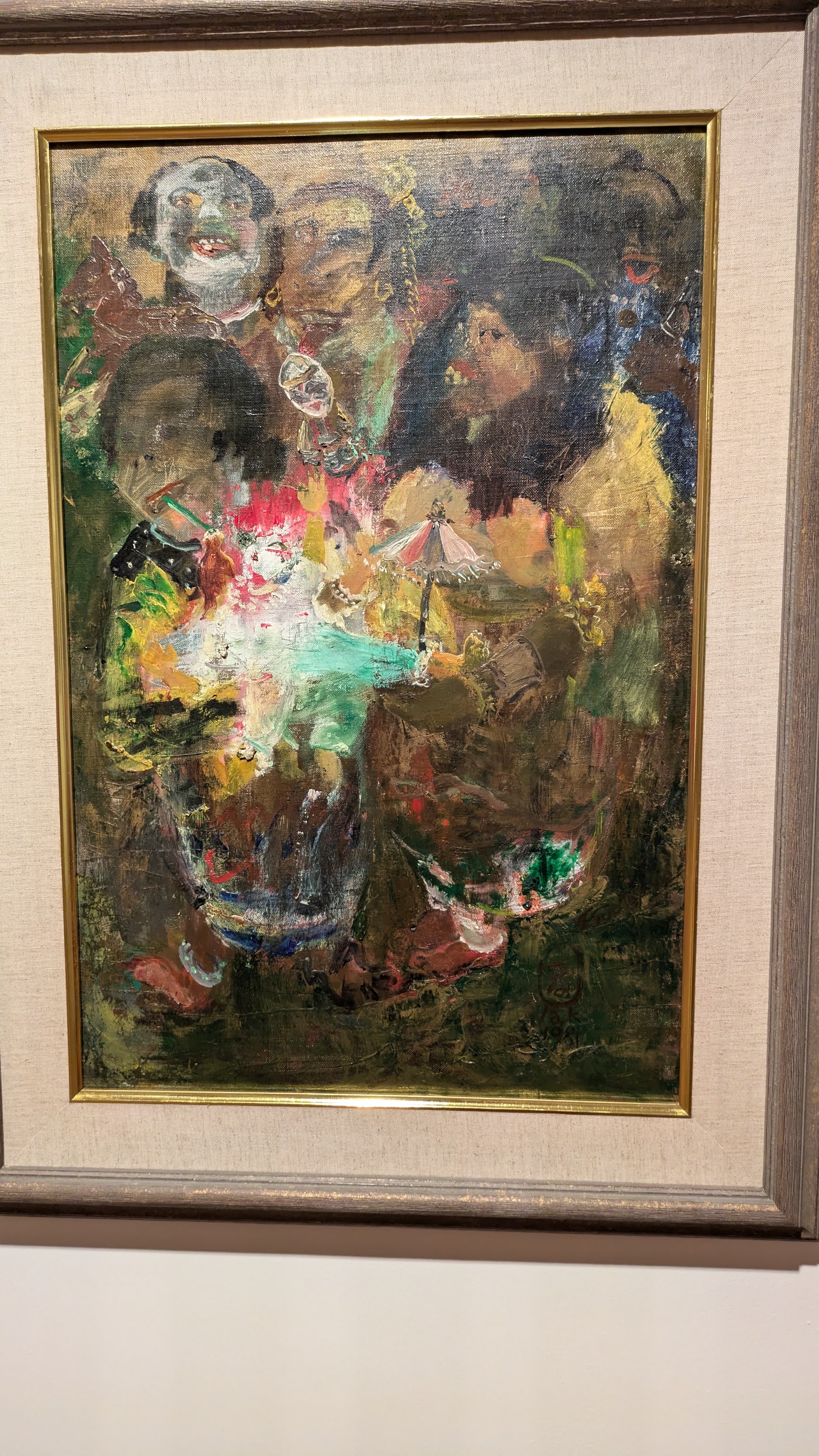
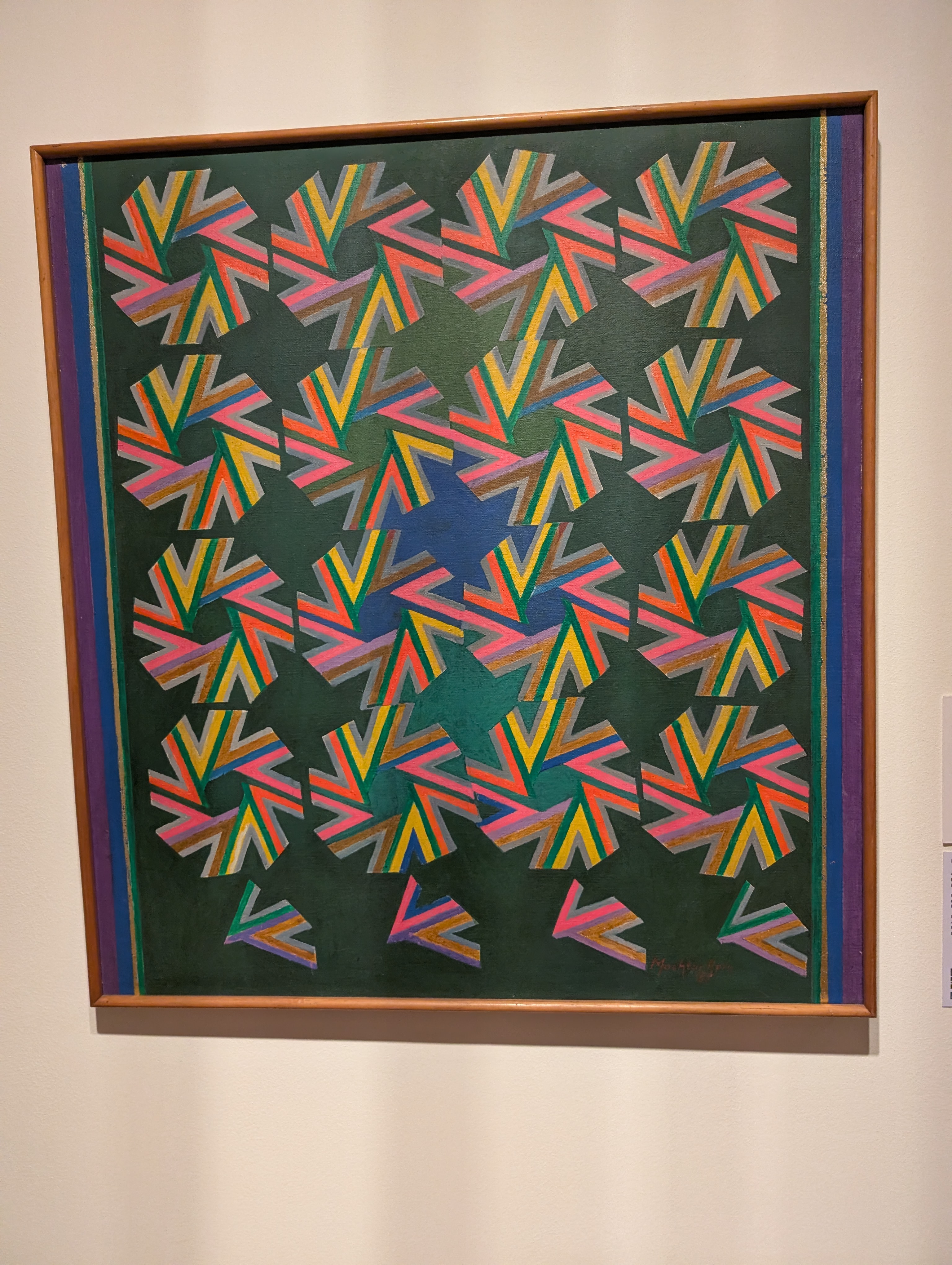
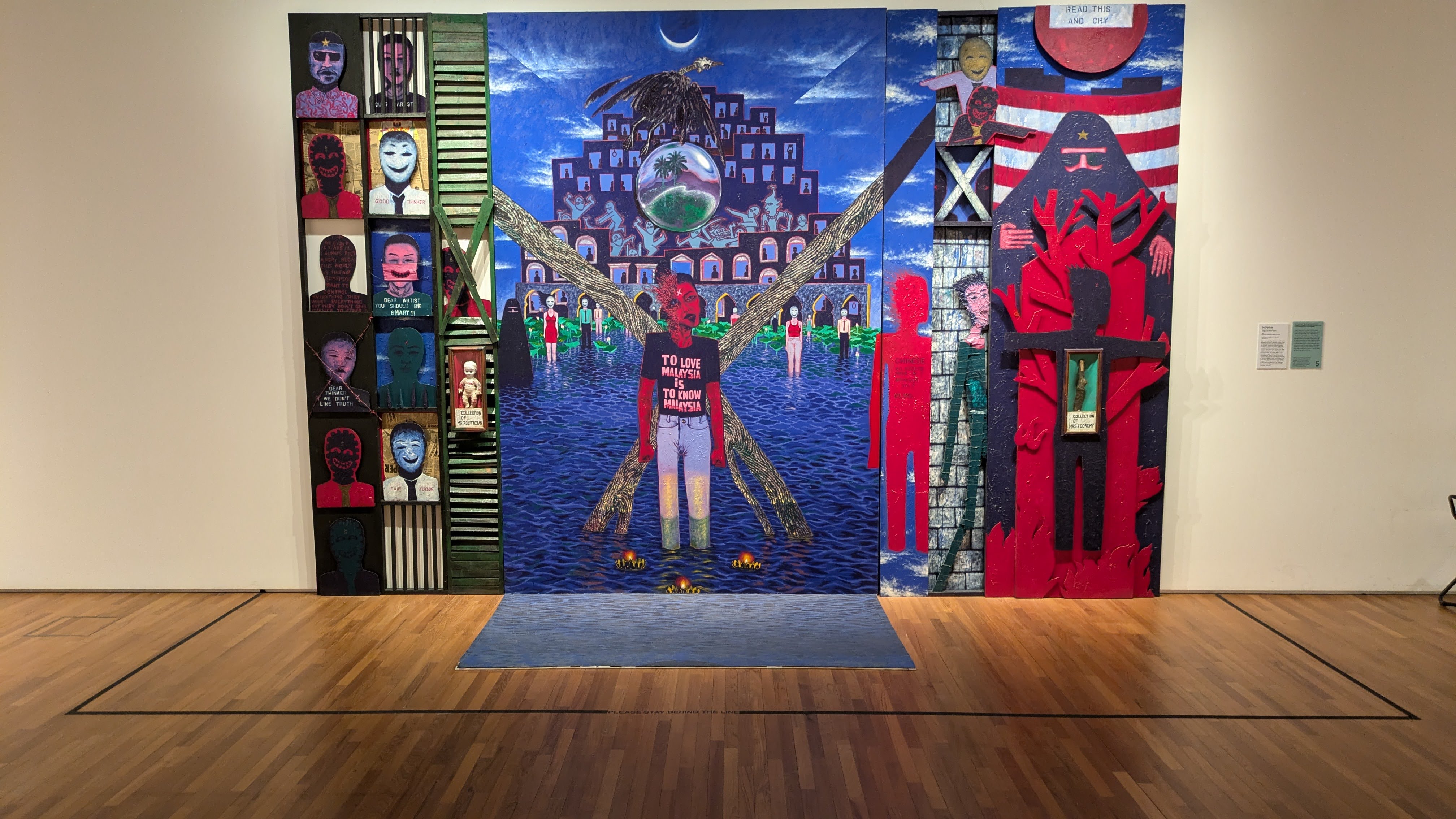
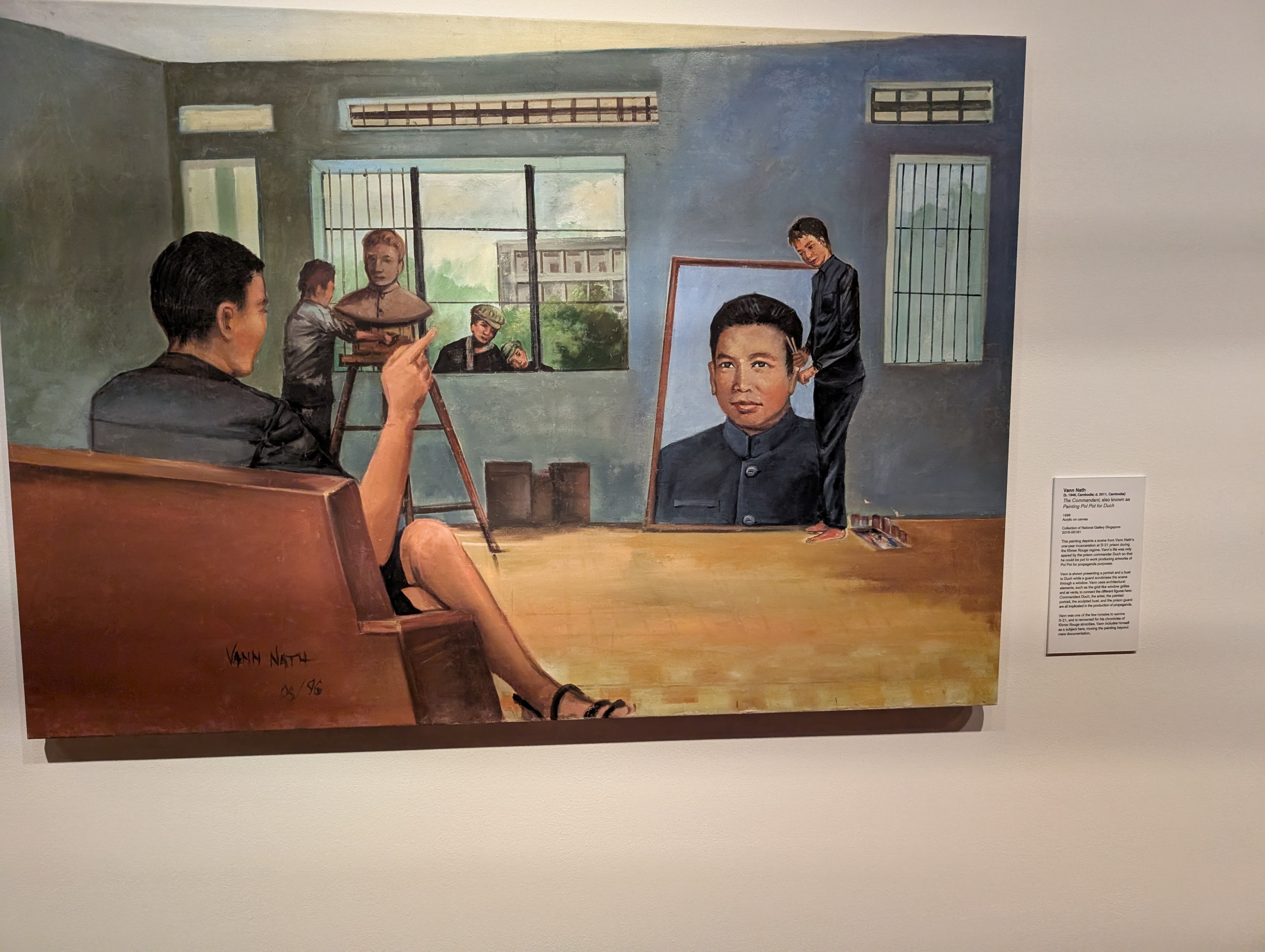
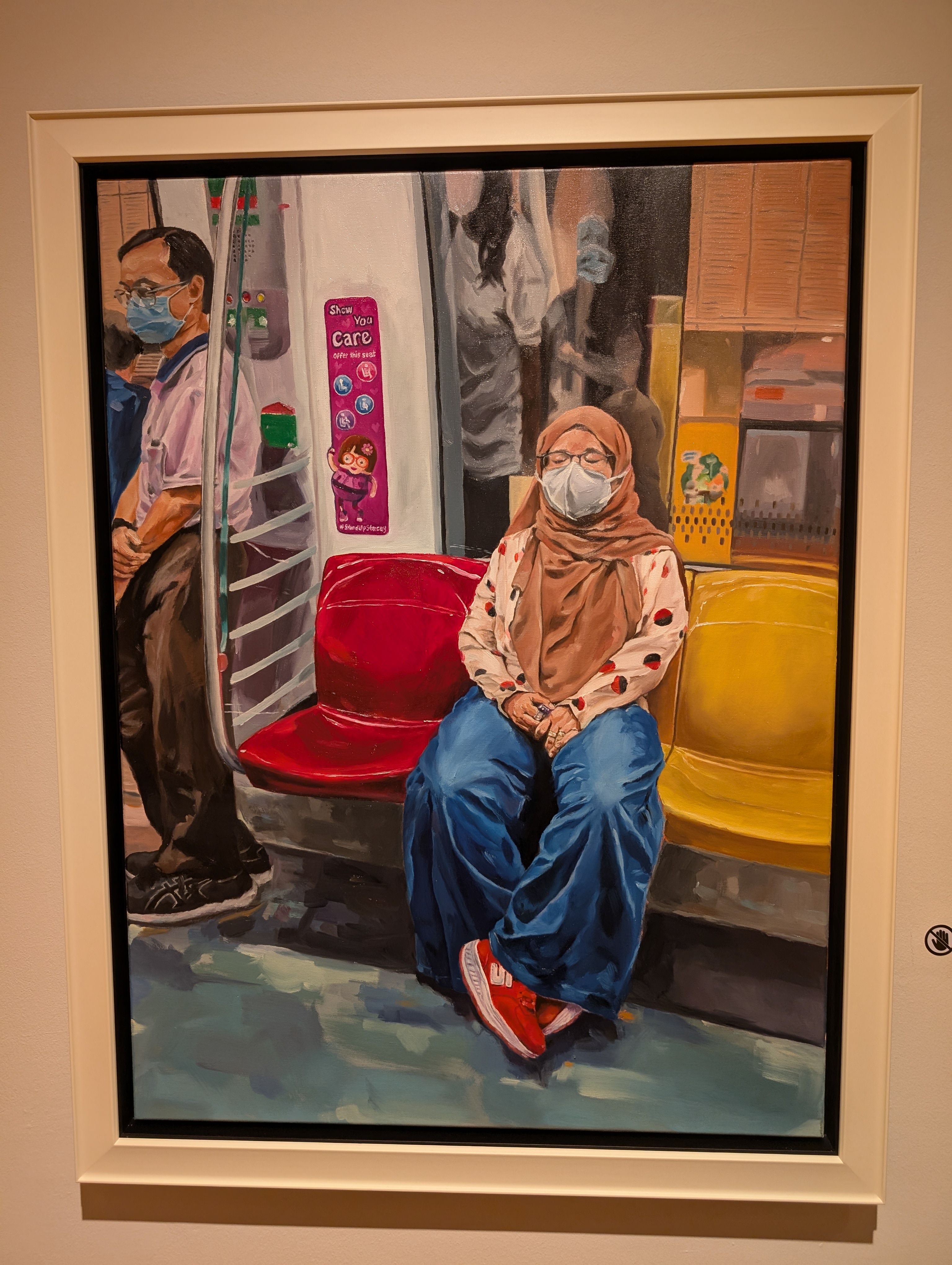
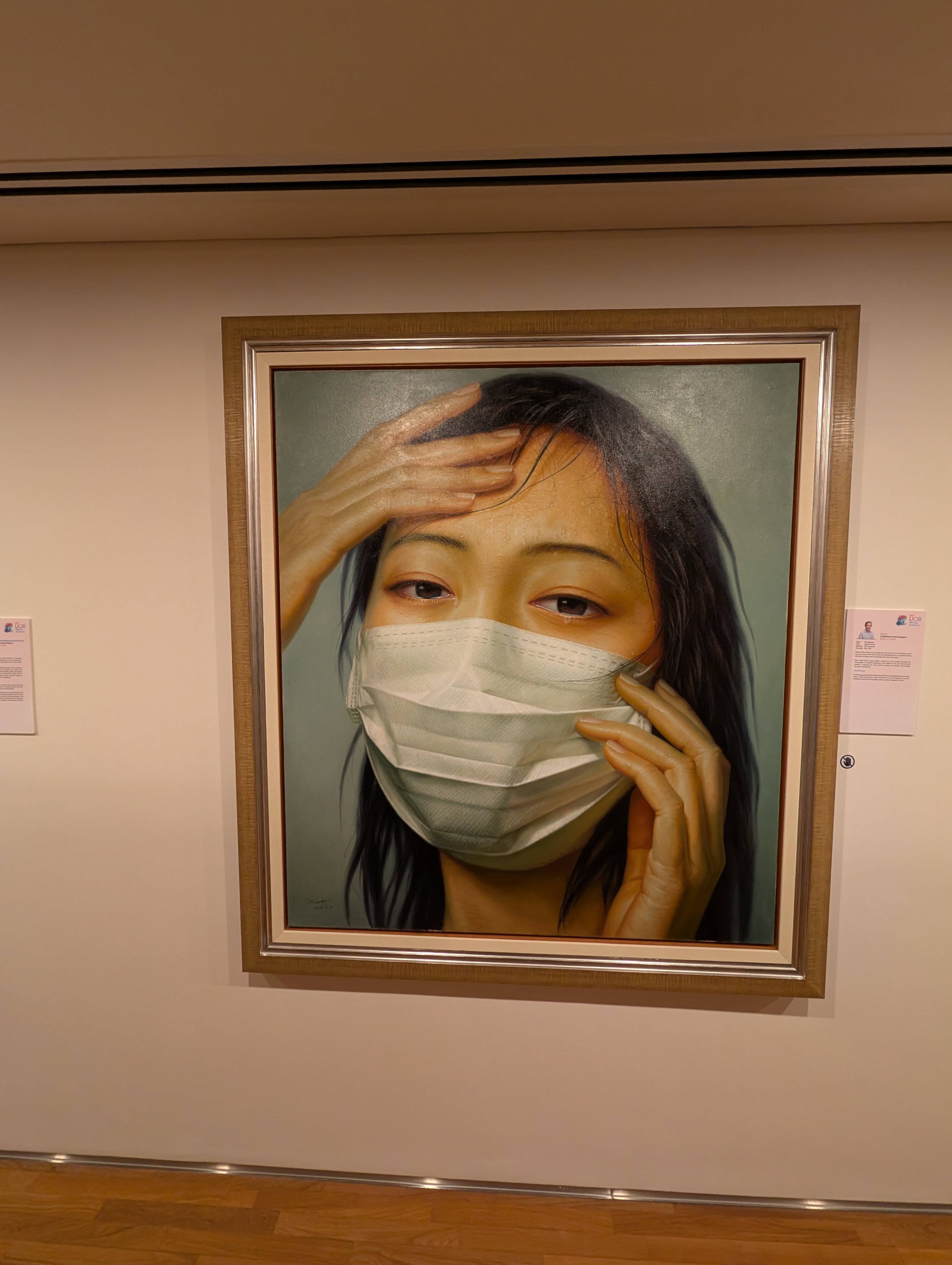
After lunch we went round four exhibitions. The first of which was an exhibition of the award winners in a South East Asian Art competition. It was interesting if varied in quality and style.
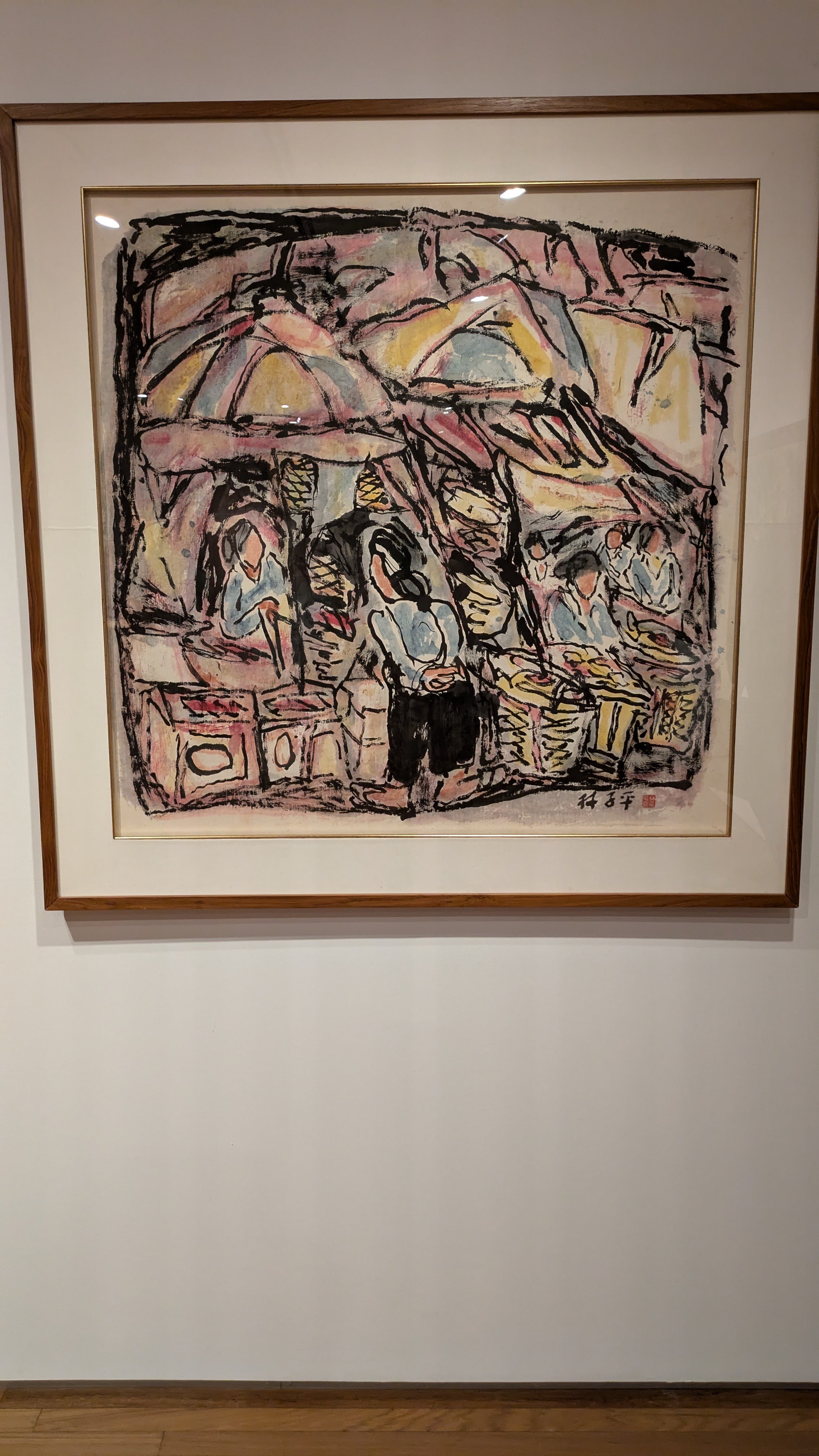
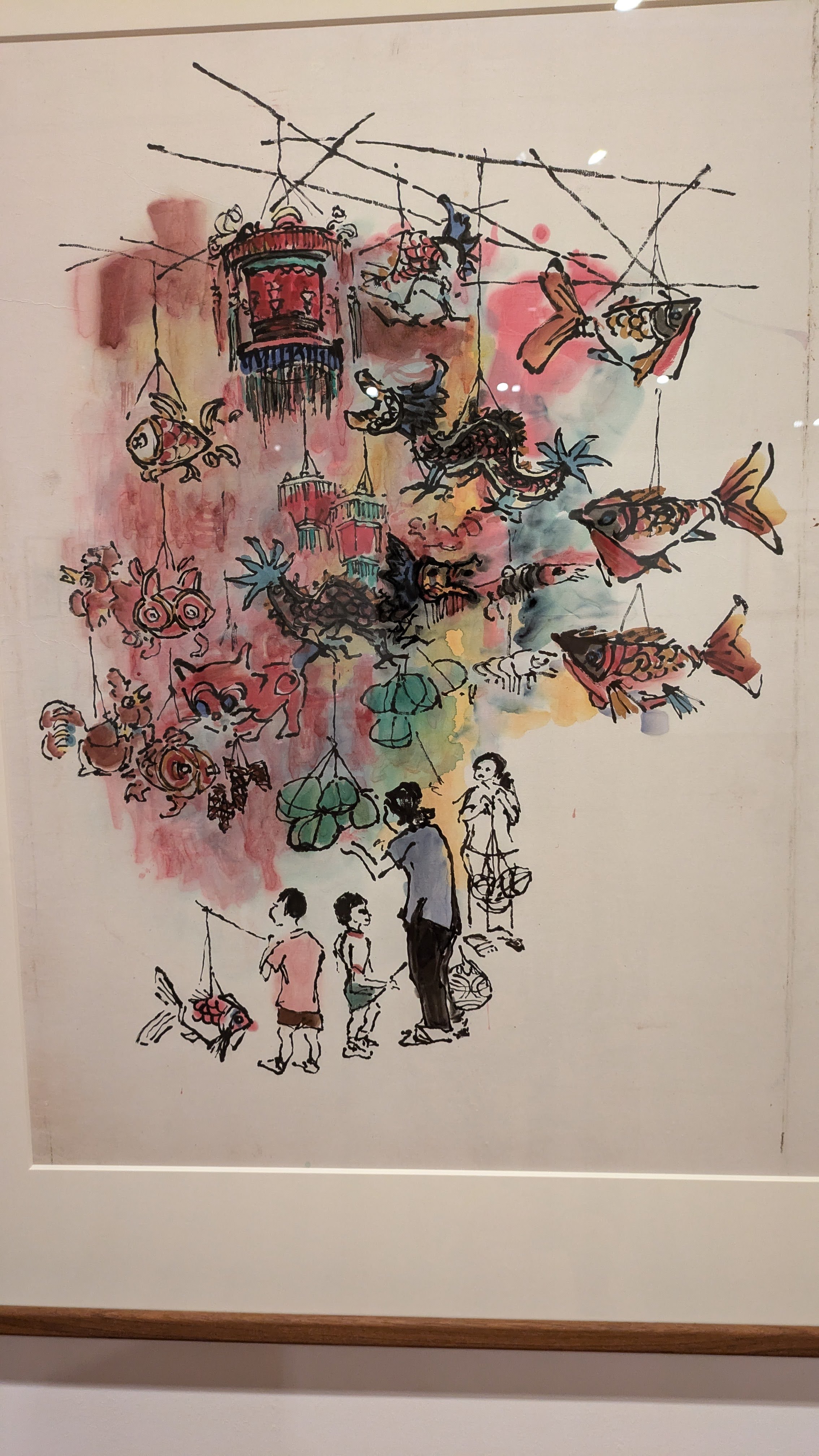
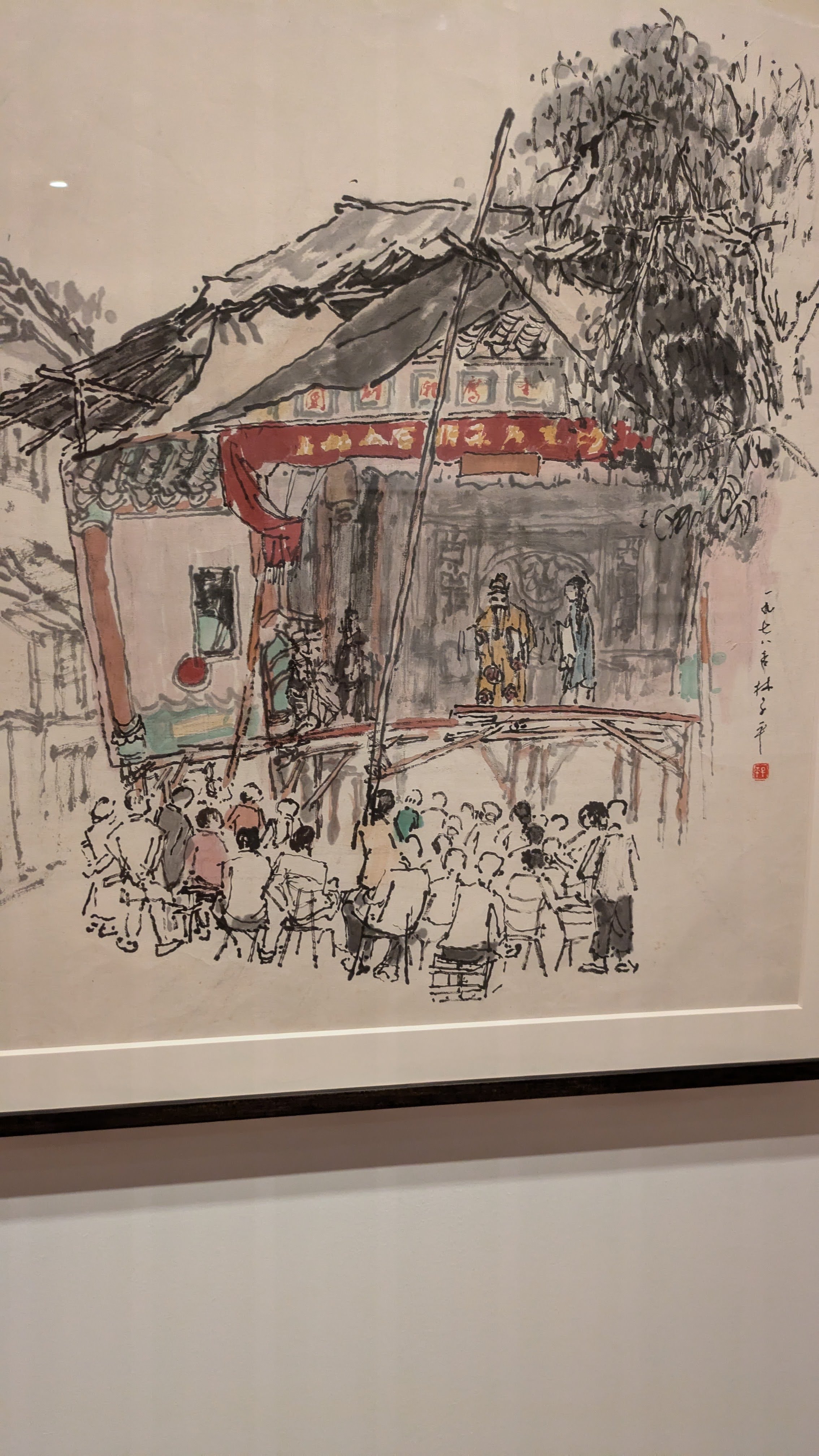
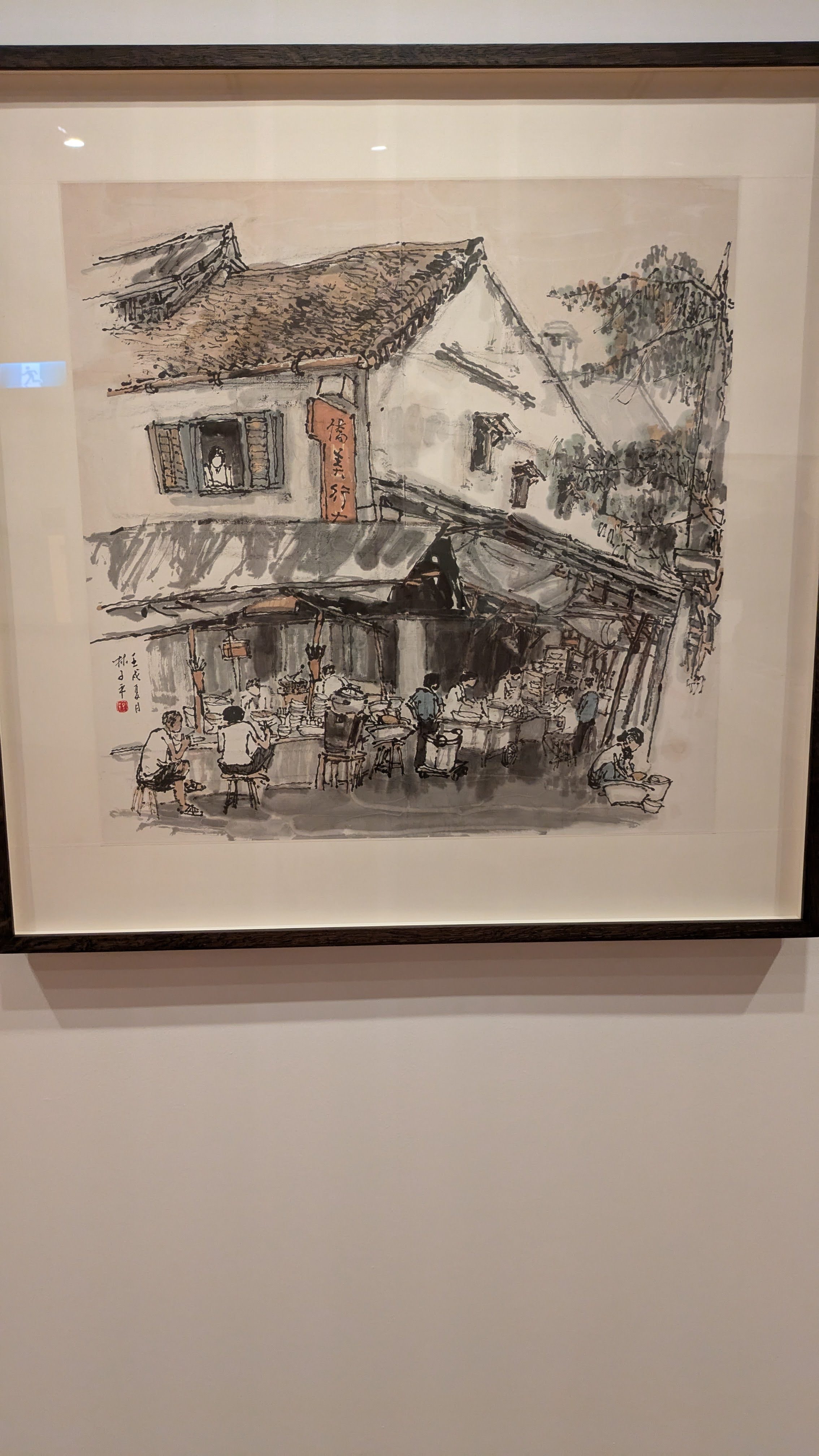
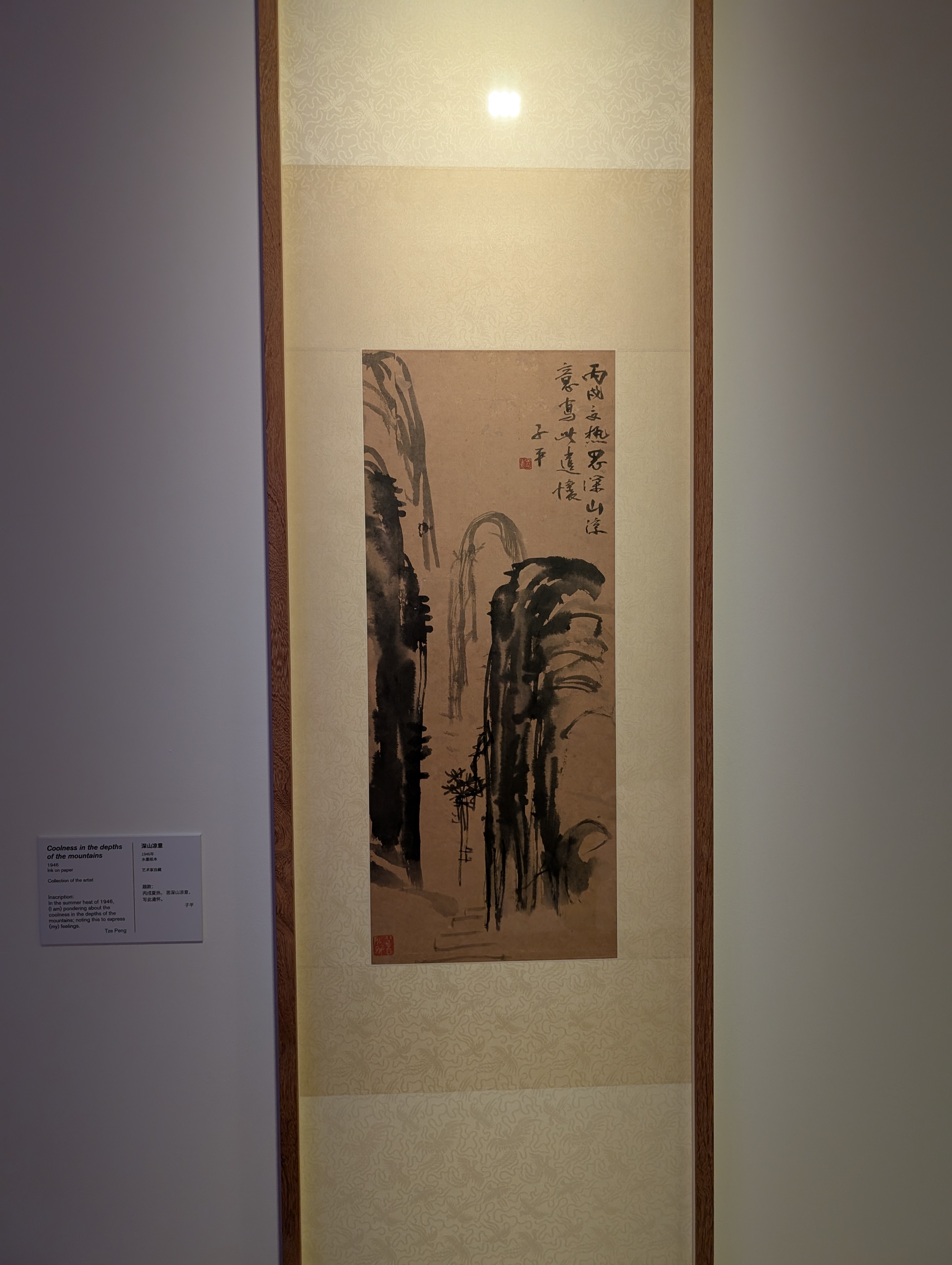
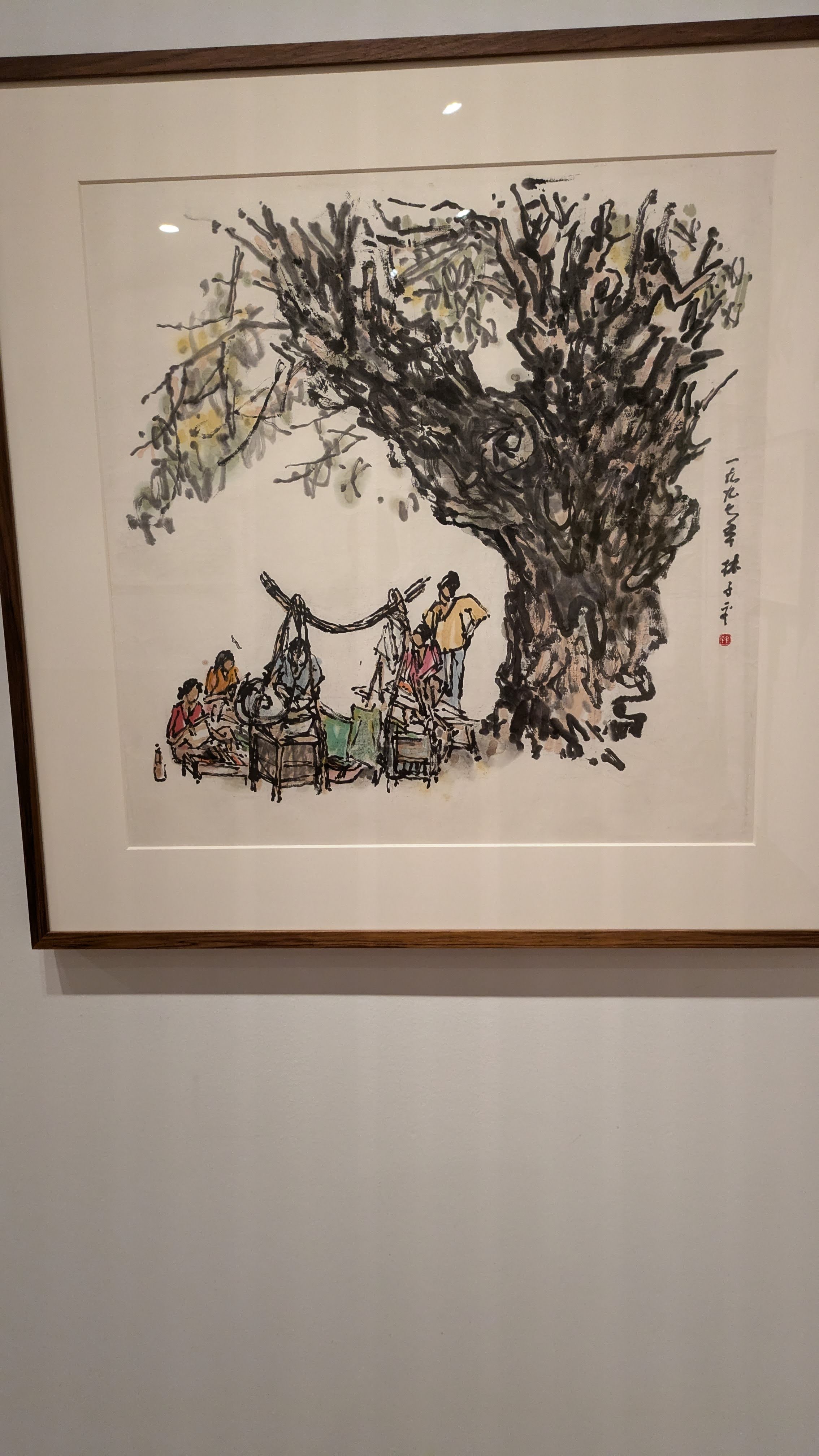
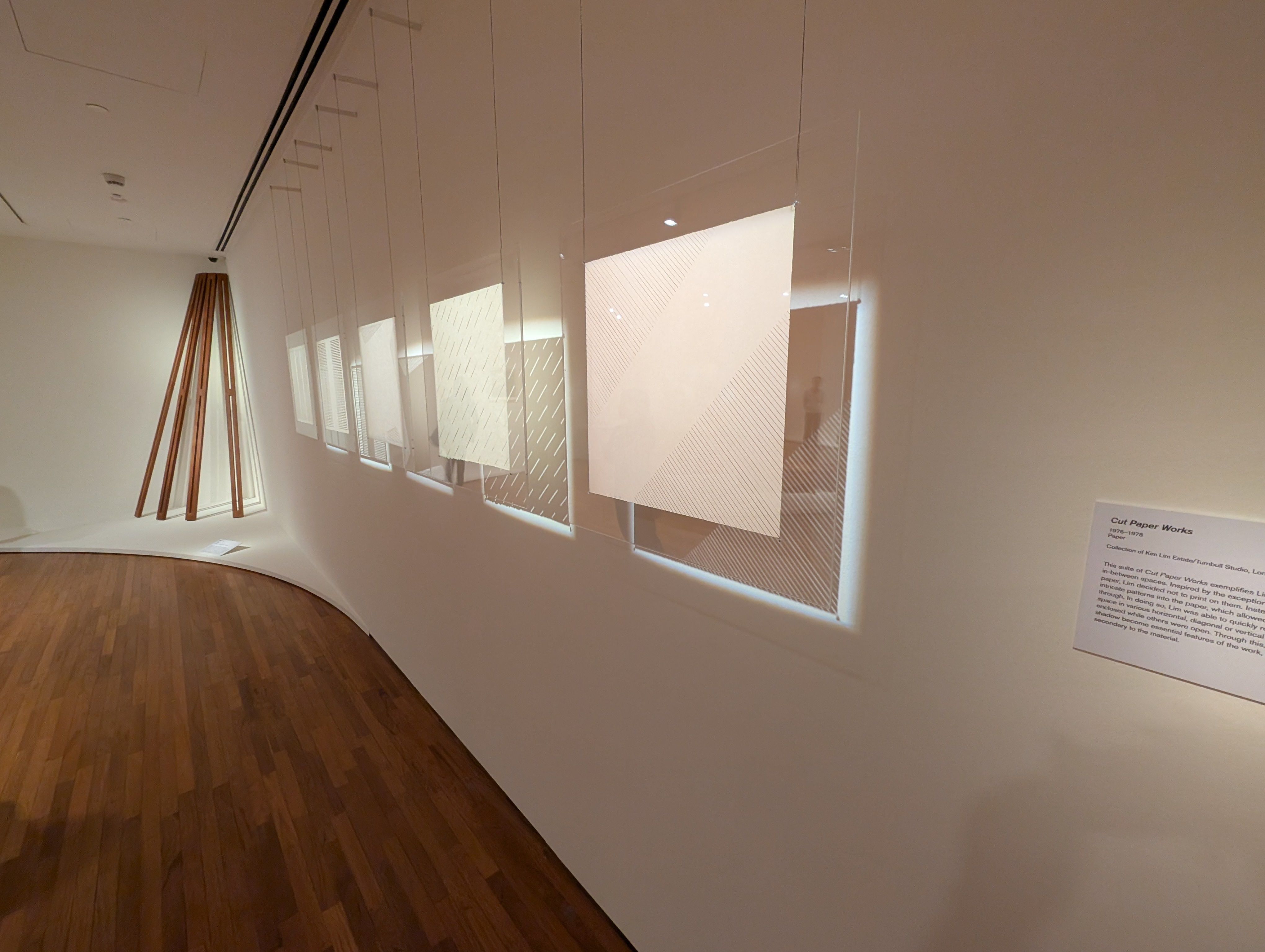
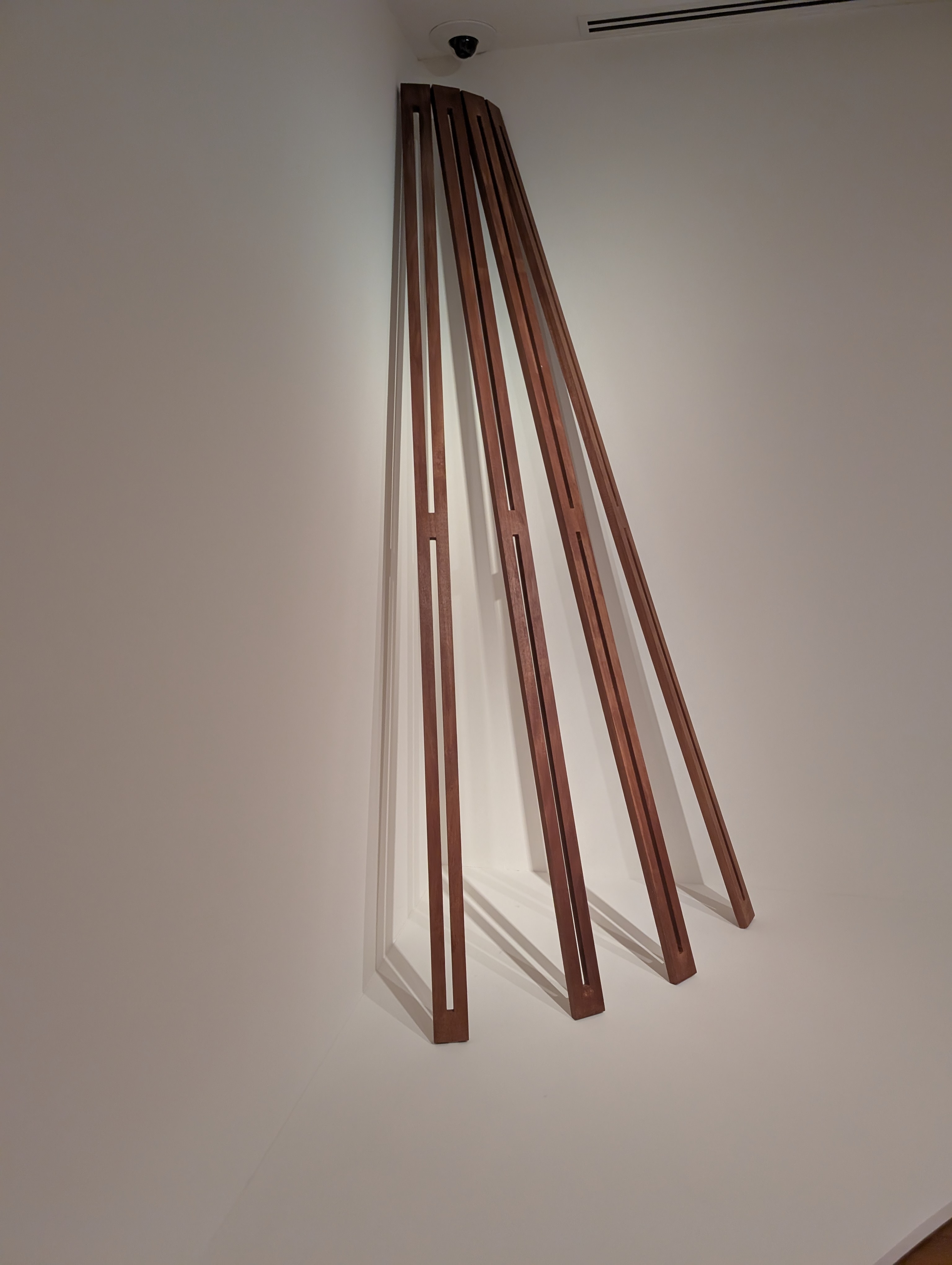
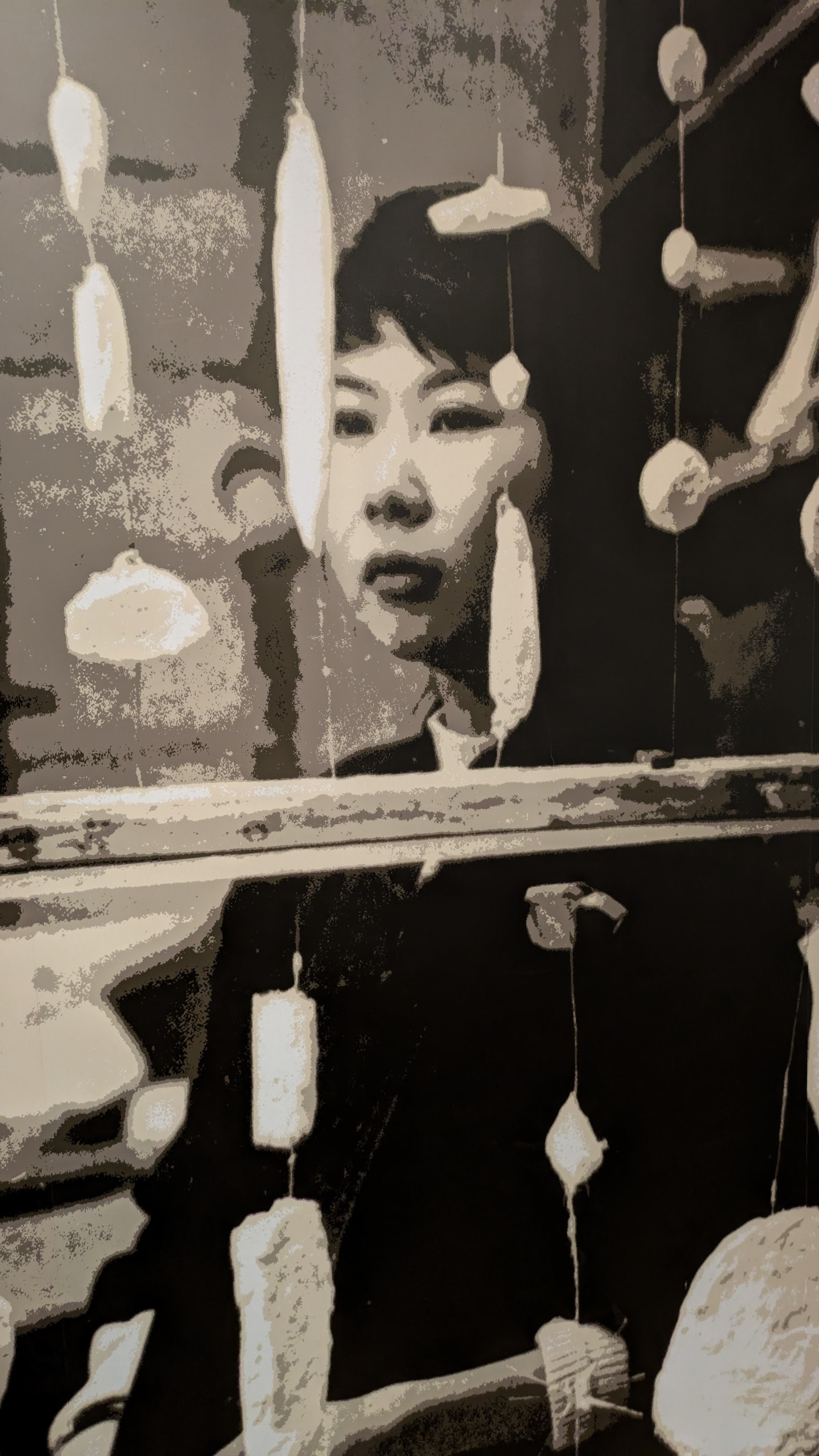
After that we saw, what was my favourite of the exhibitions, “Becoming Lim Tze Peng”. Lim Tze Peng is a one hundred and three year old Singapore born artist. The exhibition traces his development and his route to becoming a national treasure. He is viewed in Singapore in a similar way to David Hockney in the United Kingdom.
This is lazy on my part. But, I feel that the video above gives a better overview of an artist than I can. I knew nothing of her or her work before seeing the exhibition. I liked what I saw.
By this time, it was around 5:30. We were “arted” out. It had also started to rain. This was rain as I remembered it from my time in the Solomon Islands. Like a giant bucket of water being poured out. We decided to get a taxi back to the hotel. We would have drowned in the ten minute walk back. We already knew that taxi fares went up at peak times. Rain makes getting a cab more difficult and also, apparently, even more expensive.
Back at the Park Royal Pickering, we had a final dinner. Our faithful driver arrived at 8:00. He had been the same one for all our official excursions. He whisked us off to the airport and our flight home.
Our flight was delayed slightly but took off about one in the morning. Fourteen hours later we were back where we started thirty nine days earlier.
We had pre-booked a car. It took us back home to a cold and dreary New Malden by nine a.m. Duster was there to meet us, and I think he was pleased to see us.
Our adventure was drawing to a close, but we still had two days left in Singapore before we flew home. We wanted to make the most of it. We had afternoon tea booked at Raffles at 3:30, but that was the only thing that we had planned.
Monday morning, we were up bright and fairly early. The plan was to visit Marina Bay Gardens, then take it from there.
After breakfast, we decided to get a taxi to the gardens. Two reasons, it was about a forty-five minute walk, and it was hot and humid. Taxis are fairly cheap in Singapore, off-peak. They get much more expensive at peak times.
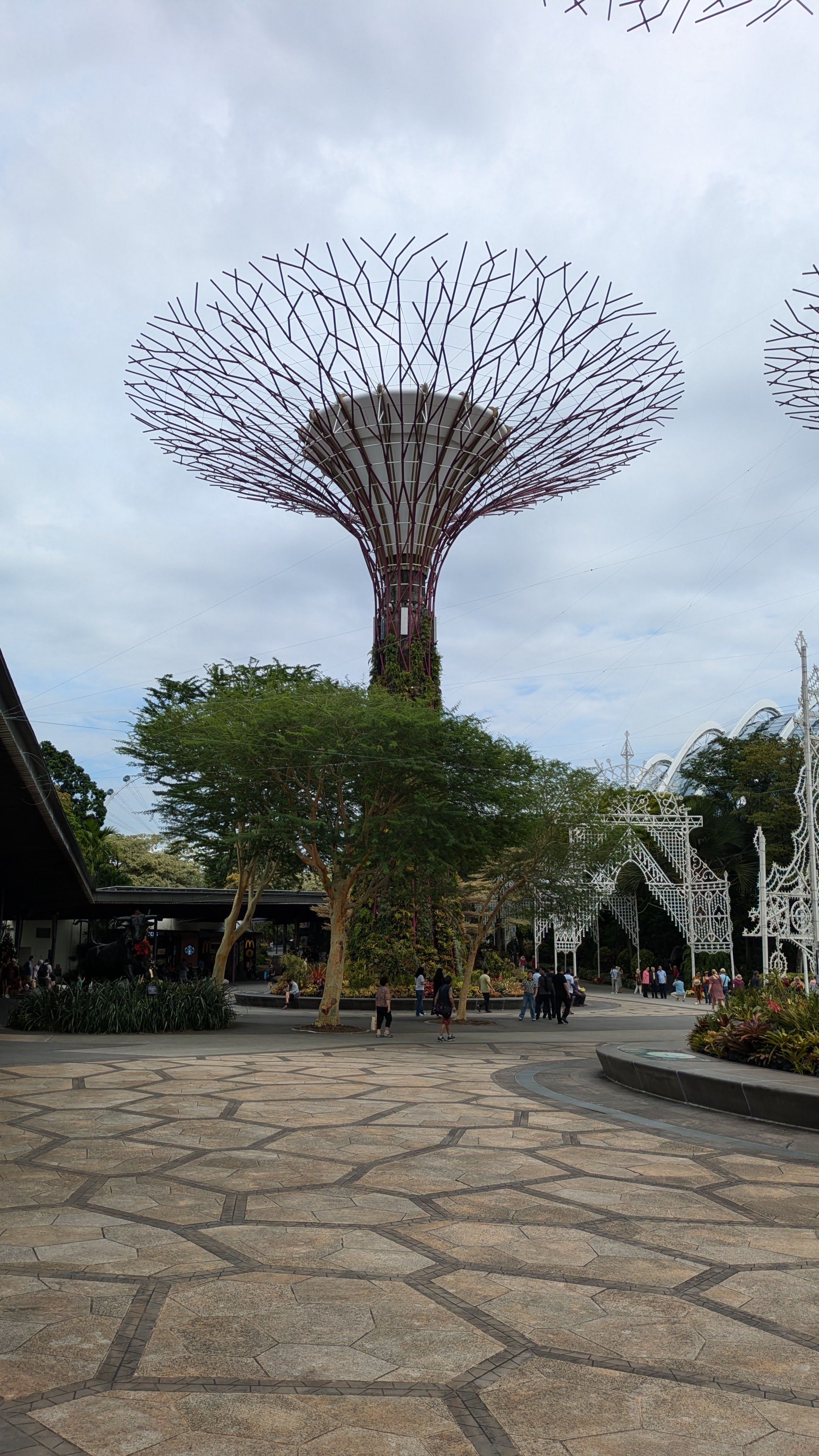
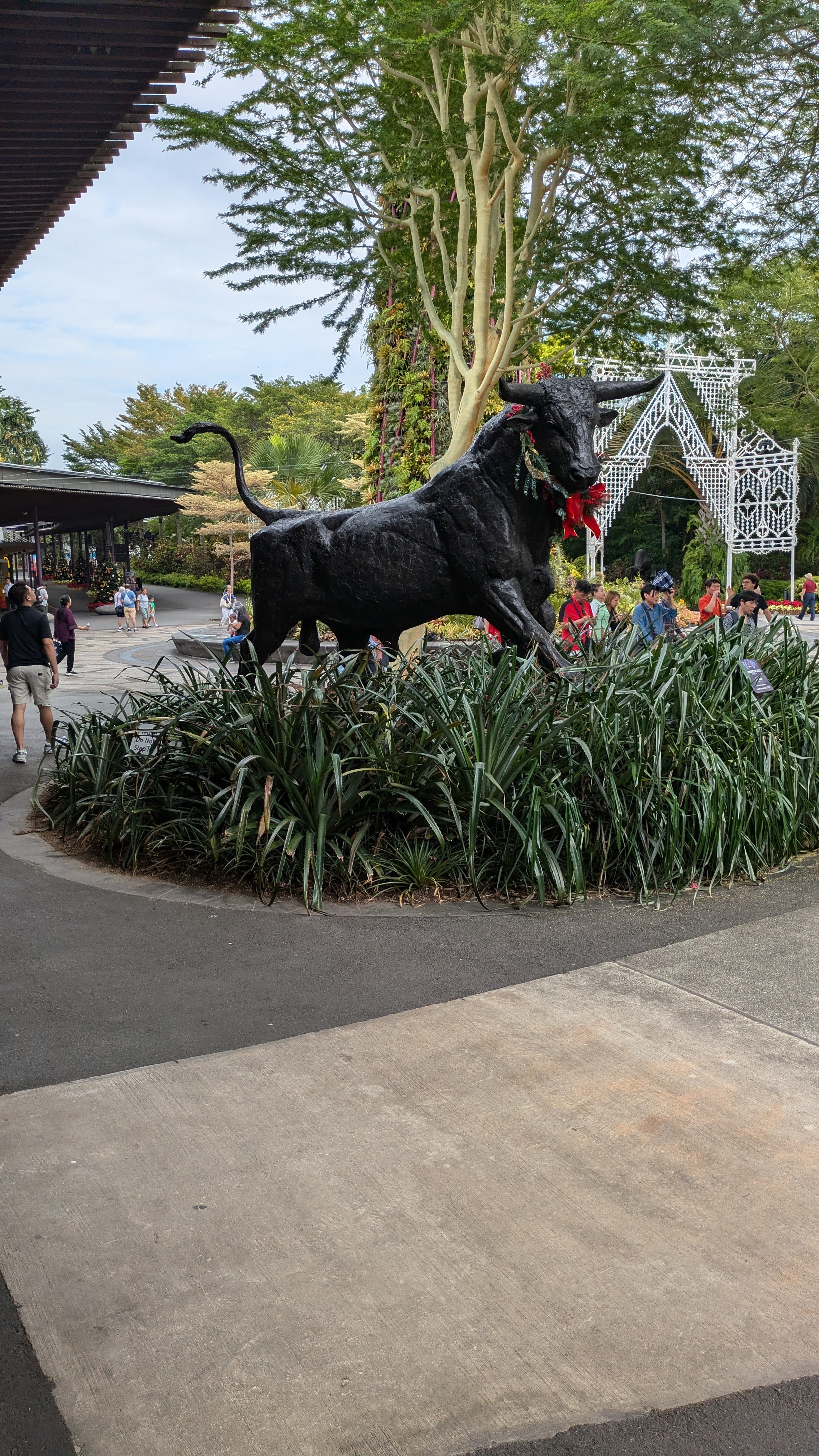
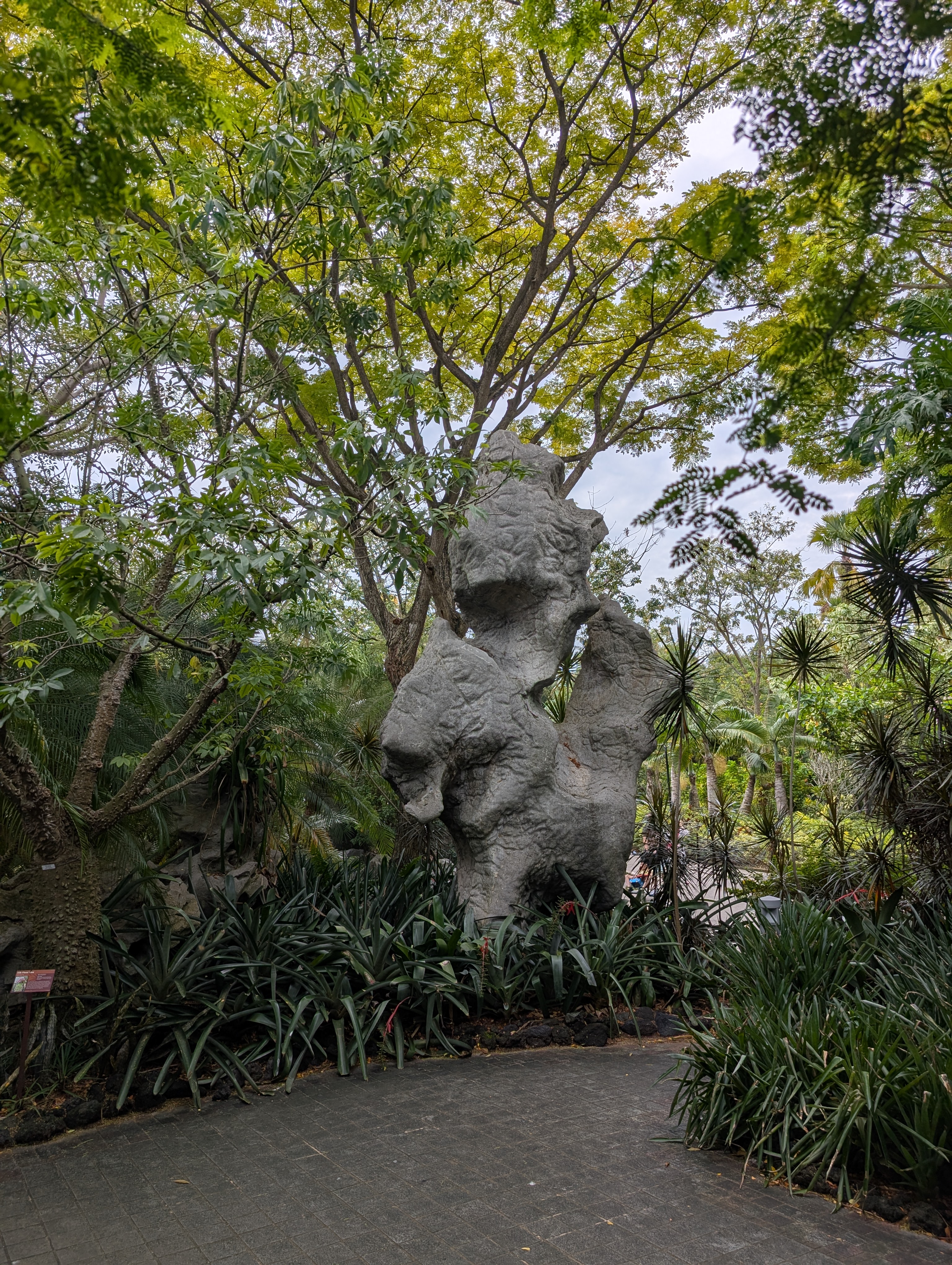
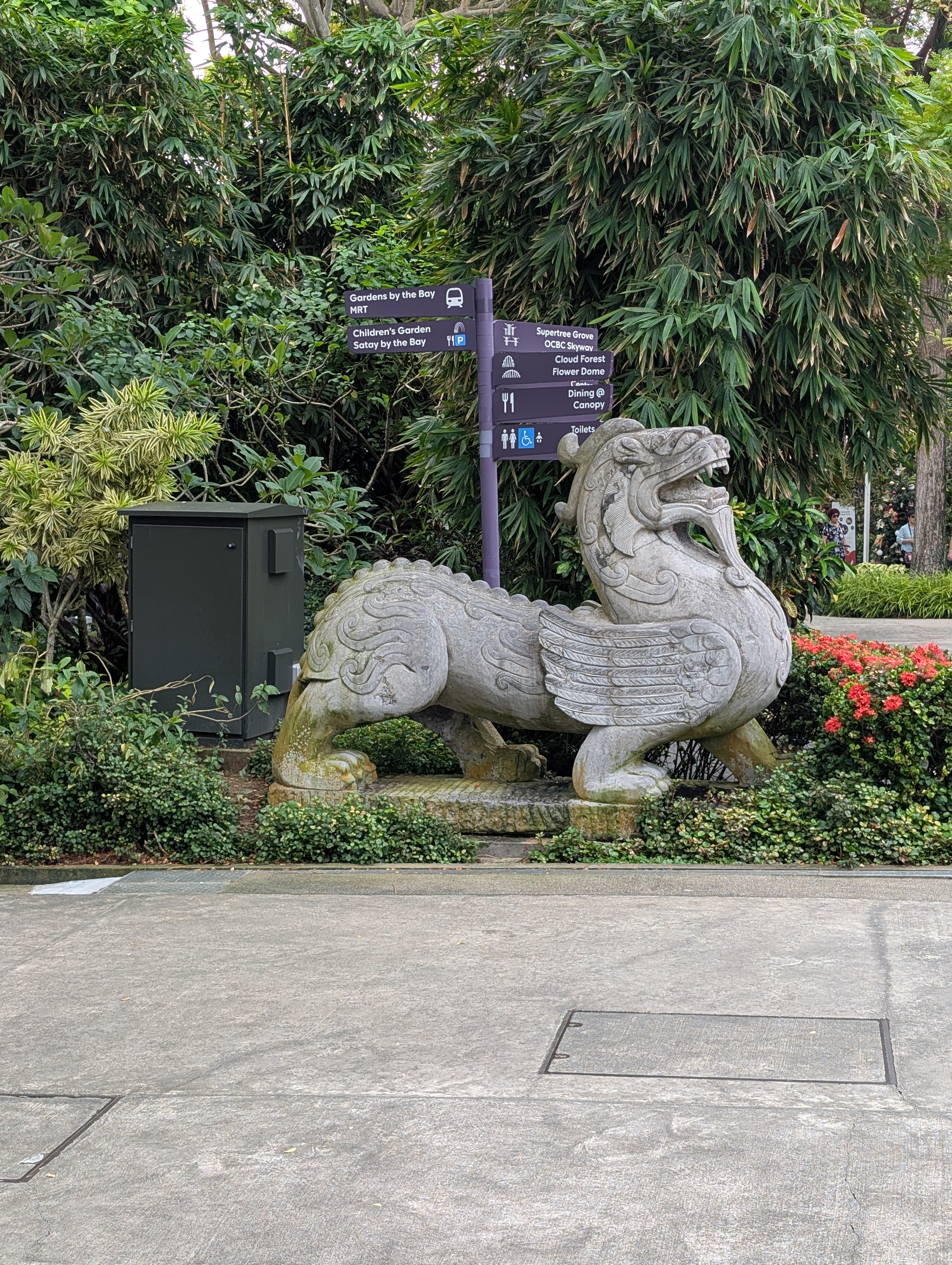
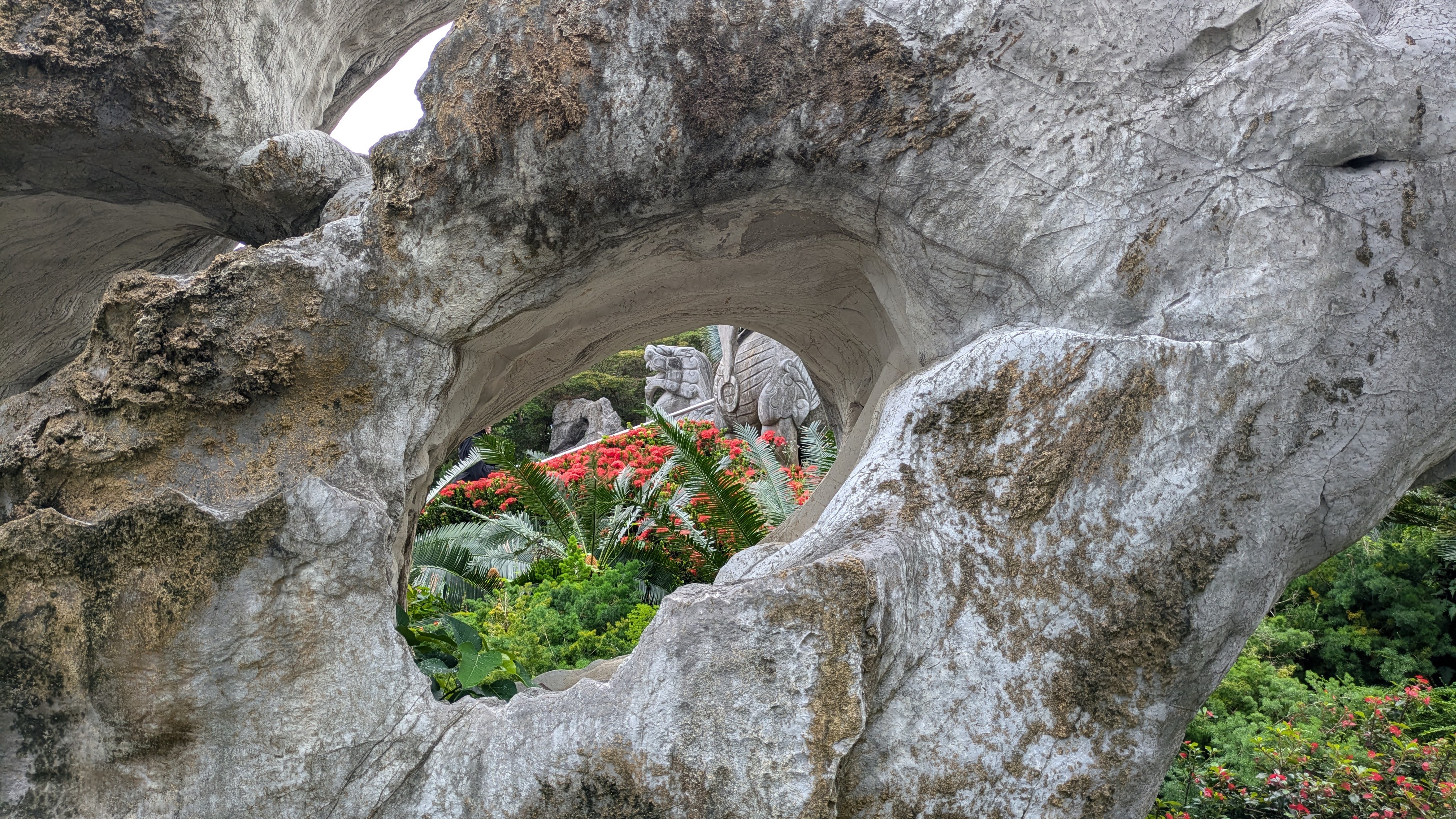
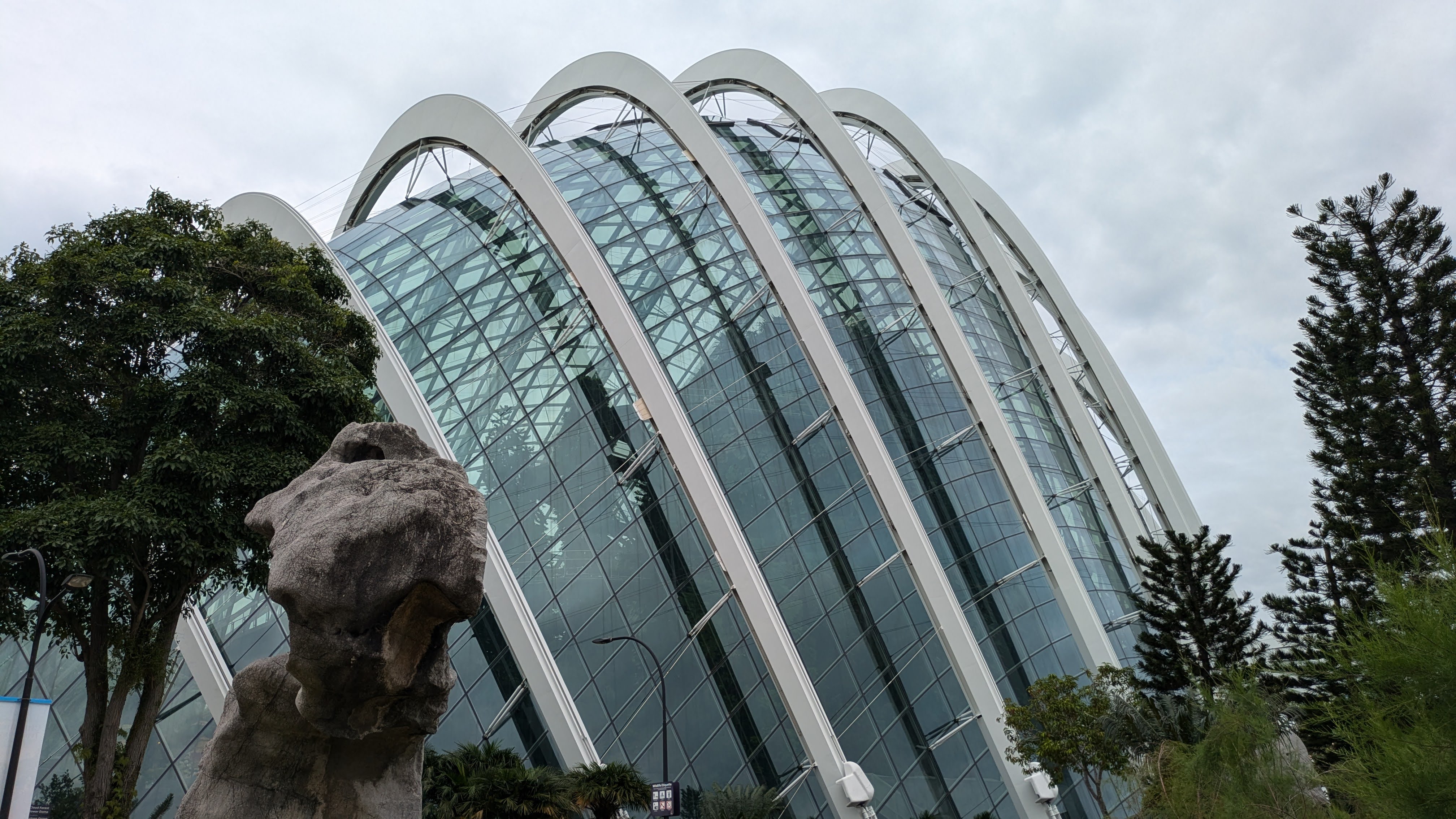
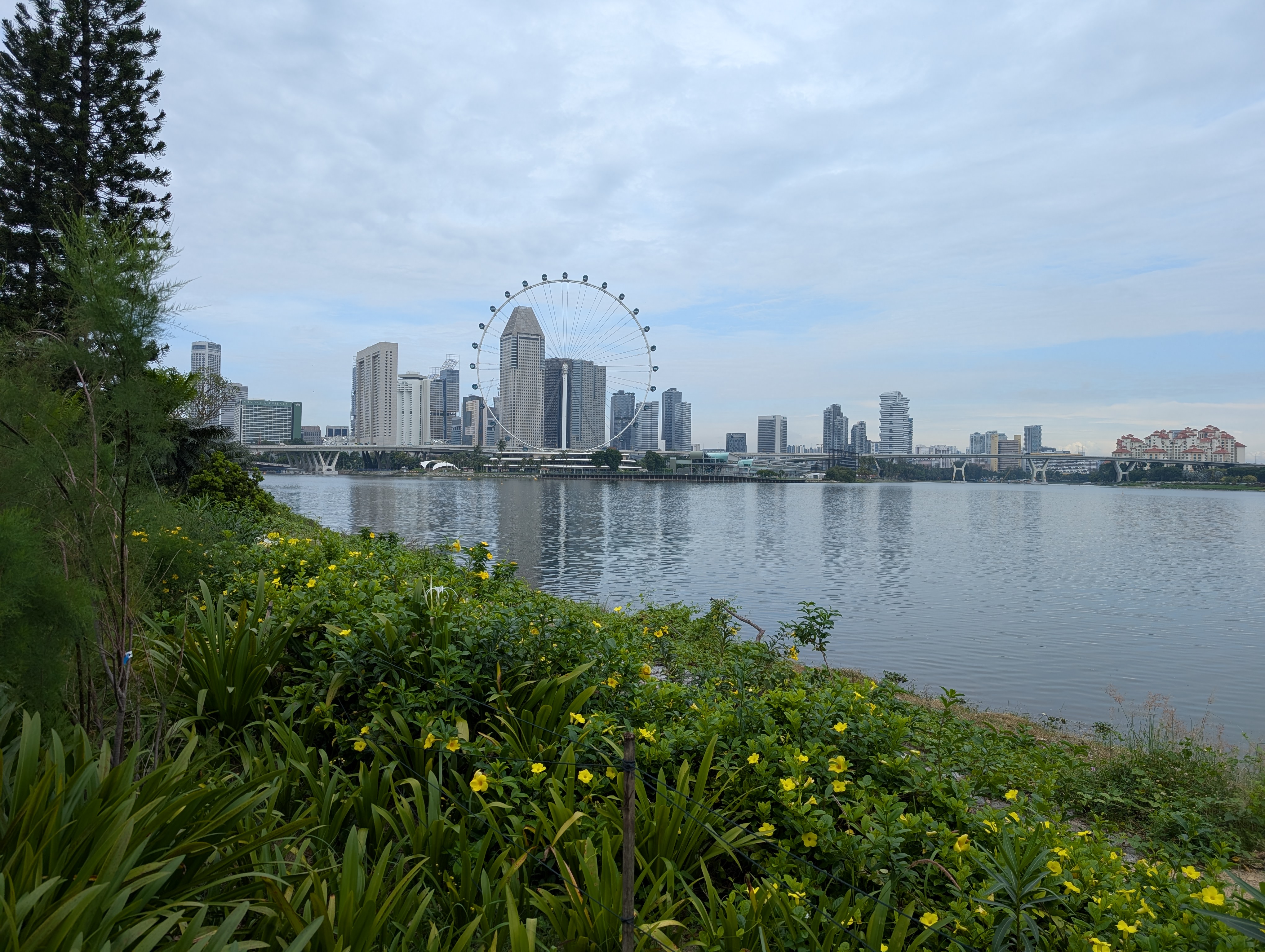
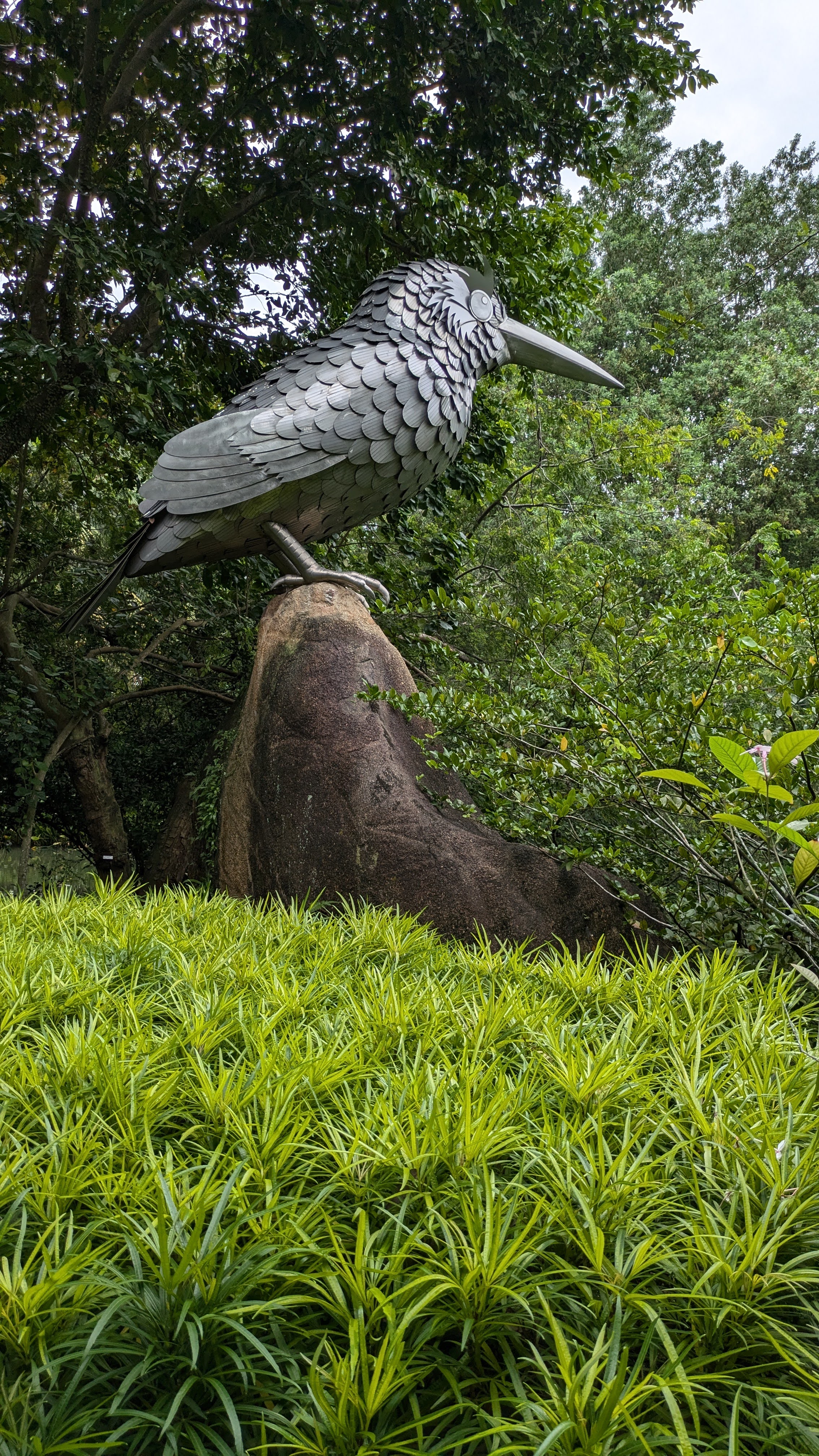
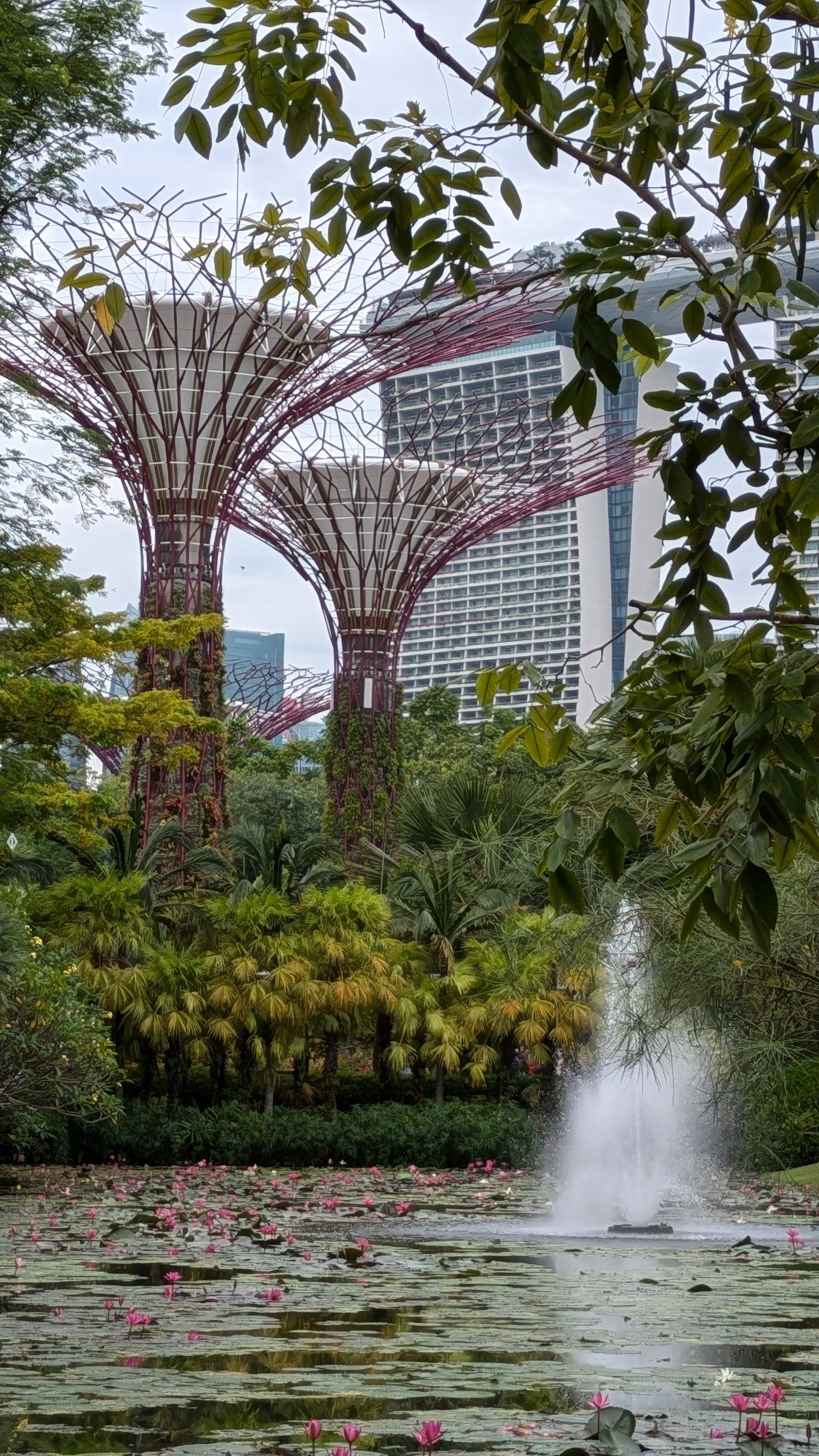
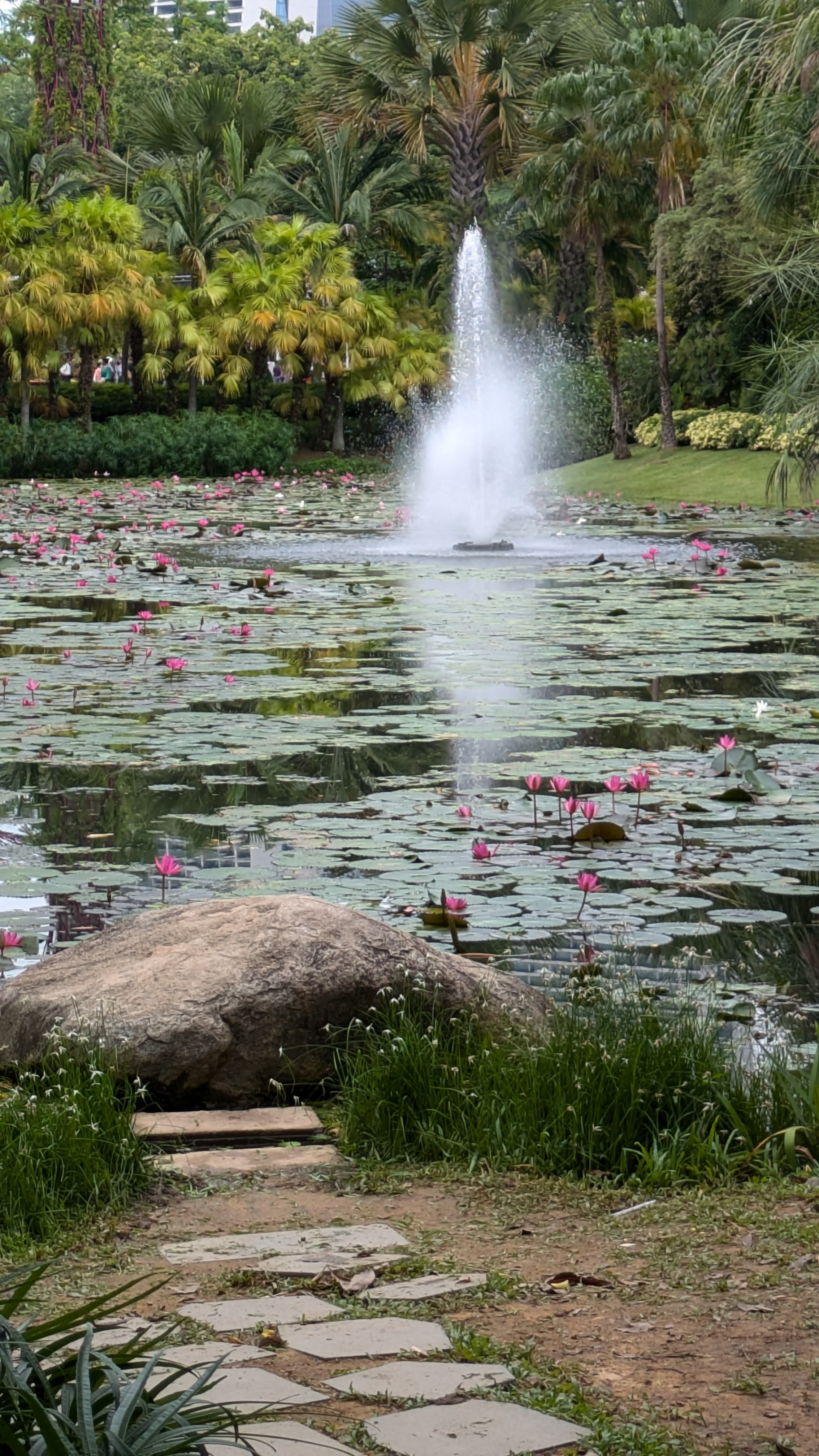
The gardens are a mix of gardens with a sculpture park thrown in for free.
The artificial trees are impressive, even more so at night when they are lit up. Unfortunately I don’t have a photo to prove it. The gardens are worth a visit.
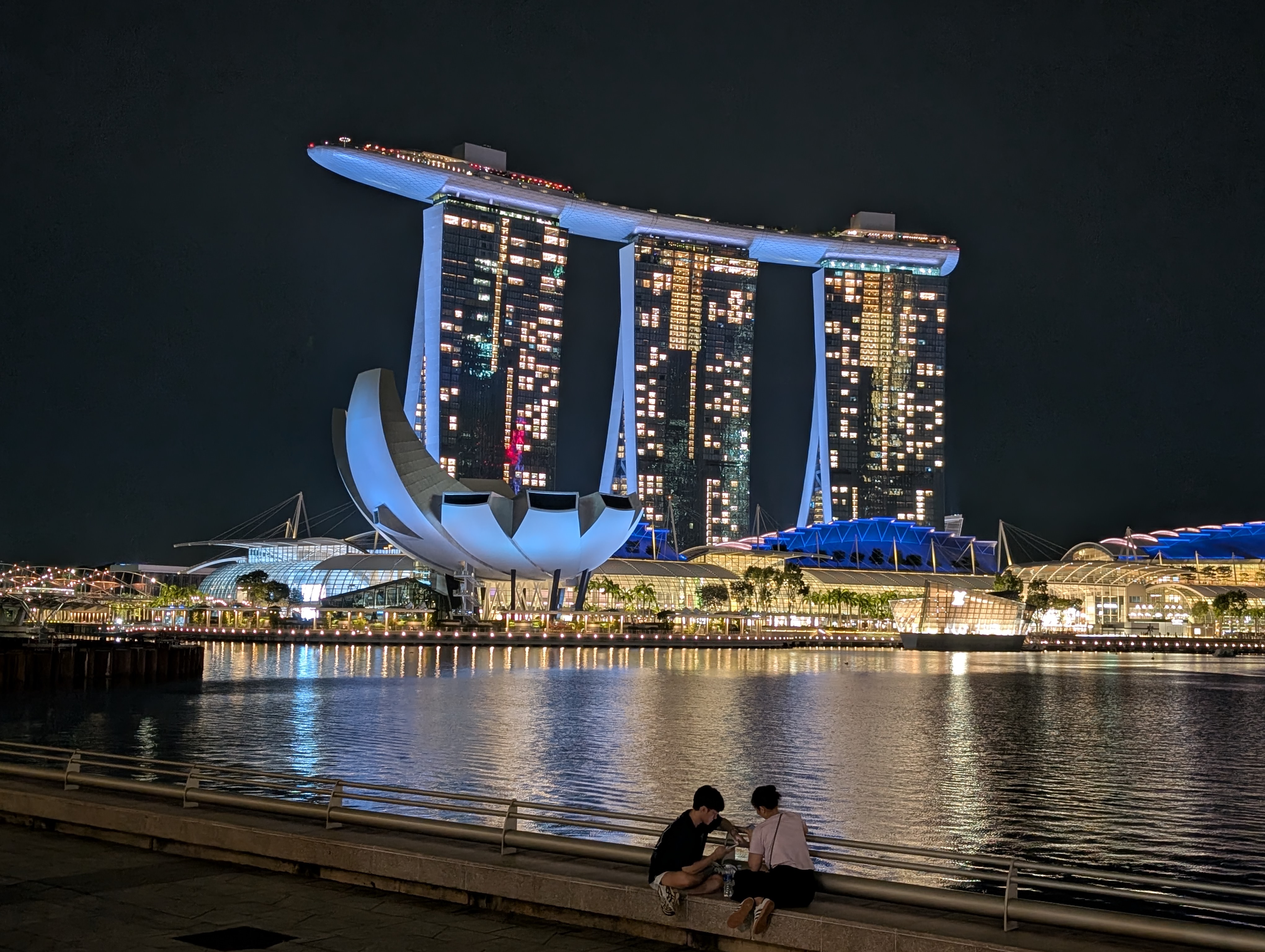
After the gardens we decided to visit the Art Science Museum. It is situated in an attractive flower shaped building.
It is part of the Marina Bay Sands Hotel / Shopping Mall complex. Like a lot of Singapore it is even more spectacular when lit up at night.
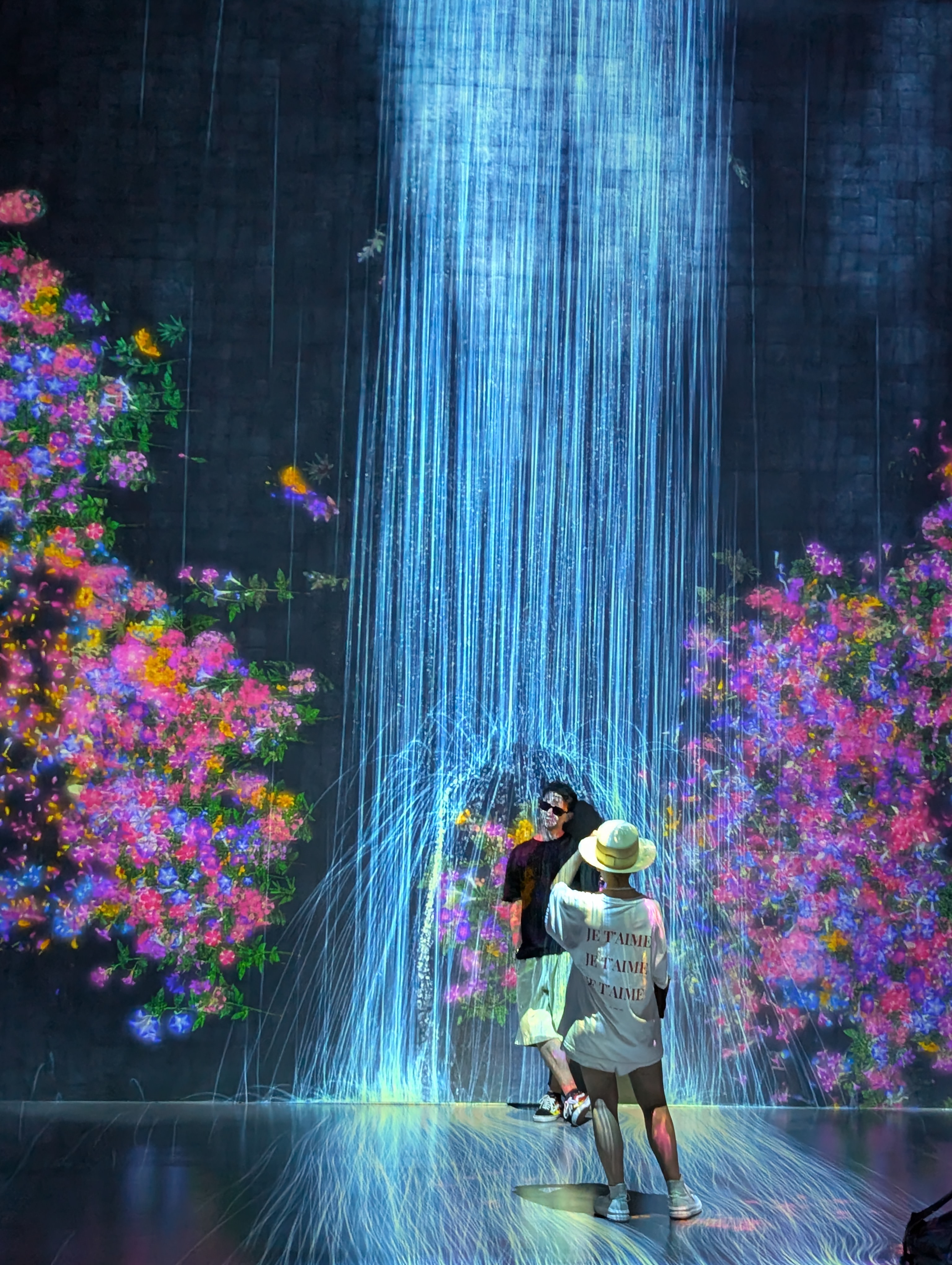
There were several exhibitions on in the museum. The one we went to see was called Future World
There were eight installations, more information is available if you click on the link above. They were all interactive but I particularly liked the first one.
Standing under the waterfall
The Sketch Aquarium was a lot of fun. You drew sea creatures and coloured them in. Then they were digitally scanned and they swam around the walls of the “aquarium”.
Diane’s green Jelly fish floating around. My shark is in there somewhere as well.
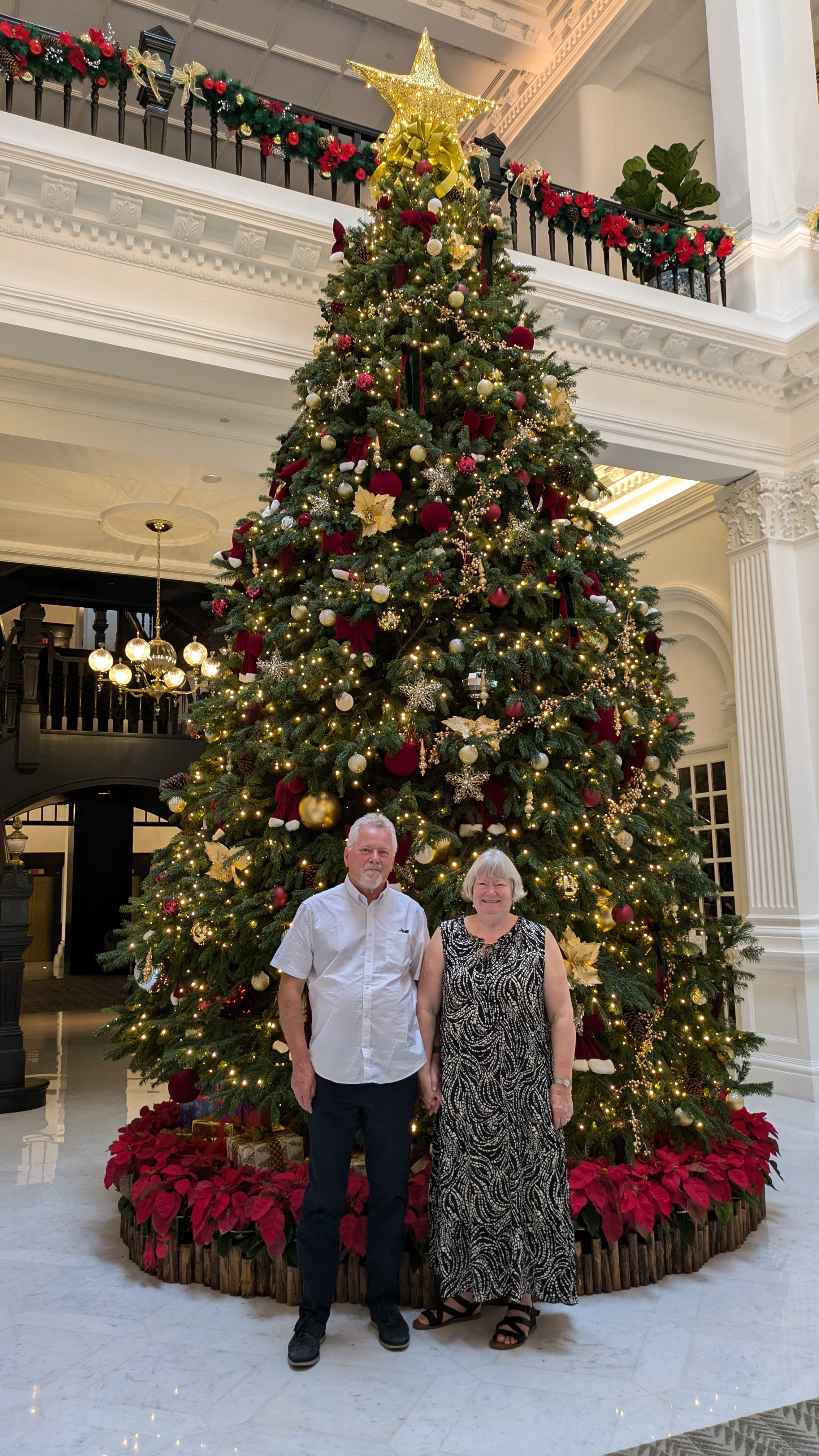
After all that excitement it was time to head back to the hotel. We needed to get changed for afternoon tea at the world famous Raffles Hotel. We couldn’t afford to stay there, but afternoon tea was an affordable luxury.
We decided we needed to dress up. I thought about wearing the suit I wore at Rob and Georgia’s wedding, but it was too crumpled. so I settled for a shirt and trousers. Diane chose her least crumpled frock.
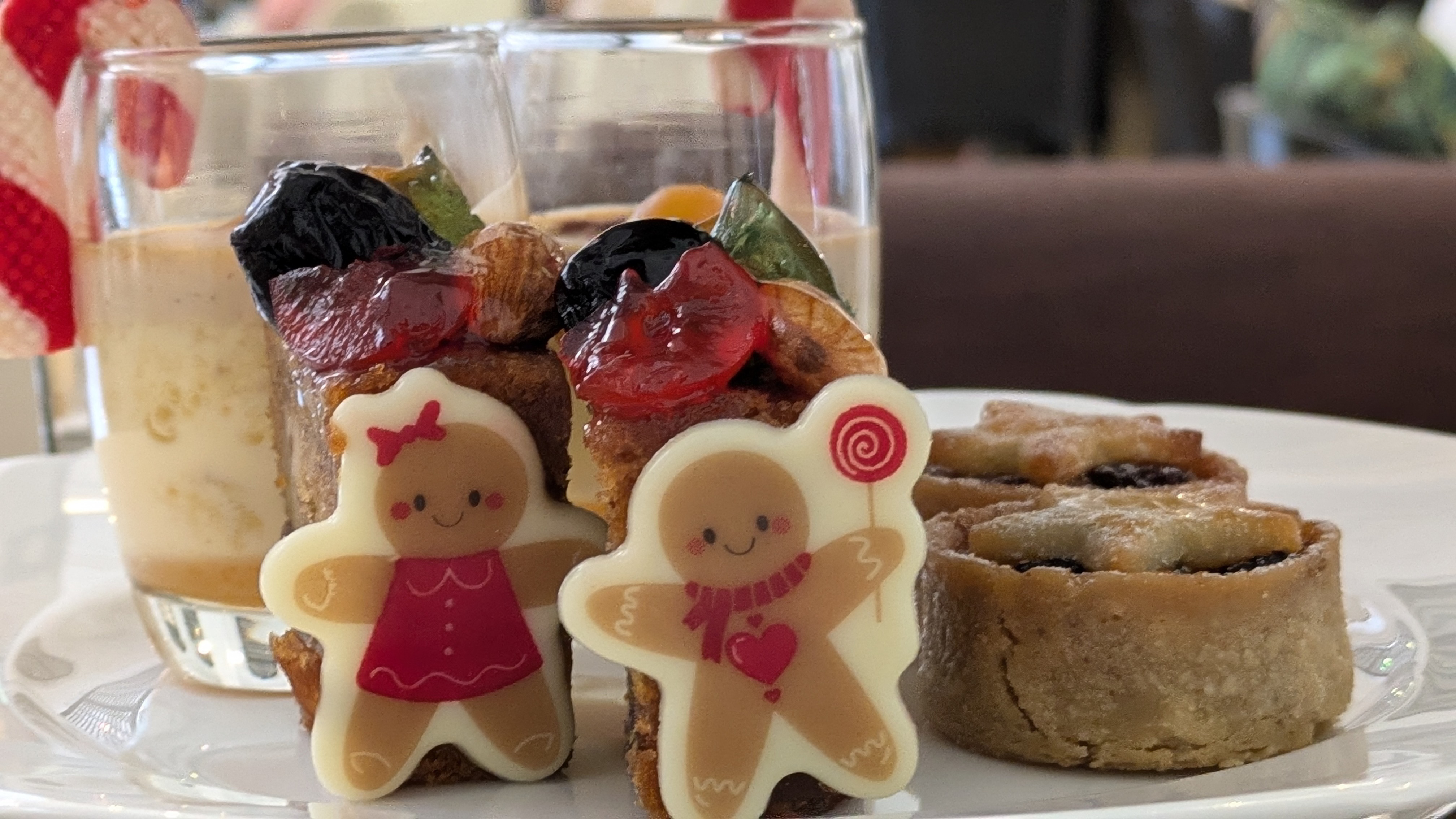
The afternoon tea was great. A touch of colonial decadence.
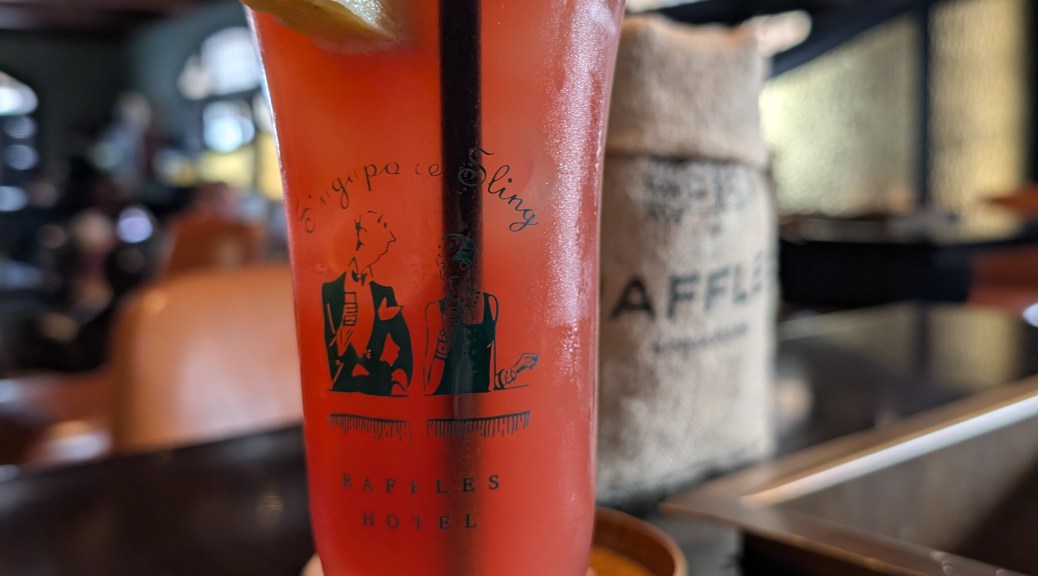
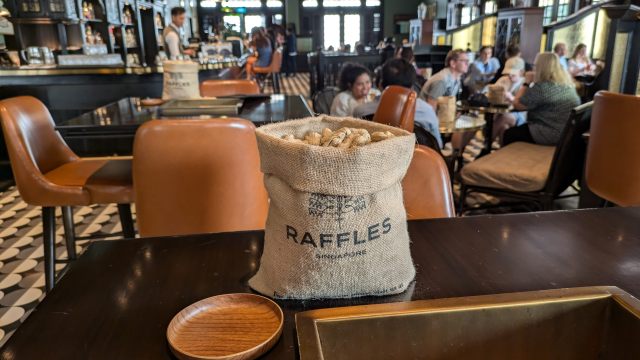
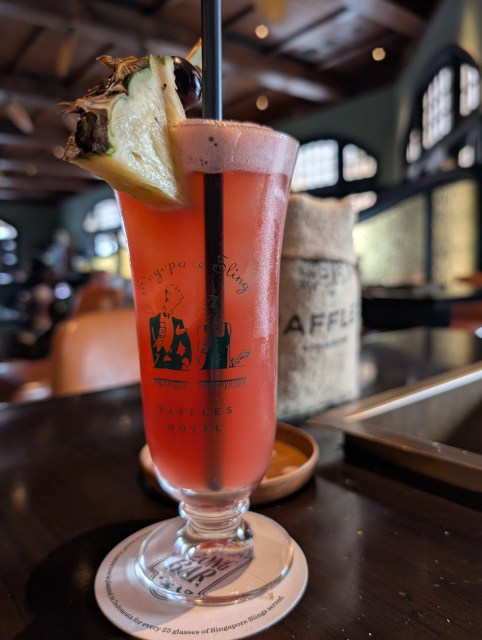
After we had eaten most of our tea, there were too many cakes, we headed for the Long Bar. The Long Bar is the home of the legendary Singapore Sling
Long Bar and the Singapore Sling
In colonial Singapore of the early 1900s, when improved rail and road systems were bringing rubber and palm oil plantation owners to Singapore from Malaya every weekend, Long Bar was located at Cad’s Alley. Not a formal bar, but rather tables placed next to each other facing Bras Basah Road, it was known as ‘the rendezvous of planters’, a good vantage point for watching the world go by.
It was common to see gentlemen nursing glasses of gin or whisky, but etiquette dictated that the ladies could not consume alcohol in public. For the sake of modesty, they were served with teas and fruit juices. In 1915, resourceful Raffles bartender Ngiam Tong Boon decided to create a cocktail that looked like plain fruit juice but was actually infused with gin and liqueurs. Based on gin, it also contains pineapple juice, lime juice, curaçao and Bénédictine, while grenadine and cherry liqueur give it its rosy pink hue. This deliberately feminine touch, together with the use of clear alcohol, led people to believe the cocktail was socially acceptable for women. With that, the Singapore Sling was born and, needless to say, it became an instant hit.
Taken from the Raffles Hotel website
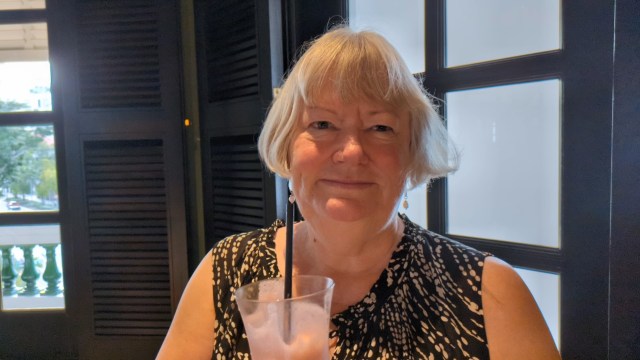
Diane’s cousin, who died last year, spent three or four years in Singapore when she worked for the Foreign Office. She was particularly fond of a Singapore Sling, and apparently often drank in the Long Bar. So we had to have one to remember her.
The peanuts are complimentary. You are supposed to brush the shells onto the floor. The Sling is very fruity, slightly too sweet for my tastes, and also very expensive at about £20 per drink. We only had one.
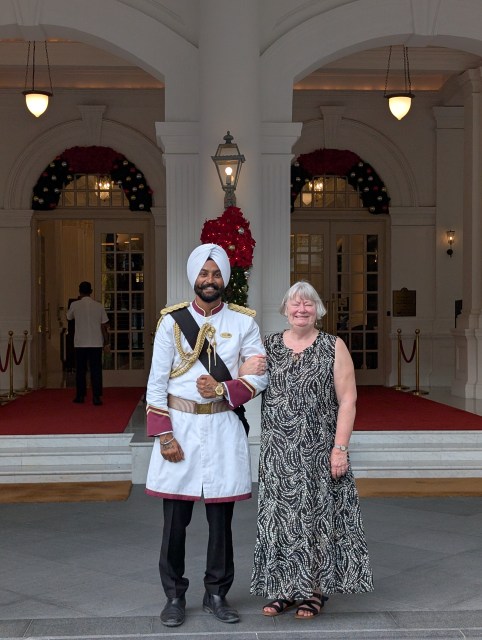
While we were waiting for our taxi back to our hotel, Diane made a friend.
Raffles Hotel Doorman
It was then that we discovered that taxis at peak time are more expensive than off peak.
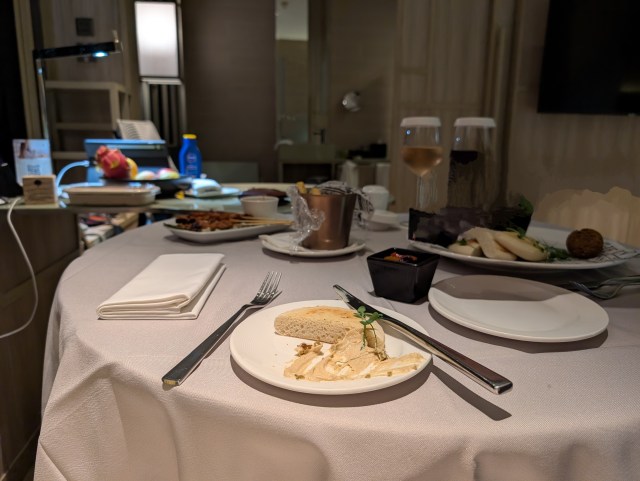
We got back to the hotel sat down, and went to sleep. When we woke up we decided that we couldn’t be bothered to go out to eat. We weren’t that hungry anyway. So we changed into our pyjamas and called room service.
A really good light meal to finish off a decadent day.
Our flight from Christchurch landed in Singapore about 5:30 pm local time. It was beginning to turn dark as we headed off to our hotel. Our driver gave us a quick introductory tour of Singapore as he took what he described as the “scenic route”. I didn’t really take that much in. Although it was only six thirty pm in Singapore, my brain was still on New Zealand time.
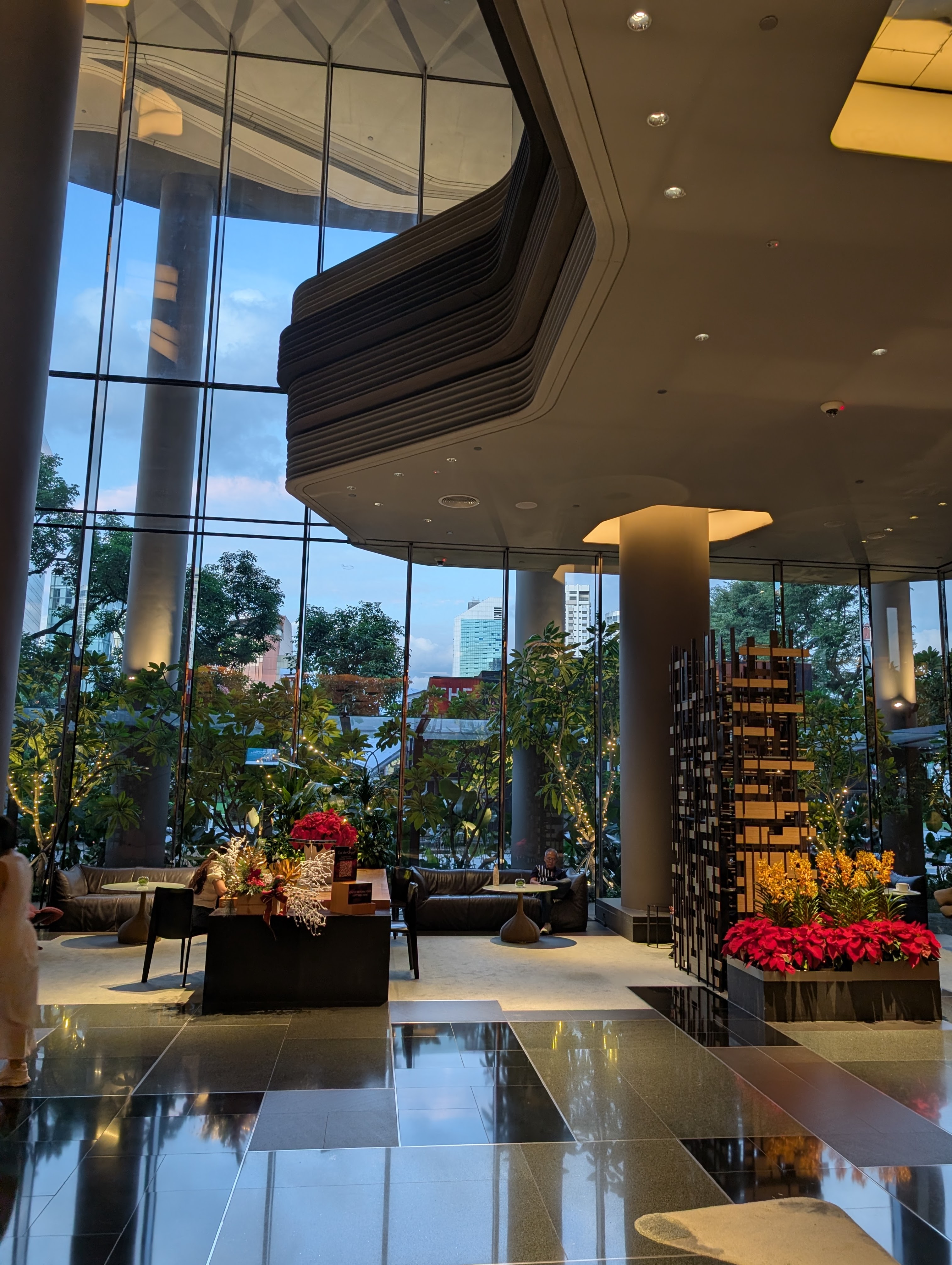
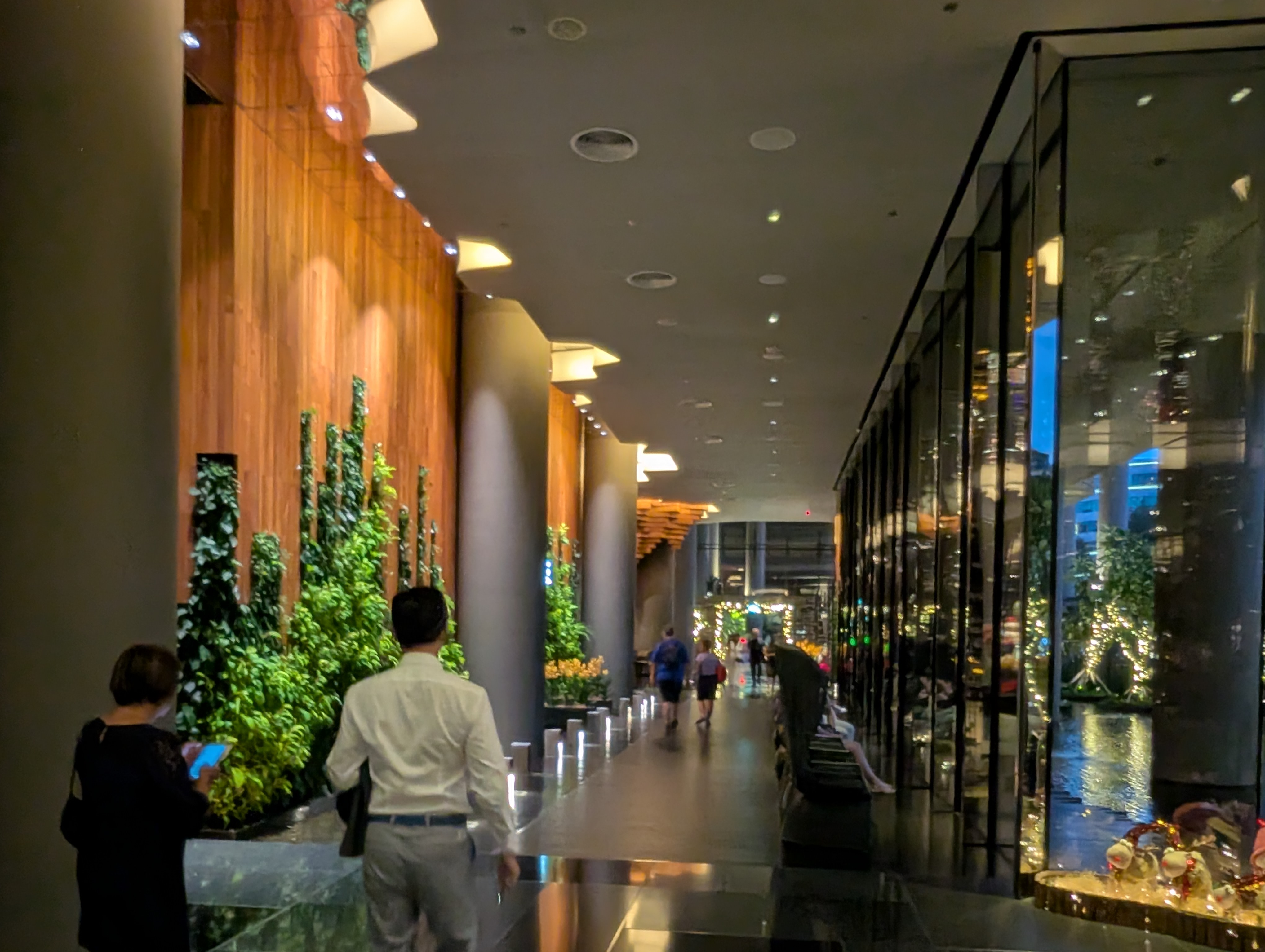
My first impression was a lot of very tall glass and steel buildings. Impressive, but a long cry from the South Island. We arrived at the hotel. As we stepped out of the car, the heat hit us. Thankfully it was only a few steps to the impressive, air-conditioned atrium. This was by a long way the flashiest hotel we had stayed in.
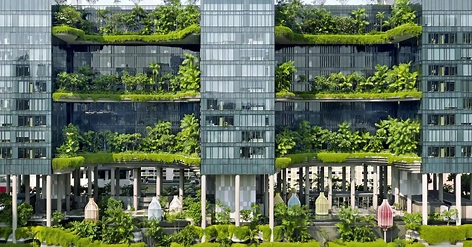
We were taken to our room on the 10th floor. Described as a garden room. The hotel has vertical gardens, part of the Singapore government’s green initiative.
The room smelt musty as we entered. I thought that a few minutes with the air-conditioning on would solve the problem. It helped but didn’t solve it completely.
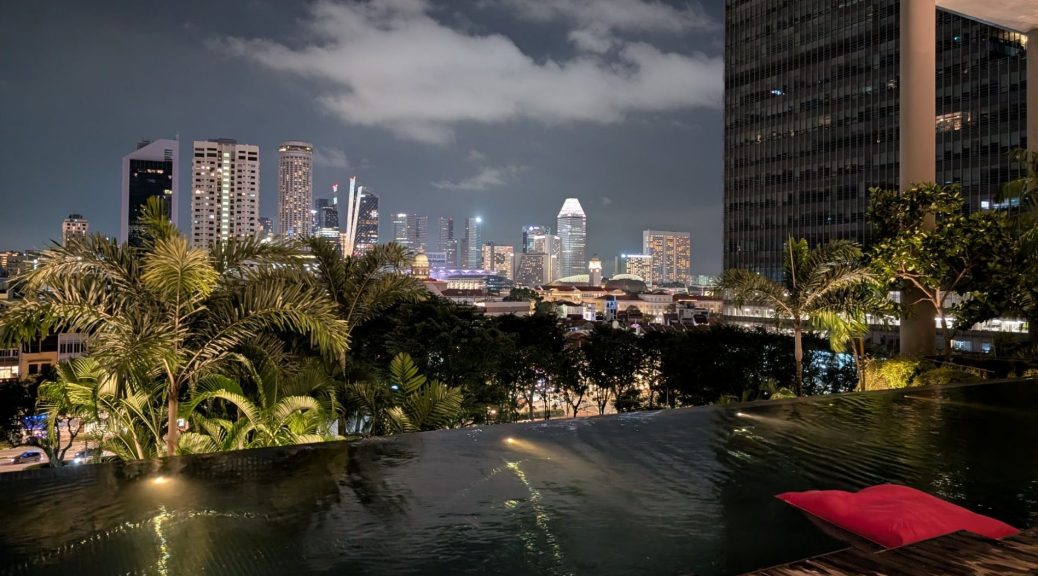
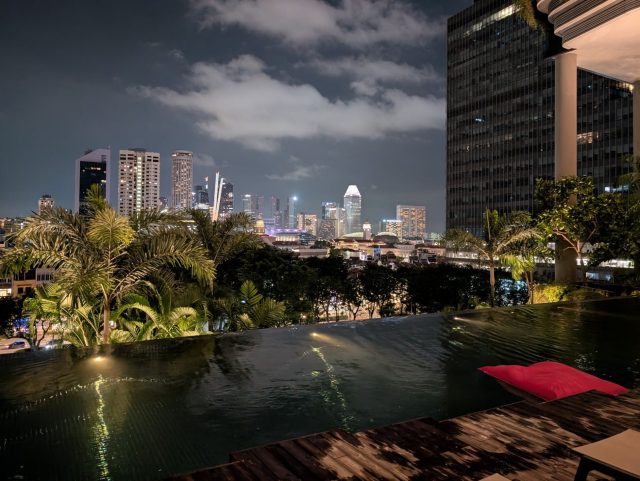
We decided to see what the hotel had to offer. Specifically, Diane wanted to check out the swimming pool. Situated on the fifth floor it gave a great view of Singapore.
After that we decided that a beer and something to eat was in order, then bed.
The room still smelt musty the next morning. Diane said it was making her feel slightly sick.
We went down for breakfast. During breakfast I had one of the more surreal experiences of my life. Eating breakfast in a hotel 1° north of the equator listening to Dean Martin singing “Let it Snow”. Sorry, not going to happen mate. We ate breakfast. It was a very good buffet.
After breakfast we asked the hotel if they could do anything about the musty smell in our room. The hotel agreed to give us a different room.
We has to delay changing rooms as we had a tour of Singapore arranged. The tour was slightly disrupted because of road closures for the Singapore Marathon that was taking place that day.
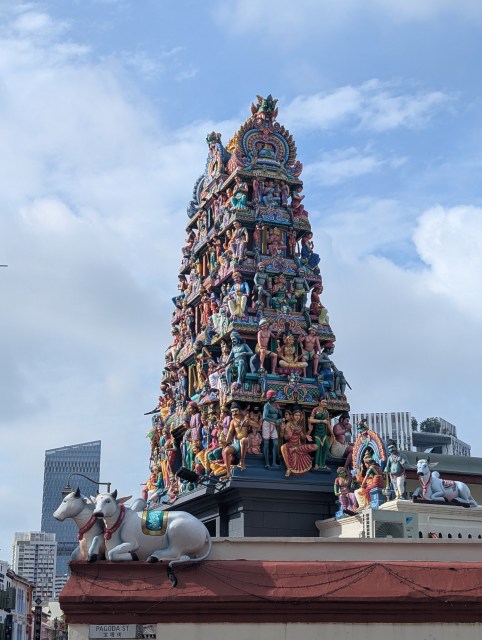
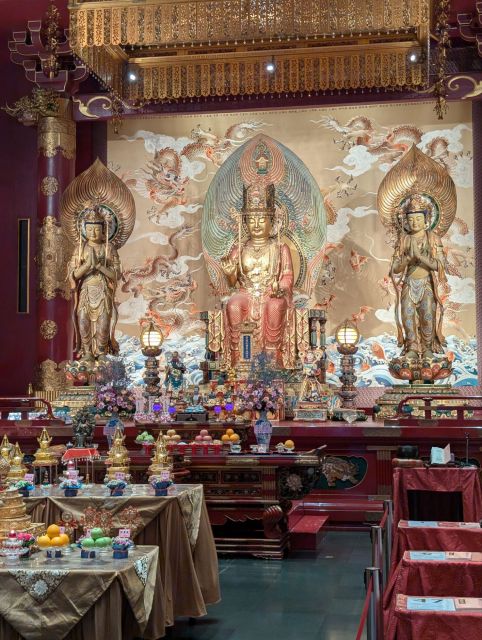
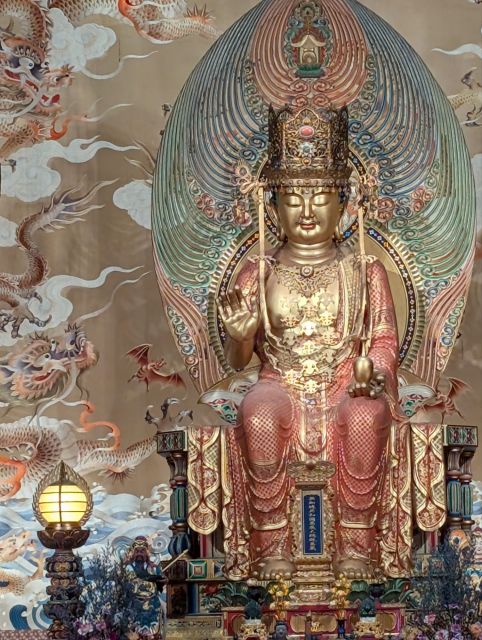
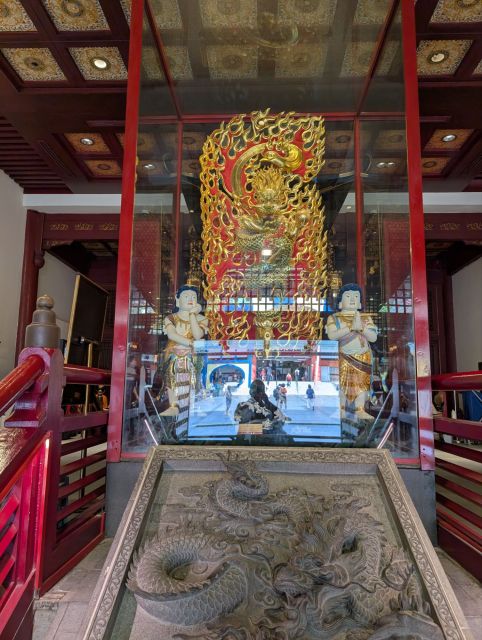
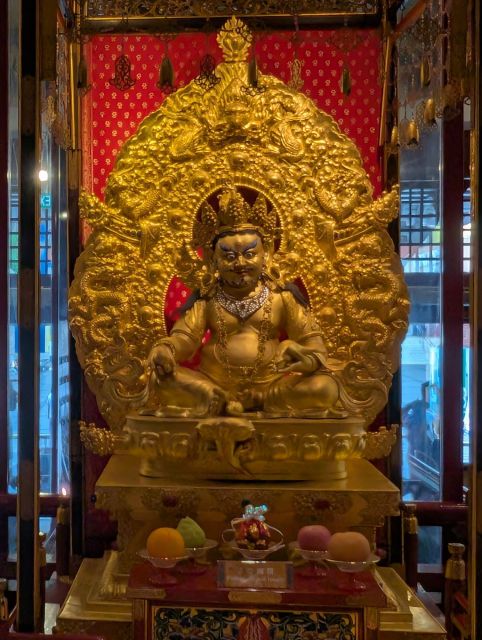
The tour took us to the Sri Mariamman Hindu temple. Then on to a Buddhist temple, The Buddha Tooth Relic temple. This temple holds a tooth reputed to belong to the Buddha. We didn’t see the tooth. We then went on to Chinatown and “Little India. We finished up at the National Botanic Gardens
Sri Mariamman TempleBuddha Tooth Relic Temple
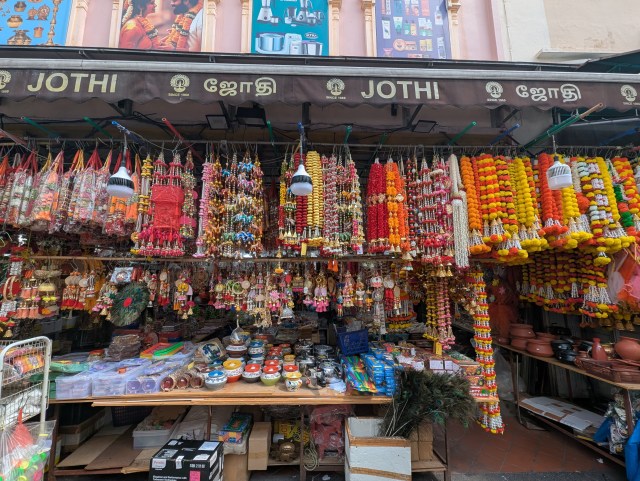
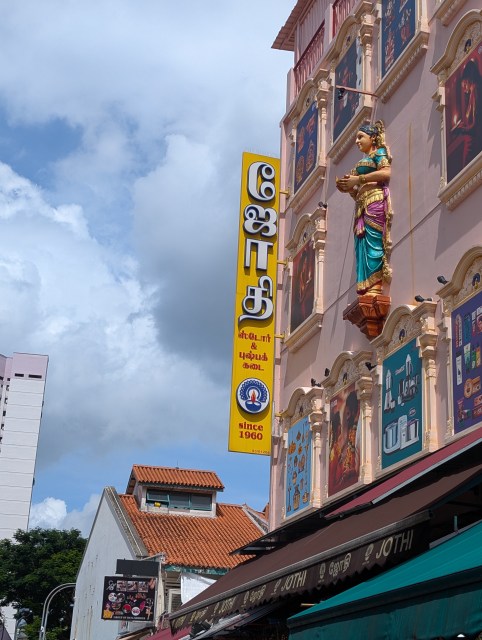
After the temple we moved on to “Little India”. If i am being completely honest, it wasn’t all that much different to many Indian areas in the UK. Just a lot hotter.
“Little India”
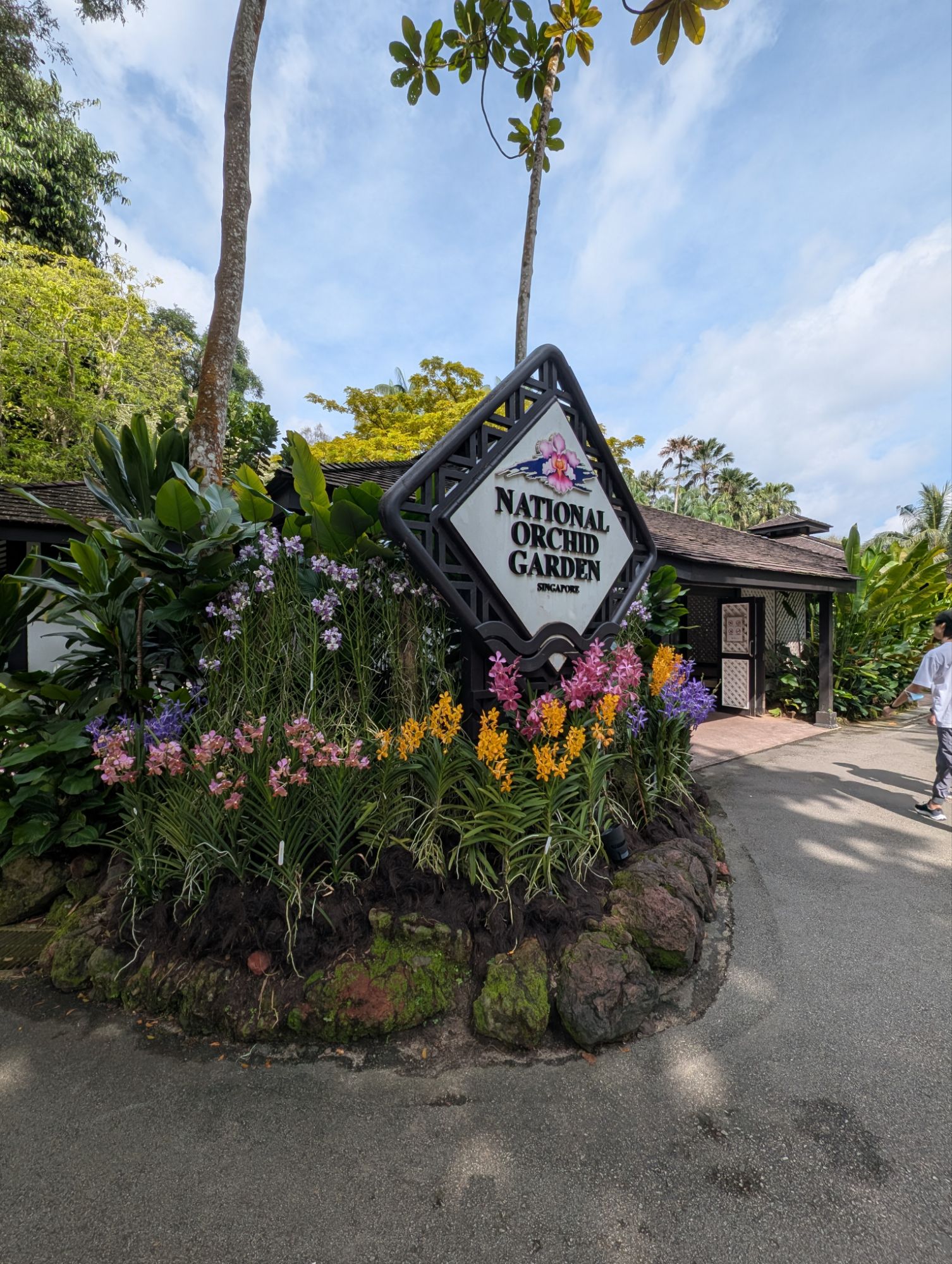
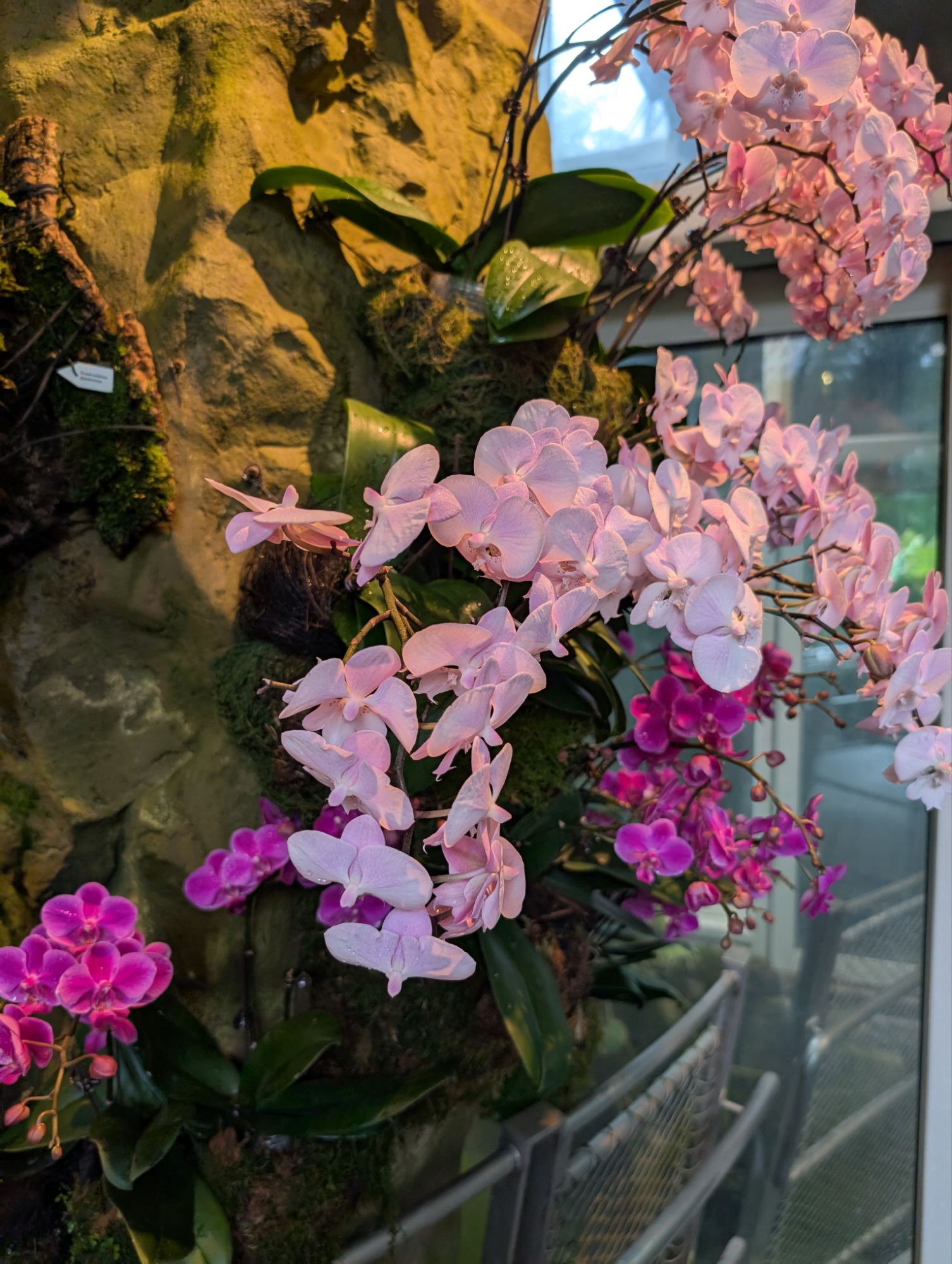
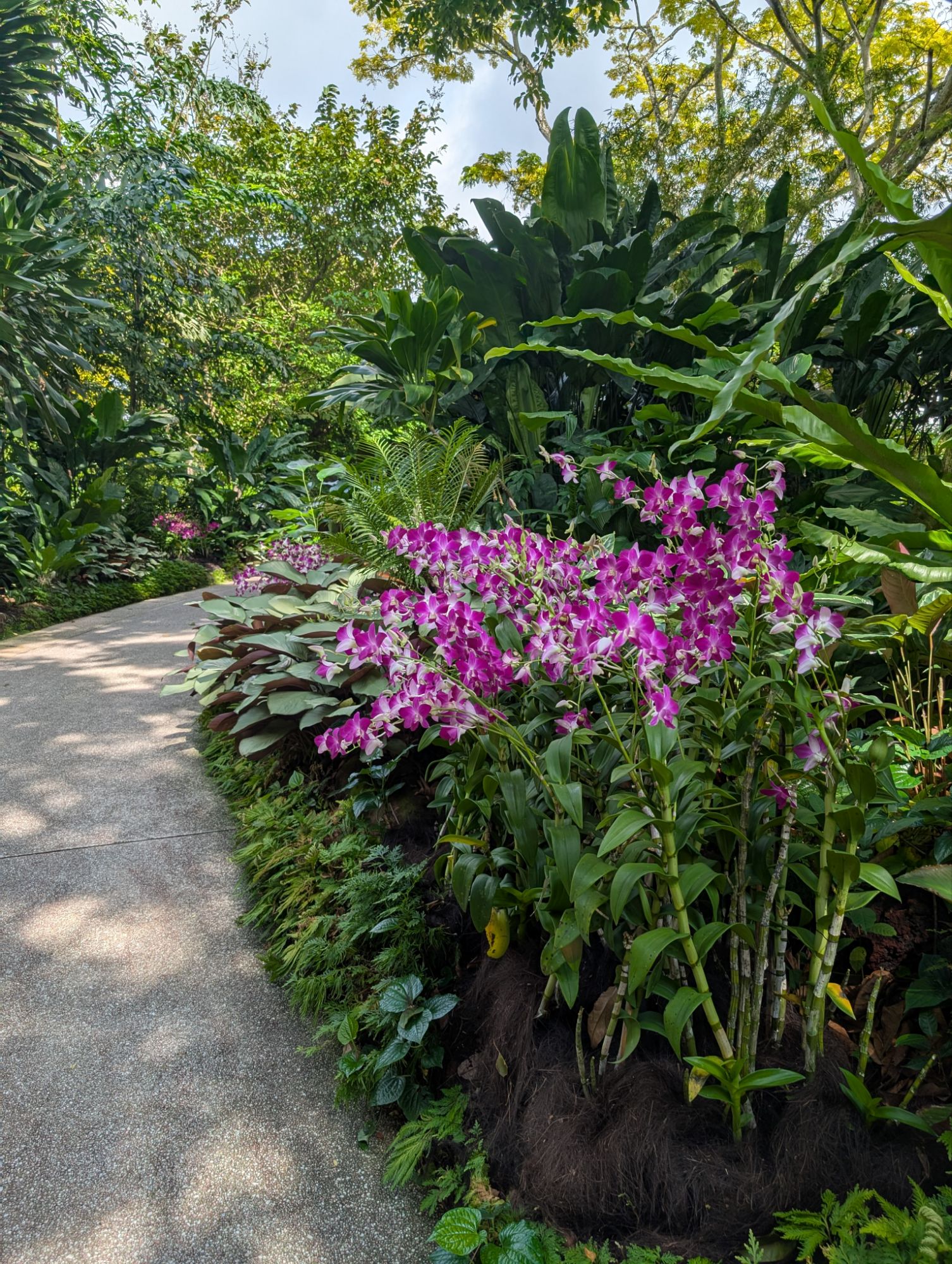
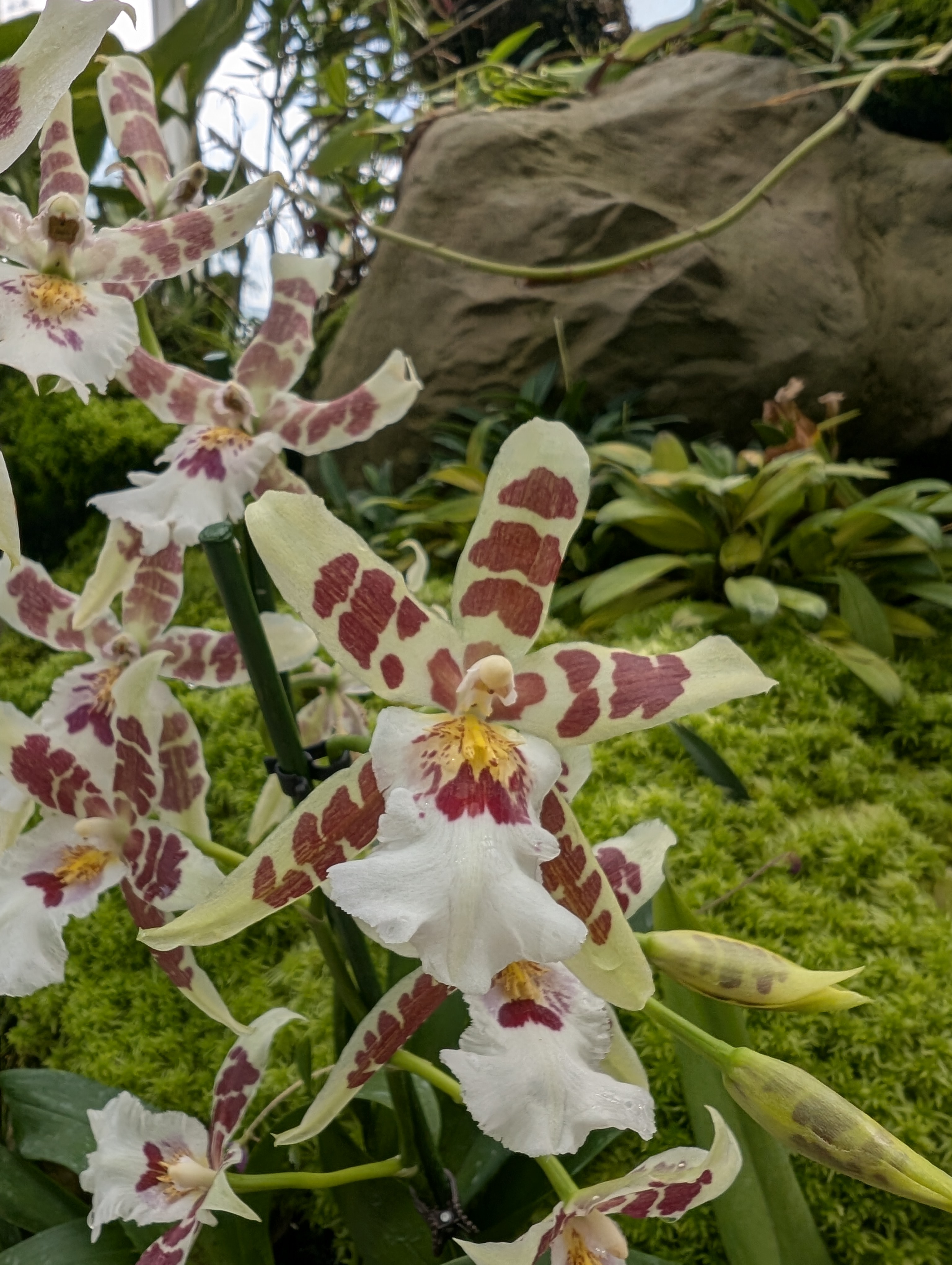
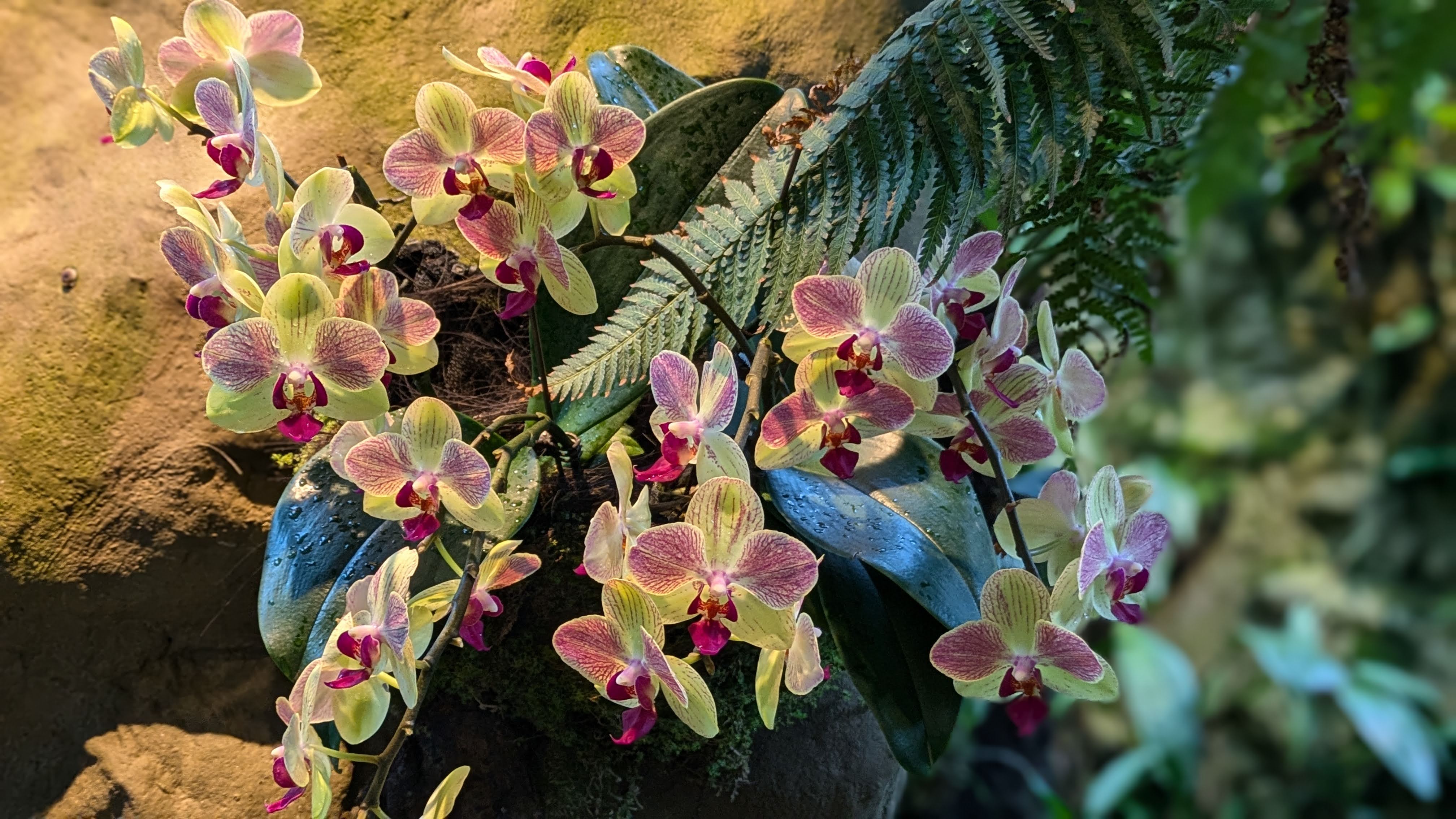
We then moved on to the Singapore Botanic Gardens. They have an incredible range of tropical plants and probably the largest orchid collection in the world. They also have a temperate house. It is like the tropical house at Kew, except in reverse. It is air conditioned rather than heated.
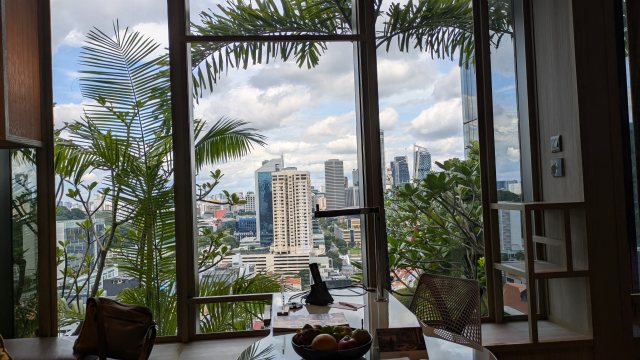
After we arrived back at the hotel we moved rooms. We were given a room on the 15th floor. The views were spectacular.
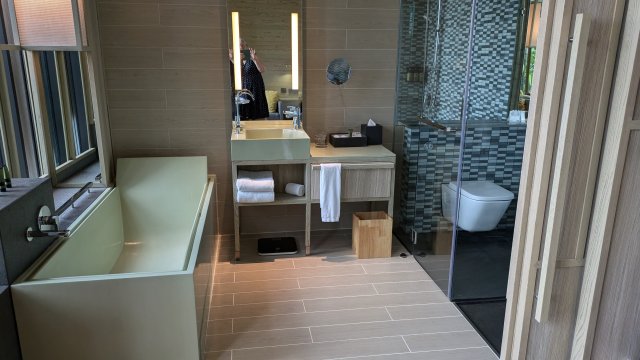
I particularly liked the opportunity to look out over Singapore while you were having a shower or a bath.
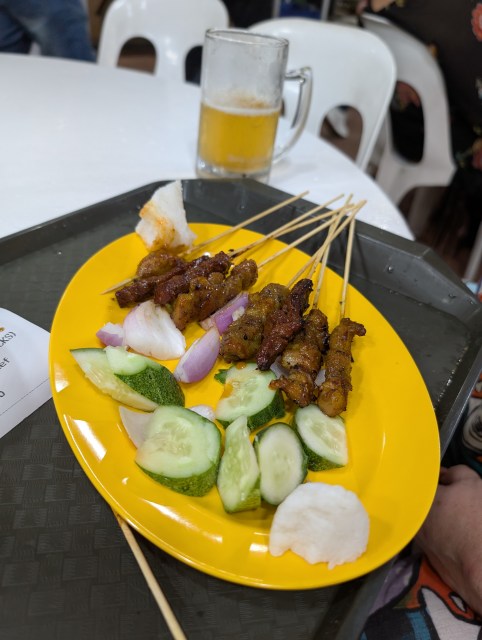
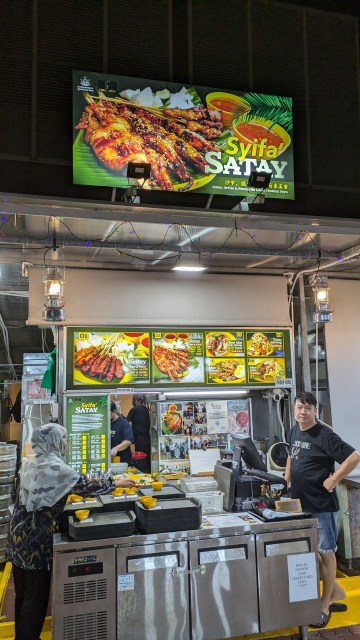
Our great-niece, who used to be a stewardess with British Airways recommended a place for us to eat this evening. It was called Syifa Satay. A few years back Singapore decided to ban street food vendors. It was done in the name of keeping the city neat and tidy. Street-food vendors were corralled into controlled locations. There are probably other locations, but Syifa Satay is located in an enclave called Glutton’s Bay. There are about a dozen stalls selling various types of street food, including Italian???
The satay was excellent.
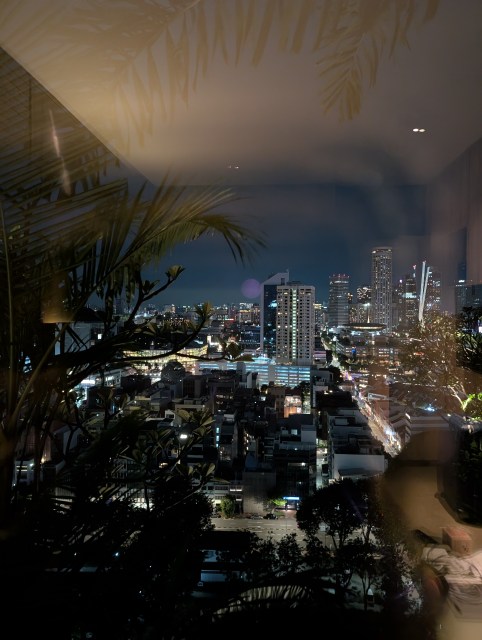
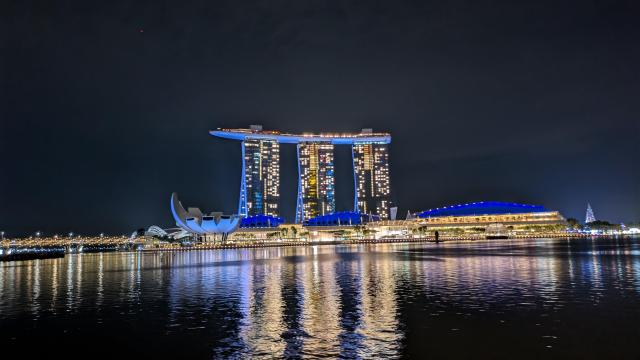
We had decided that the “restaurant” was close enough to the hotel to walk. In the evening, the temperature dropped a little, making it pleasant to walk. The cityscapes on the way back were stunning.
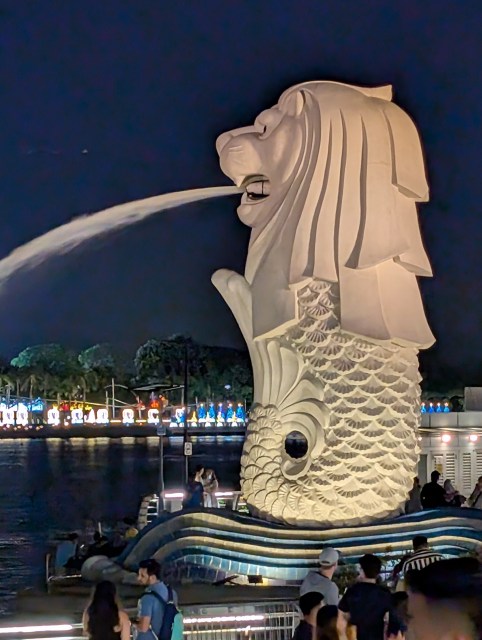
Singapore Cityscapes
The MerLion (above) is the city’s symbol.
We arrived back at the Park Royal Pickering. We had a drink while we admired the view from our room. Then we went to bed.
All good things must come to an end. Our trip around the “Mainland” was nearing its end. We woke up to a wonderful view over Lake Tekapo.
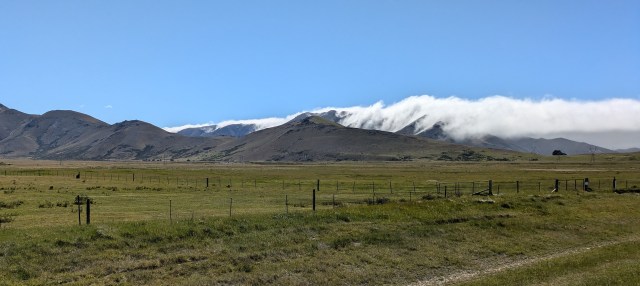
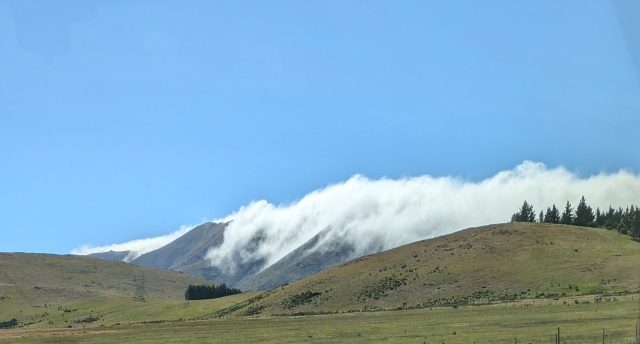
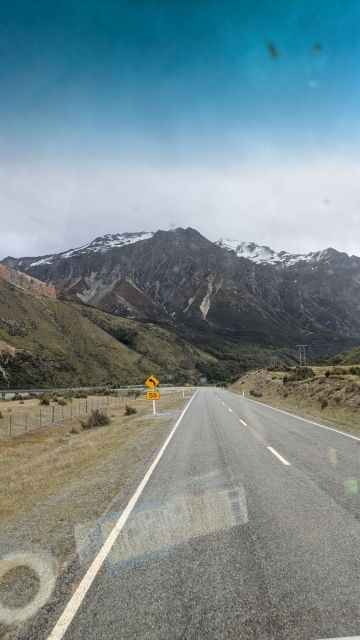
After breakfast, it was time dump the waste water and empty the toilet cassette for the last time. Then it was off to Christchurch. The first part of the journey, over Burke’s pass to Fairlie, was reasonably pretty.
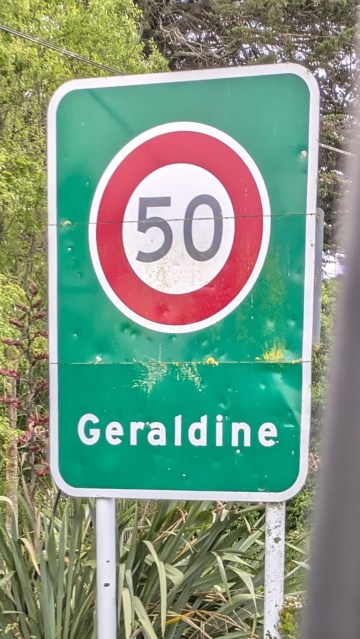
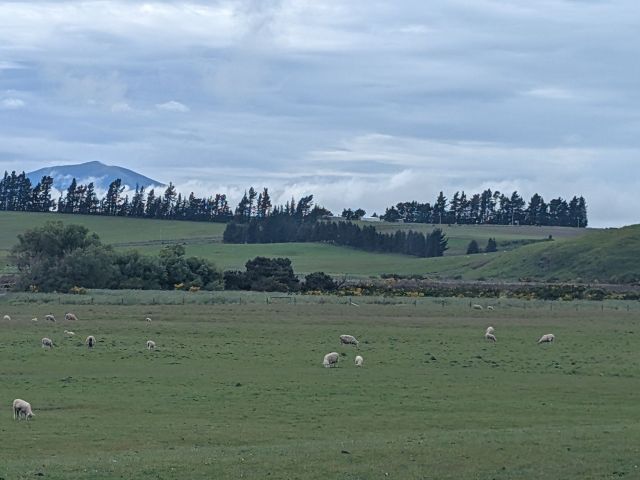
After Fairlie, we were back onto the Canterbury plains. So it became flat and boring, for the first time in a fortnight. We stopped in Geraldine, partly to get a cup of coffee, partly because we have a friend called Geraldine. We couldn’t find anywhere for a coffee. Nonetheless, we did manage to take a photo of the town sign to show that we had been there.
Target Practice?
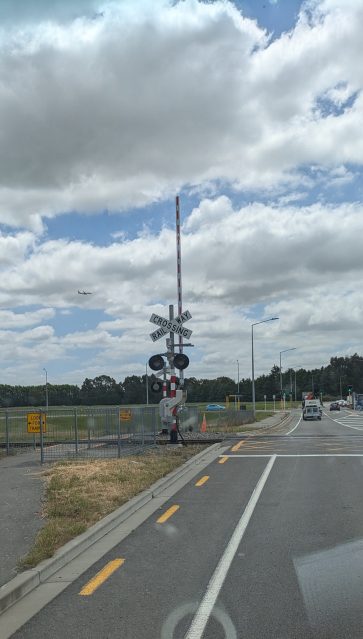
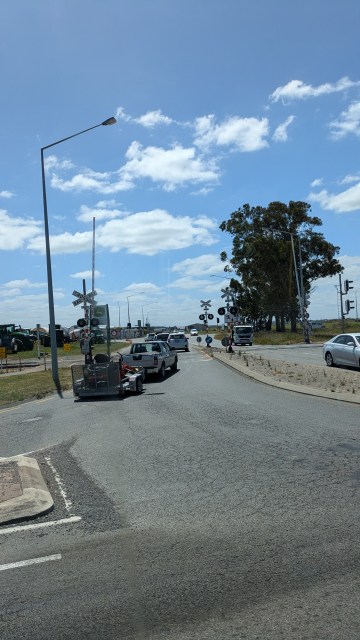
The road from Geraldine back to Christchurch was very flat and more or less straight. Diane tried to stop herself from getting bored by taking pictures of railway crossing signs. The road and the railway run parallel most of the way.
We stopped for lunch in Ashburton at some place. I can’t remember its name, probably because it wasn’t a memorable meal. Then, it was back up SH1 to Christchurch and Maui Campers to return the van. That took a wee while. We had to wait for the branch manager to discuss the compensation for the water leaks. They needed to decide what level of compensation they were prepared to offer us. Compensation agreed we caught the Maui airport shuttle to our hotel.
The Sudima Hotel was the most boring of all the hotels that we stayed at on our trip. That said, it did its job. It gave us a bed for the night and fed us. You can’t really ask much more of an airport hotel. It did, though, lack a lift. Fortunately, they employed a retired second-row player to cart our bags up to the second floor.
The next day, we were up reasonably early for breakfast. We had a plane to catch at 12:00. Our brilliant time in Aotearoa was over. Next stop Singapore.
Checking in and going through security at Christchurch Airport was an absolute pleasure compared to Heathrow. Heathrow probably has more passengers to process in an hour than Christchurch has in a week, but never the less. Actually, landing in Singapore was similarly stress free. Everything was automated, and it worked. We hardly saw a single (official) person from leaving the plane until we were picked up by our car.
The flight to Singapore was pleasant. Because of the changes in time zones it was daylight all the way. We spent the flight watching Lord of the Rings films, trying to spot the places we had been.
It was time to say goodbye to Te Anau and work our way back to Christchurch. We decided to check out another gold rush era town on our way to our overnight stop at Omarama. The first part of the journey to Arrowtown retraced the route from Queenstown to Te Anau. On our way to Te Anau, Diane had noticed a quirky looking cafe called Bracken Hall. As it was coffee time, we decided to stop.
It had good coffee and cakes as well as a decidedly quirky gift shop attached. We came away with a possum fur belly button warmer (among other things).
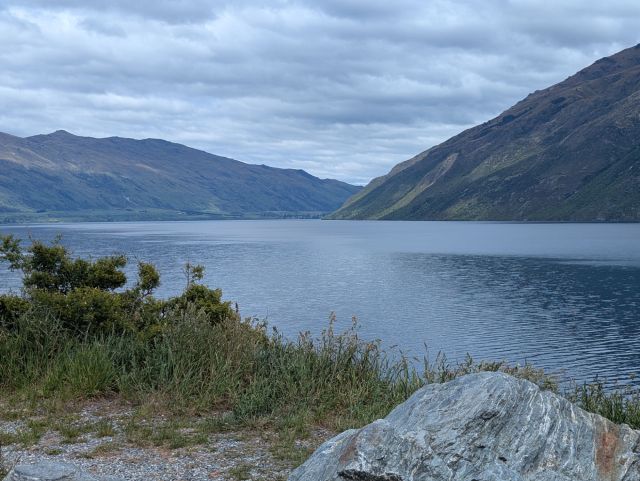
Lake Wakatipu was just as attractive going north as it was south. We didn’t stop in Kingston this time.
Lake Wakatipu
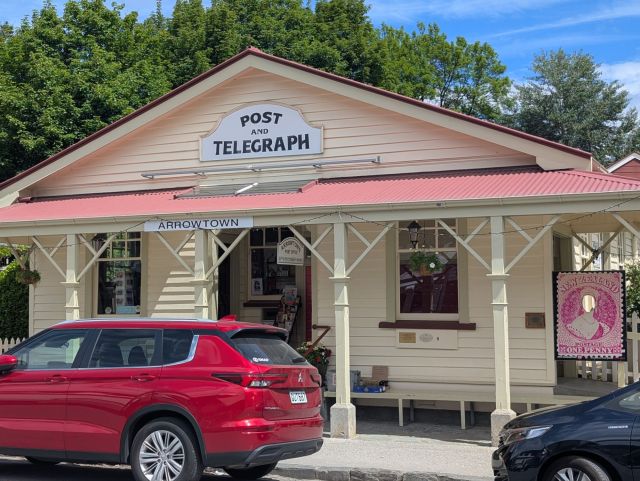
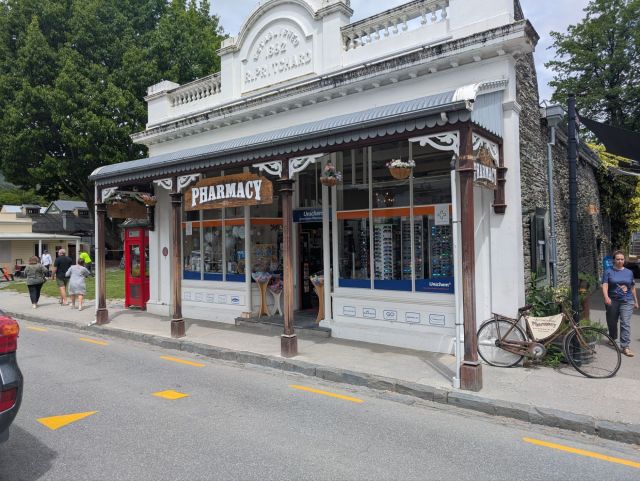
We carried on to Arrowtown. Centre of the Otago goldrush of 1861. There are a number of buildings from the gold rush days that are still surviving. Most, if not all, have been repurposed since then.
Arrowtown
It is an interesting town to visit. It is more tourist orientated than Ross, but it still has a bit of a wild west feel to it. There may still be gold to be found. A couple were panning for gold in the river, near where we were parked. I didn’t ask if they had found any. After lunch, we headed off to Omarama via the Lindis Pass.
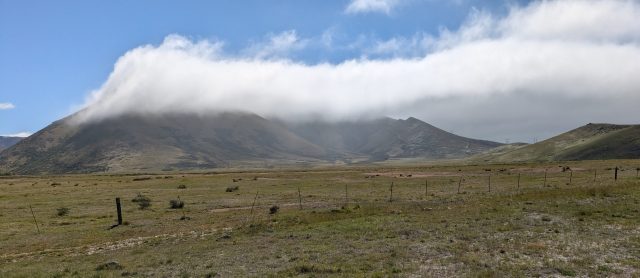
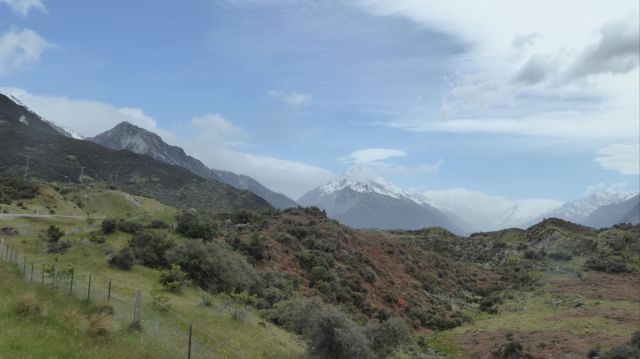
The Lindis Pass connects Central Otago with the McKenzie country. It is quite barren, but also beautiful. The main vegetation is tussock grass. Rising to almost 1000 metres at the summit, it is high enough to have snow during the winter.
There was still some snow on the surrounding mountains.
Dropping down from the summit to Omarama was just as spectacular.
After we had parked for the night (at yet another Top 10 site). We decided that we would cook in the van for a change. The pasta was pretty good.
The next day, we set off to find Aoraki, also known as Mt. Cook.
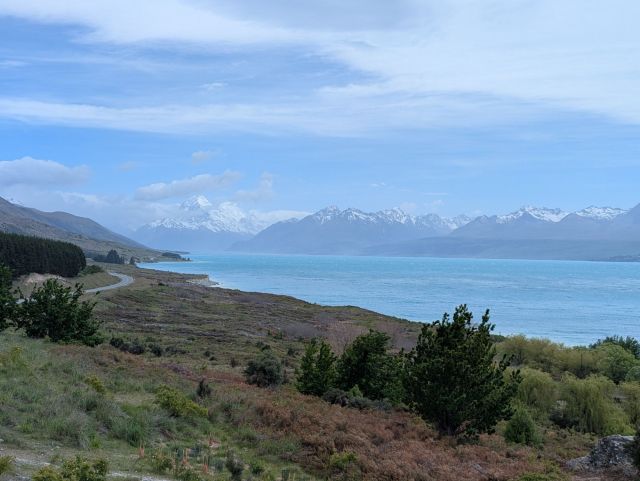
The Tasman River widens out into Lake Pukaki. The lakes and rivers in this part of New Zealand are all glacier fed. As a result, they are an amazing pale blue colour. The glaciers grind the rock down to a very fine powder. This remains suspended in the water and causes the colour.
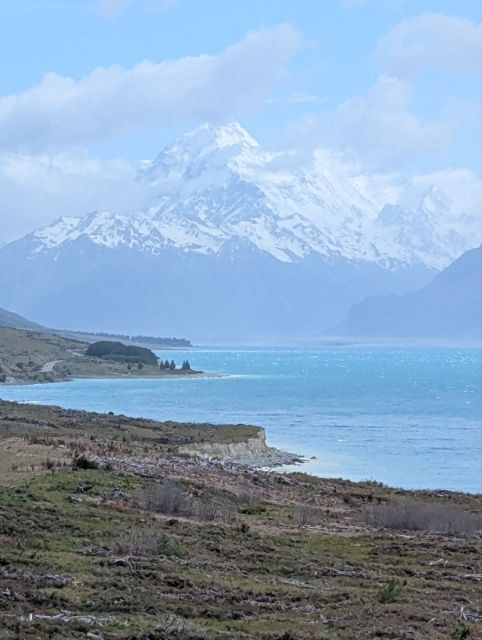
We drove along the side of the lake up towards Aoraki/Mt Cook village. There are some spectacular views of Aoraki as you drive up the lake.
Aoraki
As we drove on up the valley to the village, the mist came down, and it started to rain. consequently, the mountain became more atmospheric.
There is a small museum telling the story of the hotel and the mountain. It is worth a visit.
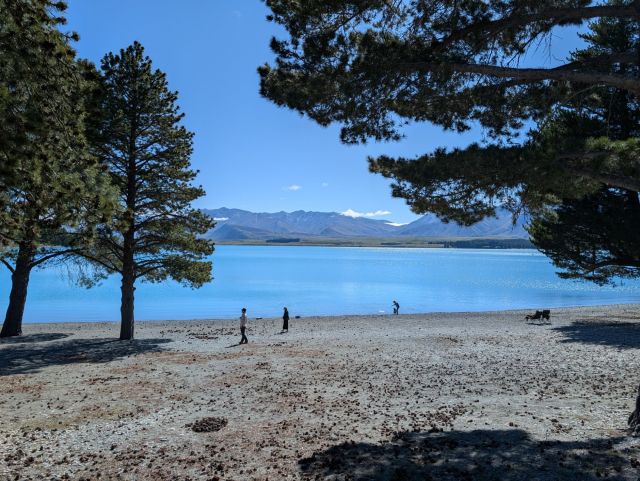
We then headed on to Tekapo, and the second must have photo on a Japanese tourist’s itinerary. The first being Aoraki. Actually, it is not just Japanese tourists anymore, everyone wants the perfect Instagram picture.
Our arrival at the campsite was a fraught. We had a seven metre van, but we were given a pitch that would have been tight for a five metre van. When I complained, they said they didn’t have a suitable pitch, but we could park by the lake, with no power and no refund. The view from the pitch by the lake was better though.
We set off to find dinner. Saw a restaurant called “Fishtail”, assumed it did fish and chips. It didn’t. It turned out to be a rather good Indian restaurant.
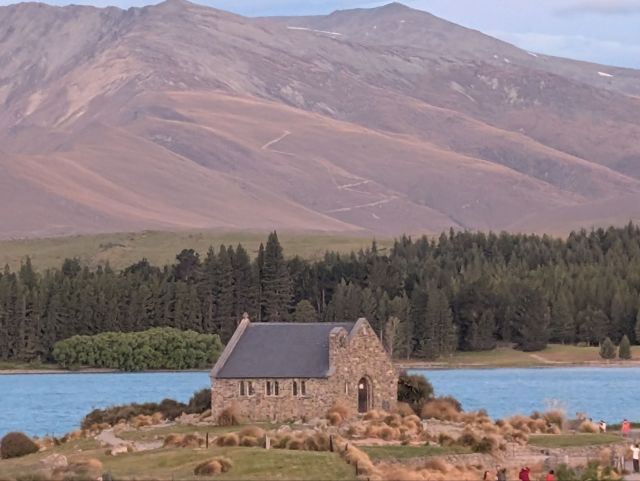
Afterwards we went to take the compulsory photo of the “Church of the Good Shepherd”.
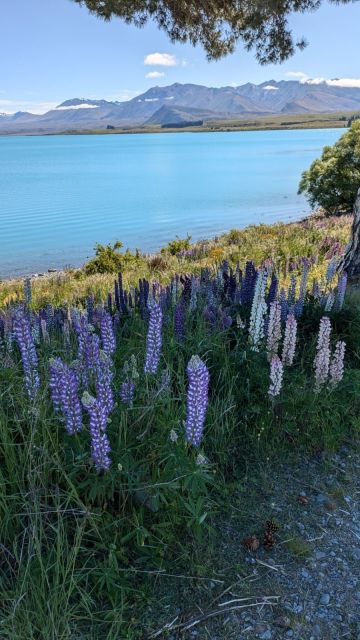
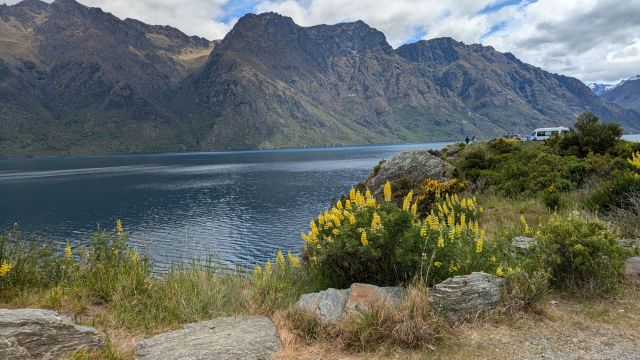
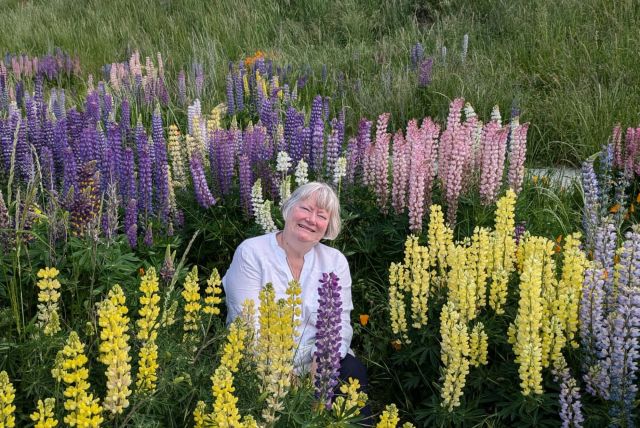
Diane also decided she wanted a photo of herself among the lupins.
Tekapo is in a dark sky area. The stars were amazing. Living in London, it is easy to forget just how awesome the night sky can be.
We ended up spending an extra day in Te Anau. Our original plan had been to head back to the Queenstown area today. Maui Campers arranged for a garage in Te Anau to look at our van. So we booked an extra day at the campsite. It gave us an opportunity to catch up with our laundry. It also gave us a more relaxed day. It had been fairly full on most days. A day off, even though it was enforced, was pleasant.
I took the van along to the garage about lunchtime, left it with the garage owner. I went off to have a bite of lunch, when I came back it was fixed. He was disparaging about the quality of the repair that Maui had carried out in Queenstown. We were ready to roll again.
In the meantime Diane had found that there was a Glow worm Cave on the other side of the lake. She booked us tickets on the evening trip.
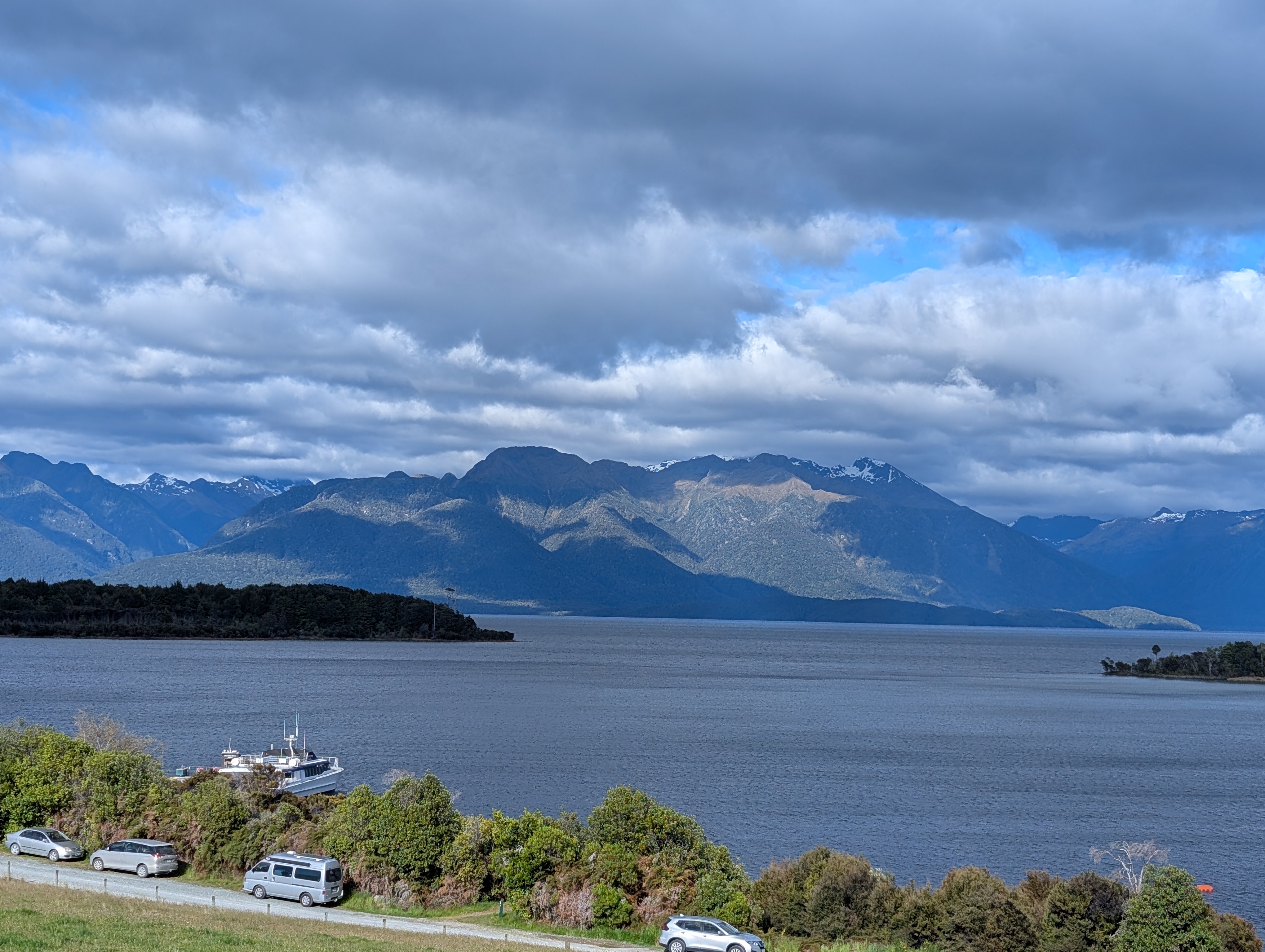
The first part of the trip was a cruise across the lake.
When we arrived at the other side, we entered the reception building. Then, they divided us into smaller groups for the tour of the caves.
The caves themselves are very spectacular with an underground river and a stunning waterfall. The caves are geologically speaking, quite young. They were formed about 12,000 years ago.
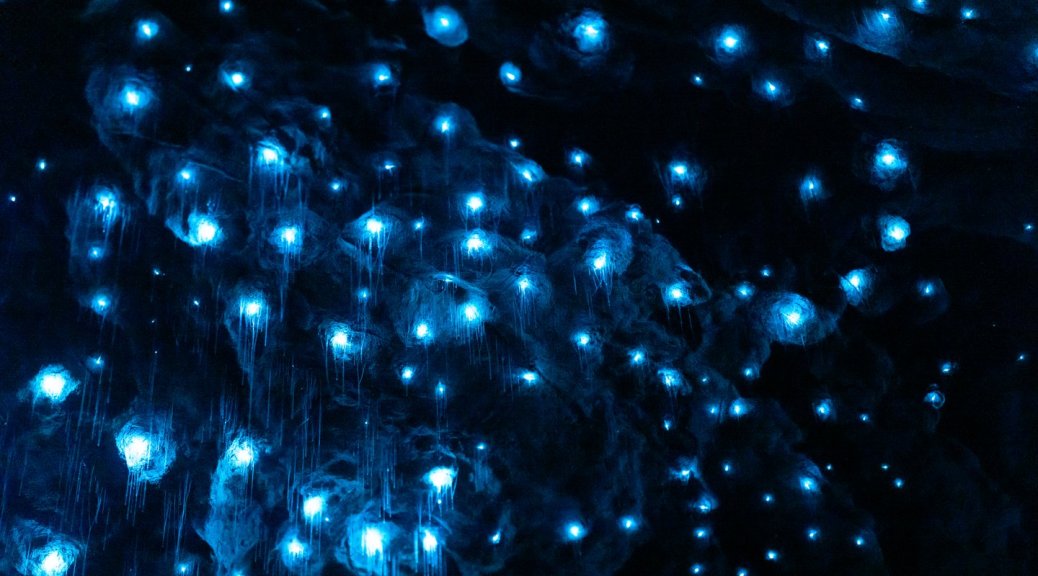
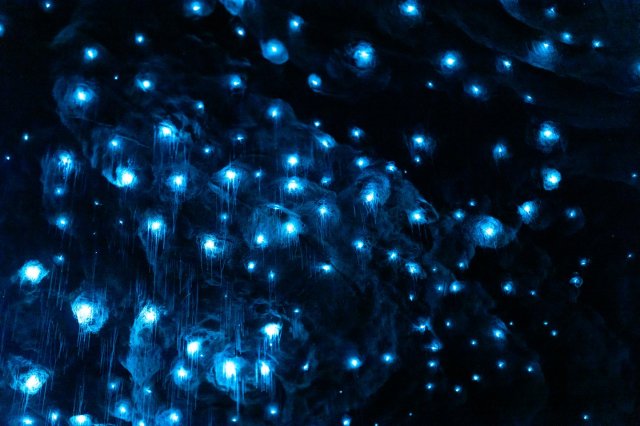
Having walked through the caves, past the waterfall, we boarded a punt, for the trip to see the glow worms. In the pitch darkness as our eyes gradually became accustomed to the lack of light, the glow worms appeared.
Glow worms.
The picture is borrowed from the cave’s website. Unfortunately You can’t just whip out your phone and take a quick snap. Any flash would cause the worms to turn off their glow. It is possible to take a picture, but it requires a very long exposure. I had neither the camera equipment nor the time to do it. Nor probably the patience.
I found it quite meditative looking at the glow worms. It was peaceful in the darkness and silence, drifting along on the punt.
As we were walking back through the caves we saw a rather large eel. I’m not sure what it lived on, glow worms seem the most obvious candidates.
After we left the caves, we waited for the boat to take us back to Te Anau. During this time, we received a presentation about the life of a glow worm.
The glow lights are designed to attract prey. They catch their prey by dangling sticky strings from their bodies. Fairly akin to a spiders web. Glow worms are cannibalistic, they have no qualms about eating another glow worm if it gets too close. Strictly speaking they are actually maggots, rather than worms. On a positive note, they eat Sandflies.
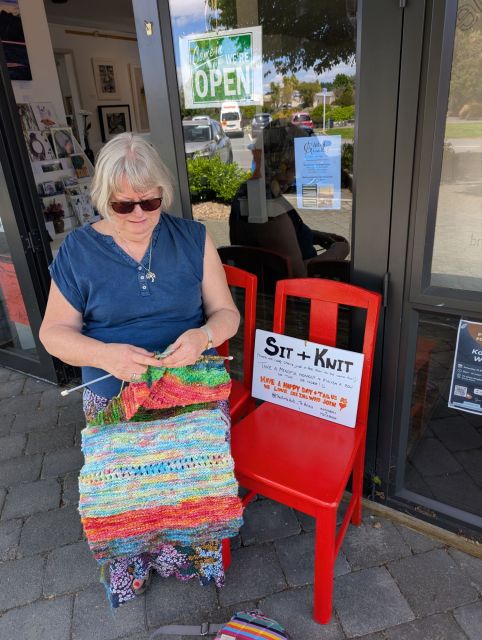
It was a good day. We got our laundry done. The van was fixed. Te Anau is a lovely little town. Diane did some “mindful” knitting. We saw glow worms and finished off with an excellent dinner at the unfortunately named “Thai Anau”
One of the main reasons for coming to Te Anau was its convenience. It provided a good jumping off point for a day trip to Milford Sound. We had looked at various options. Trips from Queenstown meant spending about ten hours on a coach. Booking the trip from Te Anau saved about five hours of the boring bit (from Queenstown to Te Anau). We booked our tour with Fjordland Tours. We were picked up from our accommodation about 08:00. The transport was a sixteen seat mini-bus. There was plenty of legroom. I found it very comfortable. Our driver/guide was a local woman, who knew the area intimately.
Our route took us up the eastern edge of Lake Te Anau. We traveled as far as Te Anau Downs. This is where you catch a ferry to the start of the Milford Track. You can walk to Milford Sound from there, if you want to. Other tracks are available.
Te Anau Downs
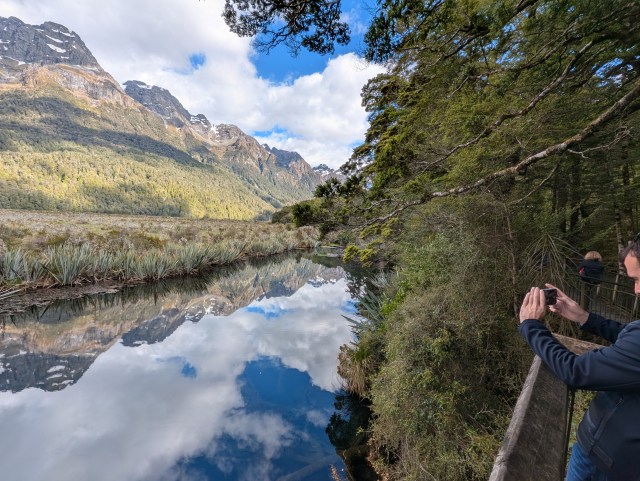
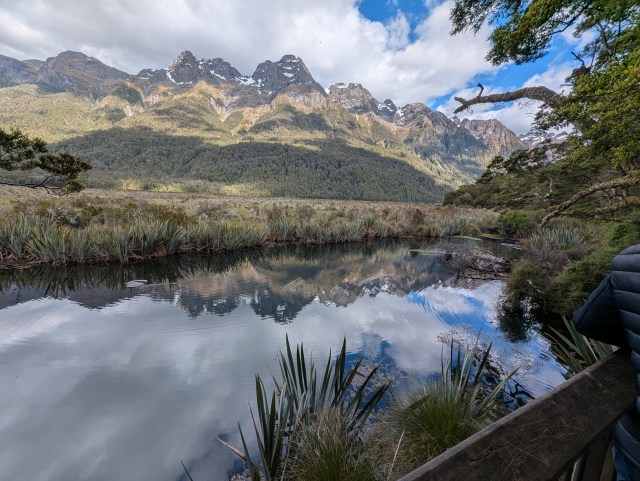
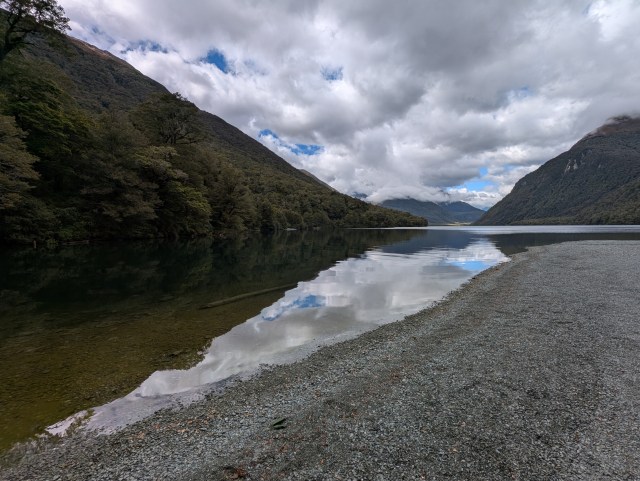
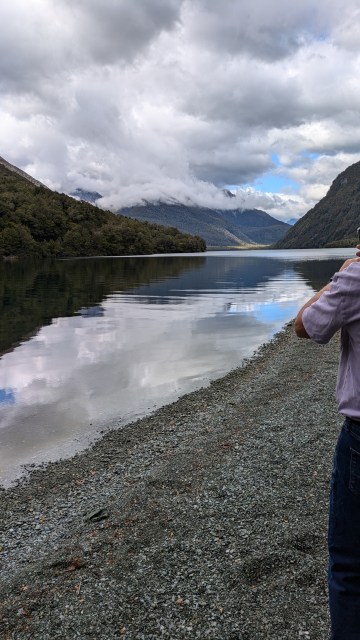
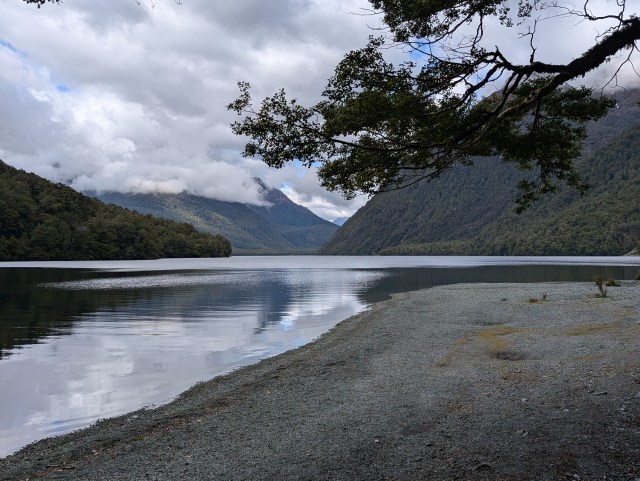
From there the route carried on up the Eglington Valley. This valley is featured in the Lord of the Rings. It continued to the Mirror Lakes.
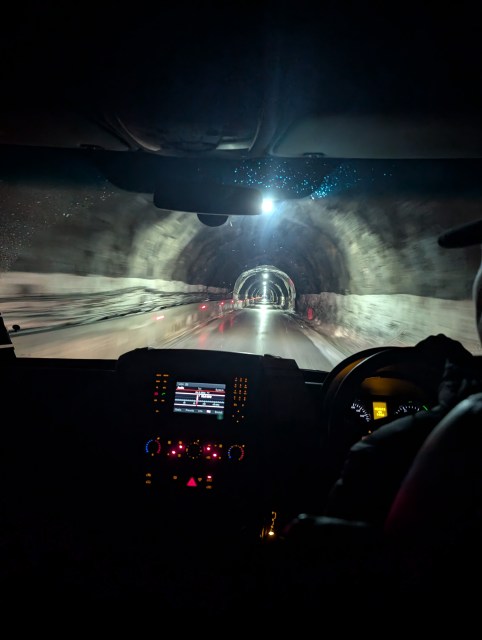
The road climbed and twisted its way up to the Homer Tunnel.
Inside the Homer Tunnel
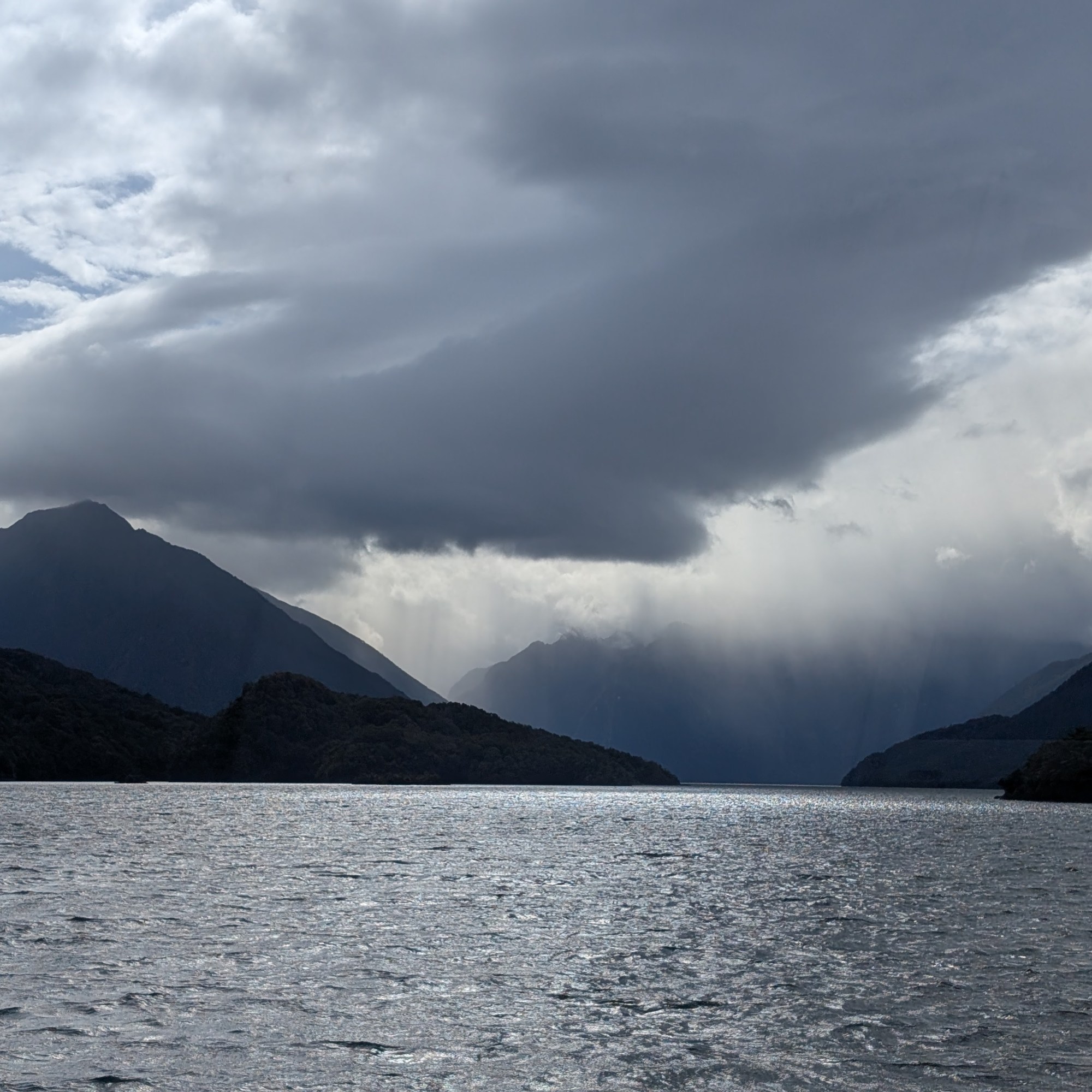
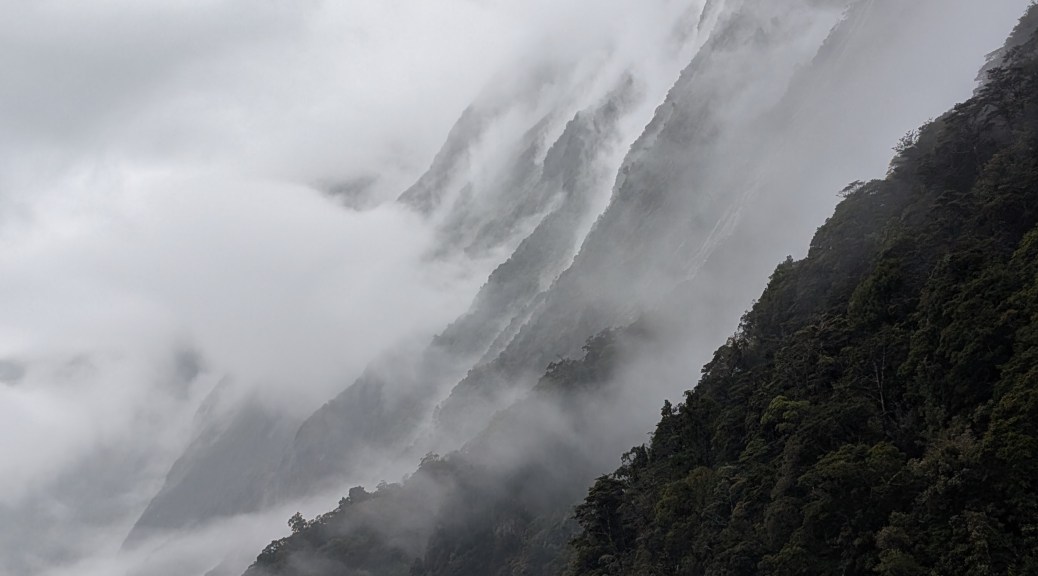
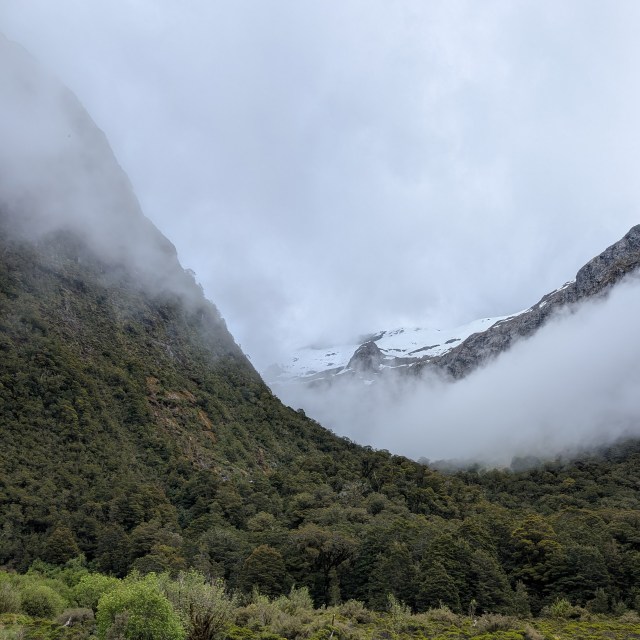
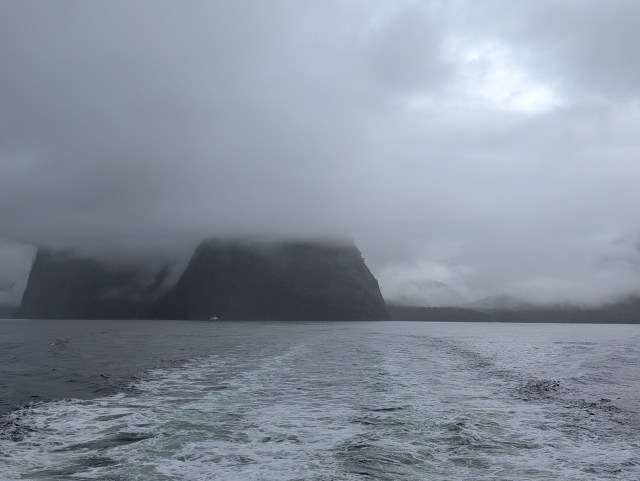
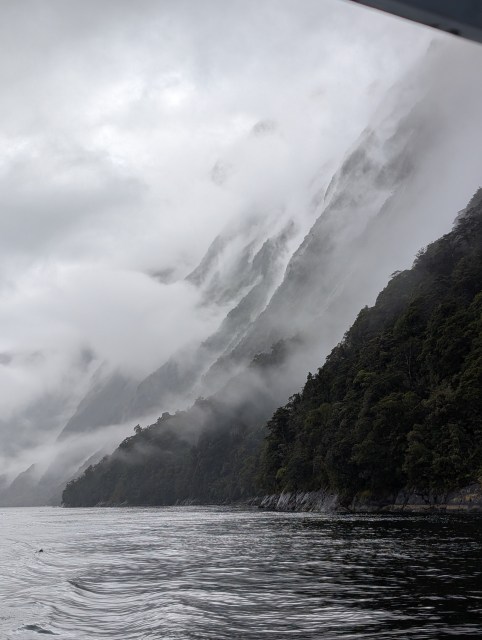
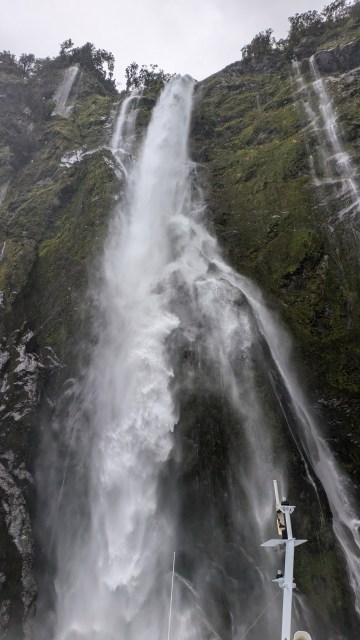
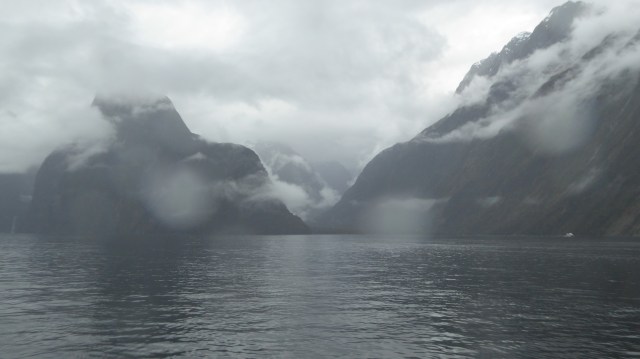
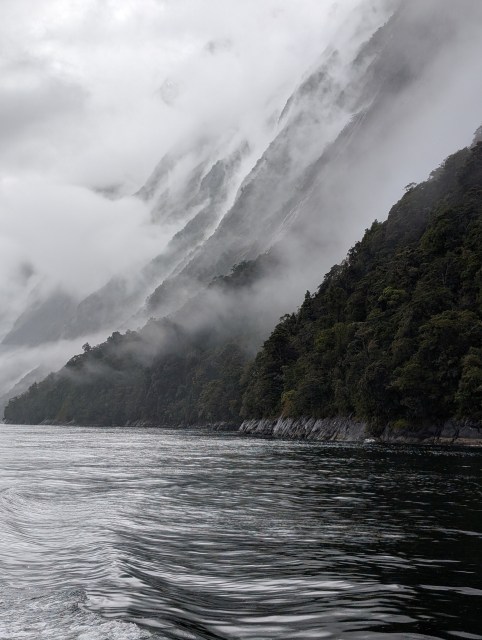
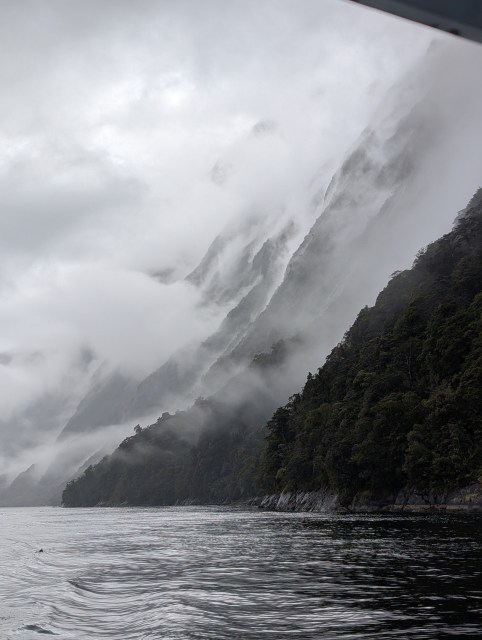
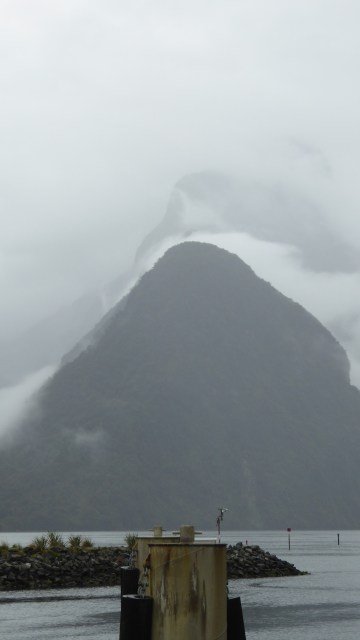
The weather was blue skies and sunny when we stopped for tea and cake at The Mirror Lakes. When we emerged from the tunnel the rain started. This was not unexpected. Milford Sound receives a mean annual rainfall of 6,412 mm (252 in) each year. This is a high level even for the West Coast. It is known as the wettest inhabited place in New Zealand and one of the wettest in the world. Rainfall can reach 250 mm (10 in) during 24 hours.[14] The rainfall creates dozens of temporary waterfalls cascading down the cliff faces. It also results in several major, more permanent ones. Some waterfalls reach a thousand meters in length. Smaller falls from such heights never reach the bottom of the sound, drifting away in the wind.
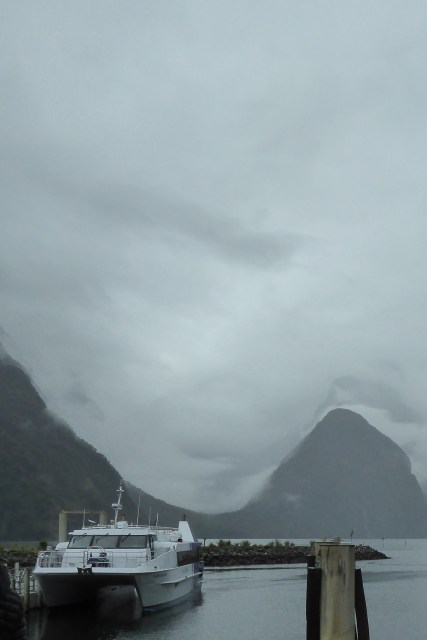
We dropped down from the tunnel to Milford Sound, where our boat was waiting for us.
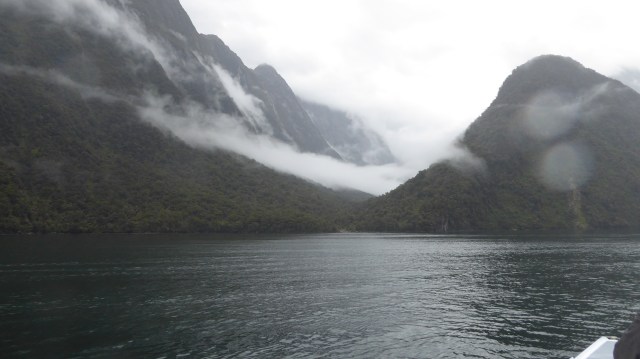
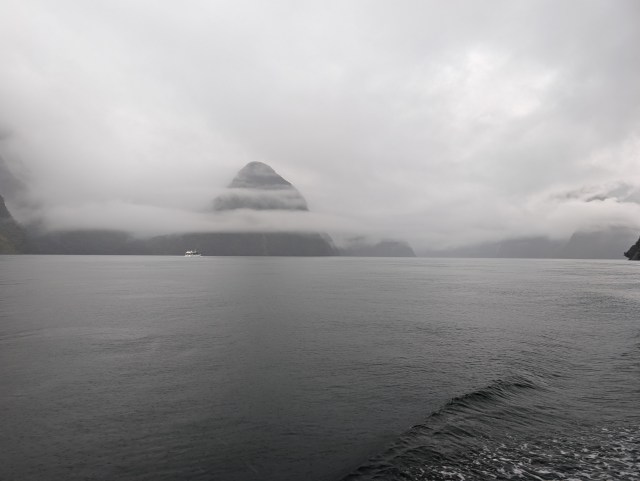
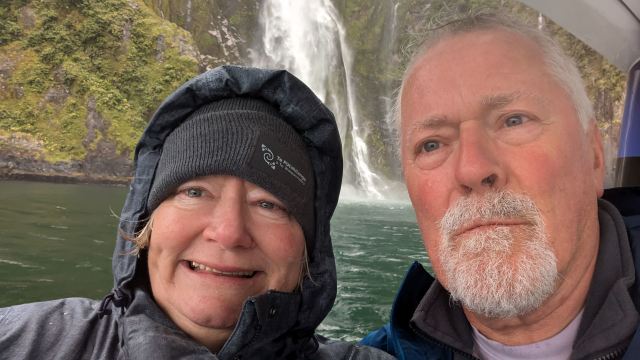
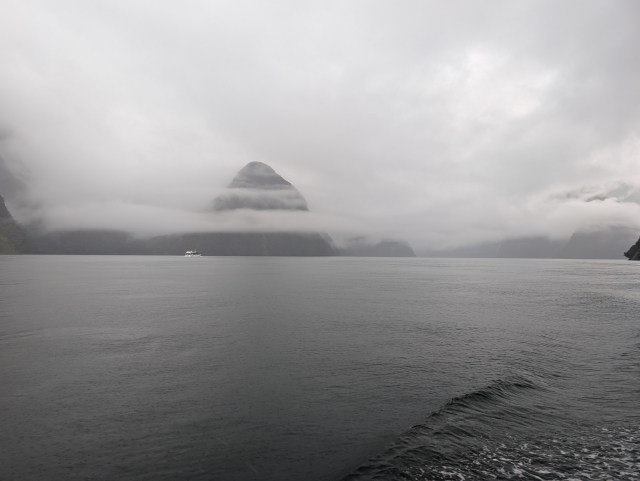
Our cruise was very scenic, very spectacular and very wet.
Waterfall
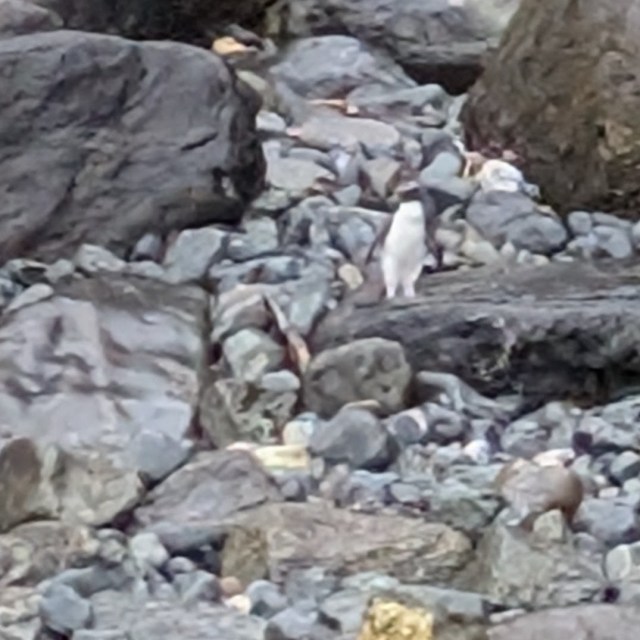
A Fjordland Crested Penguin
We saw a few Fjordland Crested Penguins. From a photographers point of view they are unfortunately rather small. The reach a maximum height of around 55 cm. Hence the not very clear photo.
Sometimes seals, dolphins and orcas are seen, but not today.
I should mention that Fjordland Tours provided an excellent packed lunch, which we ate while cruising the sound.
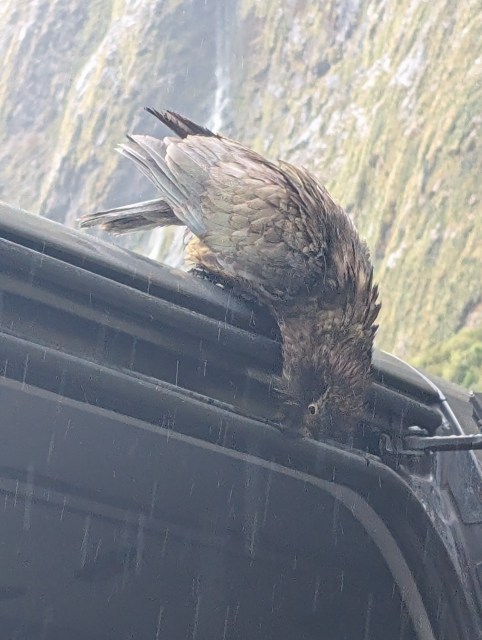
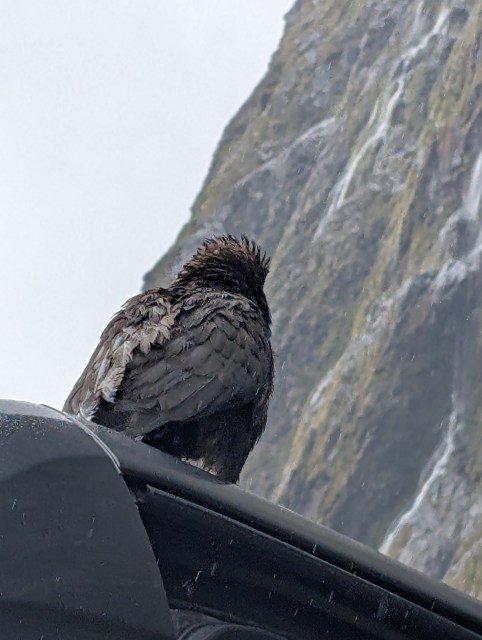
The cruise lasted about two hours, then it was time to head back to Te Anau. We were stopped, waiting to go through the tunnel. During this time, a Kea decided to try and take the rubber door seal of the van apart.
You didn’t really need that door sealKea
We stopped on the way for a walk up the first (easy) part of the Lake Marian Trail.
After that we drove back to Te Anau where we were dropped off back at the campsite.
Some people would have been disappointed that it was wet and misty. I think that it the rain and the cloud actually enhanced the experience. There are apparently only two permanent waterfalls at Milford Sound. The rest are only formed when it is raining.
It was a wonderful day out and one of the highlights of our trip.





















 A Scotsman in Suburbia