
Sunday 1st
Welcome to the, “If it’s Sunday it must be Cuzco” phase of the holiday.
We had breakfast was early, to allow enough time to get to the airport for our flight to Cuzco. Lima’s traffic is diabolical.
We had a few problems with Diane’s wheelchair assistance at the airport. But they were overcome. We arrived in Cuzco without any further problems.
In fact the only problem we encountered was due to the altitude. Cuzco is situated at 3,399 meters (11,152 feet) above sea level. This can lead to altitude sickness, especially if you arrive straight from sea level, as we did. Diane and I only suffered from shortage of breath, due to the lack of oxygen. Some of our party were quite ill.
Our hotel, the Palacio del Inca, was spectacular. It is housed in a five hundred year old colonial mansion.
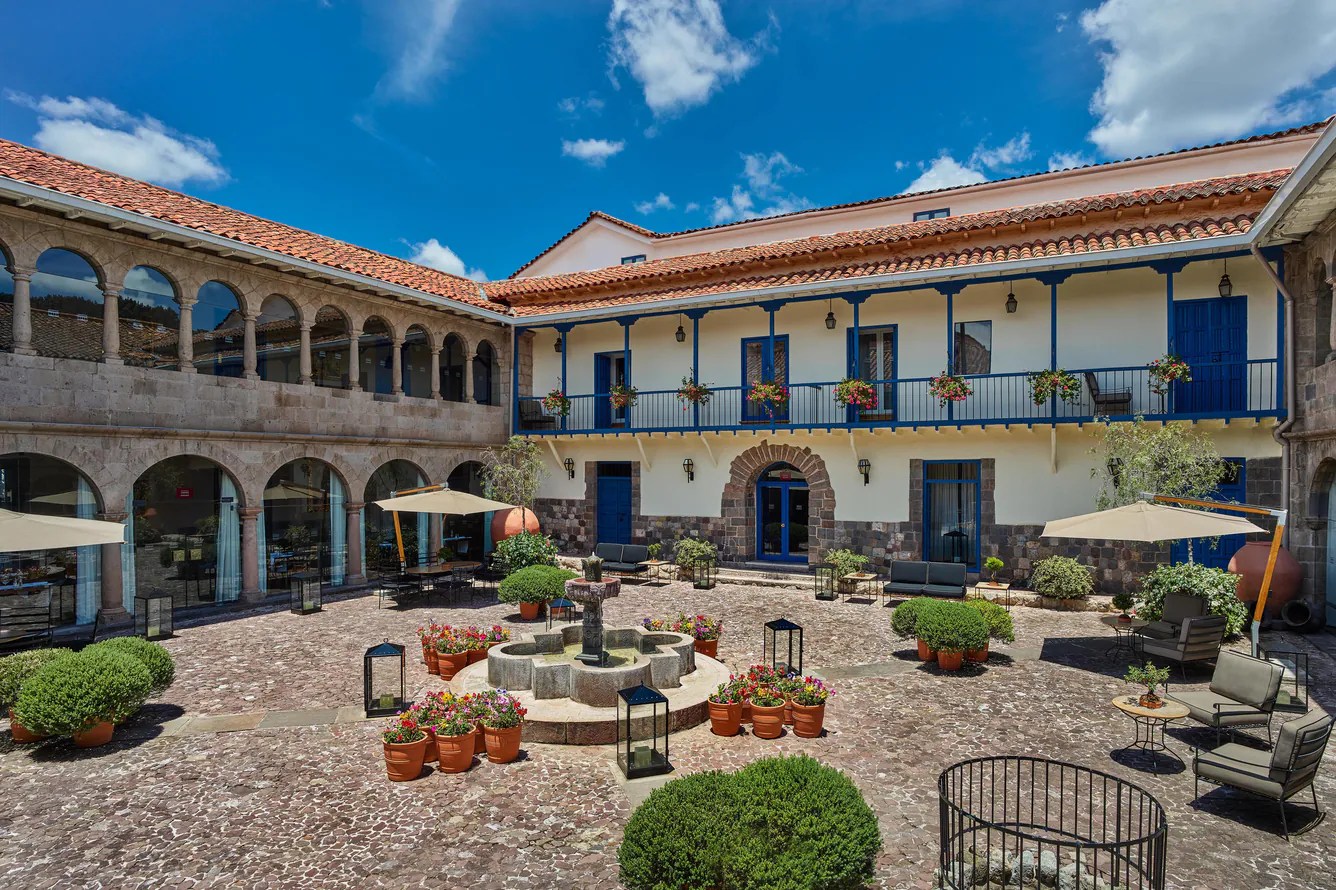
It has a large number of original paintings from that period.
We arrived late morning and after a quick lunch we were whisked off to explore.
First we called at Museo de Sitio Qorikancha. Which was more or less next door to the hotel. The museum is situated in the former Church of Santa Domingo. This church was built on an Inca Temple called Qorikancha. Qorikancha was a temple of the sun. The small museum gave a picture of what life was like in the temple, before the arrival of the Conquistadors. The ancient city of Cuzco was the capital of the Inca empire.
Our time in the museum was short but interesting. The artifacts on display were not that much different from those we had seen at the Larca museum in Lima. What was interesting was the way that the temple had been constructed to withstand earthquakes.
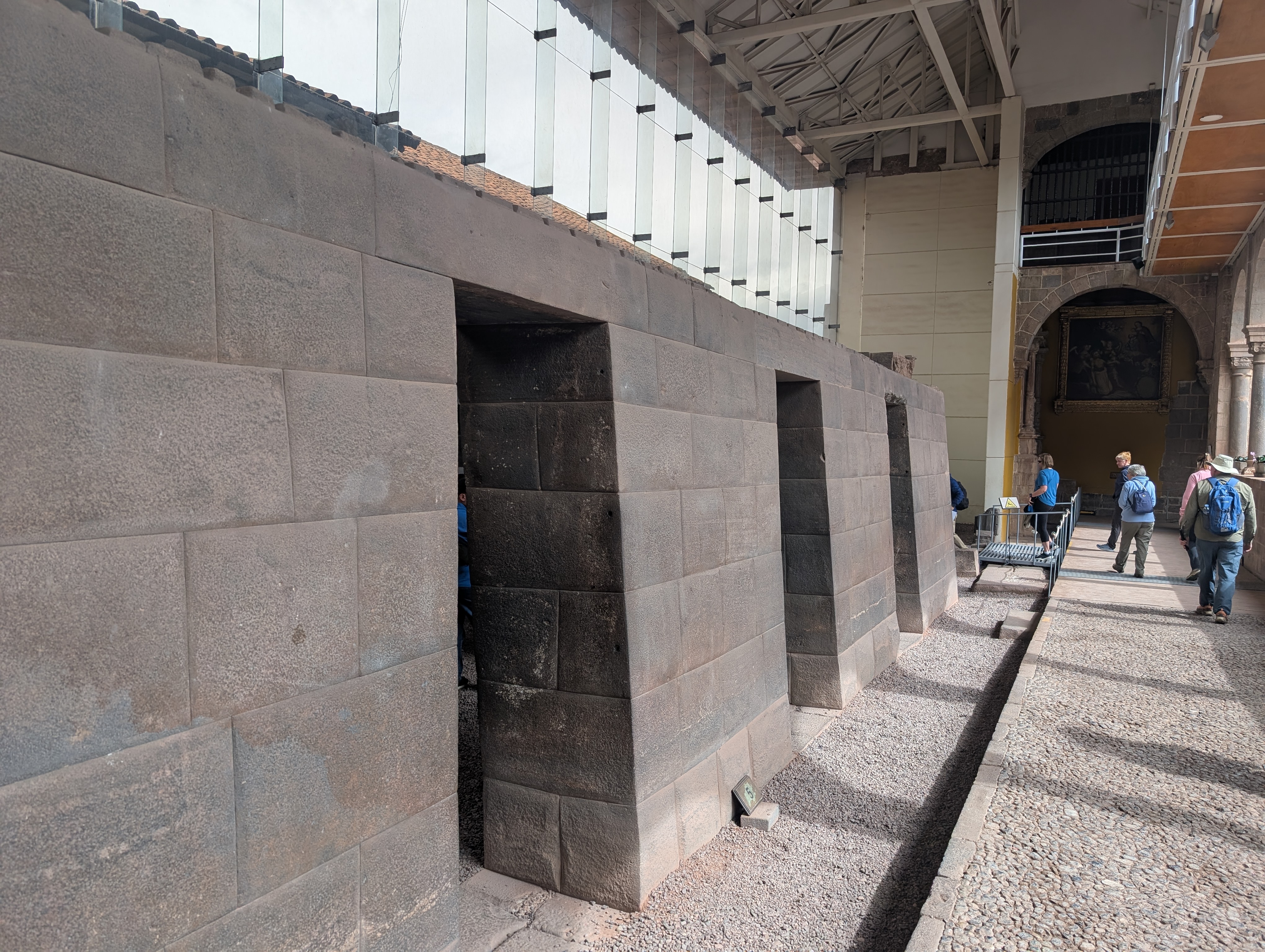
If you look closely you can see that there was no mortar used in the construction. This allows the blocks to move freely, during an earthquake. You can also probably see that the openings are trapezoid shaped, rather than rectangular. This gives extra strength compared to a normal rectangular shaped opening.
After about thirty minutes we were whisked off to our next stop. The fortress temple of Sacsayhuamán. On the way there we stopped for a view over the city.
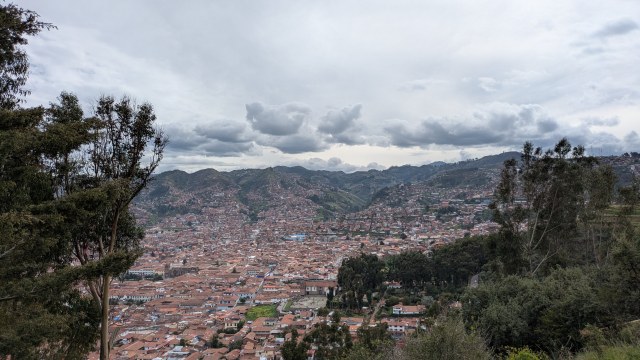
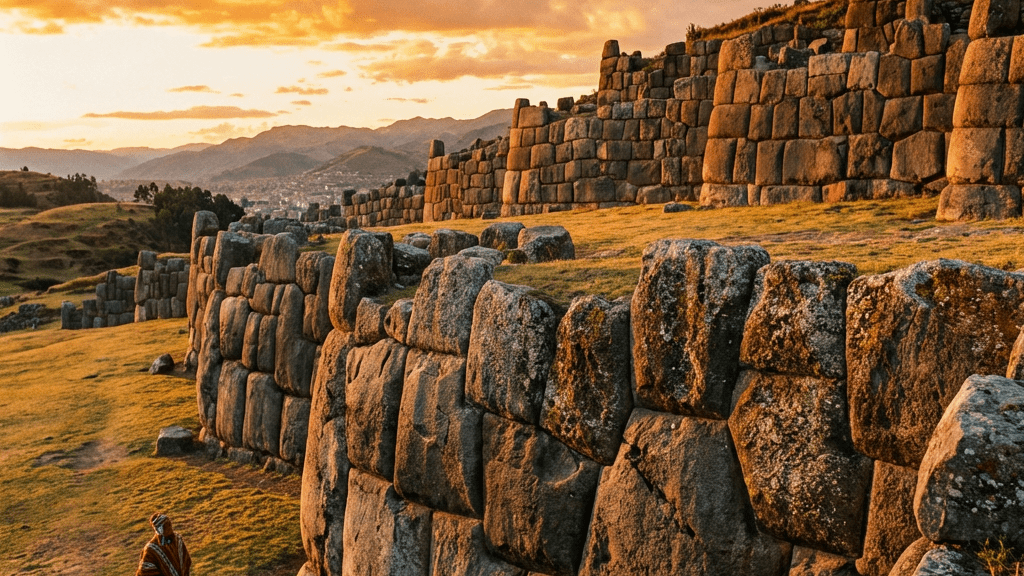
Sacsayhuamán is an incredible place. It was probably built in the 15th century during the reign of Pachacuti Inca Yupanqui. The blocks of stone that it is built from are huge. It is difficult to conceive how they were moved and put into position. The Inca did not have slaves as we understand the concept today. But there was a system of conscripted labour. There were around twenty thousand labourers working on the site at any one time.
Archaeology carried out on the site indicates that may have been occupied from around 900 CE. Some theories suggest that the site was first built upon during the Killke period (900 to 1200 CE). This period preceded the Inca.
The site is still used today. Peruvians continue to celebrate Inti Raymi, the annual Inca festival of the winter solstice and new year. It is held near Sacsayhuamán on 24 June. Another important festival is Warachikuy, held there annually on the third Sunday of September.
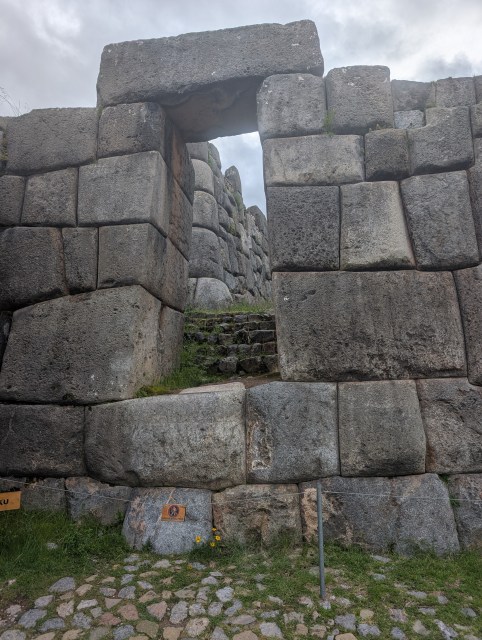
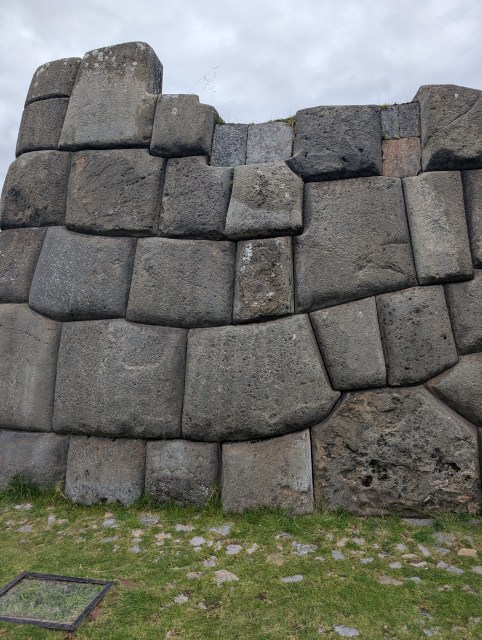
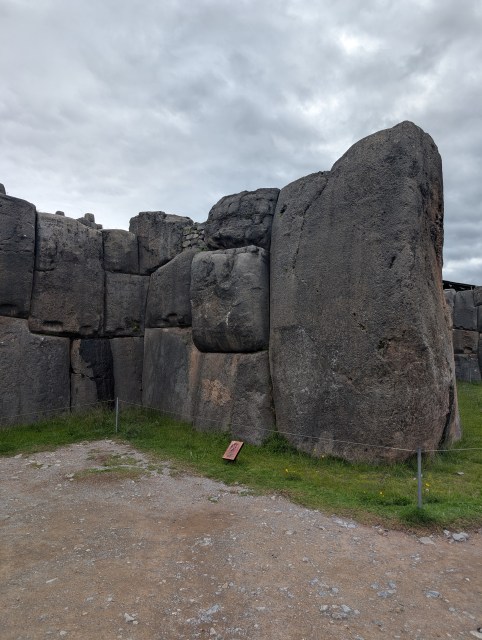
The photos give an indication of the size of the blocks that were used. The site is not as spectacular as it would have been when the Spanish first arrived. Just as every farm within fifteen miles of Hadrian’s Wall is built with stones from the wall. Similarly, almost all the older buildings in Cuzco were constructed using stones from Sacsayhuamán. Fortunately it now a UNESCO world Heritage site.
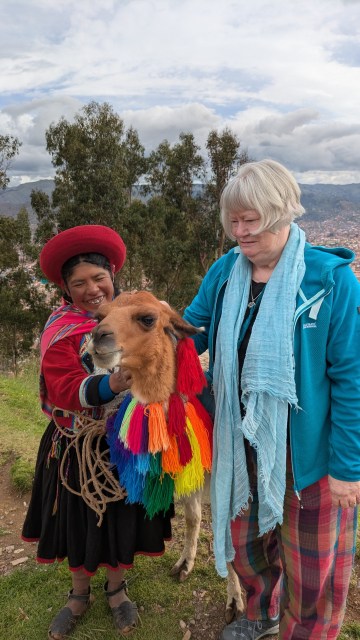
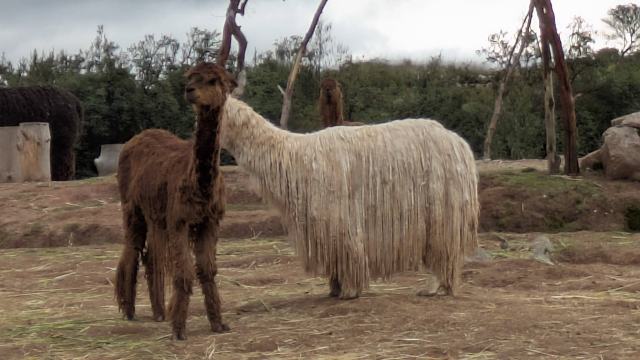
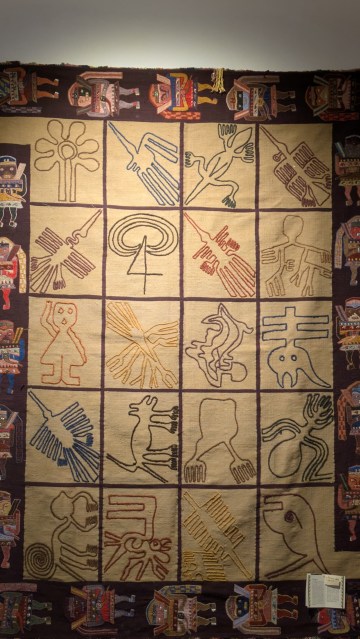
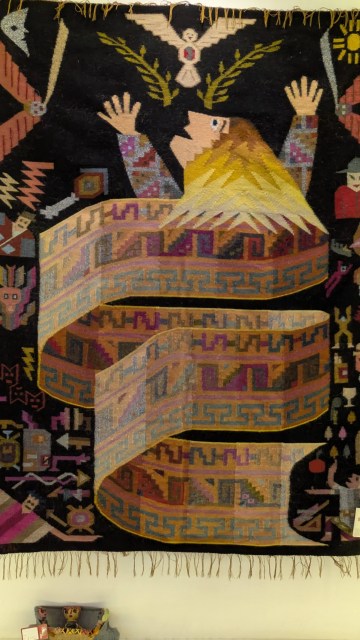
From there we moved on to an alpaca and llama farm. where we got to meet and feed , but not lick, some llamas and alpacas. We also got to see some of the amazing woven wall hangings that they did. The designs are based on Inca designs. They were wonderful, but unfortunately out of our price range. There was also some very attractive knitwear, fashioned from alpaca wool.
By the time we got back to Cuzco it was getting dark. We were dropped off in the main square which was near our hotel. It was an attractive space, but again we didn’t have a lot of time to explore.
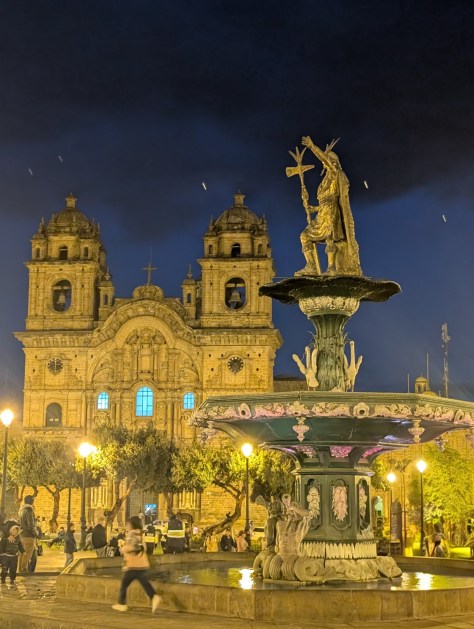
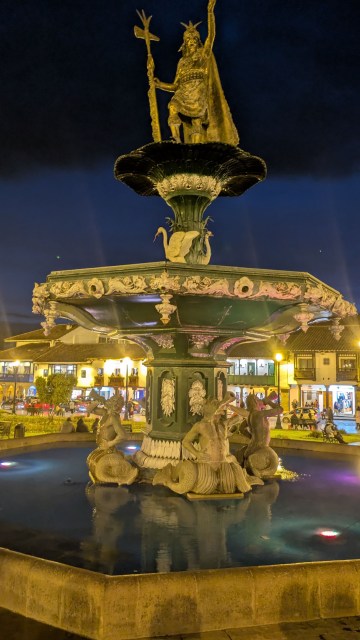
We needed to be back to the hotel for dinner. The next day was going to be a very early start.
Note: the featured image is AI generated
 A Scotsman in Suburbia