
I grew up on a farm in the Scottish Borders. The nearest house to the one we lived in was about quarter of a mile away, the nearest town was about seven miles away and the nearest city about fifty miles away. When I went outside on a clear moonless night I have no idea how many stars I could see. Above me the of the universe was on display. Later in life I earned my living at sea. Sitting on the fo’c’sle on a warm tropical night looking up at the strange – to northern eyes – stars of the Southern Hemisphere is a memory I will always cherish. Now I live in the South London suburbs, I once counted the stars I could see on a clear moonless night. There were 42 visible. Where have all the stars I marvelled at in my youth gone. They are all still there. But our insistence that there be no difference between daylight and night drowns them out.
About two weeks ago we observed Earth Hour. We switched our lights off at 20:30, and discovered that with the light from the street lights at the front of the house, and our neighbour’s ‘security’ (as in blanket) light at the back, there was enough light, if not to read by, but to do most things.
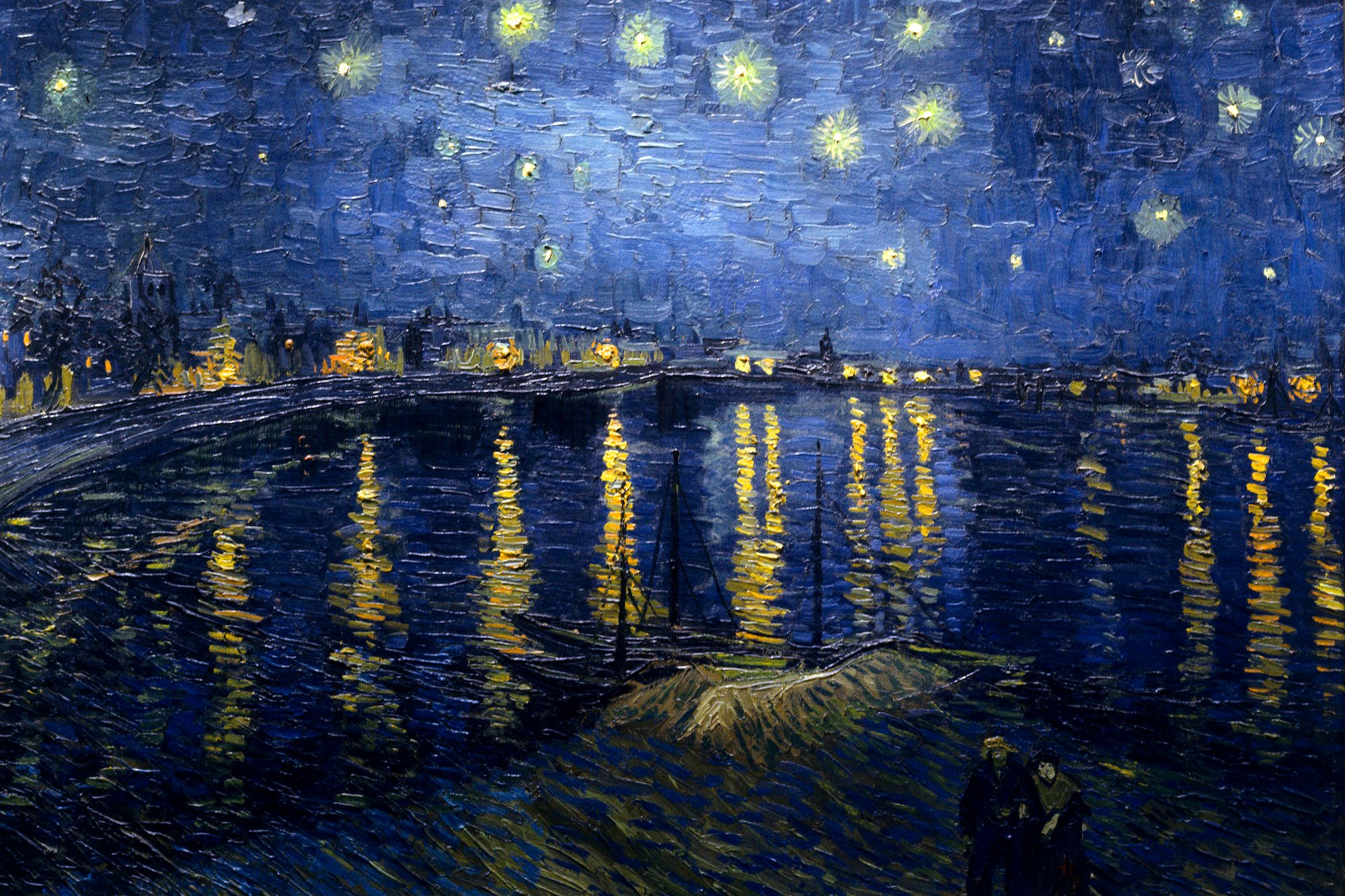
About one hundred and twenty years ago Vincent Van Gogh was trying to work out how to capture the night skies magnificence in his paintings. These are some of the results.
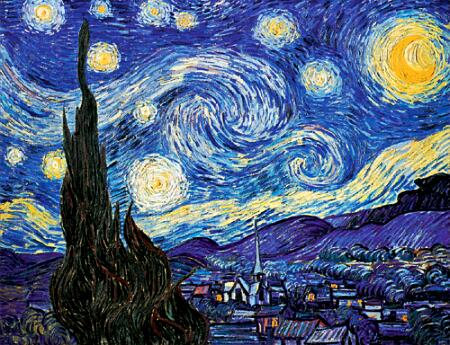
The Starry Night, immortalised in song by Don McLean is probably his most famous painting. The flow, the colour and the movement in the painting brings home to me the brightness and the wonder that was in the sky above Saint-Rémy-de-Provence. He also painted an earlier picture generally known as Starry Night Over the Rhone, painted from the east side of the Rhone in Arles.
 A Scotsman in Suburbia
One thought on “Dark Skies”